All Collections

Writing Craft

Essays on the art and practice of writing. Technique, process, and the life of a writer.

30 posts
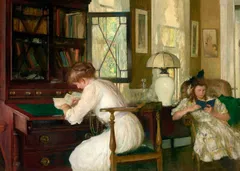
Impressionist interior scene: a woman in a white dress leans over a mahogany writing desk, pen in hand, beside a leaded-glass window with a bookcase behind her. To the right, a girl in a patterned dress and dark hair bow sits in a wingback chair reading a small blue book, lit by a white ceramic lamp on a side table

There Are People Who Would Give Anything For Your Ability to Read and Write

In our current year, there is a global literacy crisis. As a result, there's a privilege in being able to read and write. Notes on Frederick Douglass, the problems you don't think about, and why the ability to write is something to be grateful for and use rather than take for granted.

Close-up of an old handwritten ledger book open to a page of cursive names and columns of numbers in blue ink, on ruled accounting paper with red and blue grid lines, photographed at an angle with shallow depth of field.

Every Commit A Sentence: Git Commit Messages for Bloggers

I had 448 `feat:` commits and 417 `fix:` commits. Nearly the same count, for wildly different kinds of work. Here's why conventional commits were never designed for a writer's blog, and the eleven-type system I built to replace them.
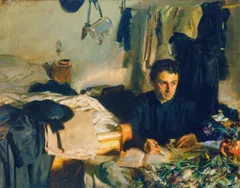
Oil painting of a dark-haired young man seated at a small desk in a cramped, sunlit room, writing intently in a book or letter. He wears a dark robe or coat and has an intense, weary gaze. The cluttered room around him features an unmade bed with white sheets, dark coats and a hat hanging from pegs on the wall, a washbasin and jug, and a vase or bundle of cut flowers and greenery spilling across the foreground table. Loose, impressionistic brushwork in muted greens, golds, and blacks. Signed 'John S. Sargent' in the upper left.

COMPULSION: The Writers Who Wrote The Most in History

I've been writing publicly every day for seven months, and I wanted to know what that looked like for other compulsive writers. From Chesterton dictating past midnight, to Chinese web fiction authors racing through 10,000 words daily. What does their obsessive output reveal about the nature of writing itself? The volume isn't the point. The showing up is.
Watercolour painting of a lush garden scene dominated by deep and yellow-greens, with clusters of soft lavender-pink flowering lilacs blooming throughout dense foliage. Small white wildflowers dot the lower foreground. The brushwork is loose and impressionistic, with washes of colour blending into the cream-white of the unpainted paper at the upper left. Hints of red stems and teal leaves add contrast within the greenery.

Blogging Saved My Life

Writing publicly and frequently for the past seven months has saved my life. Six ways consistent public writing transformed me: cultivating curiosity, building connections, investigating rabbit holes, starting new projects, creating accountability, and seeing life's patterns in real-time. An invitation for others to begin writing without restraint.
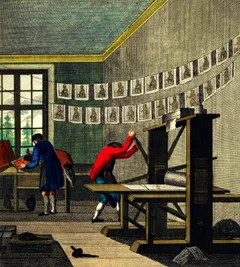
Historical engraving depicting a print shop in the 18th century. Two workers in period clothing operate a wooden printing press: one figure in a red coat pulls the press lever while bent over the press bed, and another in a blue coat inks type at a compositing table near a multi-paned window. Freshly printed sheets, each bearing a small portrait, hang in two rows on drying lines strung across the room. Ink balls, tools, and other workshop materials are scattered on the floor.

A New IndieWeb Publication? or: I Want to Start Something and Be Bad at It

Inspired by Good Internet Magazine, I'm starting a new volunteer-run IndieWeb publication tentatively called Long Horizon. Exploring my readiness to launch a digital and physical magazine focused on creative non-fiction and lyric essays, and seeking collaborators who want to build something meaningful on the Internet together.

Screenshot of the writer-cli homepage. The page header reads 'WRITER-CLI' followed by the headline 'Write from your terminal. Publish with one command.' A subheading describes it as a command-line tool for bloggers with a static site who want to open a terminal, write something, and have it live on the Internet. Below is a dark install command: curl -fsSL https://raw.githubusercontent.com/brennanbrown/writer-cli/main/INSTALL.sh | bash, with a 'copy' button. A note below states it installs to ~/.local/bin/ and links to the installer source. Navigation links at the top read: home, guide, reference, source, GitHub.

Introducing writer-cli: a bash tool I built from scratch to blog in the terminal!

After finding the tildeverse and the Tilde.town feels engine, I decided to build my own simple command-line tool for blogging that handles the full lifecycle of a blog post (creation, editing, building, and git push). A walkthrough of the design decisions, the modular architecture, and the tradeoffs of writing 700 lines of plain bash.
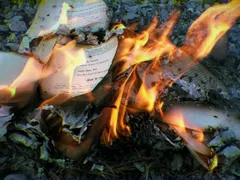
Printed pages burning on rocky ground outdoors, with tall orange flames rising from the center. The pages are from a book, and visible names include Steve Wozniak, Stanley Kubrick, and Leslie Stern, M.D., with a section header reading '[End Of Tra...' and a headline at the top beginning 'Why Did Navidson Go Back To The Hou...' The surrounding area shows ash, gravel, and dry vegetation. The image has a subtle chromatic aberration effect, giving the edges a yellow-green fringe.

Writers Who Burned All Their Words feat. Bix Frankonis

I am a compulsive archivist, terrified of losing my words, but many of history's greatest writers asked for theirs to be burned. Kafka, Dickinson, Plath, Virgil all had their reasons. A meditation on self-erasure, ego, and the difference between the writing and the written thing, with an interview with Bix Frankonis, a contemporary writer who one day decided he needed to be smaller online, not bigger.

An elderly man sits in morning sunlight outside a weathered blue doorway in Basantapur, Nepal, absorbed in reading a Nepali-language newspaper. He wears black-rimmed glasses, a blue vest over a checked shirt, and light grey trousers. The newspaper catches the early light brilliantly against the dark background. A cane rests under his arm.

Being a Citizen Journalist

From Drudge to Salam Pax to Darnella Frazier and Zhang Zhan. The world needs citizen journalists. There has been a hollowing of Postmedia's local press, the radicalization pipelines mainstream coverage fails to trace, Andrew Callaghan's compromised platform, and what I owe under the SPJ Code of Ethics as an independent writer with a blog.
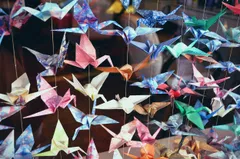
Dozens of origami paper cranes in a wide variety of colours and patterns. Blues, pinks, reds, greens, white, and earth tones, many made from patterned washi-style paper with florals and stripes, suspended from thin strings against a blurred warm-toned background.

A THOUSAND CRANES: Why I Write Every Day

My daily writing is a practice of releasing messages in bottles and folding paper cranes—from Montaigne in his tower and Johnson writing in poverty, to Sadako Sasaki folding 1,450 cranes in a hospital ward. What the essayists, drift bottles, and Senbazuru share, and why the attempt itself is the whole math.
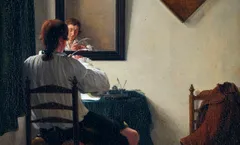
A softly lit interior scene shows a young person seated at a small table, writing with a quill pen. They are viewed from behind, wearing a loose white shirt, while a mirror in front reflects their face as they concentrate on their work. On the table are ink bottles and writing tools. A wooden chair and a draped coat sit to the right, and the textured wall and muted colors give the scene a quiet, intimate, painterly atmosphere.

Poetry Saved My Life

I snuck off school grounds to write in a back alley, shoplifting Ginsberg and Neruda from Chapters, and I'm alive and writing today because of that. Recent neuroscience confirms poetry activates the brain's dopaminergic reward system, treats anhedonia, and is—more than metaphor—medicine.
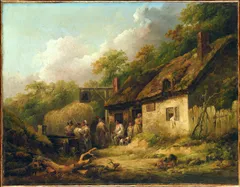
Oil painting of a rustic countryside inn scene. A thatched-roof whitewashed cottage with two brick chimneys serves as a wayside inn, identified by a hanging bell sign on a wooden post. Several figures in 18th-century rural clothing gather outside — some standing and conversing near a haycart, others seated by the inn's entrance with a dog. A wooded hillside rises behind the building under a partly cloudy sky. A small stream or puddle is visible in the foreground. The painter's signature appears in the lower right corner.

Earning My Keep

On the poets who found different terrors inside the phrase 'earn my keep'—Jeong Ho-Seung, Brecht, Heather McHugh, Kim Hyesoon—and the theological dispute over whether grace can be deserved, turning thirty in borrowed time, and the nuthatches outside who do not know the feeder was set out for them.

An ornate, hand-colored illustration in an old European style shows a person standing in a grove of stylized palm-like trees, surrounded by symbolic emblems and text. Above, a radiant triangle containing an eye (the “all-seeing eye”) shines through clouds. Each tree bears oval crests and circular plaques with letters, Roman numerals, and heraldic symbols. The central figure gestures outward while holding a shield-shaped panel with decorative script.

STORYTELLING Part Two: The (Literal) Magic of Writing

Grammar/Glamour/Grimoire. 言霊 & heka. Spelling & spellcasting. The Word. Writing is generative, not descriptive. Cultures across millennia have understood that words conjure reality. Writing conjures, symbols activate the brain, serving as telepathy across distance and time.
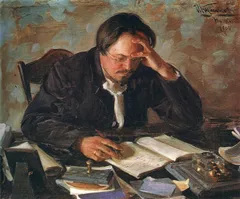
Oil painting (1904) of a man seated at a cluttered desk, writing with a pen while pressing one hand to his forehead in concentration. He wears a dark jacket and glasses, surrounded by open books, stacked papers, and an inkwell. The background is a muted blue-grey. Signed in Cyrillic in the upper right corner.

Being Taken Seriously as a Writer

There's tension between creative authenticity and professional presentation in the IndieWeb space. What does it mean to be taken seriously as a writer while maintaining personal joy and rejecting the aesthetic standards of capital?

A 19th-century-style anatomical diagram of the human brain in lateral cross-section, rendered in fine engraving style with black-and-white linework. The brain's gyri (folds) and sulci (grooves) are depicted in detail, with numbers (1–10) and lowercase letters (a–g) labeling specific lobes, fissures, and structures including what appear to be the cerebral cortex, cerebellum, brainstem, and ventricular regions. The image has been digitally processed with a chromatic aberration effect, creating rainbow colour fringing (cyan, magenta, yellow, green) around all edges and a horizontal scan-line pattern across the image.

STORYTELLING Part One: The Neurology of Narrative

How do our brains physically process stories? The neurology of narrative transportation, brain synchrony between storytellers and listeners, biocultural theory, and Indigenous storytelling traditions that collapse Western narrative structures.
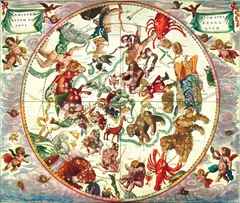
A Baroque celestial hemisphere map, depicting the constellations of the northern sky as mythological figures and animals. The circular map is bordered by a red ring marked with constellation and zodiac names. Within the map, labelled constellations appear as colourful illustrated characters: Aquarius pouring water, a large red Scorpion, Cancer as a red lobster, Pegasus as a winged horse, Ursa Major and Minor as bears, Orion, Perseus, Cygnus, Boötes, Virgo, Draco, Andromeda, and many others. Star positions are marked with small white rosettes. The map is overlaid with grid lines indicating celestial coordinates including the equinoctial and solstitial colures. The corners of the image are decorated with cherubs (putti) floating among pink and blue clouds.

Constellation of Living Stars

I've written 120 blog posts in the past 140 days, averaging 1,900 words per post. 250,000 words total on my blog currently. It's as good a time as any to review my work so far and speculate on the possibilities of my future.
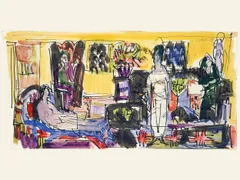
A loose, expressive watercolour and ink sketch depicting an interior scene with multiple figures. A reclining nude figure in blue and pale pink dominates the lower left foreground. Behind them, a seated figure in purple and green occupies a chair. The background is filled with warm golden yellow and features framed artworks or windows on the wall, rendered in dark gestural lines. Additional standing or seated figures are suggested on the right side through rapid, overlapping ink marks in blue, green, and dark brown. Red accents appear throughout the composition. The style is spontaneous and gestural, characteristic of mid-20th century expressionist drawing.

Write Weird Shit

Dogfooding my freewriting; an experiment on why writers need to embrace the weird, unfiltered, and unconventional rather than fearing AI detection.

A lady in early 17th-century attire is seated at a table pondering a letter she is writing. In the background is a high Japanese screen. The artist has lavished great care in the rendering of the contrasting surfaces of his subject's satin dress and of the rug covering the table. In its intimacy and in its oriental note, this work approximates the painting of Alfred Stevens.

My Blogging Workflow: A routine for nearly a post a day for 4 months straight.

A detailed look at my personal blogging workflow that has enabled me to write nearly a post a day for four months straight, including how I generate ideas, organize thoughts, and maintain consistency.
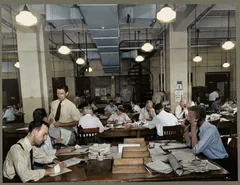
Busy vintage newsroom with journalists working at long wooden tables under industrial pendant lights. Men in white shirts and ties review papers and documents in a high-ceilinged space with exposed ductwork and black metal framework. The industrial-style office has a mid-20th century aesthetic with workers engaged in various reporting and editing tasks.

Substack's Subpar Subculture

The newsletter platform is supposed to be the new economic engine for culture. Yet, they let hate speech fester. Why? The answer is obvious. Writing is treated as commodity instead of sacred art. But there is a solution.
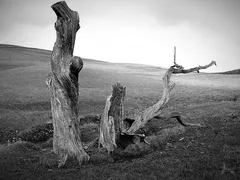
Dead and decaying trees by the Ladhope Burn. These are the only trees in this large grazing field on the northwest side of Galashiels Golf Course.

Do It Ugly: On Bad Art and Civic Duty

Thoughts on embracing the ugliness of your early creations as a form of civic duty and spiritual practice. A call to action without judgement.

Stop, Collaborate, and Listen! Writing in the Pre-Y2K Age of Zines, Mixtapes, Dial-up, Tamagotchi, Payphones, VCRs, and Windows 98.

10 Ways to Write Like the 90’s

Using the Methods of Journalists from the Past to Inspire Your Writing Today

Photo by Donald Giannatti on Unsplash

What does it mean to be a good editor?

Accessibility, Gatekeeping, and Who Gets to be Published

Source | (Edited by the Author)

Tough, but Fair: How to Elevate Your Craft from Blogging to Literary Journalism

On independence, integrity, and telling the truth beautifully. (featuring Better Call Saul and Homestuck?)
My Best Advice for Medium Writers with No Followers

My Best Advice for Medium Writers with No Followers

My Experience with Medium’s Writers Circle

How does this relate to writing? Read on. | Source (edited by the author)

THE INERTIA EFFECT: Stop Optimizing

Writers that write badly instead of plan extremely well are… better writers?
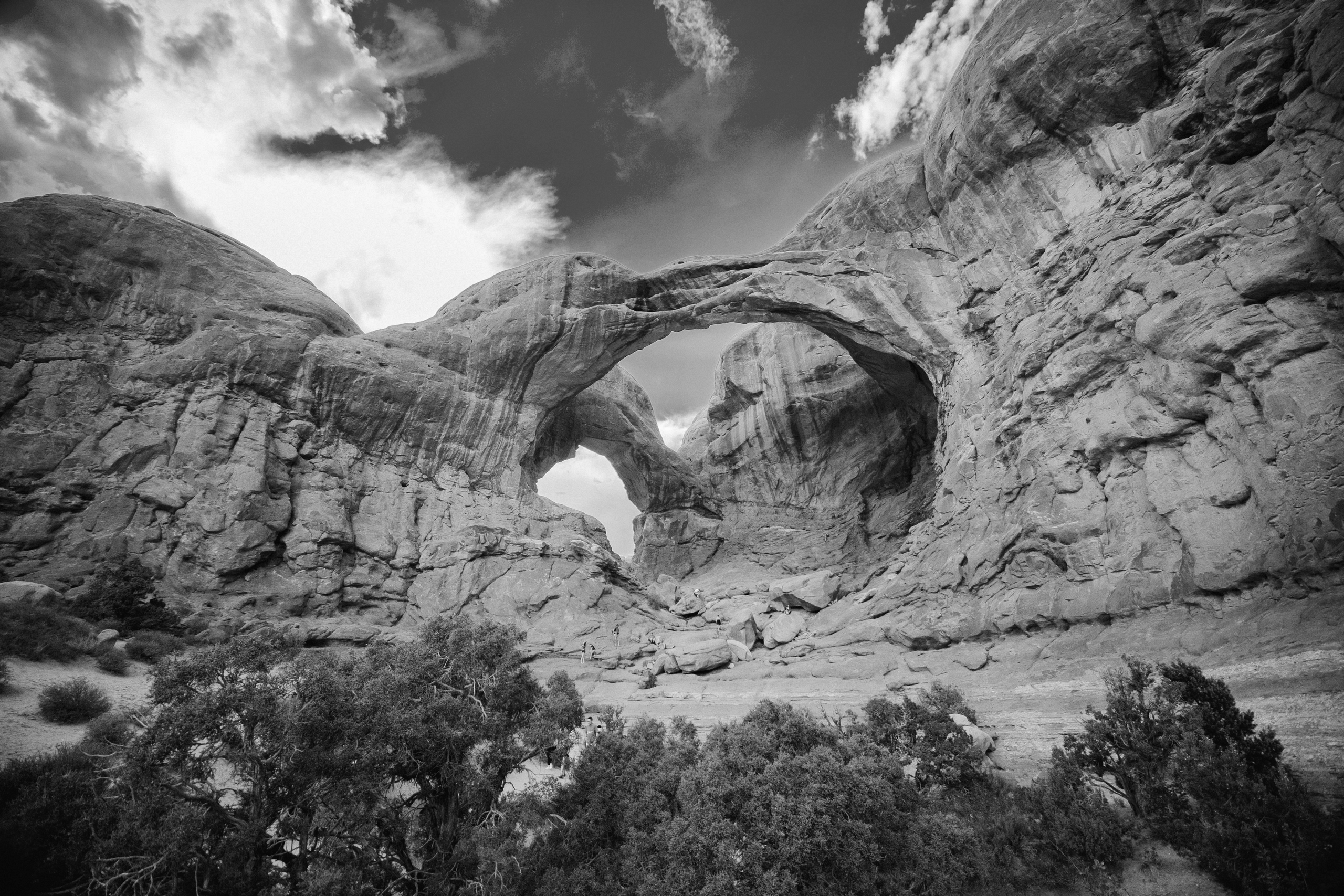
Photo by Josh Soriano on Unsplash

How to Rewild Your Writing Practice

Escape the Sterile Classroom Killing Your Voice. Return to Nature.

Source (edited by the author)

In Defence of Rupi Kaur

The Necessary, Complicated Legacy of Canada’s Best-selling Poet
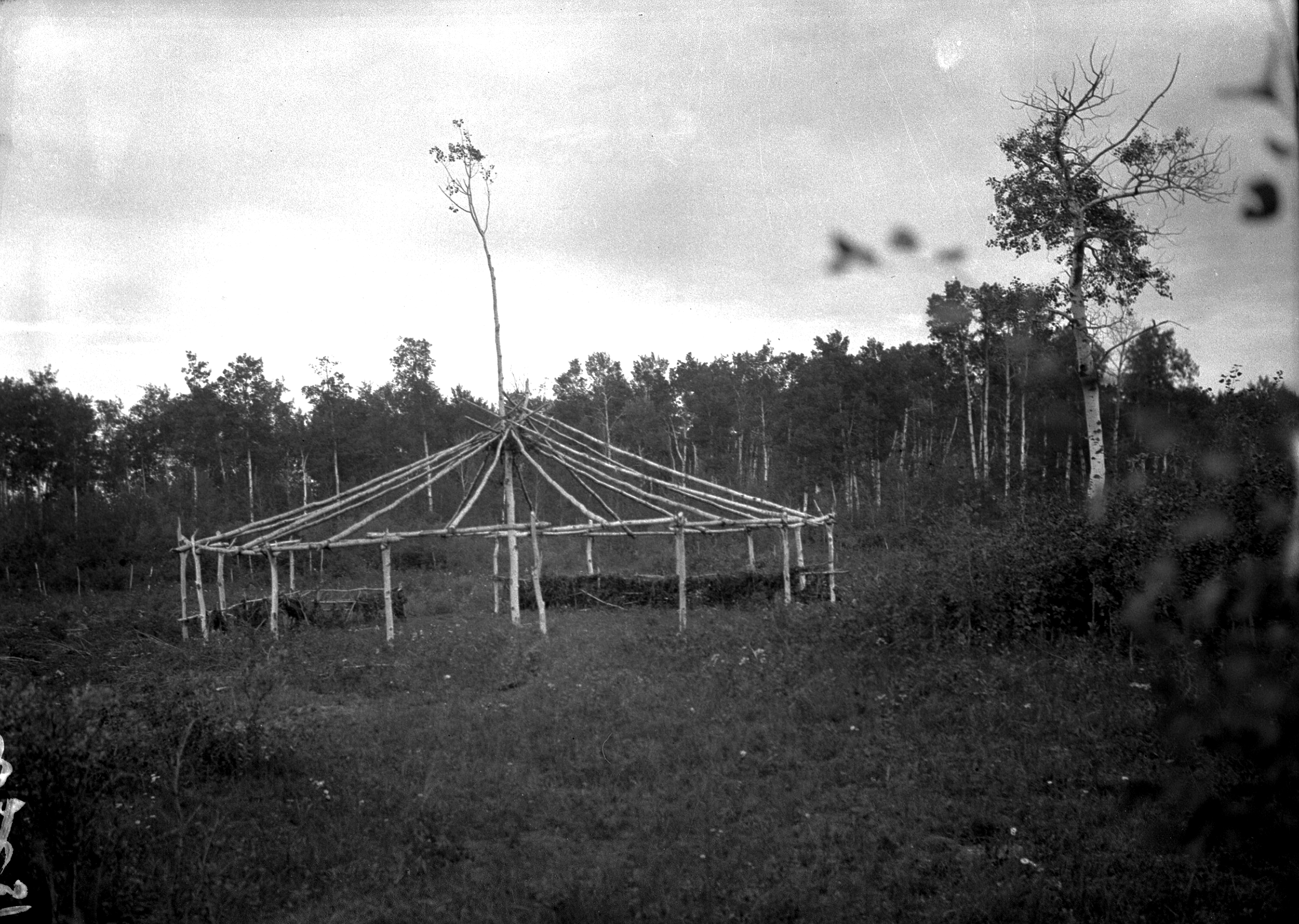
Circular Wood Frame Structure Used on Ceremonial Occasions—Waterhen River, Northern Saskatchewan

Ceremony

What I Learned Getting My First Story Boosted After 10 Years on Medium

Photo by Ante Samarzija on Unsplash

Mise en Place for Writers

What Four Years in a Children’s Hospice Kitchen Taught Me About Craft
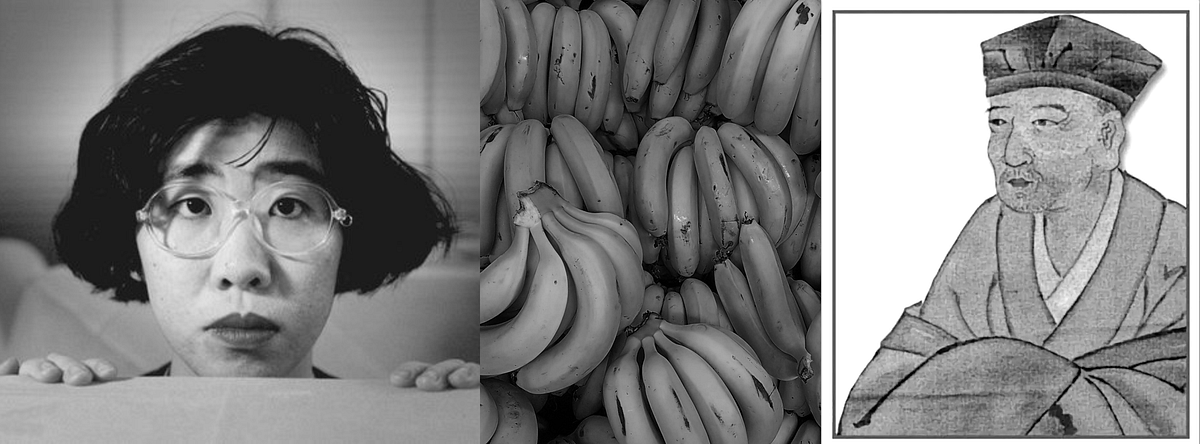
From left to right: Banana Yoshimoto, a pile of bananas, and Matsuo Bashō

THE BANANA MYSTERY

A Literary Question Across Centuries in the East
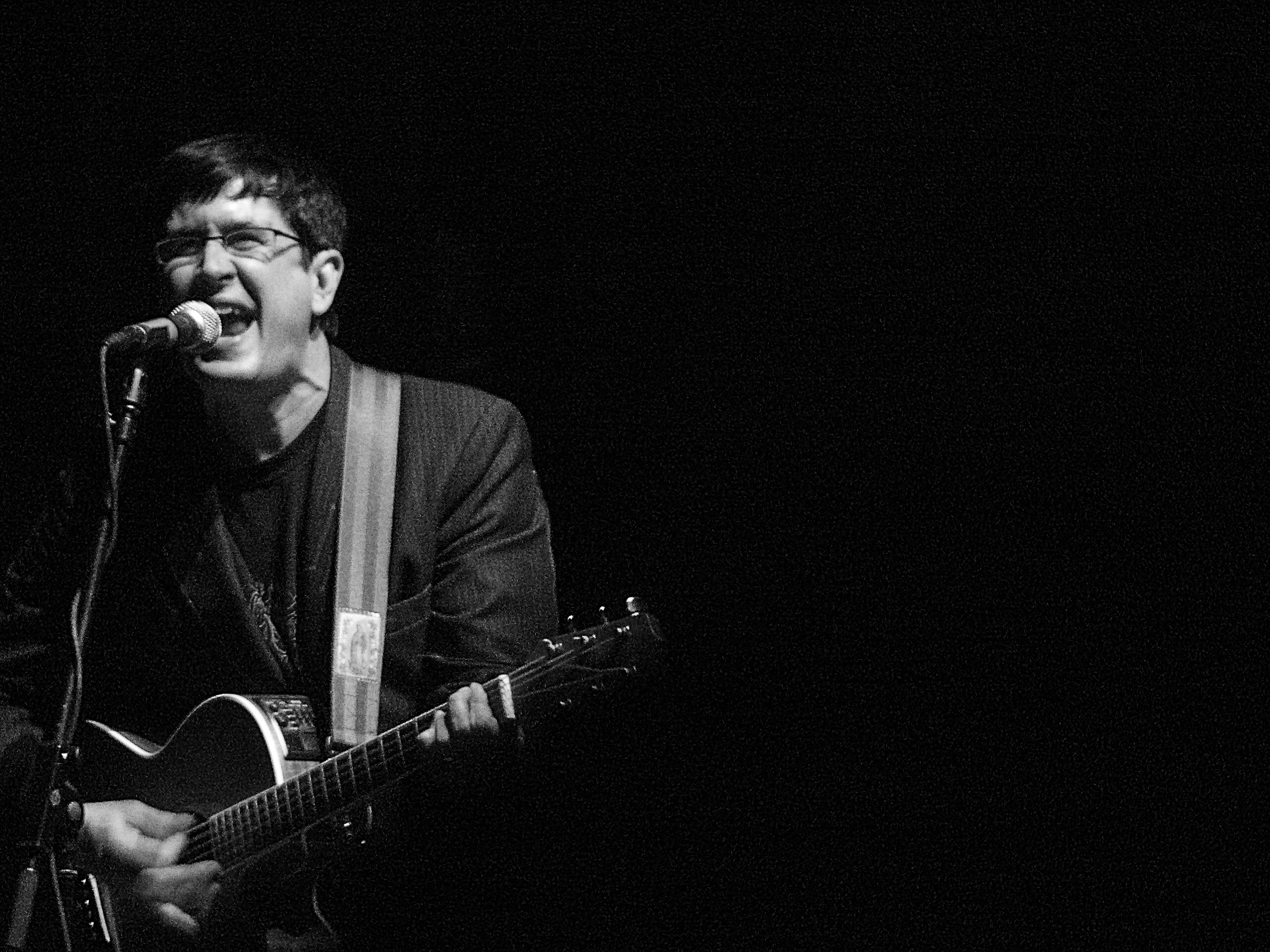
You really only get one shot at this.

Be prolific. Accept every thought. Mythologize yourself. Show up.

How to write like the Mountain Goats to create your own body of work you’ll be proud of.

↑ TOP