Science
Explorations of scientific discovery, research, and the natural world, ranging from physics to biology to astronomy.
16 postsA subset of these posts is syndicated to the Rogue Scholar science blog archive via a dedicated feed — Atom or JSON Feed — and licensed under CC BY 4.0 rather than this site's usual CC BY-SA 4.0. Posts in that feed are marked below.
A Guide to Becoming a Rogue Scholar
#261 CC BY
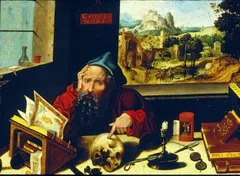
I've been weighing grad school against continuing my own open-access publication, so I wrote a guide to becoming a 'Rogue Scholar' using ORCID, citation metadata, issue numbers, print CSS, and Wayback Machine archiving to try to make my static Eleventy site as citable, permanent, and discoverable as institutional scholarship.
Confessions of a Maladaptive Daydreamer
#257 CC BY
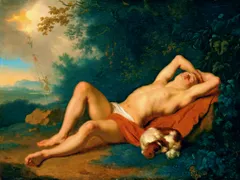
A personal tale living with maladaptive daydreaming—intense, immersive daydreams that replace rather than accompany real life. On Eli Somer's research, the difference between paracosms and maladaptive daydreaming, trauma connections, and how this coping mechanism became both a refuge and a source of enjoyment.
Our Skies Contain Sprites, Elves, Trolls, Pixies, Ghosts, and Gnomes
#253 CC BY
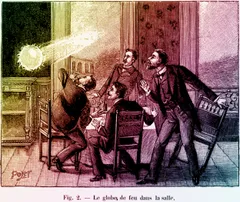
Yes, really. Exploring the magical world of transient luminous events in the upper atmosphere: sprites, elves, blue jets, trolls, pixies, ghosts, and gnomes. How scientists named these barely-witnessed electrical phenomena after folklore, and why scientific wonder and awe are not opposed to rational inquiry but essential to it.
Wow, I Love the 'Puter!
#242
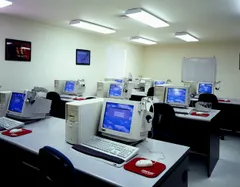
The desktop computer is a miracle of human ingenuity, from the microscopic precision of Intel's Core Duo processor to the vast possibilities of offline and online computing. On the tragic decline of desktop towers, the IndieWeb and open-source software as alternatives to corporate platforms, and why we should take the time to become system admins and webmasters.

What have note-taking PKMs accomplished, really?
#231 CC BY
As somebody who writes a lot, I've always been interested in personal knowledge management systems and note-taking apps. But what do these frameworks and methodologies actually give to researchers and the broader world? Has there been a meaningful increase of wisdom since these became popular? I went to look for an answer.
SPICE: Our Antifragile Biology
#189 CC BY
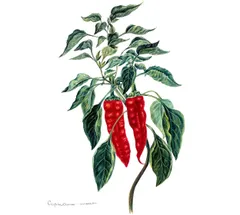
Spicy food and capsaicin demonstrate hormesis and antifragility in human biology. The science of pain, TRPV1 receptors, and how controlled exposure to stressors makes our bodies stronger rather than weaker.
The Hondius Pneumonia (Low Risk Assessment)
#180 CC BY
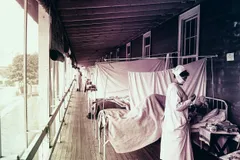
A hantavirus outbreak aboard the MV Hondius in the South Atlantic has sent thirty passengers home across twenty-three countries before a single test was run. What does the WHO's 'low risk' framing mean? The institutional failure of January 2020, and what honest communication about uncertainty actually requires. The incubation window is open. We are watching.
PATTERN RECOGNITION
#178
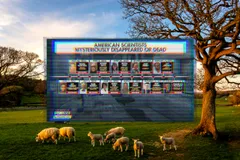
Scientists working in classified American aerospace and nuclear research have died and disappeared. The story has migrated from UFO forums to the White House briefing room. A conspiracy requires a conspirator. On grief, and the brain's furious, irrepressible need for meaning. Nuno Loureiro wanted to trap a small star. Carl Grillmair watched stellar streams from a self-built desert observatory. Monica Reza invented an alloy that does not burn. This is not me trying to figure anything out, this is me trying to remember the human beings.
Video Games that Secretly Teach Mathematics
#174 CC BY
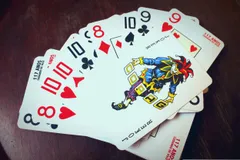
A love letter to the mathematics hiding inside video games, and a protest against the expression 'I'm just not a math person'. From parallel universes in Super Mario 64 to the technical exegetes mapping Animal Crossing, The Sims 2, Pokémon, and Paper Mario. Then Balatro and the IEEE 754 double-precision ceiling, tetration, Knuth's up-arrows, Conway chained arrows, Graham's number, TREE(3). A history of notation catching up to the infinite.
CLEAN AIR: Long COVID Is a Catastrophic Public Policy Failure
#163 CC BY
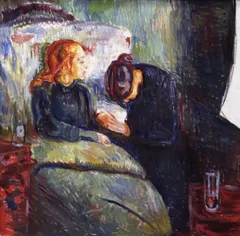
A follow-up looking at the real, systemic intervention for the Long COVID mass-disabiling event: Clean air. MERV 13 filters, the Corsi-Rosenthal Box, and the Zadroga Act we still have to write to climb the bureaucratic wall of disability denial, and what those of us with capacity owe to those who are too sick to fight for themselves.
That's Home. That's us.
#153 CC BY
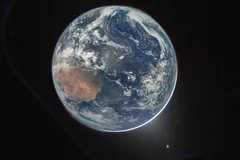
We have the first human photograph of Earth from space in 54 years, and I can't help but meditate on what it means to be human on a fragile planet in 2026.
THE MOON
#152 CC BY
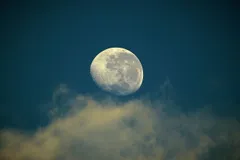
Born on April 13th, 26 years after Apollo 13's failure, I explore my personal connection to the Moon as Artemis II astronauts journey toward Her. The Moon has scientific importance, cultural naming traditions, religious significance across civilizations, linguistic ties to lunacy and menstruation, and is the first poem. The Moon unites humanity across time and space as we return to Her once again.
Being a 21st Century Schizoid Man
#145 CC BY
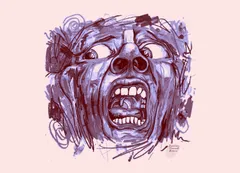
My personal exploration of schizoid personality disorder and neurodivergence. From King Crimson's prophetic song to global youth withdrawal phenomena, I examine what it means to live with a rich interior life and limited social needs, challenging pathologizing frameworks and questioning whether 'poor outcomes' are about the condition or the metrics.
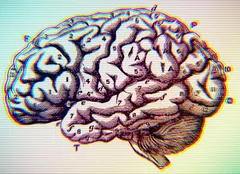
STORYTELLING Part One: The Neurology of Narrative
#142 CC BY
How do our brains physically process stories? The neurology of narrative transportation, brain synchrony between storytellers and listeners, biocultural theory, and Indigenous storytelling traditions that collapse Western narrative structures.
Fermenting Boredom
#133 CC BY
Come be bored with me. Utterly bored. Within the default mode network, Heidegger's philosophy, Indigenous dream epistemologies, and personal experiences with hypnagogic states.

The Pandemic Never Ended. We Only Pretend it Did
#87 CC BY
Six years into COVID-19, the world has moved on while the virus continues to disable millions. An examination of the ongoing pandemic, long COVID, and our collective failure to prevent a mass disabling event.