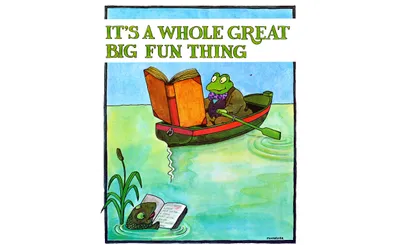
'It's a Whole Great Big Fun Thing' by Tomi Ungerer. 1972. Originally from the Library of Congress. | Rawpixel (edited by the Author)
issue #243 of brennan.day
You Don't Have to Blog

brennan.day — issue #243
Publisher: Brennan Kenneth Brown
Place of publication: Calgary, Alberta, Canada
Available at: https://brennan.day
Contact: mail@brennanbrown.ca
It's the final day of July, and I'm in a contemplative mood. Tomorrow begins Blaugust 2026, a fun event where bloggers are challenged to write 31 blog posts in 31 days.
Will I participate? Well, every month has been Blaugust for me since November 2025, as I've written at least 23 posts every month since then. Although I haven't yet had a month where I've successfully blogged every single day, so maybe I will.
What I want to talk about, though, is not blogging. At the start of the month, Dan Q. wrote a great blog post called You don't have to blog like me, listing out all the things you don't need to do in order to be a blogger. I sincerely appreciate this post, as I think if you take a look at my own blog you might feel as though quite a few things that Dan lists are in fact requirements.
But I want to go a step further, though, and tell you that you don't need to blog at all.
If you're on the IndieWeb and you are a webweaver, and you have your own site on NeoCities or make your own static site generator, or use one of the many other tools available, your website does not need a blog. Your website is fully complete with just a couple pages, or shrines, or web rings, or web cliques. Even then, none of those are necessary either.
If you're an artist, share your drawings instead of writing. Put your music on Faircamp, or put your photography on PixelFed, or put your video on PeerTube. None of it needs to be words.
And if you're instead a lurker, if you're somebody that reads the blogs of others and often feel a pressuring heat on the back of your neck because you haven't started your own—I'm here to tell you right now that it's okay if you never do. It doesn't make you any lesser, and it isn't a failing.
I blog because I enjoy writing to an absurd degree—and while I have written often about the benefits of writing (private or public), there are plenty of other things you can be doing with your time instead that might be better for you, like meditation, running, spending quality time with the people you love, gardening, prayer, or going to your public library.
The Poisonous Gamification of Blogging
As I wrote about in my previous post on linking better, the act of blogging has existed as long as the public Web 1.0 has. But during the early 00's, when Internet usage skyrocketed, so did the appeal—and money—that could be made by blogging. As an unsurprising result, the practice got commodified and exploited. Instead of blogging to share your life or hobbies, it became about stuff like domain authority and backlinks and search-engine optimization and longtail keywords. Anything that would make a site more profitable and earn more revenue through annoying, intrusive ads or seeing the blog as nothing more than a funnel tool to get people towards buying the actual (expensive) product being sold.
Blog Ads launched in 2002 as one of the first blog-specific ad networks, with Google's AdSense following inside the year, and Google bought Pyra Labs, the company behind Blogger, that same February. Blogging became a business line. By the end of the decade, Demand Media, the poster child of the content farm era, was cranking out thousands of pieces of content a day, most of it hollow and engineered to catch a specific search query. It took Google's 2011 Panda update, which was aimed towards eliminating low-quality keyword-stuffed content, to even start correcting course.
I know this quite well because I've been interested in blogging long enough to watch the results on the first page of searching about it become more and more exploitative and extractive over the years.
Perhaps thankfully, writing moved to the wayside as video became the de facto medium, and the Internet as a whole has transitioned to vlogging—which then again transformed into the shortform video content of reels and the like.
The first vlog is credited to Adam Kontras, who posted a video alongside a blog entry back in January 2000, though the form stayed a curiosity until YouTube launched in 2005 and grew to 100 million video views a day within about a year. Lonelygirl15's webcam monologues racked up hundreds of thousands of subscribers in 2006, one of the format's first breakout hits. The ideal medium for monetization kept becoming more attention-grabbing and more compressed over the following decade. TikTok then grew out of ByteDance's Douyin, launched in China in 2016, before merging with Musical.ly and going global in 2018, and Instagram Reels followed in August 2020, launched as an answer to TikTok's runaway growth.
Web Logging
What the IndieWeb provides for us is a return to original meaning of the word—the act of logging life and thoughts on the web. Weblogging. Blogging.
This is the most important thing Dan wrote in his post: "The Internet is ours. It belongs to the humans." Which is exactly why you don't need to blog, you just need to be a person on the Internet. That alone is enough.
But of course, a human web comes with all the beautiful flaws humans carry. The subculture and the social groupings, and the conflicts, and the loud voices and the vocal minority. And it is easy to get bogged down in the trees and forget the vast, wonderful forest. To find yourself focusing on the day-to-day specs and bureaucracy and disagreements—this too, is what Dan is writing about.
So, I hope regardless of how you interact and create the human web (or how you don't), you remember that this is a time where the Internet still exists, where we can visit each other's websites and online creations and words from across the world without restriction, and communicate with each other near instantly. These capabilities didn't exist for the first 300,000 years of humanity. And truth be told, we don't know how much longer they're going to, either. Restrictions and Internet Fragmentation are already happening as things shift from a single global network into walled gardens, driven by national data rules, localized content blocking, and diverging technical standards.
It's impossible to know what the future holds, and I'll fight tooth and nail to preserve and grow this beautiful global digital mess of humanity, warts and all. But regardless, I'm so glad we were able to connect right now, right here, in the small way a writer and reader do. For what were the chances of that happening? What were the chances of us encountrying each other at all?


Comments
To comment, please sign in with your website:
How it works: Enter your website URL. IndieLogin checks your rel="me" links on GitHub, GitLab, Codeberg, and email. Setup instructions.
Signed in as: