Brennan's IndieWeb Themes, Tools, & Resources
What is the IndieWeb?
The IndieWeb is a people-focused alternative to the "corporate web." It's about owning your domain, creating your content, and connecting with others on your own terms—not through algorithmic feeds designed to maximize engagement and extract value.
I think of the IndieWeb as an umbrella definition that encapsulates the small web, the old web, the good internet, and the human web. It's a movement to reclaim the internet as a tool for empowerment and creativity, not surveillance and monetization.
🌟 Essential Resource: 32-bit Cafe's Personal Web Resource List — An incredible curated collection of tools, platforms, and communities for building your corner of the web.
My Core Principles
I believe the fundamentals of the IndieWeb should go beyond just ownership and control. Here's what guides my work:
1. Good faith code. Good faith writing.
This is the biggest separation from mainstream corporate oligopoly social media platforms. If you're on the IndieWeb, you're not publishing your site with invasive trackers, annoying advertisements, bloated webpages or a11y-hostile design.
Likewise, you aren't writing from a place of bad faith, such as assuming the worst in others or having a general misanthropic view of things. To be a netizen on the IndieWeb, you have to have the belief the Internet can still be good and a tool for empowerment and creativity.
2. A Pro-social Attitude
The web is meant to be social! That's the whole point of being online. To cultivate friendships and a community of other pro-social people who share your interests.
You don't need to syndicate your work or have "likes" on your blog posts, but I do believe there should be some sort of dialogue available, rather than a one-way shouting-into-the-void experience. Your site should have some sort of social element, even if it's as simple as basic contact information.
3. Be Fun. Be Accessible. Be Small.
Your site can have personality and express yourself in ways that sterile, boring, all-look-the-same corporate social media platforms never allow. But it also needs to be accessible to everyone—working with screen readers, following WCAG guidelines, and embracing the POUR principles (Perceivable, Operable, Understandable, Robust).
And your site needs to be small. Performance is fundamental to whether people can actually access your work. Compress images, use lazy loading, embrace progressive enhancement. Your site should function without JavaScript, because JavaScript can fail to load for countless reasons.
4. The Official IndieWeb Definition
According to IndieWeb.org, the IndieWeb is a community of independent and personal websites based on three core principles: owning your domain and using it as your primary online identity, publishing on your own site first (optionally elsewhere), and owning your content. Your content is yours, you are better connected, and you are in control.
The IndieWeb is a Spectrum
There is no "perfect" IndieWeb site. Even if you're running your own server on bare metal, your domain is still managed by a registrar, your HTTPS connection relies on certificate authorities, and your electricity comes from a utility company. And that's okay!
My first principle is that we use good faith tools made by good people. It's the honour system. It's trust. Faith in humanity and other people. That's a good thing to keep and protect and grow and nourish.
That's exactly why we're here. That's why we're building the IndieWeb in the first place. ❤️
Why Move Off Corporate Social Media?
Corporate social media platforms are designed to extract value from you, not serve you. Here's why leaving them matters:
Your data is the product. Corporate platforms monetize your attention, personal information, and social connections. Every post, like, and share is tracked to build detailed profiles sold to advertisers and data brokers.
Algorithms control what you see. Instead of chronological feeds from people you choose to follow, corporate platforms use opaque algorithms designed to maximize engagement—often by promoting outrage, polarization, and content that keeps you scrolling.
You don't own your content. When you post on corporate platforms, you're renting space on their servers. They can delete your content, shadowban your account, or shut down entirely—taking years of your work with them.
Platforms extract value from creators. Whether it's YouTube taking 45% of ad revenue, Substack taking 10% of subscriptions, or Medium paying pennies per view, corporate platforms capture the value creators generate.
Surveillance is the business model. Corporate platforms track you across the internet, building comprehensive profiles of your behavior, interests, and relationships. This surveillance capitalism fuels advertising and influences what you see.
Communities are disposable. When corporate platforms change policies, shut down features, or close entirely, communities built over years can disappear overnight. Your connections exist only at the platform's pleasure.
The alternative exists. You can own your domain, control your content, and connect with others through decentralized, community-driven platforms that respect your privacy and autonomy.
Corporate Social Media Alternatives
The IndieWeb isn't just about having your own website, it's about leaving extractive, algorithmic corporate platforms that monetize your attention and data. Here are decentralized, community-driven alternatives to the major corporate social media silos:
Microblogging (Twitter/X Alternatives)
- Mastodon: Federated microblogging with no algorithms, no ads, and chronological timelines
- Bluesky: Decentralized social network with AT Protocol, open APIs, and portable data
- Friendica: Decentralized platform that connects to many other networks (Mastodon, Diaspora, etc.)
- Hubzilla: Powerful decentralized platform with strong privacy controls and nomadic identity
- Pleroma: Lightweight fediverse server similar to Mastodon, highly customizable
- Minds: Open-source platform with blockchain tokens, video, blogs, and group messaging
- diaspora*: One of the earliest decentralized social networks, privacy-focused Facebook alternative
Photo Sharing (Instagram Alternatives)
Video Sharing (YouTube Alternatives)
- PeerTube: Federated video platform, decentralized alternative to YouTube
- LBRY/Odysee: Blockchain-based video sharing with creator monetization
- Invidious: Open-source front-end to YouTube that respects privacy
- DTube: Blockchain-based decentralized video platform with token rewards
Community & Discussion (Reddit Alternatives)
Real-time Chat (Discord/Slack Alternatives)
- Matrix: Open protocol for decentralized, secure communication
- Element: Popular Matrix client for encrypted messaging
- IRC: Classic decentralized chat protocol (try Libera.Chat)
- XMPP: Extensible Messaging and Presence Protocol, federated instant messaging
- Revolt: Privacy-focused Discord alternative with user-friendly interface
- Signal: End-to-end encrypted messaging, open-source and privacy-focused
Long-form Writing (Medium/Substack Alternatives)
- Write.as: Minimalist, privacy-focused blogging platform
- Plume: Federated blogging platform (ActivityPub-powered)
- Micro.blog: Microblogging and indie social network with full blog support
- Steemit: Blockchain-powered blogging platform with token rewards for content
Directory & Discovery
- The Federation: Statistics and info about the fediverse
- Fediverse Observer: Explore and discover instances across platforms
- Fediverse.party: Beginner-friendly guide to the fediverse
How to Get Started Making Your Own Site
You don't need to be a developer to own your corner of the internet. Here are my recommendations for different skill levels:
Level 0: No Code Required
- omg.lol ($20/year): Domain, profile page, status log, email forwarding, and a kind community
- Pika.page (free for 50 posts, then $6/month): Beautiful blogging platform with guestbook and image uploads
- Bear Blog (free): Ultra-minimalist text-only blogging
- DreamWidth: User-funded blogging with flexible free tier and community features
Level 1: Learn HTML & CSS
- NeoCities (free): Build your own site from scratch with beginner-friendly tutorials
- HTML for People: A gentle, human-friendly introduction
- Sadgrl.online Guides: Tutorials specifically for NeoCities
- The Dragonfly Cave's HTML Guide: Thorough and clear
Level 2: Static Site Generators
- Eleventy: Fast, flexible static site generator
- My 11ty IndieWeb Blog Starter: Template to get started quickly
- PorkBun: Affordable domain registration with excellent support
My IndieWeb Projects
I build accessible, sustainable web experiences that prioritize user privacy and community benefit. Most of my work focuses on creating JAMstack themes and tools that empower writers and creators to own their content while participating in the IndieWeb movement.
Unless otherwise noted, all projects are released under the AGPL License.
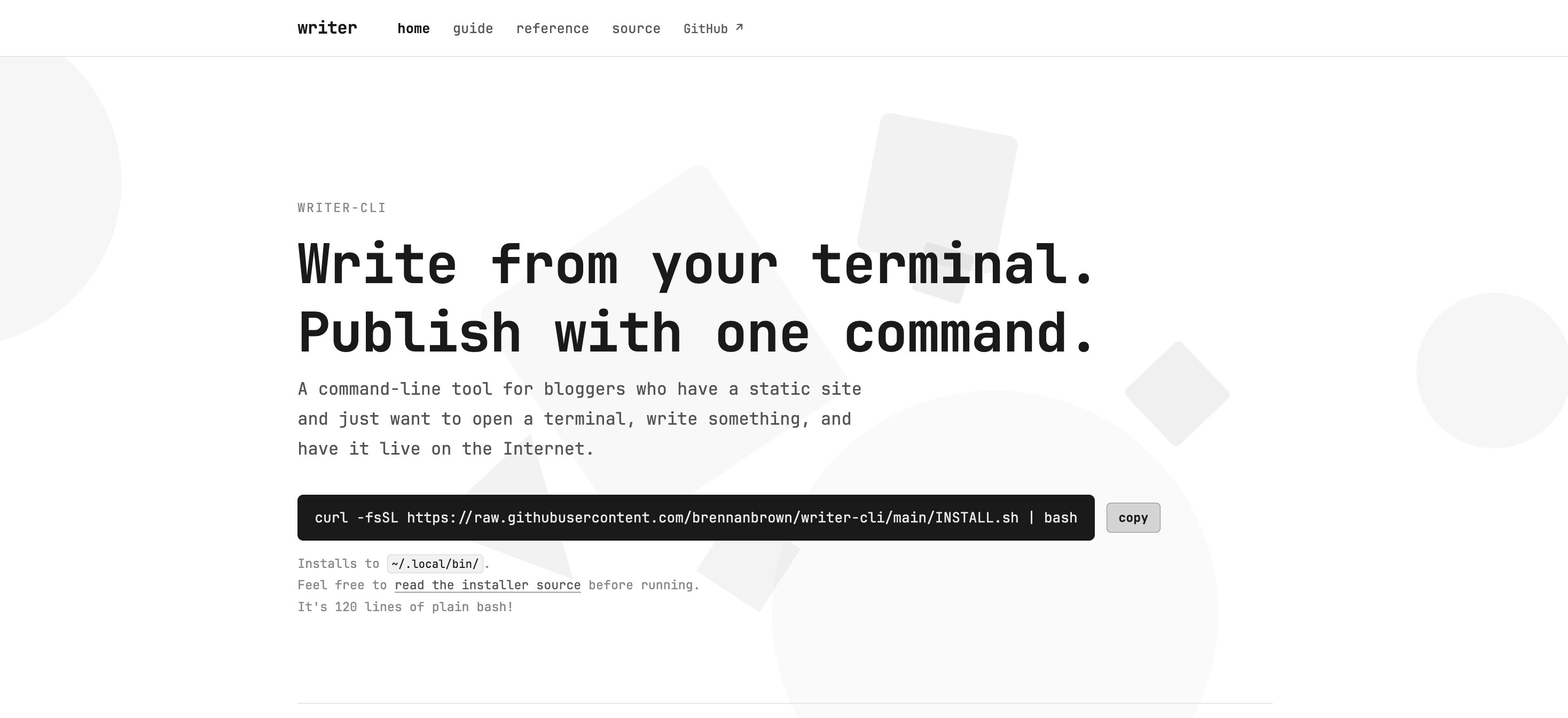
writer-cli
A bash command-line tool for bloggers with a static site who want to open a terminal, write something, and have it live on the Internet. Handles the full lifecycle of a blog post: creation, editing, building, and git push.
Live Demo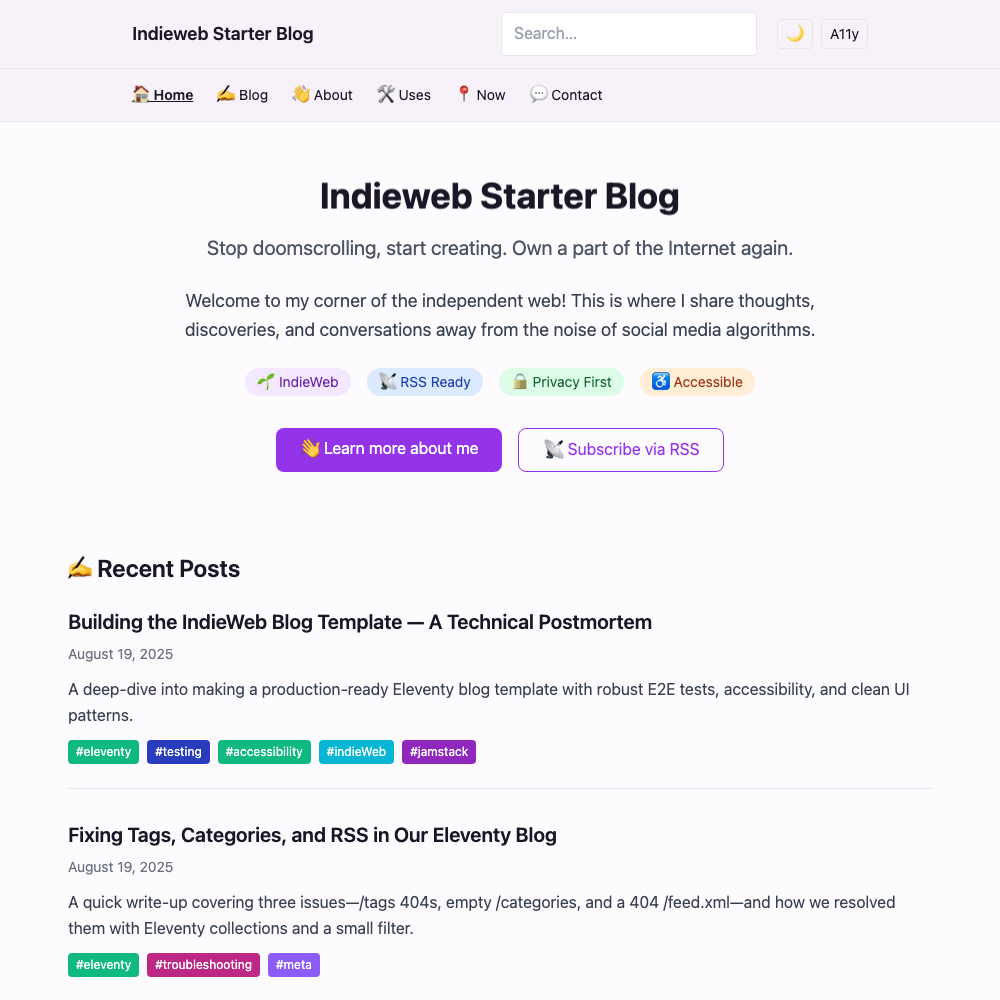
11ty IndieWeb Blog Starter
Modern blog template built with Eleventy and Tailwind CSS for writers who want to own their content. Features IndieAuth, Webmentions, and complete IndieWeb integration.
Live Demo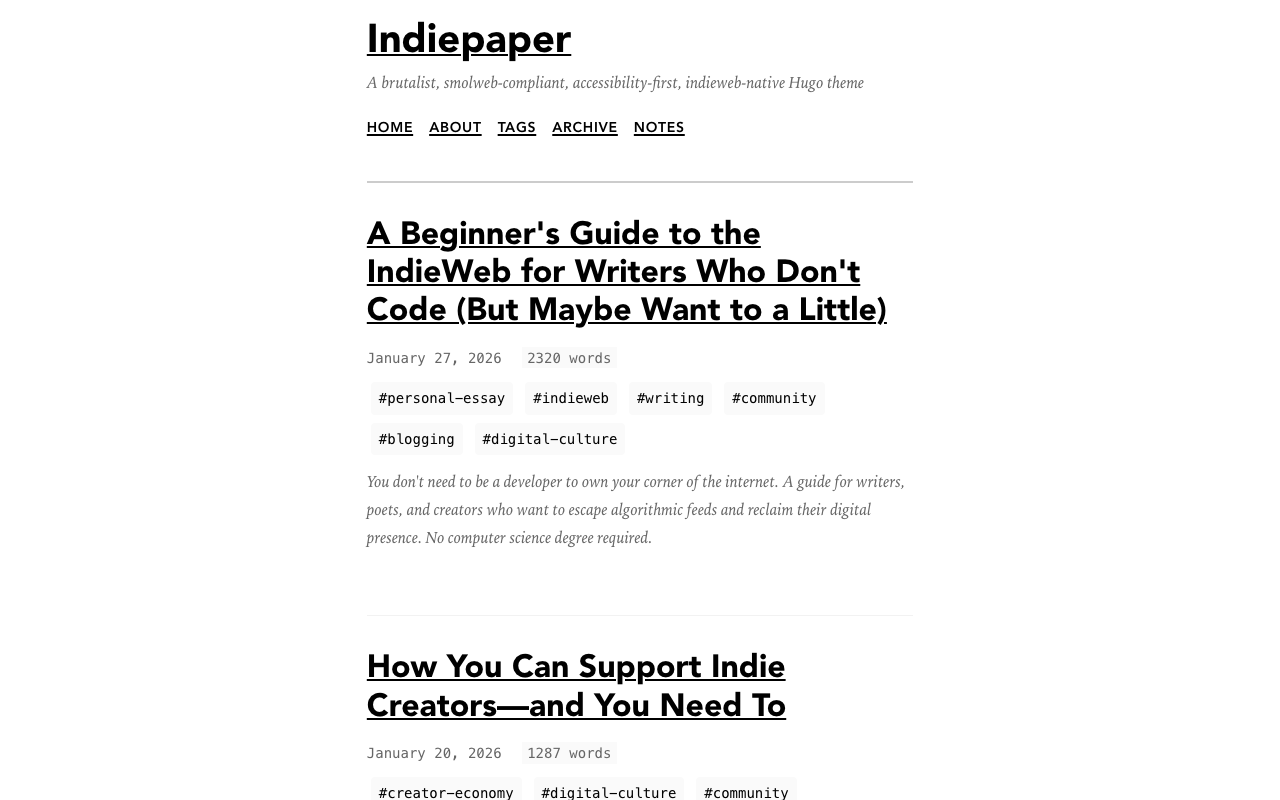
Indiepaper
A monochrome, brutalist Medium-inspired Hugo blog theme that prioritizes IndieWeb principles. Clean typography and minimal distractions.
Live Demo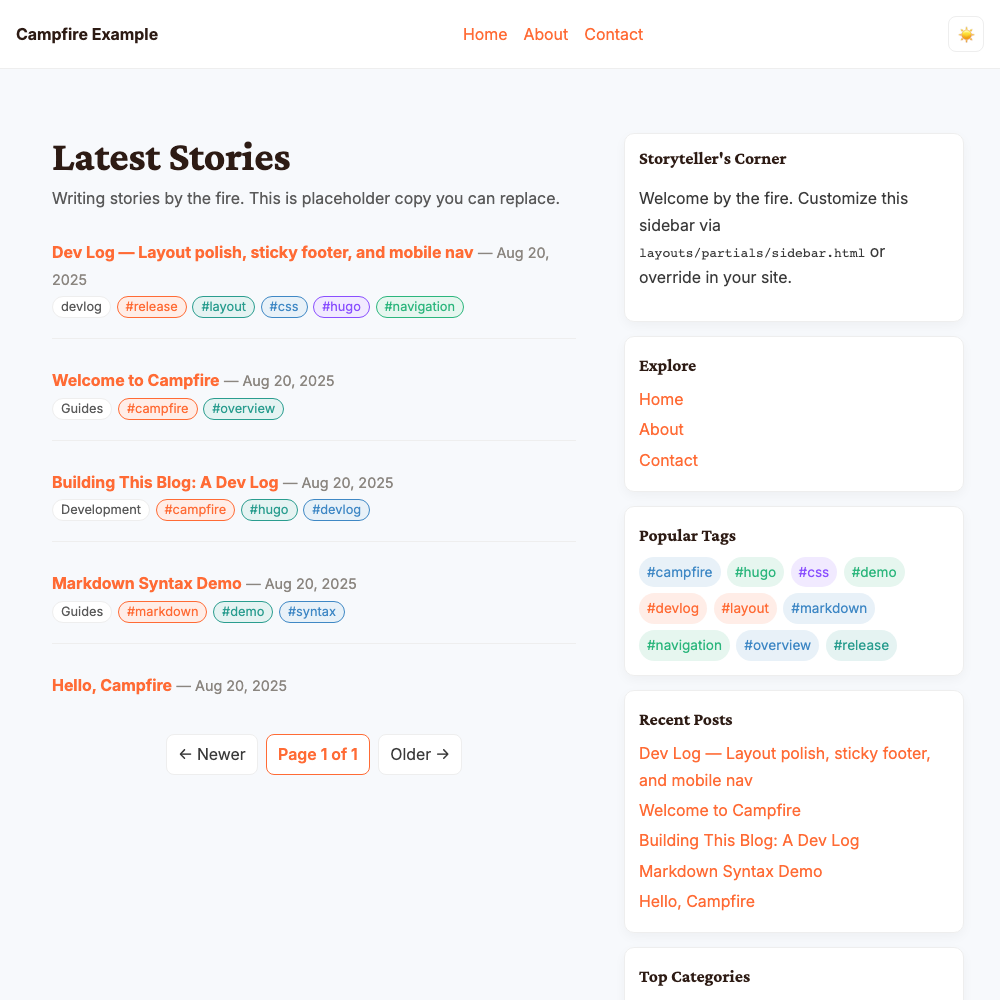
Campfire Hugo Theme
A warm, story-focused Hugo theme focusing on typography and opinionated design choices. Perfect for narrative-driven content.
Live Demo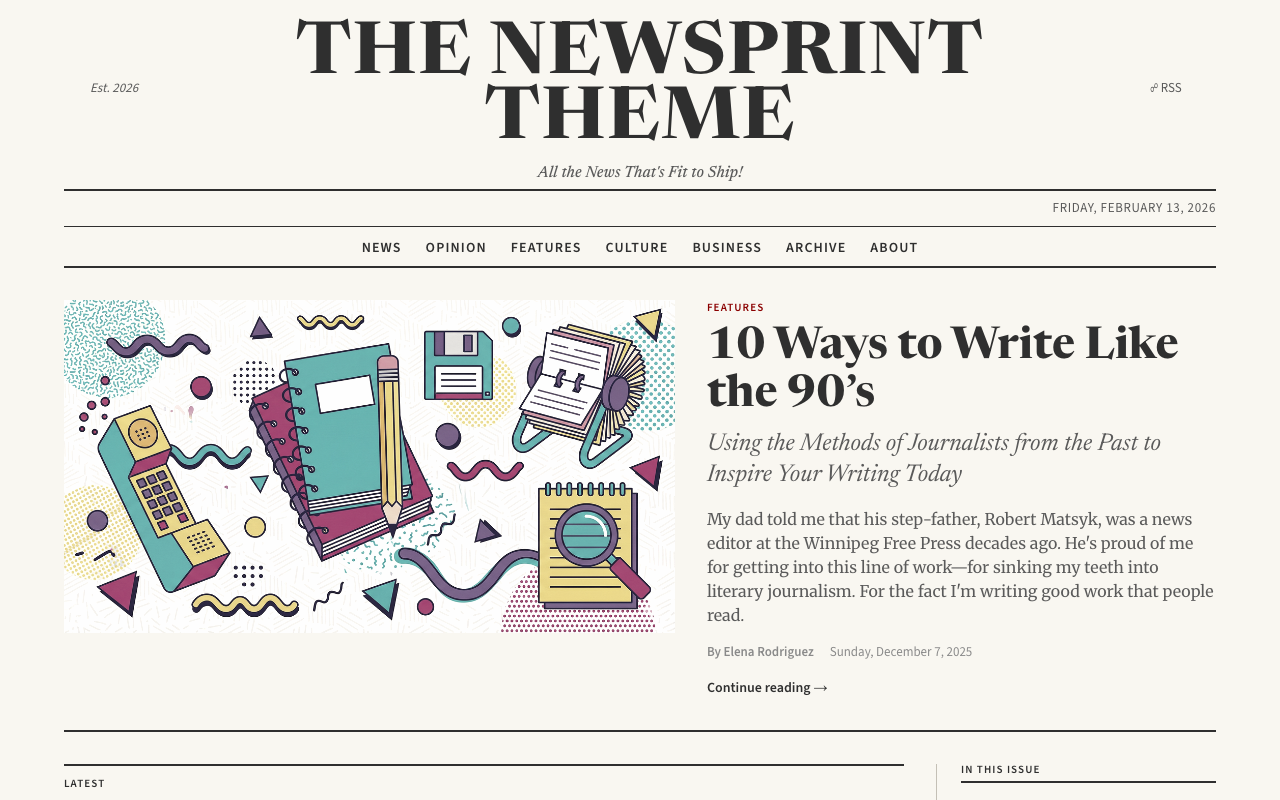
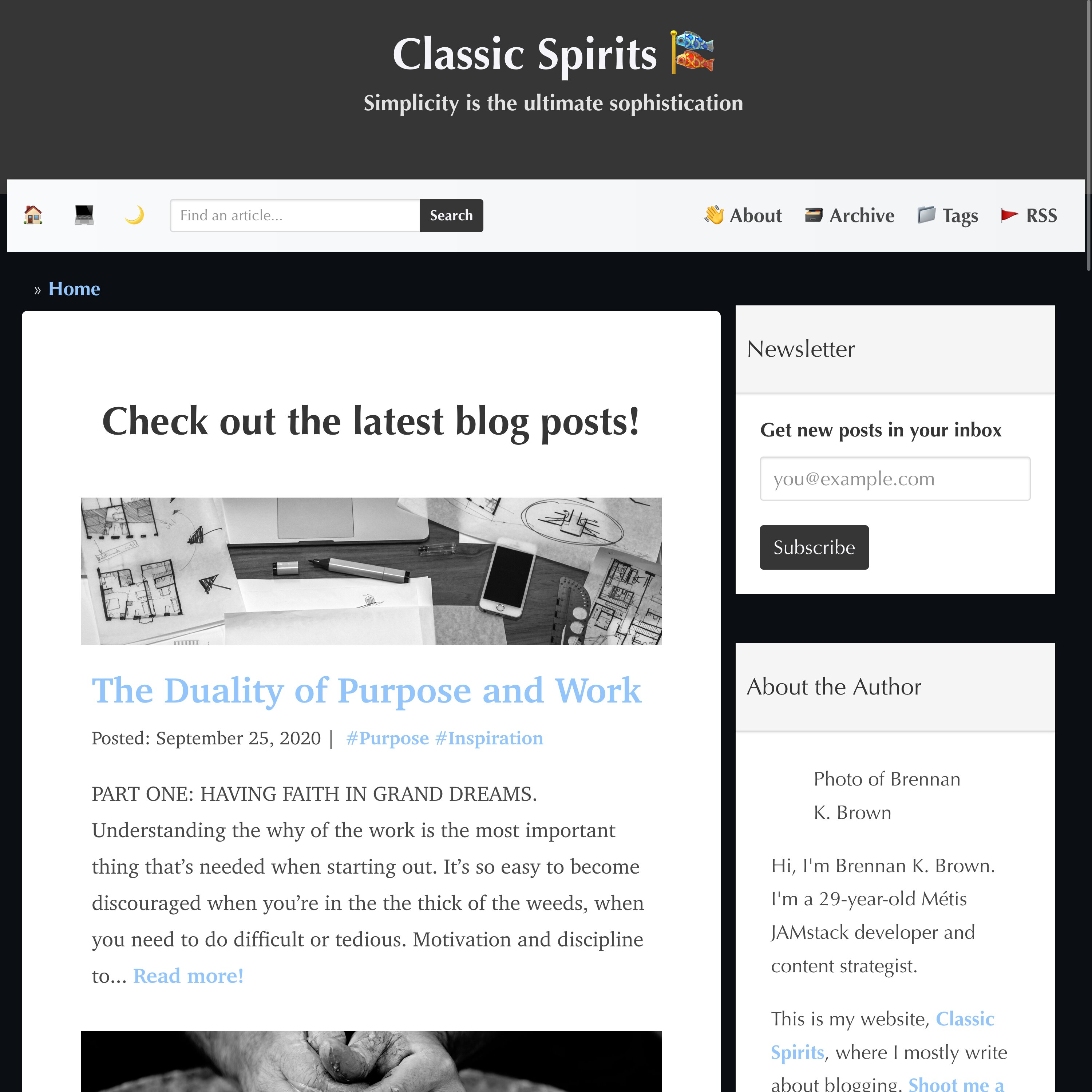
Classic Spirits
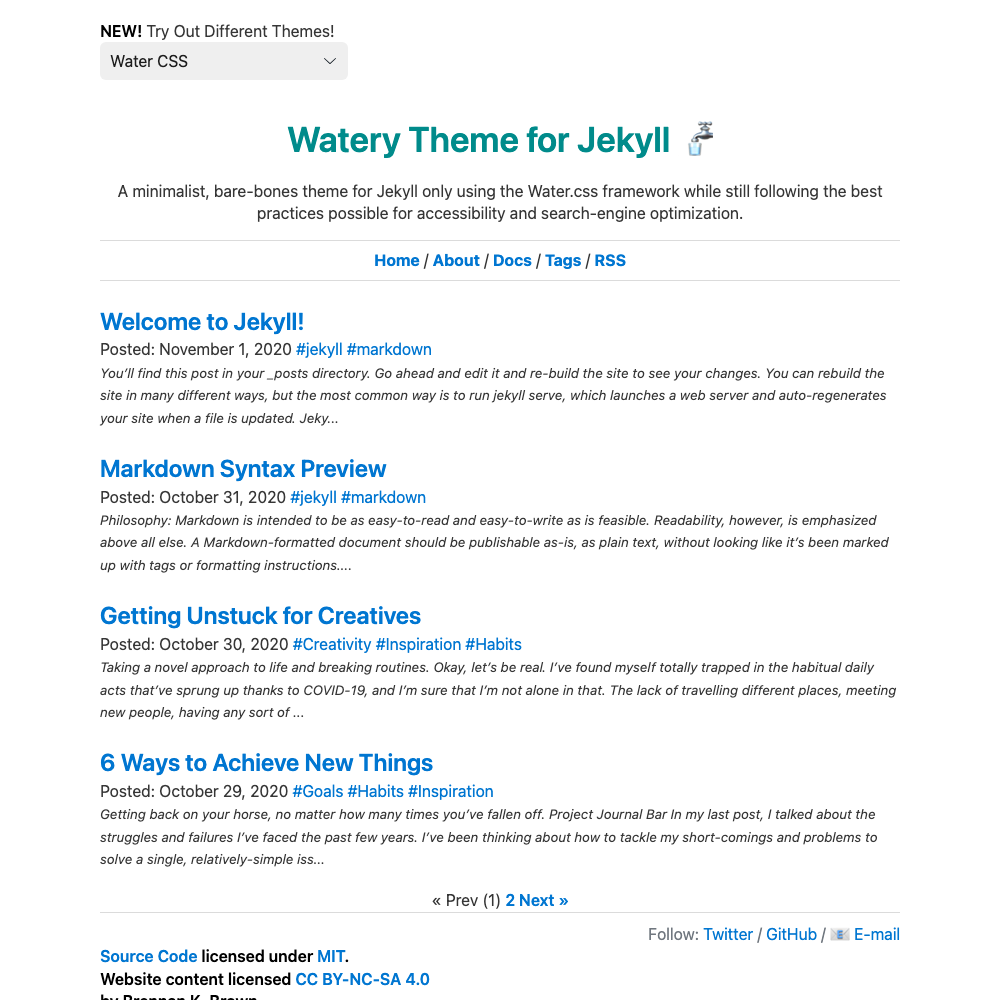
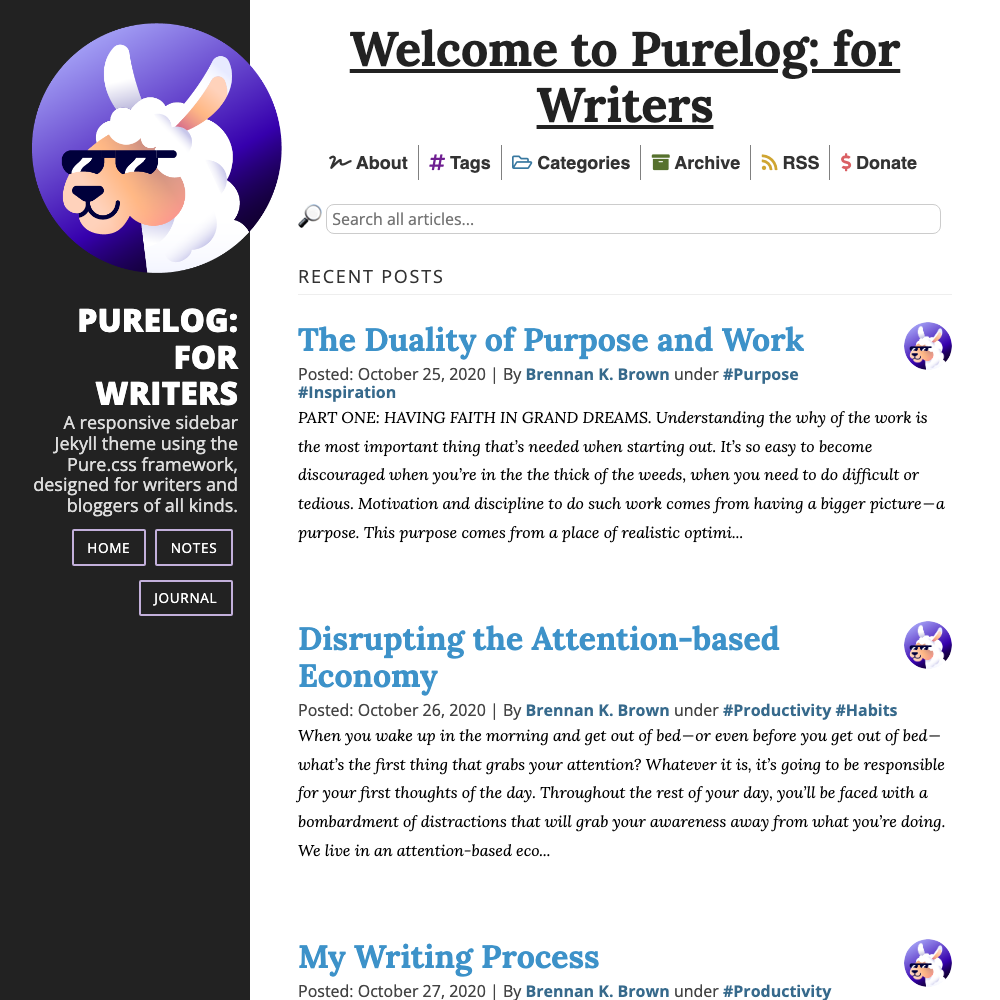
A classic sidebar Jekyll theme for old-school blogging, created with the Bulma framework. Simple and elegant.
Live Demo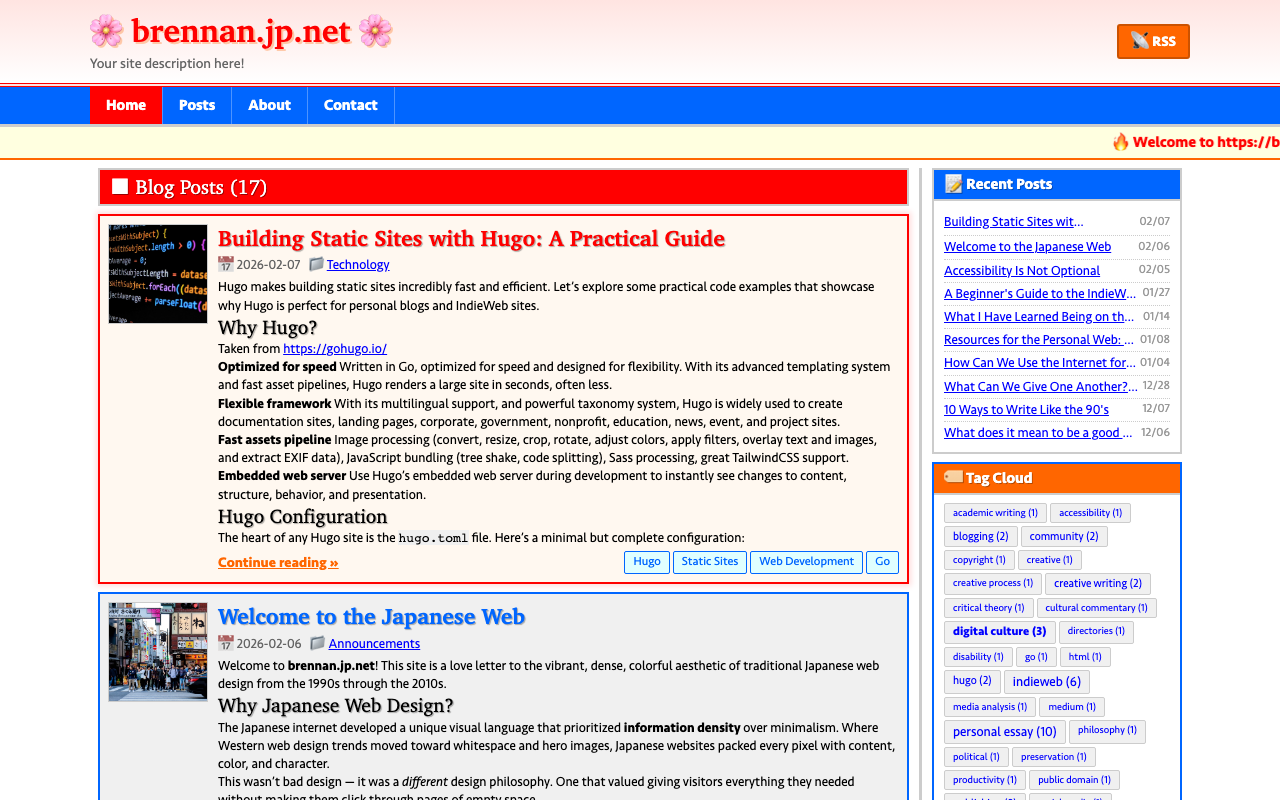
brennan.jp.net
A Hugo blog theme recreating the compact, text-heavy, colorful aesthetic of traditional Japanese web design.
Live Demo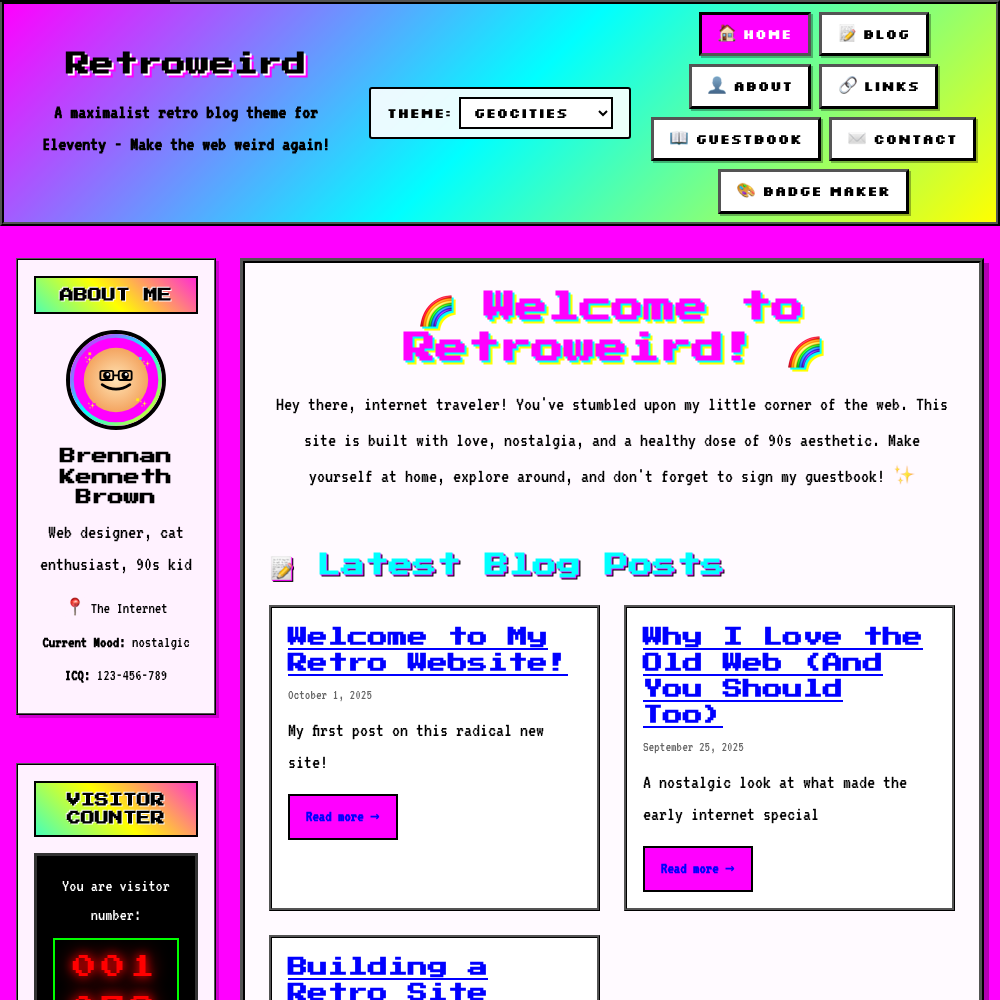
Retroweird
An 11ty blog theme inspired by Web 1.0 aesthetic of GeoCities, MySpace, and AngelFire. Maximum nostalgia.
Live Demo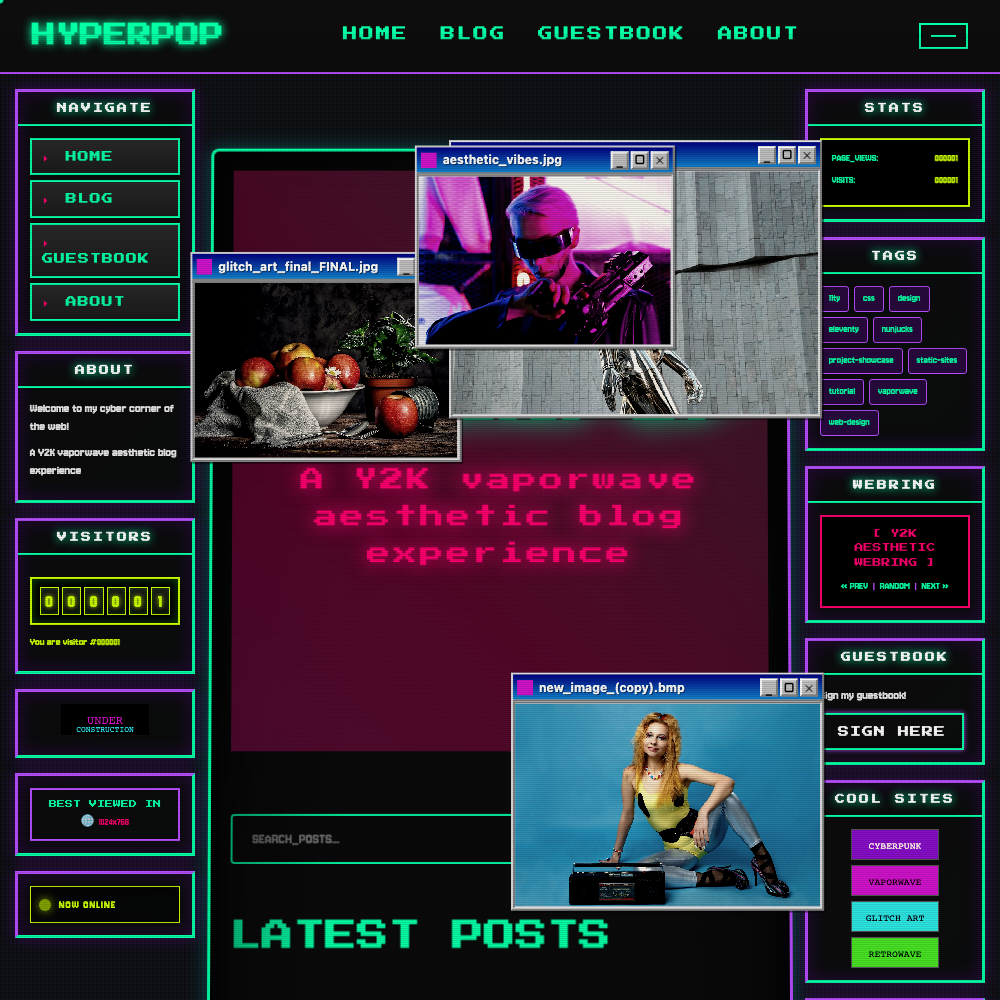
11ty Gamification
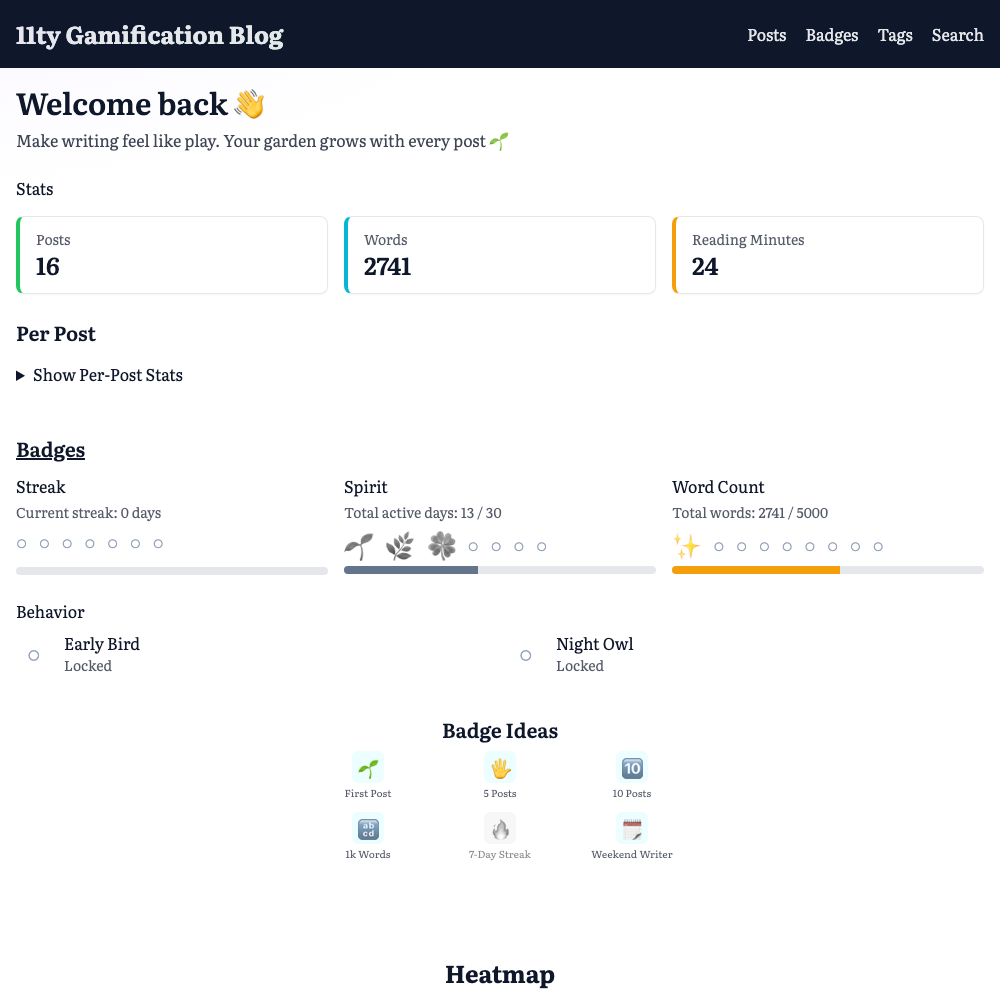
A blog theme that turns writing into a game. Earn badges for streaks and milestones, watch your activity on a heatmap.
Live Demo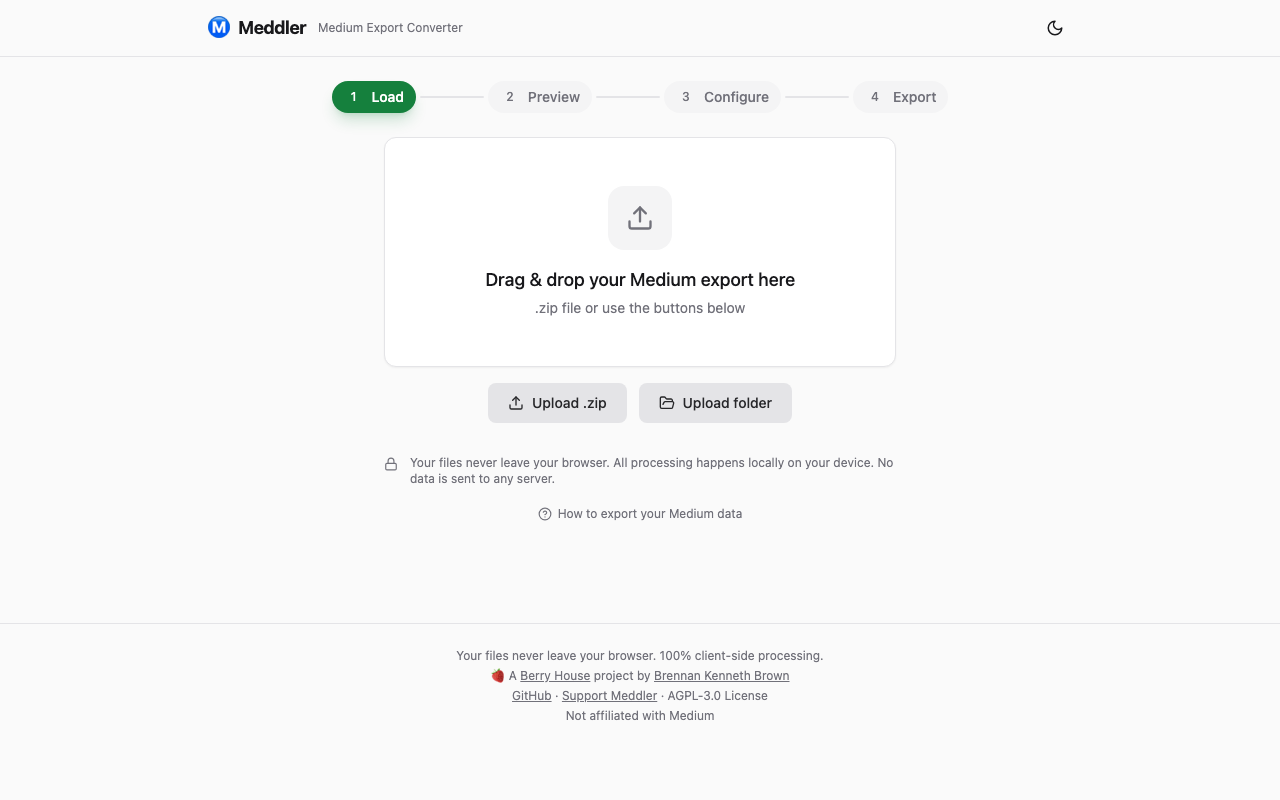
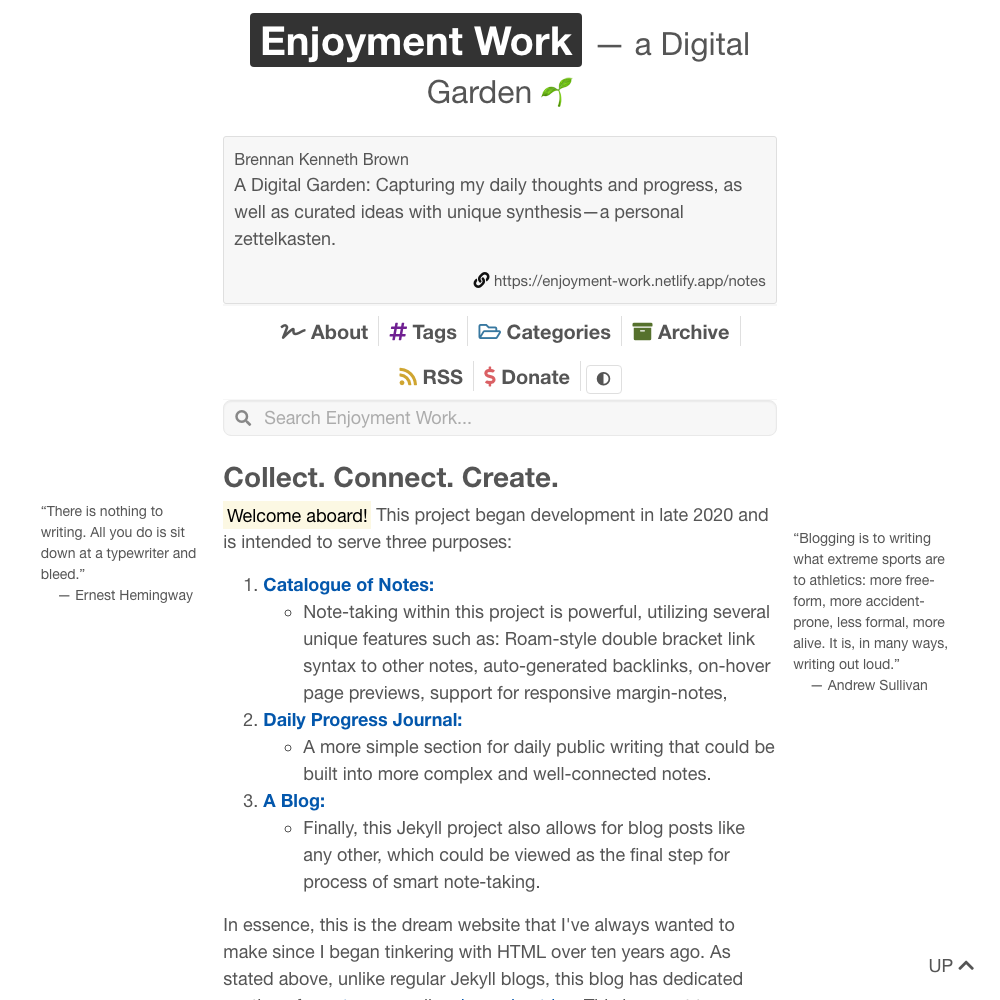
Enjoyment Work
Digital Garden: Capturing daily thoughts and progress with unique synthesis—a personal zettelkasten built with Jekyll.
Live Demo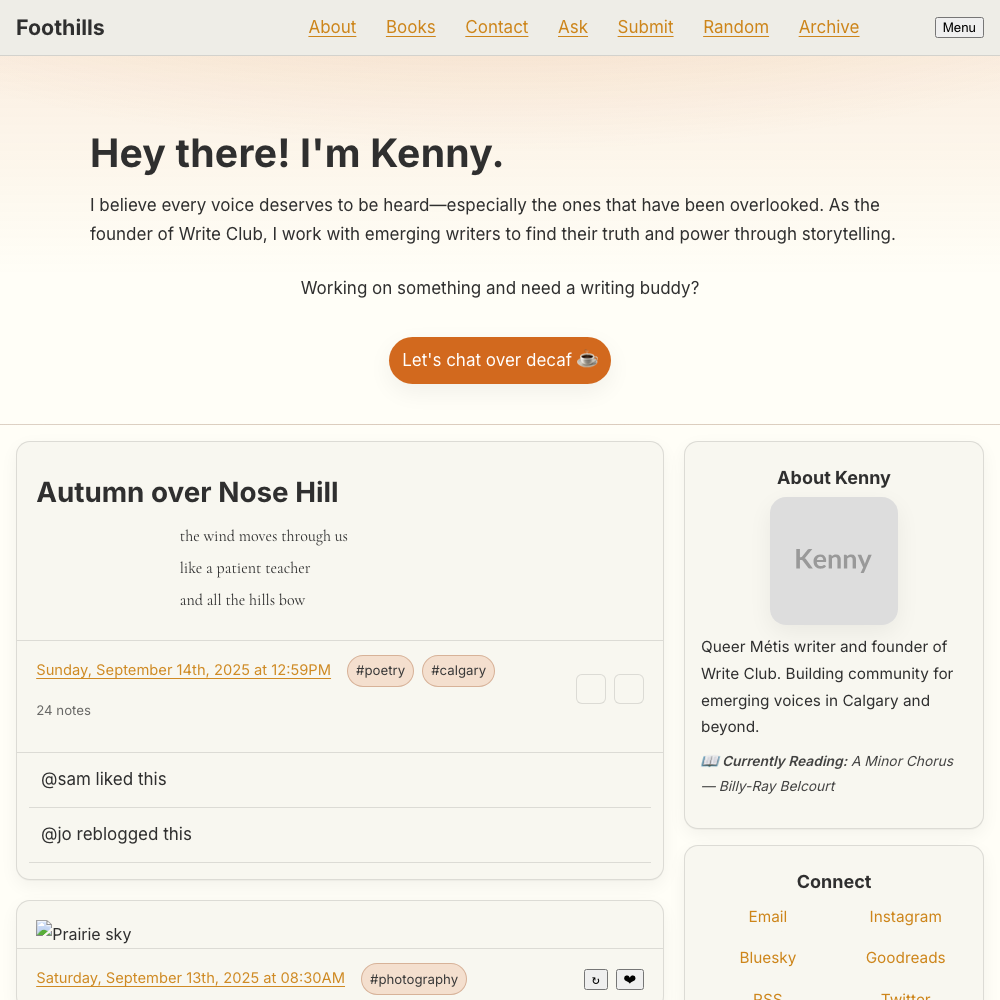
More Resources & Further Reading
Discovery & Community
Search Engines
- Kagi Small Web: Free search for independent sites
- Marginalia: Favors text-heavy websites
- Wiby: Search engine for the classic web
Directories
- Ye Olde Blogroll: Humanly curated list of personal blogs
- Ooh Directory: Handmade catalog of unique websites
- Personal Sites: Showcasing websites made by hand
- URL Town: omg.lol's member directory
Web 1.0 Culture
- 88x31 Badges: Small buttons linking to sites or showing interests
- Webrings: Circular collections of linked websites
- Slash Pages: Essential IndieWeb pages like /now, /uses, /about
- Hotline Webring: Active community webring
Philosophy & Principles
- IndieWeb Wiki: Comprehensive documentation
- IndieWeb Guide: How to join the movement
- Yesterweb Manifesto: Philosophy behind the independent web
- Internet is Fun: Collection of thinkpieces
Advanced Topics
IndieWeb Standards
- IndieAuth: Use your domain as your identity
- Webmentions: Cross-site conversations
- Micropub: API for posting to your site
- POSSE: Publish on your Own Site, Syndicate Elsewhere
Why This Matters
The independent web is already here, thriving while Big Tech collapses in real-time under its own extractive weight. Writers, artists, poets, and creators are building their own spaces, linking to each other, forming communities based on shared interests rather than algorithmic recommendations.
The technology serves the writing, not the other way around.
You don't need a perfect site. You don't need to understand every technical detail. You just need a place to post, and the willingness to share it.
I write what I want, when I want, how I want. That freedom is worth every hour spent learning HTML.
My Writing on the IndieWeb
I've written extensively about the IndieWeb, independent publishing, and building a better internet:
Starting Out
- What is the IndieWeb?: My definition and core principles
- IndieWeb for Writers: A beginner's guide for non-coders
- What I Have Learned Being on the IndieWeb for a Month: Small technical joys and community
- Resources for the Personal Web: A Follow-Up Guide: Tools and directories for joining the movement
- Softcore First, Hardcore Eventually: A Ladder for the IndieWeb: Why you should climb the rungs progressively instead of choosing between easy platforms and full technical independence on day one
- The 1% Rule: An Open Letter to Everyone Who Doesn't Post Anything Online: A call to action for the 99% of internet users who consume but never create
- You Don't Have to Blog: Your website can be shrines, art, or anything else. You don't need to write a single word to belong here
Community and Connection
- Won't You Be My Neighbour?: On mycorrhizal networks, Indra's Net, and the importance of building intentional connections between independent websites
- Yes, Buy Them a Coffee: Support and Mutual Aid on the IndieWeb: Asking for support isn't commodification, it is mutual aid
- The Internet Needs More Cross-Pollinators: We need people who move between different online subcultures to seed ideas and build bridges
- The IndieWeb is Wonderfully Dionysian: A plea to write your own comments, from the heart, instead of letting genAI do it for you
Building It Yourself
- Building an IndieAuth Comment System for Your Static Site: How to build a comment system for your static site using IndieAuth and Netlify Functions
- How Webmentions Work on brennan.day: A tutorial and walkthrough of implementing webmentions, from setup to display
- Why Make Your Website Accessible, Anyways?: Web accessibility isn't compliance theatre, it is about designing for everyone
- Phoneblogging: Why the IndieWeb must prioritize accessible, simple ways to blog from a phone
The Bigger Picture
- WEBMASTER@ a manifesto for everyone: Reclaiming the title of "webmaster" as the multidisciplinary creator who designs, develops, writes, and advocates for their own corner of the web. An act of digital repatriation and human agency against corporate platforms and AI orchestration
- Building the Good Web: What does it mean to build a better web, and what do we owe each other?
- Trust and Faith in Our Web: What is trust in an AI-saturated internet, and how do we make independent web spaces more accessible?
- Good, Standard Work: Creating the Commons: From Garrett Hardin's tragedy of the commons to Elinor Ostrom's refutation, the commons was never inevitable to fail. It was always a choice
- How Are We Preparing for the Long Web?: Digital preservation, link rot, and building for the Internet decades from now
- Free Speech and the IndieWeb: Not all harm is equal, and where we draw the lines in the sand for what is acceptable
Other Writing
- Digital Third Spaces: Can the Internet be a place we visit again?
- Move to a Better Internet: Why join Medium, Tumblr, and NeoCities
- Publishing My Eleventy Blog to the ATmosphere with Standard.site: Integrating AT Protocol for decentralized publishing
- Wonders of Webweaving Podcast Ep. #8: Brennan: Interview about writing routines and indie web community
Join Me
The only thing missing is you. Start small. Buy a domain. Write a post. Link to someone else's work. See how it feels to own your corner of the internet.
The tools are here. The community is welcoming. The independent web needs more people willing to do the work of building community outside of corporate spaces.
Contact: mail@brennanbrown.ca | Mastodon: @brennan@social.lol