Composite by the Author. Background: 'Raising the Flag on Iwo Jima' by Joe Rosenthal (February 23, 1945), U.S. National Archives, public domain. | Foreground: 'Internet Today and Tomorrow' poster, NIH Medical Arts and Photography Branch (1994), National Library of Medicine, public domain.
issue #162 of brennan.day
Memes, Metal Gear Solid, and You

brennan.day — issue #162
Publisher: Brennan Kenneth Brown
Place of publication: Calgary, Alberta, Canada
Available at: https://brennan.day
Contact: mail@brennanbrown.ca
"There are good memes, and there are bad memes
Why has God abandoned us?"—George Kusunoki Miller, "Meme Machine"
I. Advice Dog Knew Nothing
There are days where I want to be taken back to an Internet where a cutout of a dog's face is on a rainbow background with Impact font on the top and bottom giving me poor advice.
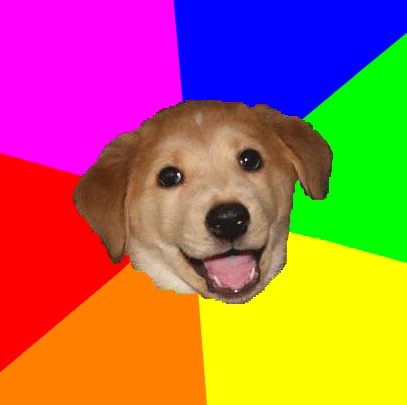
The colours were almost nauseatingly saturated—cyan and magenta and yellow like a test pattern for a television that had stopped broadcasting—and yet there was something earnest in the absurdity of it. Top text. Bottom text. Image macro. Repeat. Internet People by Channel Frederator is a wonderful time capsule of this bygone era of distinct Internet memes. The anonymous saints of early viral culture who stumbled into immortality without knowing so. There is definitely a recognition of this era, but also maybe a grief. The sensation of a door closing.
II. When We Say the Word
The word "meme" is used typically for "an image, video, piece of text, etc., typically humorous in nature, that is copied and spread rapidly by internet users, often with slight variations." Though, that definition has lost traction, hasn't it? Hollowed out, stretched thin. We've gone from explicit image macros and autotuned remixes of local news segments to any short-form video or shareable image being a meme. A meme has become ubiquitous as an artifact of the Internet you share with someone, a love language unto itself.
But before the Advice Dog, before the Doge, before distracted boyfriend and this is fine dog and whatever format has emerged and calcified and become ironic and become sincere again, there was a different meaning. A more difficult, more ambitious meaning.
III. From Darwin to Dawkins
In 1976, British evolutionary biologist (and transphobe) Richard Dawkins published The Selfish Gene. This was a book about genetics that, in its final chapter, accidentally launched an entirely different field of inquiry. Dawkins explained how natural selection operates not on bodies or species but on genes, the microscopic self-replicating units of biological information. And then parenthetically, almost as an aside, asked if culture worked the same way.
He called the unit of cultural transmission the meme—his neologism is drawn from the Greek mimeme, meaning "imitated", shortened to rhyme with gene. As Dawkins put it in his own words, he wanted something that sounded like a monosyllable related both to memory and to the French même. His examples were broad and domestic. Melodies, catchphrases, fashion, the technology of building arches. The idea was elegant in its simplicity, for memes propagate themselves in the meme pool by leaping from brain to brain via imitation the same way genes propagate themselves in the gene pool by leaping from body to body via reproduction.
What Dawkins was describing was the mechanism by which ideas become culture. Top 40 pop songs become an earworm in your head. You hum one to your friend. She hums it to her brother. The melody doesn't care whether it serves human flourishing; it replicates because it is sticky, fitting the shape of a human brain. Religion, Dawkins would later and more controversially argue, is a memeplex—a cluster of co-adapted memes that replicate together. Nationalism is as well. Any ideology, really, dense enough to survive transmission across generations.
The academic reception was complicated. A field called memetics emerged in the '90s in an attempt to take this seriously, dismissed by sociologists, anthropologists, and cognitive scientists for oversimplifying cultural transmission through an overly biological metaphor. Dawkins himself was ambivalent, welcoming certain extensions of the idea and cautioned against others. He witnessed his neologism getting kidnapped by the Internet. The image macro, the static joke, the very discrete and human-authored artifact that his theory had not really predicted. Dawkinsian memes, after all, were supposed to be selfish replicators operating without our conscious consent. Internet memes are deliberately crafted.
IV. Ideas Worth Spreading (Some Assembly Required)
In that expanded sense—meme as any transmissible unit of culture, any idea that can be compressed and handed off—you start to see memetics everywhere. TED was literally founded on the premise of curating the most important memes alive. Ideas worth spreading. Chris Anderson's famous formulation describes an organization whose explicit purpose is identifying which concepts are sticky enough to survive compression into an 18-minute talk and carry the payload across an auditorium into the minds of thousands of strangers.
There are countless memes that TED has put into general circulation: the 10,000-hour rule (Gladwell, borrowed from Ericsson, mutated across a hundred dinner tables). The growth mindset (Dweck). The power pose (Cuddy—and then the slow, public unravelling of that meme when the underlying research failed to replicate, the same as many others). Each of these ideas is a unit of culture in the Dawkinsian sense: discrete, transmissible, sticky, capable of replication and mutation. You can summarize them in a sentence and the compression is survived.
Propaganda is memes. Thesis statements are memes. Slogans, brand identities, theological doctrines, political platforms—all of these are memetic architecture. The phrase all men are created equal is a meme. So is from each according to his ability, to each according to his needs. So is love thy neighbour. History is the competitive ecology of ideas. The memes that have replicated, or mutated into the unrecognizable, or died from a lack of hosts.
V. The Academy Arrives Late, as Usual
Memes—Internet memes, Dawkinsian memes, the whole cascading ecosystem of cultural transmission—have been the dominant force shaping human communication for at least twenty years. The institution of literature has been, as usual, laggard in taking this seriously.
Limor Shifman published Memes in Digital Culture through MIT Press in 2014 and it was received as a novelty, a curiosity. Even then, Shifman herself had to argue, in the book's introduction, that internet users were on to something, and researchers should follow—framing it as a gap, a chasm between the Ivory Tower and the texture of our actual digital life. That book is twelve years old and even still, the gap has not closed. The Meme Studies Research Network, a collaborative academic project that collects and presents scholarly literature on internet memes, spent years having to justify its own existence.
Meanwhile, creative writing MFAs are still teaching the personal essay as though email listservs are the primary vector of cultural transmission. Literature departments are still organizing themselves around the novel as the prestige form, the lyric poem as the second-prestige form, and treating everything that happens on the open web as either journalism (if it's serious) or noise (if it isn't).
Digital humanities as a field has made some strides—computational text analysis, network mapping of literary influence, archive digitization—but it has mostly avoided the harder question of what it means that the dominant form of human meaning-making in the 21st century is the meme. What does literature have to say about that and learn from it? The answer, mostly, has been: nothing yet. Wait for us. We're still, embarrassingly, peer-reviewing the 18th century.
VI. The Death of the Shared Feed
The Internet of the viral video and the image macro was the Internet of a single experience. If you were online in 2005, you had roughly the same Internet as everyone else who was online in 2005. You might have had different forums, different fandoms, different corners—but there was a common substrate. Things could go viral in the old sense of the word, which meant they crossed every boundary, landed in every inbox, became legible to people who had nothing in common except an Ethernet cable. All Your Base Are Belong to Us. Chocolate Rain. Charlie Bit My Finger. Universal reference points making friends out of strangers in a classroom, workplace, or at a party.
That is gone. The Internet killed mainstream monoculture. We now have hundreds of culturally distinct internets, running in parallel, largely invisible to each other. Hundreds of subcultures with distinct norms, language, and values, each with their own vocabulary, in-group signals, and memes. The memes of a Queer BookTok community and the memes of a men's rights subreddit and the memes of a crypto Discord and the memes of a K-pop fan account are all recognizably memes, sharing almost nothing.
Content from three years ago feels like a different era. A twenty-two-year-old and a twenty-eight-year-old have completely non-overlapping Internet experiences despite an objectively small age difference. This matters for memetics because memes derive their power from shared context. An in-joke only works if you're in. The compression that makes a meme efficient—the way it can carry enormous cargo in a tiny container—depends on the recipient already having the container's key. When there is no shared Internet, there is no shared key. The meme becomes noise, or it becomes the exclusive property of a tribe. That's not open culture.
This isn't just the Internet. There is no longer a single cultural zeitgeist. There is no water-cooler show, no universal top forty, no book that everyone is reading. Awards shows—the Oscars, the Emmys, the Grammys—are the lowest in years. People still care about culture, but people's culture is no longer the same culture. We are each the protagonist of our own algorithmic feed.
I think of how this bleeds into my own writing. When the audience is not a coherent public but a constellation of micro-publics, the memetics of writing changes entirely. Who is supposed to receive this meme? Who has the key?
VII. Memes: the DNA of the Soul
In the video game Metal Gear Rising: Revengeance, developed by PlatinumGames and published by Konami in 2013, there is a boss character named Monsoon.
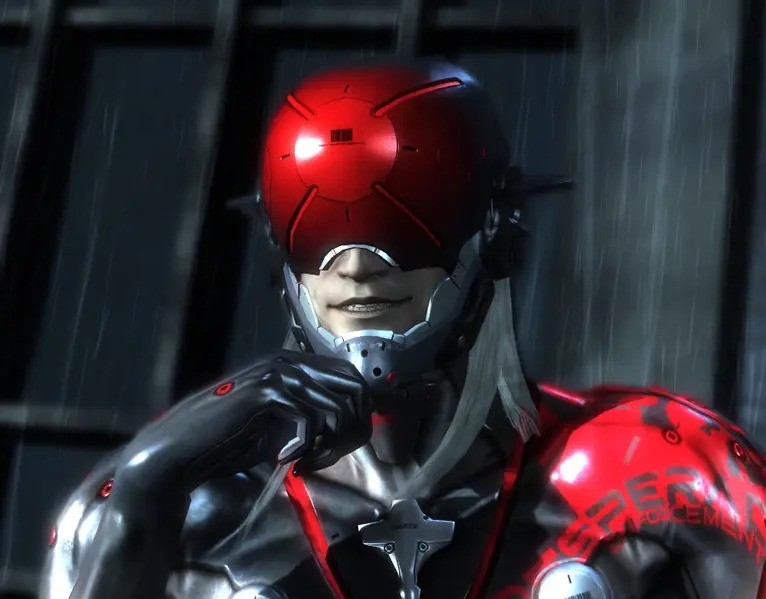
He is one of the Winds of Destruction—a unit of four elite cyborg soldiers serving the mercenary company Desperado Enforcement LLC. He is named, like his colleagues, after a type of wind. The seasonal, sweeping, unstoppable system that drenches Southeast Asia. The name is biographical—Monsoon was born in Phnom Penh in the early 1970s and raised as a child soldier during the Khmer Rouge's reign of terror and the Killing Fields. He survived only to be shot in a gang shootout, rebuilt as a cyborg whose body that can magnetically separate into pieces and reassemble. A man who had literally fallen apart and held himself together by force of will, rendered as hardware.
Before Monsoon fights the game's protagonist Raiden—himself a former child soldier, himself a mirror—he delivers a monologue that, on its face, is a B-movie villain grandstanding.
"War is a cruel parent, but an effective teacher. Its final lesson is carved deep in my psyche: That this world and all its people are diseased. Free will is a myth. Religion is a joke. We are all pawns, controlled by something greater: Memes. The DNA of the soul. They shape our will. They are the culture—they are everything we pass on. Expose someone to anger long enough, they will learn to hate. They become a carrier. Envy, greed, despair… All memes. All passed along."
The lines border on bathos—flirting with self-parody, overwrought with the cadence of someone who has read LessWrong recreationally. But underneath the melodrama, Monsoon is describing a mechanism. He is describing what happened to him. Exposed to enough violence, he became a carrier of violence.
He is describing what is happening to us: exposed to enough outrage, we become carriers of outrage. The memes we ingest shape what we can feel. The memes we share are the impressions our soul leaves in the world.
I would go as far as to say that memes are responsible for our current cultural and political climate. A convenient heuristic shorthand—a way to compress complicated concepts into something palatable and digestible. Accommodating and accessible. A meme carries a political position across a hostile border, bypassing the defences because it doesn't announce itself as an argument. It slips in as humour, as recognition, as shared grievance. By the time you share, you've already agreed.
In that sense, memetics are antithetical to the ivory tower elitism of knowledge guarded by self-appointed gatekeepers. The reel, or the image macro, are democratized epistemology. Anyone can make one. Anyone can deploy one. The meme represents something aligned with free culture, the public commons, the open web at its most utopian. The meme also means context is optional. Nuance is a steep tax. The faster the share, the better.
VIII. What a Good Blog Post Actually Is
I don't think I write good blog posts. Because best blog posts are memes, in the Dawkinsian sense. Discrete, transmissible units of culture. They argue persuasively for one idea in a form that makes that idea easy to pass along, becoming a shorthand. They give you something you can point to when you're trying to explain something to someone else.
Kevin Kelly's 1,000 True Fans is a fantastic meme. One idea—you don't need mass popularity, you need deep loyalty from a small number of people—compressed into a number and a phrase that has survived fifteen years of citation. You don't even need to have read it; the summary is the meme. Paul Graham's essay archive is basically a meme factory: Do Things That Don't Scale, Maker's Schedule Manager's Schedule, Beating the Averages—each one a sticky, transmissible idea with a title that doubles as a slogan. Clay Shirky's A Group Is Its Own Worst Enemy introduced vocabulary for understanding online community dynamics technologists are still using twenty years later.
These are all pieces of intellectual infrastructure that other people have plugged into, built on top of, cited as shorthand in arguments they would otherwise have had to reconstruct from scratch.
That is the memetic function of nonfiction. The book does the same thing at greater length. The Selfish Gene is itself a meme about memes. The Shock Doctrine gives you a vocabulary for disaster capitalism that activists have been deploying for two decades. The New Jim Crow re-framed a policy conversation by introducing a single, clarifying lens. Each of these books is, at bottom, one transmissible idea—novel, sticky, built for replication. The hundreds of pages are in service of making the one idea impossible to dismiss.
IX. The Lyric Essay
Fiction, obviously, can contain memes. 1984 gives us Big Brother, Room 101, doublethink—a vocabulary for describing totalitarianism. The Handmaid's Tale gives us a template for writing about theocratic patriarchy that has migrated to protest signs and tacky Halloween costumes. Is the meme the point, though? Orwell was building a world with its own internal logic and specific textures—the smell of Victory Cigarettes, the grey light through Winston's window, the way his diary's physical resistance against him felt like the last real thing. You can extract a meme from 1984, but in the extracting you lose something.
Nonfiction—the essay, the blog post, the polemic, the manifesto—typically dedicates itself to one particular, novel meme. This is its purpose and its honour. To compress and argue and in doing so, the idea transmissible. A nonfiction book that doesn't is a nonfiction book nobody can summarize at a dinner party, and those books tend to disappear. The form demands memetic success.
Fiction has room for ambiguity and pure aesthetic appreciation. It can be about something without that something being extractable. You come away from The Brothers Karamazov having had an experience that is not merely reducible to a take.
The lyric essay uses the mechanics of fiction—the sensory, the elliptical, the associative, the willingness to hold contradiction without resolving—to write real life. I try to use braided structure and imagery and the body as locus and deep time and grief and winter's afternoon light on the river. I do not try to hand you a take, I'm not thinking about the shorthand for a position you can text to your friends. I am not trying to create infrastructure.
This means that what I write is, in the Dawkinsian sense, anti-memetic. Not unmemeable—anything can be turned into a meme if you try hard enough, but the work as a work resists the compression that memetics requires. You cannot summarize a lyric essay into a tweet without destroying the lyric essay. The density is the point.
This is neither a complaint nor a boast, just a statement of genre. When I write creative nonfiction—when I sit down with what I know and let it find its own structure through imagery and association and the pull of the sentence—I am borrowing from fiction's toolkit to write work that is true but not memetic. Non-fiction (in the literal sense: not fiction) without the memetic function that nonfiction (in the genre sense) typically performs.
X. What to Do With Any of This
What do you do with the fact that you are, every day, ingesting and excreting memes with almost no conscious awareness of the process?
First, there is the question of what memes you are hosting. Because Monsoon is not wrong. Expose someone to enough scarcity thinking and they will begin to experience the world as scarce. Expose someone to enough contempt for a particular group and they will begin to feel contempt. The memes we absorb through repetition become our reality. Inventory yourself. What are the dominant frames you encounter daily? What do they make feel natural? What do they make feel invisible?
Second, if you are a writer, there is a craft question here: what kind of meme is this piece, and is that the relationship you want with your reader?
If you're writing a blog post, a column, an essay—ask yourself what the unit of transmission is. What is the one idea, the sticky core, the thing that survives compression? If you can't identify it, you may have written something beautiful that will nevertheless struggle to find its audience, as readers will not know what to extract. That's not a failure; it might be a deliberate choice.
If you're writing literary nonfiction—the braided structure, the piece of images rather than argument—then learn to resist the pressure to make your work memetic. Social media and editors and the world will try to compress your work into shareable content.
The fiction writer has a parallel consideration, think of the memes embedded in your world-building, your character psychology, the structures of desire and consequence that organize your plot. Every story is proposing a model of how the world works. That model is a meme, whether you mean it to be or not. Have you chosen it consciously?
The memes you ingest shape what you can imagine. The memes you share shape what others can imagine. Dawkins observed from the outside—the gene's-eye view of culture, information replicating through hosts without caring about the hosts. We are the carrier. We check our phones and something passes through us and we send it somewhere else and it arrives in someone else's brain opening a door we never saw.


Comments
To comment, please sign in with your website:
How it works: Enter your website URL. IndieLogin signs you in through your site's IndieAuth server if it has one (e.g. indieauth.com), or checks your rel="me" links on GitHub, GitLab, Codeberg, and email. Setup instructions.
Signed in as:
No comments yet. Be the first to share your thoughts!