All Collections

Community

On belonging, connection, and the power of people coming together, both online and off.

14 posts
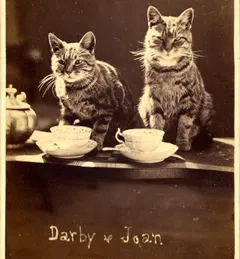
A vintage sepia photograph, likely late 19th century, showing two striped tabby cats posed on a wooden table as if sitting down to tea. In front of them are two porcelain teacups on saucers and what appears to be a teapot to the left. Both cats face the camera directly. The left cat leans slightly forward with one paw near a cup; the right sits upright with a composed, slightly imperious expression. The image has the soft grain and tonal warmth of albumen, silver print photography. Cursive handwriting at the bottom identifies them as 'Darby & Joan,' a traditional English idiom for a devoted older couple, suggesting these were beloved companion animals photographed as a pair.

Yes, Buy Them a Coffee: Support and Mutual Aid on the IndieWeb

Responding to criticism of 'buy me a coffee' links on blogs, I argue that asking for support isn't commodification—it's mutual aid! Exploring the economic pressures on creators, the history of mutual aid, and why the IndieWeb needs community support mechanisms to sustain independent art.
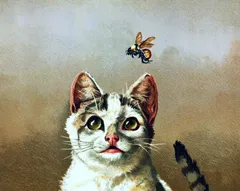
A vintage chromolithograph illustration of a tabby kitten with wide, yellow-green eyes staring upward at a large bumblebee hovering just above its head. The kitten has white and grey-brown markings, a pink nose, prominent whiskers, and an alert, curious expression. Its striped tail is visible curling up in the lower right corner. The background is a warm, muted grey-brown gradient typical of 19th-century print illustration.

The Internet Needs More Cross-Pollinators

So, my silly little fanfic project blew up like crazy and received some really negative feedback. And I think I understand why. Exploring the concept of boundary spanning and cross-pollination in online communities. Drawing on organizational theory and the work of Michael Tushman. We need people who move between different online subcultures to seed ideas and build bridges.
Screenshot of a meme styled as an MSN Messenger chat window. The conversation is addressed to bkennethbrown@live.com. The webcam panel shows a childhood photo of a young boy with dark hair, wearing a black shirt with flame graphics, standing in front of a white crib in a blue-painted bedroom. Overlaid on the photo is an MSN Messenger tooltip that reads 'Last Appearing Online: 620 Weeks Ago.' The messenger interface includes the standard toolbar with Invite, Send Files, Voice, Activities, and Games buttons, a text input area with Send and Search buttons, and a display picture of the classic MSN Messenger butterfly logo. At the bottom, a status bar reads 'AIM is now open and ICQ access is only $2!' The Windows XP-era green hills desktop is visible behind the window.

Last Online 620 Weeks Ago: Why I'm Loyal to the IndieWeb

You visit your parent's house and find your white Xbox 360 in your childhood bedroom. A friends list full of gamertags that haven't booted up their own console in hundreds of weeks. On the heartbreak of digital disappearance, and why I'm committed to staying findable.
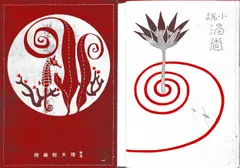
Scan of an open Japanese book showing two pages. The left page is a deep red cover featuring a white circle containing stylized red seaweed fronds with curling spiral tops and a red seahorse; small red leaf motifs and dark coral branches appear at the bottom. Text at the bottom reads '東京 隆文館藏版'' (Tokyo Ryūbunkan zōhan — a Tokyo publisher). The right page is white and shows a single stylized flower or plant — resembling a bird-of-paradise bloom on a slender stem — rising from a flat red concentric spiral that suggests ripples on water. Japanese characters in the upper right read '小説 渦巻' (Shōsetsu Uzumakim, meaning 'Novel: Spiral' or 'Whirlpool').

Dreamwidth and Yearning for Humanity on the Web

The sonder and vertigo I feel about people's interior lives. Corporate social media fails to offer genuine witnessing. So, I look to Dreamwidth, a fork of LiveJournal, and fifteen years of unbroken communities. On digital gentrification and the difference between syndication and participation.
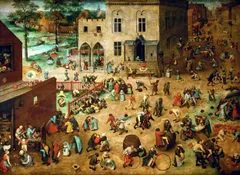
A densely populated Flemish town square overflows with more than two hundred figures—mostly children, some adults—engaged in over eighty distinct games and pastimes. The scene is painted from a high, tilted perspective that flattens the space and allows the eye to travel across clusters of activity: children spinning tops, rolling hoops, playing leapfrog, wrestling, walking on stilts, riding piggyback, blowing up bladders, and marching in procession. In the left foreground, small groups sit at a table and on the ground. A red wooden fence bisects the mid-ground. At centre-left, a large stone building with Gothic arched doorways anchors the composition. The background opens onto a river, green fields, and a receding street. No single focal point—every corner holds another small drama of play.

Good, Standard Work: Creating the Commons

A defence of digital stewardship, IndieWeb principles, Blackfoot models of collective flourishing, and what it means to plant seeds in a garden you'll never see. From Garrett Hardin's infamous 1968 essay to Elinor Ostrom's Nobel Prize-winning refutation, the tragedy of the commons was never inevitable. It was always a choice.
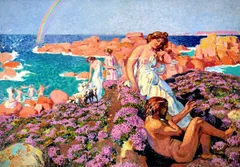
Painting depicting a sun-drenched coastal scene in a classical mythological style. In the foreground, purple wildflowers carpet rocky terrain where a reclining nude male figure reclines while a draped woman in white and blue leans toward him. Behind them, two robed women tend to goats near the water's edge. In the background, several nude figures wade and play among pink-orange boulders along a vivid turquoise sea. A rainbow arcs across a pale blue sky in the upper left. The palette is warm and saturated. Coral rock, lavender bloom, aqua water.

Building the Good Web

What does it actually mean to build a better web, and what do we owe each other in doing so? A response to the 32-bit Café thread about trust, onboarding, and the distance between knowing something is wrong and doing something about it.
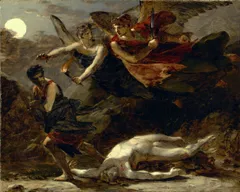
A dark Romantic-era oil painting depicting an allegorical scene of divine retribution. Two winged figures descend dramatically from a moonlit, storm-clouded sky — one holds a torch, the other brandishes a dagger and wears flowing red drapery. Below them, a dark-clad figure flees to the left, glancing back in terror, also carrying a torch. In the foreground, a pale, nearly nude human body lies prostrate on the ground, face-down, with a small wound visible on the torso. The palette is dominated by deep browns, greys, and blacks, with the pale body and the full moon providing stark contrast. The composition conveys swift, inevitable pursuit.

How Do We Account for Evil?

Drawing on Susan Neiman's philosophy of evil, the 'missing stair' problem, and Elinor Ostrom's principles for governing the commons, I try to explore the difference between withdrawal due to burnout versus accountability, and argue that ethical communities must distinguish between systemic failures and intentional bad-faith actors while implementing graduated sanctions and accessible conflict resolution.
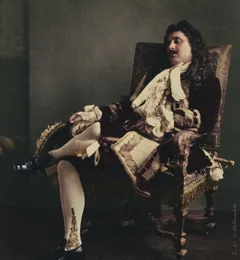
A hand-colored photograph of a male stage actor in 17th-century French theatrical costume, reclining languidly in an ornate gilded armchair. He wears a deep burgundy velvet coat with elaborate lace cravat and cuffs, white stockings with gold embroidered detail, and black heeled shoes.

'The Friend of Mankind Is No Friend of Mine': What's the Misanthrope's Place in Community?

My second principle for the IndieWeb requires good faith writing excludes the misanthrope. I want to reconsider that, carefully. Because the question of who gets to be here, and why, is more interesting and more complicated than I first let on.
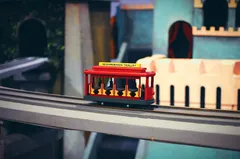
A red miniature trolley with 'NEIGHBORHOOD TROLLEY' written on a yellow sign on top, sitting on silver tracks. The trolley features yellow and black trim, visible passenger silhouettes in the windows, and is photographed against a blurred background of a miniature neighborhood set with colorful buildings.Shot taken during the 'Neighborhood of Make-Believe Tour' at WQED studios in Pittsburgh.

Won't you be my neighbour?

We need to be good neighours to each other. But what does that mean on the IndieWeb? A look at mycorrhizal networks, Indra's Net, and the importance of building intentional connections between independent websites.

A white ceramic plate with a thin blue rim holds several euro coins of different denominations and a folded 10 euro banknote, arranged on a dark gray table or countertop with a blurred background.

How You Can Support Indie Creators—and You Need To

Beyond tipping culture, there are meaningful ways to support independent creators that don't involve money. Here are eight of the best.
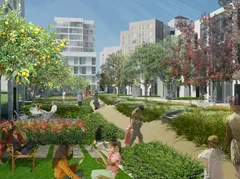
Rendering of a modern residential development featuring mid-rise apartment buildings surrounding a landscaped communal courtyard. The outdoor space includes winding pedestrian pathways, diverse plantings with citrus trees, deciduous trees with autumn foliage, ornamental grasses, and colorful flowerbeds. People of various ages are shown enjoying the space

Thoughts on Digital Third Spaces

Can the Internet be a place we can visit again? Can it replace what malls were supposed to be for us? A blog post about what we can do with what we have.
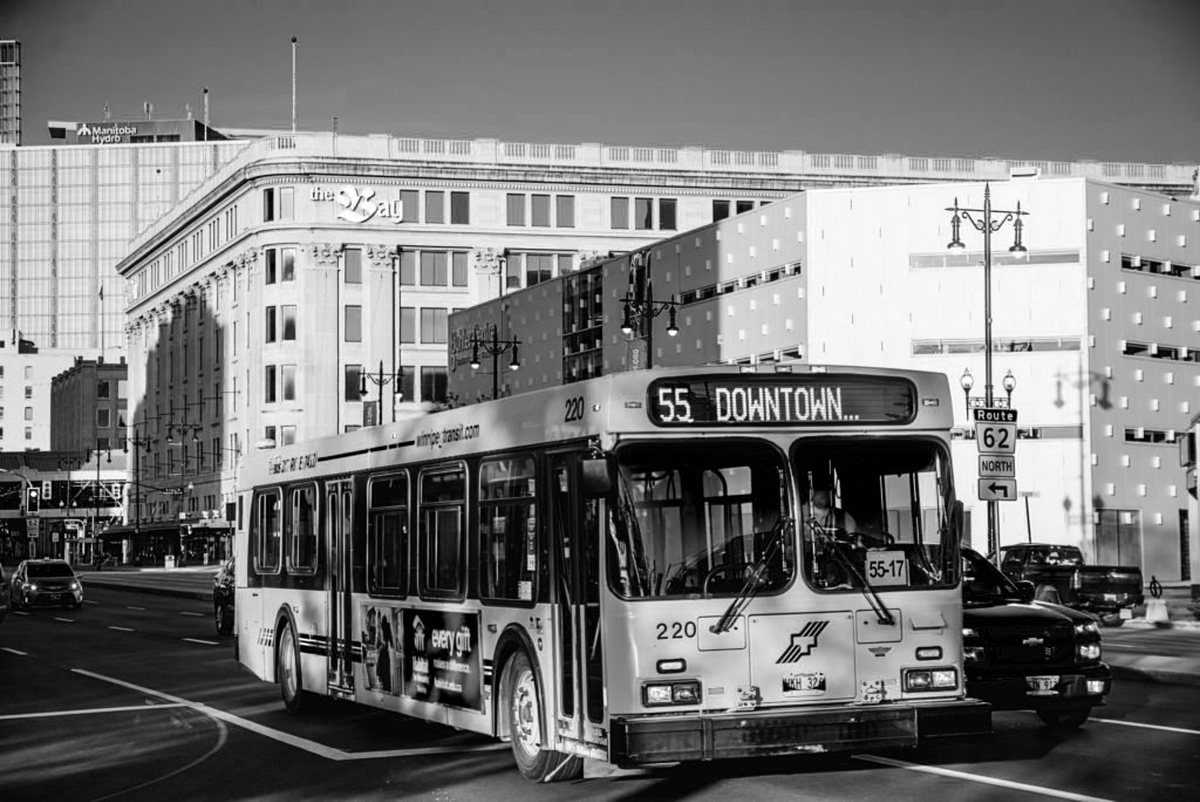
Welcome Aboard! | Winnipeg Transit

A Love Letter to Public Transit

Did you know it's actually better than driving?

Community Will Save Your Life

Community Will Save Your Life

But You Must Allow Yourself to Be Annoyed and Practice the Radical Work of Staying
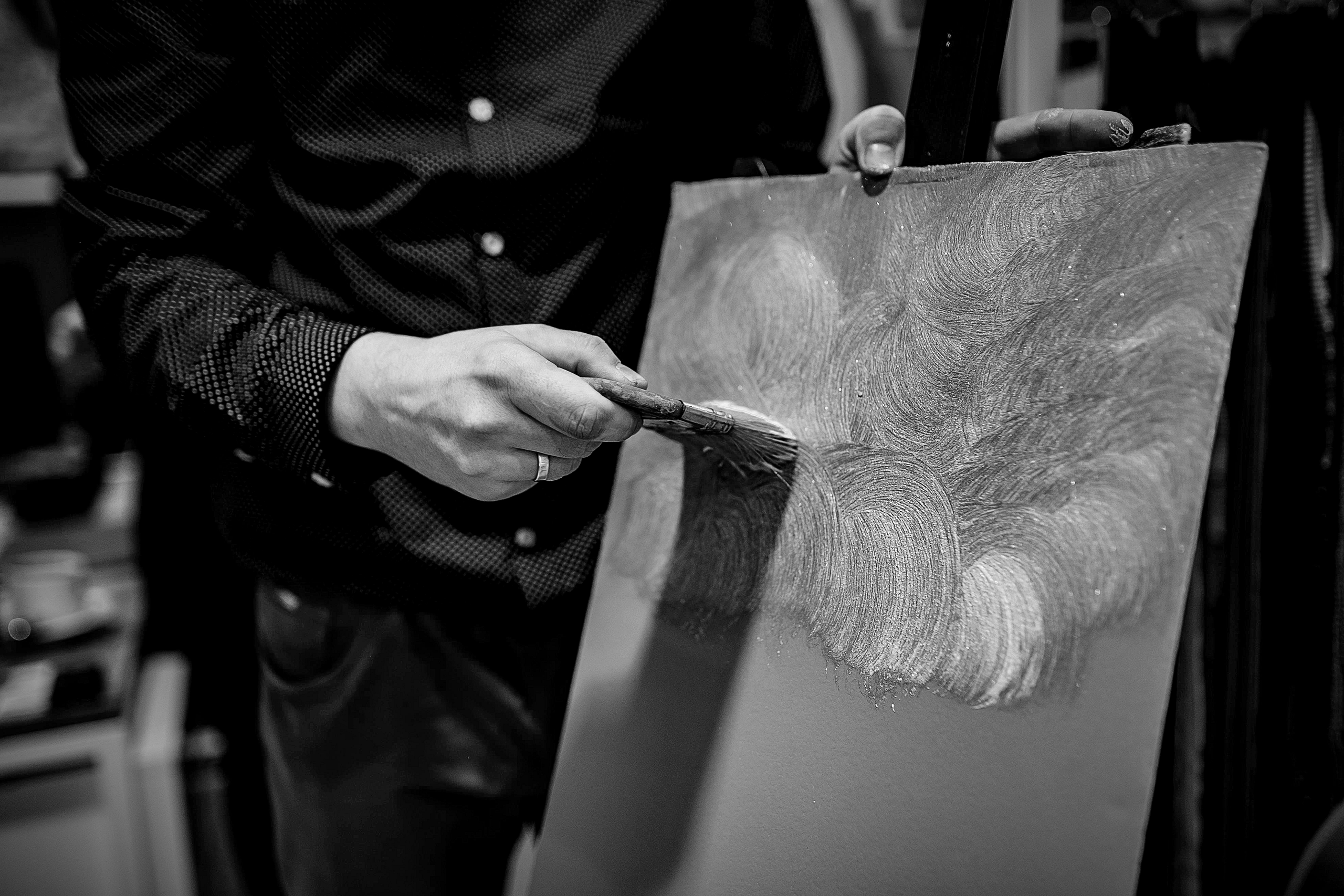
The work you make is so much more important than you realize. | Source

Your Civic Duty to Make Art

On the downfall of NaNoWriMo, democracy as creative practice, the bread we bake, and waking up.

↑ TOP