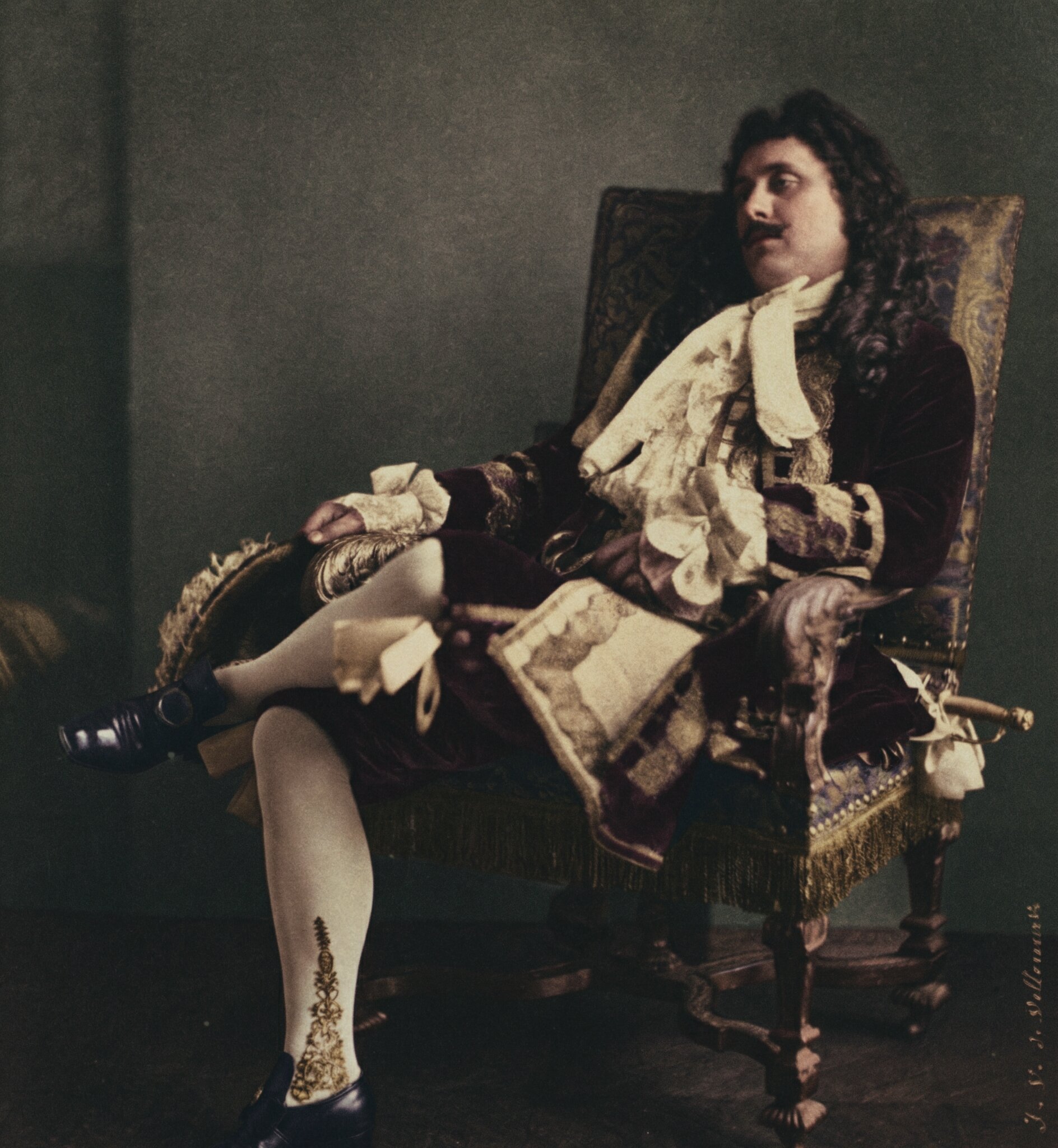
Mr. Leroux in the Role of Alceste in Le Misanthrope by Julien Vallou de Villeneuve | Source (colourized by the Author)
'The Friend of Mankind Is No Friend of Mine': What's the Misanthrope's Place in Community?

I was talking to a friend today who was one of the rare few with the constitution necessary to read my blog actively. She pushed back against a principle I thought made a lot of sense, and now I'm rethinking a lot.
In my defining post on how I conceptualize the IndieWeb, I wrote good faith writing is a foundational principle. Not just good faith code (no invasive trackers, no dark patterns, no bloated pages, etc.) but good faith writing. In order to be a netizen and internaut on the IndieWeb, you ought to have the belief that the Internet can still be good. That you can't write from a place of bad faith and the assumption of the worst in others, nor from a general misanthropic view of life.
My friend's counterargument was that I am essentially screening for worldview, and what right do I have for that? Even more important, plenty of cynical, misanthropic people have personal sites, and the structural goals of the IndieWeb (decentralization, content ownership, freedom from corporate capture, etc.) are served just as well by grumpy hermits ranting into the void as by an optimistic (Pollyannaish) community builder building mycorrhizal webs of mutual support.
After thinking about this for awhile, I think my friend is right, and I want to properly steelman this argument. Because this is about community for all of us, not just the niche IndieWeb.
And for once, I think my English literature degree will come in handy to make this point.
Alceste Was Also Correct
One of the most theatrical misanthropes in literary history is Timon of Athens, but one of the most infamous is Alceste, the protagonist of Molière's Le Misanthrope, first performed in Paris in 1666. Alceste hates mankind, but he hates mankind because mankind keeps being awful to him.
Alceste refuses to praise a mediocre sonnet when everyone else flatters the writer. He rejects political games with judges who are openly corrupt. He witnesses his social circle gossip, flatter, and deceive.
He is enraged by all this, and he is right to be enraged.
Molière never tells you whether to laugh at Alceste or cheer for him. That's the devastating trick of the play. His friend Philinte keeps essentially saying "yes, you're right, but it's not that deep," and the audience is supposed to nod along with Philinte, but you keep noticing that Philinte is implictly endorsing the hypocrisy that Alceste actively despises.
The one man who is exhaustingly and inconveniently honest is the one everyone else considers the problem.
Rousseau wrote about Misanthrope and came down hard on Molière's side, arguing Alceste was the moral hero who was turned into a comic butt. Is he wrong? There is something in Alceste's fury which feels like a cornered, feral dog. Like someone choosing integrity and consistency in principle even when society punishes him for it.
Most important to countering my argument is this: Alceste is still in society, attending Célimène's salon. He takes a lawsuit to court and makes his opinions known loudly to anyone who asks (and many who don't). He connects, bitterly and badly, but he connects. He is not a dead node.
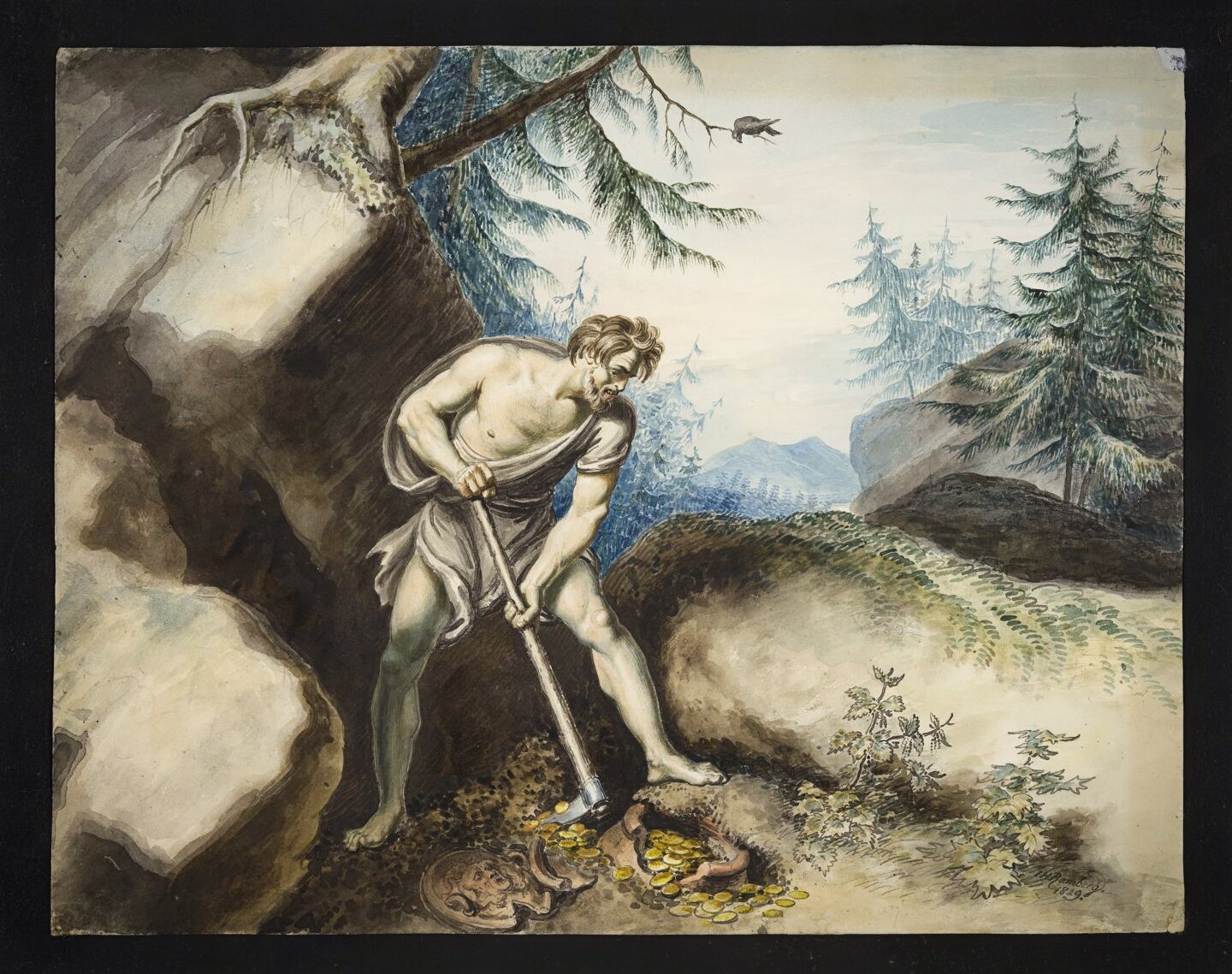
The Problem is Timon, Not Alceste
Timon is the one who breaks. Timon of Athens is Shakespeare's study of a philanthropist who becomes a misanthrope after his friends abandon him the moment his wealth dries up. He throws a banquet for them, serves them warm water and stones, curses all of Athens, and retreats to a cave in the wilderness.
Timon goes into self-exile, refusing even the loyalty of his devoted steward Flavius, and refusing the senators who begged him to return and save the city from Alcibiades. He just refuses.
He gives gold to bandits and prostitutes and enemies of Athens, anybody he believes will do material harm to civil society, and then goes to die alone.
Herman Melville, author of Moby Dick, wrote in an essay titled "Hawthorne and His Mosses" that he believed Timon was among Shakespeare's most profound plays. For the horror of Timon is not his misanthropy, it is total withdrawal. His severance of any connection to mankind.
The Isolated Node
In graph theory, a node without edges is an isolated node, a disconnected graph. Our web—the World Wide Web—depends on edges. Hyperlinks. The web exists on the fact pages point to other pages, documents reach towards one another. The network forms.
A site that does not link out and cannot be linked is not really part of the web in any functional sense, is it? It takes up space in the topology without contributing to the flow of information.
When I wrote about the mycorrhizal network, about how trees aren't competing but sharing, I was trying to articulate something about what healthy looks like for community. The wood wide web works because nodes transfer resources. Carbon, phosphorus, nitrogen, warning signals. The network is only as healthy as the number of active connections.
Where I went wrong is thinking misanthropic temperament and this failure of structure were one in the same. They're not.
Timon, retreating into his cave, became a disconnected node. Alceste, in his refusal of false flattery and taking it to the courts, stayed within the network. Grumpily, abrasively, alienating everyone around him. But in the network.
Cynicism =/= Misanthropy
This is another distinction I flattened when I wrote my original principles. The ancient Cynics, such as Diogenes, Antisthenes, or Crates of Thebes, were not misanthropes in the way the word is understood today. Their philosophy was not of hatred but of discernment. Cynics scorned convention, superficiality, and the endless pursuit of wealth and status.
Diogenes famously told Alexander the Great to get out of the way of his sunlight, because Alexander had nothing to offer him that was meaningful to Diogenes. He instead, was out there in the Sun. In the agora, barrel and all. He was performing, proactively and publicly, his outright rejection of conventional values. In the most irritating way possible, he was participating.
Philosopher Ian James Kidd says a person can have misanthropic moods and attitudes without being a full-blooded misanthrope. And, really, misanthropic attitudes are often the appropriate, correct response to the unjust way things systemically operate. The feminist who has experienced the full weight of patriarchy ought to be cynical about institutions. The immigrant who has witnessed the criminal justice system perform violence repeatedly is right to have a jaundiced view of humanity-as-organized-by-institution.
To dismiss this as pathology, as Rutger Bregman does in his "Homo Puppy" project, is its own kind of violence. You cannot tell people their experience of the genuinely brutal world is a mental illness rather than a disclosure.
This is not about optimists and pessimists, nor about those who love people and those who distrust them. This is really about who are in the network and who has withdrawn from it entirely.
A misanthrope based on dislike differs from one based on contempt, which in turn differs from one based on judgment.
Most of what I would casually call misanthropy in internet culture: the grumpy blogger, the curmudgeonly critic, the person who writes with acidic clarity about how everything is getting worse, is not a hateful person. Rather, they articulate judgment. And judgment, expressed publicly, is precisely what a healthy epistemic ecosystem requires.
The Unconnected Optimist is More Harmful
There is no mandate that you ought to have a particular attitude, even toward humanity. The mandate is participation, is willingness to participate in dialogue, to express yourself, regardless of what manifests in that expression.
I can take this even further, and say that someone who is optimistic and generally philanthropic but does not participate in community, someone who does not actively engage in efforts to help those around them (physically or digitally) still has the structural problem. Are you participating in mutual aid? What are you offering your brothers and sisters in another hemisphere?
The optimist that wishes to retreat from the world and seclude themselves in the pastoral cabin is more harmful than the actively-participating misanthrope. For the isolated optimist still reaps the benefits of our exploited world, and gives nothing functionally meaningful in return. The trees that don't participate in the mycorrhizal network actively damage it, undermining the whole system.
You don't have to believe the Internet, and by extension, humanity can still be good. You just have to act like it might be. Even if, like Alceste, you're absolutely certain it can't.


Comments
To comment, please sign in with your website:
How it works: Your website needs to support IndieAuth. GitHub profiles work out of the box. You can also use IndieAuth.com to authenticate via GitLab, Codeberg, email, or PGP. Setup instructions.
Signed in as:
No comments yet. Be the first to share your thoughts!