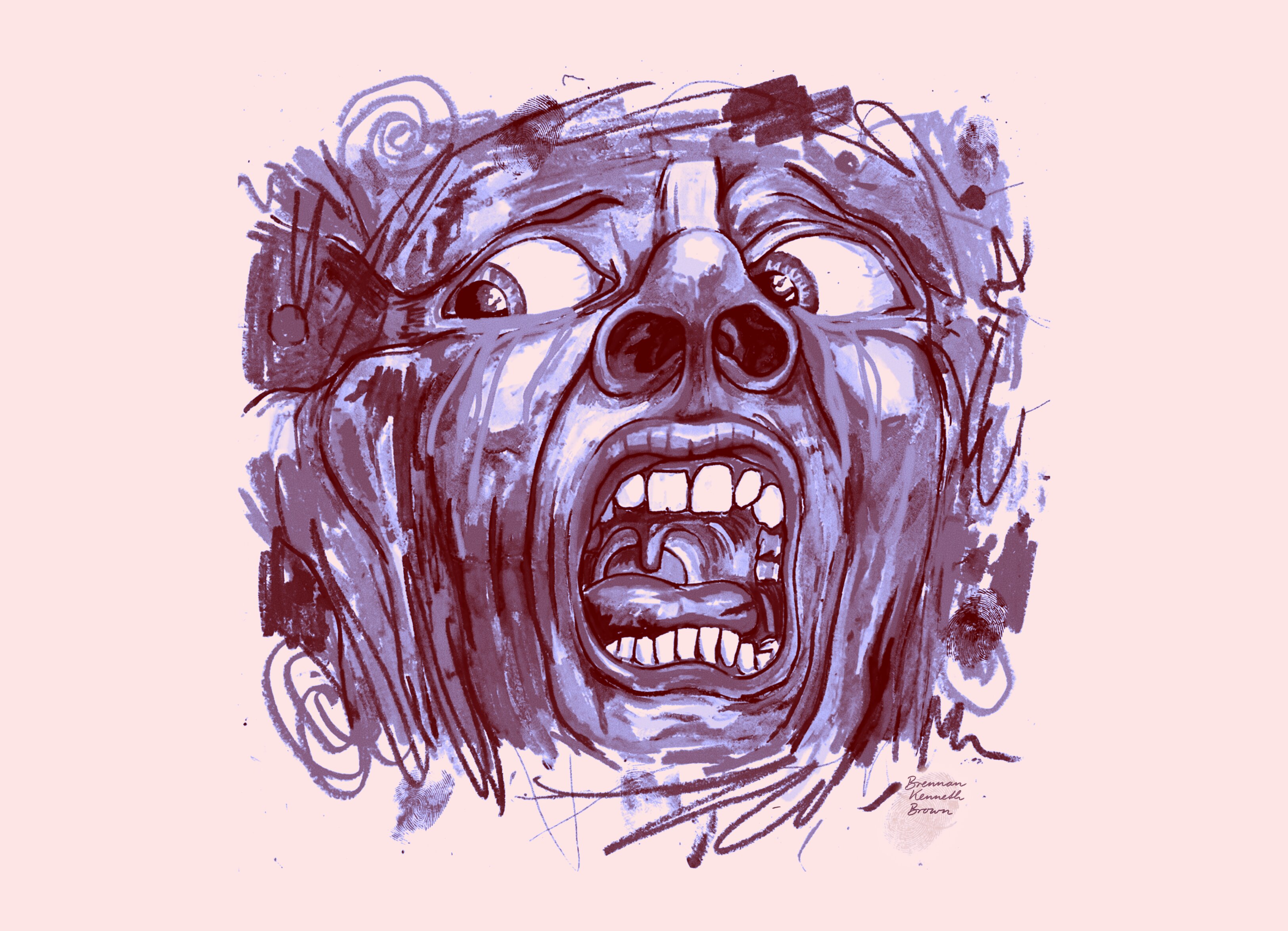
Original illustration by the author, based on the painting by Barry Godber (1945–1970)
Being a 21st Century Schizoid Man
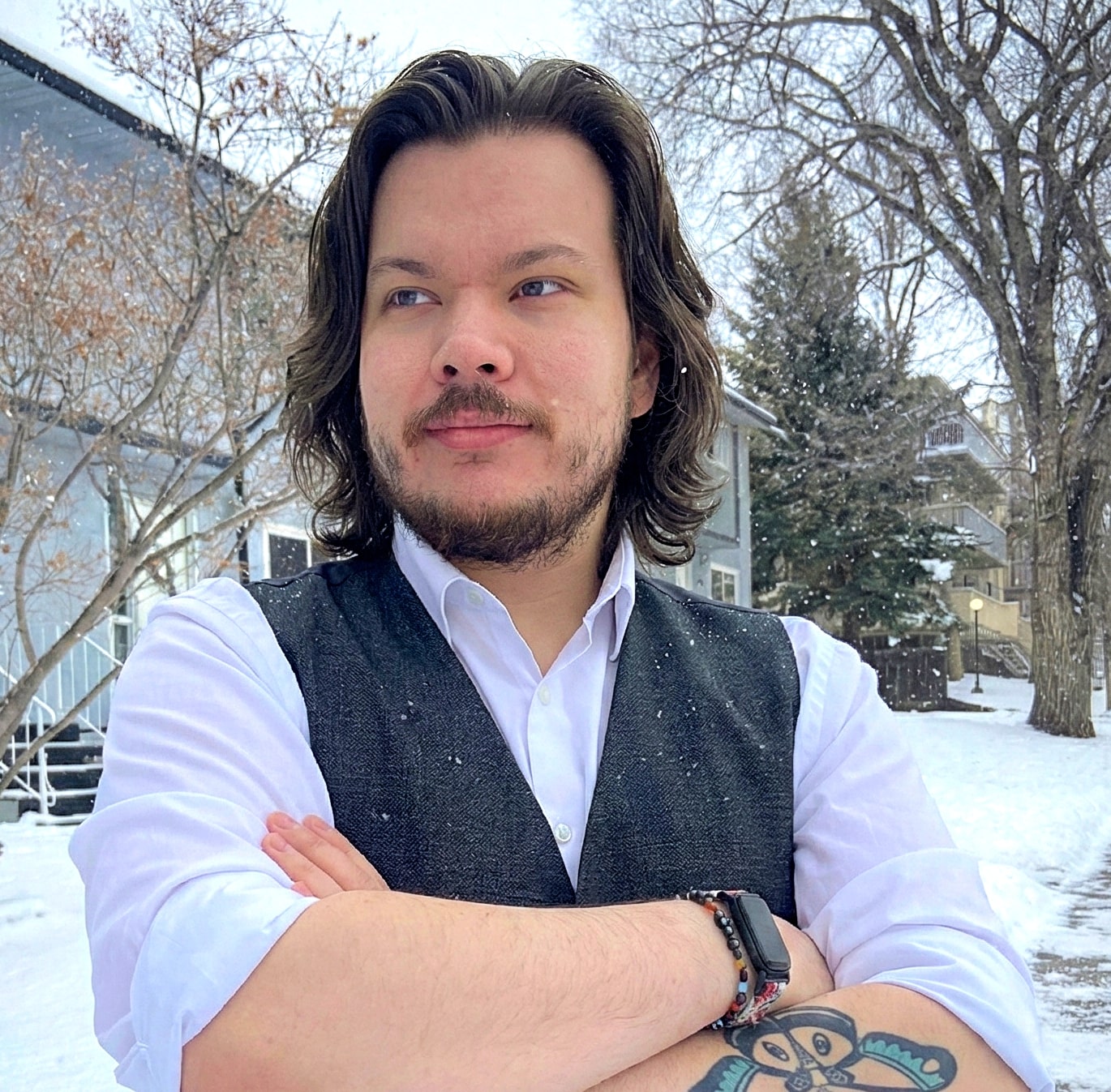
In 1969, King Crimson released their debut album In the Court of the Crimson King, one of the most highly-acclaimed progressive rock records of all time. The single, "21st Century Schizoid Man" was the opening track. It is a violent, jagged piece of music. Saxophone shrieks, polyrhythmic drumming, guitars sounding like a building being demolished. The lyrics are visceral images of war and blood, the machinery of civilization eating its own. Robert Fripp borrowed the term for the disorder and turned it into a diagnosis for the upcoming century itself: fractured, brutal, inwardly collapsed.
As the Genius annotation for the lyrics states, the title of the track comes from the understanding that people who suffer from schizoid personality disorder are apathetic, emotionally cold, and daydream a rich interior life that can be seen as a fantasy world. A cause for this disorder could be "unloving, neglectful parenting." King Crimson were declaring that the 21st century man will be severely damaged due to the Vietnam War of the 1960s, the result of the events in the previous century, and what has incurred upon their parents' generation.
And that was really prophetic, wasn't it? We've talked in circles for the past several decades about how socially isolated we've become.
In Japan, they're called hikikomori, meaning "pulling inward, being confined," the young people who withdraw from social life entirely, sometimes remaining in their rooms for years. The Japanese government estimated approximately 700,000 affected individuals as recently as 2010, and the phenomenon has since been documented across France, Spain, Brazil, Canada, Italy, India, South Korea, Nigeria, and the United States, making the once-specific label unwieldy. Researchers now increasingly prefer the clinical-neutral term "extreme social withdrawal."
In South Korea, there's the Sampo generation, sam meaning "three," po meaning "giving up," named those who had abandoned dating, marriage, and children. But the category kept expanding. The Opo generation gave up two more things: home ownership and personal relationships. The Chilpo, seven. The Wanpo, which translates to "complete giving-up generation," implies a resignation so total it eventually touches life itself. The naming is dark taxonomy, a society itemizing abandonment.
In China, the tang ping or "lying flat" movement captured a different mood, more of a deliberate rejection. The original manifesto posted online in 2021 declared "lying flat is my wise movement," a refusal of what Chinese youth call nèijuǎn (involution), the experience of exerting ever-increasing effort in an economy that returns ever-diminishing rewards.
In the West, the terms are harsher. The NEET (not in education, employment, or training). Basement dweller, the hermit, the shut-in, the failson. There is well-documented discourse on the social failures and anxieties of Gen-Z, an entire generation of us at this point.
Scholars were quick to draw connections across all these phenomena. A 2023 academic study found that Reddit discussions of lying flat spontaneously identified it with hikikomori in Japan and anti-work movements in Europe and North America, global youth recognizing their own predicament in each other's local language for it.
What's telling is the asymmetry between the moral weight we assign to these categories. The hikikomori is medicalized; the tang ping adherent is politicized; the NEET is moralized. Regardless, in all cases, the person in the room is legible primarily as a social problem to be solved, a productive unit that has gone offline. The vocabulary for it keeps proliferating, each culture generating its own term for what increasingly looks like the same phenomenon: a mass refusal, or inability, to participate on the world's terms.
The question no one is asking is, what if some of them are fine?
A Confession
All of the above makes it difficult to write about what I'm going to be sharing in this post. Negative stereotypes and stigmatization are why I've found myself masking my entire life, to the point of not realizing who I really am, until now. In the past few months, when I've finally had the ability to work for myself and no longer have to regulate for the sake of those around me, I've come to realize difficult things. But who would I be if I was dishonest about this?
As I've written about previously, I've always scored incredibly high on social introversion; I've always been shy and socially anxious. Time and time again people have told me that they don't know if I'm joking when I'm speaking to them because of my tone—my flat affect. I've come across as intimidating (which sounds so silly to me) and unapproachable.
I've been proud of myself for how I've overcome a lot of this. I've learned to be more expressive and emotional for the sake of others. Like a lot of neurodivergent people, I've learned to mask and act more socially typical for the sake of others' comfort. I've been aggressively pro-social these past few years, because I know how important community and human connection is to people. I recognize how much all this sounds like ASD to those who have it, which is why I've thought for a long time I simply was undiagnosed, low-support autistic.
But I've come to realize over the past several months it actually isn't that simple.
I've been anxious my entire life. I've been in fight-or-flight-or-freeze-or-fawn survival mode since my first memories. I never have had the choice of what I would like to do because there have always been obligations towards survival. Throughout my entire time at work and university, I was extremely social out of necessity. I was running a club, after all. I had dozens of acquaintances, but only a couple people I would call friends.
I built Write Club at Mount Royal University over three years and poured myself into the community. I designed the logo to include the Indigenous medicine wheel and Pride colours. I ran workshops and events and managed executives and wrote the constitution and gave feedback and showed up. I did this because I believe, with full conviction, that communities save lives. I did it because I know it is good and meaningful.
But, no, I didn't inherently enjoy it. It was always exhausting work for me.
Near the very end of my degree, I catastrophically burnt out. I was heartbroken, breaking up with a long-term partner I had dedicated a poetry chapbook to. Running on the fumes of muscle memory. Survival mode isn't metaphor when you're in it. It is a smell, and the texture of air. Once I finished my final exam, I found myself unable to get out of bed, developing severe agoraphobia, and I missed my own convocation.
I have had to mask so long I forget the feeling of my own face. I forgot what I truly looked like.
I didn't let that end me, though. I began seeing a therapist. I started taking the SSRI sertraline (Zoloft). It took several months of intentional work, but I can say with confidence that I am now in the best mental health state of my life right now.
But I noticed when the depression and anxiety lifted, I still preferred to be alone. I still deeply enjoyed my solitude. I did not find a desire for human intimacy and connection to conjure up inside of me.
I started going through journal entries throughout my life (thankfully I have many of them) and I began taking stock of particular oddities of my personality:
- My lack of care towards the praise or criticism I receive. (I want to help improve things for others, but for their sake. I do not care if I get credit or recognition so long as the good is done.)
- My lack of vices. I don't drink. I don't smoke. I don't play video games or pursue intimacy or need substances to metabolize my life. The worst offence is that I occasionally eat junk food. I am not trying to escape anything. I am not numbing myself or coping or engaging in the maladaptive behaviours that cluster around disorders that people actually suffer from. I am simply existing in a very quiet and small way and finding it sufficient.
- My ridiculously rich interior life, as you might be able to tell from this blog. I have an uncanny ability for intense introspection and daydreaming thoughts I channel into writing. I mean, I had the materials and proceeded to deeply self-analyze like this, after all.
I brought these various insights of my personality and decided to share with my counsellor. I specifically asked—I pressed to know what pathology they would consider for someone presenting with these symptoms I listed above. At first, the answer was familiar and unsurprising:
Honestly? I read you as autistic, probably AuDHD. The hyperfocused creative output that feels less like effort than "normal" life does. Decades of performing participation in a social world that never quite fit, without being able to name why it didn't fit.
But then there was something else that completely caught me off-guard and proceeded to change everything I understood about myself.
I'd also say there are schizoid traits in the mix—your preference for interiority, low hedonic drive, emotional self-sufficiency that isn't defensive nor wounded. But I'd say there are traits, not a label there.
It's true. The DSM-5-TR lists my personality traits as the diagnostic criteria for Schizoid Personality Disorder. I read the criteria and felt the uncanny sensation of reading a description of the furniture in my own room.
This was alarming to me at first. Like many people, I wasn't actually really aware of what schizoid meant. People hear schizoid and they hear schizo, they hear the cultural wreckage of a century of Hollywood villainy. The fractured, dangerous, hearing-voices man.
They are totally wrong. Schizophrenia is a psychotic disorder, yes. Involving hallucinations and delusions. It is a serious and frequently devastating illness, and it is not this.
Schizoid personality disorder involves no psychosis. No break from reality. No hallucinations or delusions, no fracture between what is real and what is imagined. The split is between the self that faces outward and the one that would prefer not to. Between the inner life—dense, well-furnished, self-sufficient—and the social world requiring constant performance to navigate. The schizoid person knows what is real and have decided most of it is not particularly interesting.
People with SzPD rarely feel there is anything wrong with them. This is sometimes cited as a reason the disorder is underdiagnosed. It is ego-syntonic rather than ego-dystonic, meaning it doesn't feel alien to the self, doesn't feel like an invader. Ego-dystonic experiences feel repugnant, inconsistent with who you understand yourself to be. Ego-syntonic ones feel like the self; they fit.
Most people in clinical distress are there because something inside them feels wrong to them. The schizoid is, often, not in distress at all. This is framed as a clinical complication, for how do you treat someone who doesn't feel broken? But I think, perhaps, not feeling broken is itself evidence of something. It feels, when you can finally name it, like the most honest thing you've encountered about yourself in years.
Uncomfortable Origins
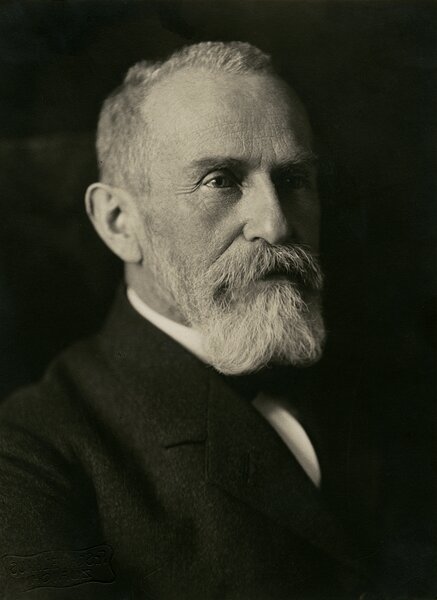
The word schizoid was introduced in 1908 by the Swiss psychiatrist Eugen Bleuler—the same man who coined schizophrenia and autism. He was also a committed eugenicist.
The Greek root schizein means to split. Both schizoid and schizophrenia carry the same root, and this is the source of significant confusion—and an important reason to linger on Bleuler as a figure.
Bleuler coined more of the furniture of modern psychiatry than almost anyone else. Schizophrenia, schizoid, autism, ambivalence. All his, all from the decade between 1908 and 1919. He is the reason we have these words.
He is also the reason that the Burghölzli psychiatric clinic in Zurich became a site of forced sterilizations and castrations performed on patients he had diagnosed. From 1909 onwards, the Burghölzli clinic, under Bleuler's direction, produced expert reports supporting surgical interventions on eugenic grounds. Sterilizations continued there even after his tenure, including under the directorship of his son Manfred. The Swiss canton of Vaud introduced Europe's first law on forced sterilization in 1928. In Switzerland, sterilizations on eugenic grounds continued until the 1970s.
In his seminal 1911 work Dementia Praecox, or the Group of Schizophrenias, Bleuler wrote: "Castration, of course, is of no benefit to the patients themselves. However, it is to be hoped that sterilization will soon be employed on a larger scale... for eugenic reasons." He believed that the reproduction of what he called "the mental and physical cripples" would result in racial deterioration. He was not a fringe figure. He trained Carl Jung. He supervised Jean Piaget's early work. His textbook went through multiple editions and shaped a generation of psychiatrists across Europe and North America.
Pascal Germann, an expert on the history of eugenics at the University of Bern, has noted that Swiss scientists like Bleuler "didn't merely follow the zeitgeist but actively shaped these ideologies and practices of exclusion," and that "it would be wrong to assume that eugenics simply reflected the spirit of the age. There was vehement criticism of eugenics early on."
This does not discount everything Bleuler observed—his clinical phenomenology was genuinely careful and still has traction—but I think it matters where the diagnostic framework comes from. The man who gave us the words we use to describe and understand the neurodivergent believed that the people he was diagnosing had lives that were, in his phrase, "of negative value." That is not incidental. It shapes what the framework is designed to do, who it is designed to protect, and what it considers a successful outcome.
The word he used for the inward-turning tendency, before it became clinical, was simply: introversion. An extreme version. He believed it sat on a continuum from schizoid personality through dormant schizophrenia to full psychosis, a spectrum of increasing pathology. We have since mostly abandoned this continuum model, but the taxonomic logic it generated with the diagnostic gravity that pulls all inward-turning behaviour toward illness? That has never fully left.
The Numbers Problem
Research on schizoid personality disorder is sparse in a way that reads like institutional indifference. High-quality, multi-population studies are lacking. The prevalence estimates range broadly, anywhere from 0.5% to 7% of the general population, a spread so wide it tells you less about the disorder than about the difficulty of studying it. The median estimated prevalence is 0.9%, though some studies put it as high as 3.1%. Among the homeless population of New York City drop-in centres, one 2008 study found SzPD rates as high as 65% among participants, which clearly says something damning about what happens when people who need very little from others are systematically deprived of what they do need.
There is no specific, approved medication for schizoid personality disorder. There are no controlled studies on any form of psychotherapy for it, either. The Merck Manual notes, with what feels like a shrug, that no controlled studies have been published on psychotherapies or pharmacotherapy for SzPD. What treatment literature exists tends to discuss SzPD as an obstacle, rather than as a condition requiring its own framework and its own language. The papers primarily stop at asking how you'd build therapeutic rapport with someone who doesn't particularly want rapport.
There has even been academic debate about whether SzPD is a sufficiently distinct diagnostic category to merit its own entry at all, with some researchers arguing its population splits into groups better captured by other diagnoses. The field cannot agree on who these people are. The people in question, for the most part, have not weighed in.
The prognosis is described as poor. Significantly compromised quality of life. Reduced overall functioning even after fifteen years. One of the lowest levels of "life success" of all personality disorders. Measured, the researchers specify, as "status, wealth and successful relationships." Status. Wealth. Successful relationships. The triple crown of metrics that assumes everyone is playing the same game.
What happens when you're not? What happens when "life success," as defined by the diagnostic apparatus, simply isn't what you're after? I am trying to figure out if the prognosis is poor or if the measurement is wrong.
And there is a structural reason to suspect it's the latter. Since January 2022, the ICD-11, the World Health Organization's international classification of diseases, used in most countries for coding, statistics, and clinical billing, has already abolished all categorical personality disorder types. Schizoid personality disorder no longer exists as a named category in the international standard.
In its place, the ICD-11 uses a dimensional model. You are assessed for overall severity (mild, moderate, severe) and characterized by prominent trait domains. The trait domain that maps most clearly onto SzPD is Detachment, described as social and emotional withdrawal with limited capacity for enjoyment and close relationships. The research consistently shows that SzPD "was consistently associated with the trait domain of Detachment." The international standard of care has already decided that the category is more useful as a descriptive dimension than as a diagnostic label. This is exactly the kind of epistemic shift that should produce some humility about the prognosis literature, which was mostly written when "schizoid personality disorder" still felt like a coherent, bounded thing.
The Language Problem
Reading the clinical literature on SzPD is a strange experience. Parts of it are clarifying, other parts are condescending in a cringe-worthy, paternalistic way.
Take sexuality. The DSM-5-TR criterion includes "minimal interest in sexual experiences with others" as a diagnostic symptom requiring clinical attention. The clinical literature states that schizoid people "commonly feel that masturbation or sexual abstinence is preferable to the emotional closeness they must tolerate when having sex." This framing—tolerate—already tells you the literature cannot accept that a person might simply have low libido. As though every Ace in the world merely suffers undiagnosed mental illness.
The psychoanalyst Salman Akhtar, whose 1987 comprehensive phenomenological profile of SzPD remains one of the most cited papers in the field, provides a table of "overt" and "covert" characteristics. The covert being—in his framing—the hidden reality the clinician must find beneath the patient's surface presentation. The overt schizoid sexuality is "asexual, sometimes celibate; free of romantic interests; averse to sexual gossip and innuendo." The covert is their "secret voyeuristic and pornographic interests; vulnerable to erotomania; tendency towards compulsive masturbation and perversions." The logic here is remarkable, isn't it? If you report disinterest in sex, the clinical apparatus assumes something darker must be underneath. The patient's apparent simplicity is itself suspicious. There must be a hidden sexual pathology.
Otto Kernberg, another major theorist, states that the schizoid's apparent lack of sexuality "does not represent a lack of sexual definition but rather a combination of several strong fixations to cope with the same conflicts." The stated disinterest is simply not believed. Your interiority is interpreted, over your own account, as conflict-driven and pathological.
The pattern of the clinician's certainty overriding the patient's self-report runs through the literature on emotionality as well. The DSM's criterion of "emotional coldness, detachment, and affective flattening" is framed as a symptom, but coldness relative to what? Affective flattening compared to whose baseline? The emotional economy being measured is extrovert-normative. A person who doesn't perform feeling at neurotypical volume registers as pathologically deficient in it.
Regarding the "full range of emotions" for myself, it's genuinely hard for me to say what my "range" is with any certainty. There have been a lot of times in my life where I've had a flat affect, been blunt, and been scolded or made fun of for it—and I have made it such an intentional point to perform my emotions that it's difficult now to say what's natural for me. My mask and face have spent so many years pressed against each other that their temperatures have equalized. I cannot always tell, from the inside, which is which.
There is actually intriguing research suggesting that people on the schizoid spectrum have appropriate microexpressions—the involuntary, split-second emotional responses—even when their observable affect appears flat. Normal feelings, non-normative expression. Which means we must ask, what if the feeling is there, just not legible to others, then what exactly is being pathologized?
Substance usage is the same. One source observes that schizoid individuals might use drugs or alcohol alone rather than for social disinhibition, as if solitary substance use is inherently more pathological than using drugs in order to feel comfortable around other people. The preference for solitude is pathologized right down into the pharmacology.
I am not saying these observations are empirically wrong, they may accurately describe patterns in clinical populations. The framing, rather, reveals whose experience is being centered. The schizoid person is always being viewed from outside, measured against a normative sociality they don't share, and found lacking. The result is a literature that is often less description than diagnosis-by-deficit. The exoticism is blatant—a fetishizing of the schizoid interior as a place of hidden strangeness, which cannot be taken at face value.
But Is It Autism?
My therapist's first instinct was autism—probably AuDHD—and the instinct isn't wrong.
The relationship between SzPD and autism spectrum disorder is deeply and persistently unresolved. There's similar outward presentation to a degree that makes differential diagnosis genuinely hard. Social detachment, limited emotional expression, preference for solitary activities, restricted social engagement, and what others often read as aloofness or oddness.
A 2012 study by Lugnegard et al. found that 26% of people with Asperger syndrome also met criteria for SzPD—the highest comorbidity rate of any personality disorder in their sample. Some researchers have gone further and suggested that many historic SzPD diagnoses were likely unrecognized autism, particularly in the pre-DSM-5 era when high-functioning autism was poorly understood or unrecognized as a diagnosis at all. Bleuler coined both autism and schizoid after all, both to describe what he understood as the same inward-turning tendency, a withdrawal into interior fantasy against which outside influence becomes intolerable.
The current DSM-5-TR criterion for SzPD explicitly states that autism must be ruled out before a schizoid diagnosis can be given, acknowledging that there is "great difficulty differentiating" the two, particularly in milder presentations. Both have "a seeming indifference to companionship."
What the research does offer is a distinction in terms of social motivation versus social capacity. Autistic people typically want connection but struggle with the how—the neurological machinery for reading social cues, processing sensory environments, and navigating implicit social rules has different wiring, and the resulting experience can be one of profound frustration. Schizoid people, by contrast, don't particularly want connection in the first place. The desire is absent rather than blocked. Cook et al. (2020) wrote that people with SzPD are more affected by differences in social motivation, whereas those with ASD are more affected by differences in social skills or capacity.
There are also features of autism that SzPD typically lacks. The repetitive behaviours, the sensory sensitivities, the highly specific fixated interests, the concrete literalism. I don't really relate to any of these. I do relate to the solitude preference, the interior richness, the emotional self-sufficiency, the indifference to external validation, the sense of observing rather than participating, even in situations I have chosen to be in. I genuinely cannot tell you whether the word that best fits is autistic or schizoid or some combination that our current diagnostic vocabulary doesn't have a tidy name for.
Asocial, Not Anti-Social
I feel as though it's important for me to explictly state I'm not anti-social. Anti-social implies contempt and a turning against. Hostility. A wish that the others would simply leave. I don't feel that. I love people. I have spent years trying to make things that help them. Communities, tools, essays, open-source code, a writing school, a philosophy of the IndieWeb as harm reduction for a world drunk on algorithmic feeds. I make friends on Mastodon. I talk to my parents every day. Byron comes over weekly and we hang out for hours. I still laugh really hard at YouTube videos at 2am.
What I lack is not love. What I lack is need. Most people with SzPD don't utilize psychotherapy because they manage to find a compromise between their need for interpersonal safety and having a reasonably satisfying life. The usual clinical descriptions are based on the lowest-functioning group, which makes the whole picture look bleaker than it is. Philip Manfield, in his book Split Self/ Split Object, estimates that what he calls "the schizoid condition," which roughly includes DSM schizoid, avoidant, and schizotypal presentations, may represent as many as 40% of all personality disorders, with the radical undercount in clinical settings explained almost entirely by the fact that schizoid individuals are, by disposition, the least likely to seek treatment. Most schizoid people walk among us and work alongside us without ever being recognized. I find this both comforting and funny. A whole category of people, unremarkably present, unremarkably fine.
The Secret Schizoid
The psychoanalytic tradition, despite its many problems, has at least been honest about this gap. Ronald Fairbairn, building on his 1940 paper "Schizoid Factors in the Personality", identified what he called "schizoid exhibitionism" in Psychoanalytic Studies of the Personality, defined as the paradox of a schizoid person who can express quite a lot of feeling and make what appear to be impressive social contacts, yet in reality gives nothing and loses nothing. Because they are "playing a part," their personality is supposedly not involved. The person disowns the part they are playing; they preserve themselves intact, immune from compromise.
Harry Guntrip, building directly on Fairbairn's framework, extended this into the concept of the "secret schizoid". A person who presents with an engaging, interactive personality—available, interested, involved in the observer's eyes—while remaining emotionally withdrawn and sequestered in their interior world.
Ralph Klein, Clinical Director of the Masterson Institute, delineates nine characteristics of the schizoid personality as described by Guntrip: introversion, withdrawnness, self-sufficiency, a sense of superiority, loss of affect, loneliness, depersonalization, and regression. Guntrip specifies that withdrawnness from the outer world "is sometimes overt and sometimes covert." The overt matches the usual description: the obvious timidity, the avoidance, the visible reluctance. The covert is the person standing in front of you at the party, apparently warm and engaged, who has not been fully present for the entire conversation.
Klein cautions clinicians not to misidentify the schizoid person based on their outward engagement, "what meets the objective eye may not be what is present in the subjective, internal world of the patient." He suggests the diagnostic question is not what the person does in social situations, but what their subjective experience is in them. Is there a felt refusal of emotional intimacy? A preference for the objective over the relational? A sense of observing rather than participating? The answers to those questions, not the surface behaviour, are what matter. Klein notes that "classic" SzPD and "secret" SzPD occur just as often as each other.
I recognize this. I have spent years being described by people who know me as warm, as deeply caring, as the kind of person who shows up. All of this is true. I also know that when I leave—when the conversation ends and I close the door—I feel something I can only describe as returning to myself. Not relief, more like a resumption. A re-entry into the world I actually live in.
The secret schizoid concept matters not just clinically, but sociologically. If the "classic" presentation is only half the picture—and if a substantial portion of schizoid people are, right now, attending your departmental meeting or leading your book club or running your student union, unremarked upon and unremarkable—then the prevalence estimates in the literature are almost certainly wrong. The people who were studied are the ones who showed up to be studied. A biased sample.
What "Poor Outcomes" Actually Means
I want to return to the prognosis, because I find the language telling. Symptoms of SzPD tend to remain stable over time, more so than those of other personality disorders. The world will not pathologize you into compliance.
"Poor outcomes" means low accumulation of status, wealth, and relationships. Metrics of a life that gets described as successful at graduation ceremonies, and LinkedIn profiles, and the questions aunts ask at holidays. But this assumes that the absence of those things is experienced as lack. It assumes a baseline capitalist hunger that I do not have.
When I look at my life recently, I believe I have been far more successful now than ever before. This is a different kind of functioning, organized around different ends.
Am I worse off in my state and condition? It's hard to say for certain. I love knowledge and art and joy. The most moving moments of my life happened while reading or watching or playing something—a few in museums and concert halls, yes, but mostly in rooms, alone. I do not care about influencing others in the sense of being perceived as an influence. What I care about is making things that are true and that help.
The ability to be enough for myself—to love myself enough to be content with the world at arm's length—has been so calming and stabilizing.
Is that a poor outcome?
Simply Myself
This is a disorder that affects somewhere between one in two hundred and one in fourteen people, that lacks approved treatment or adequate research funding, that only shows up in clinics when the person is in crisis for some other reason, and that doesn't feel like a disorder to the people who have it. It is almost certainly more common than the literature acknowledges.
I am thirty years old. I write every day in solitude. I think what I am learning—what this long, quiet monastic period is teaching me—is the diagnostic apparatus was built by and for people who want things I do not want, and that this doesn't make me broken. It makes me, as Eugen Bleuler first intuited in 1908— before he began advocating for the sterilization of people like me—oriented inward. Toward the inner life and away from the external world.
Maybe the extremity is the whole thing. Maybe I am finally, simply myself.
King Crimson was onto something. Not about the violence, but about the fracture. The way a whole society can be organized around extroversion, production, connection, accumulation—and some small percentage of people simply never receive the memo.


Comments
To comment, please sign in with your website:
How it works: Your website needs to support IndieAuth. GitHub profiles work out of the box. You can also use IndieAuth.com to authenticate via GitLab, Codeberg, email, or PGP. Setup instructions.
Signed in as:
No comments yet. Be the first to share your thoughts!