I’m giving you permission, starting now. | Liliana Drew
What If You Created As Much As You Consume?

I want you to picture something with me.
Laying in bed at 1:47 in the morning. Light of your phone casts shadows on your face and bedroom wall. You’ve been scrolling for—what, two hours now? Three? Time has become liquid, flowing through your fingers like water. Thumb moves automatically, each swipe revealing another fifteen-second video, another witty screenshotted tweet, another piece of content meticulously crafted to keep you here. In this moment, consuming.
Somewhere in the back of your mind, there’s an itch. A half-formed thought. Remember that idea you had for a story? That sketch you wanted to try? That song you’ve been hearing in your dreams?
It’s still there, waiting. But your thumb keeps scrolling. Itch remains unscratched.
I know this moment intimately. I live in it too.
The Weight of Consumption
Let me acknowledge that there’s nothing inherently wrong with consumption. Great art inspires. Beautiful design moves us. Powerful writing changes minds. We need input to create output.
The problem isn’t that we consume—it’s that consumption has become our default state, our automatic response to every moment of potential.
Author Jenny Odell, in “How to Do Nothing,” describes this as “the attention economy”—a system commodifying our attention and selling it to the highest bidder. Eight hours of screen time feels normal. Checking our phones 344 times per day (the average in 2023) seems reasonable. We’re fish who’ve forgotten about water.
And here’s the really insidious part: consumption feels productive. When we read articles about creativity, watch tutorials about art, or scroll through inspiration boards, we feel like we’re doing something. We’re learning, preparing, gathering resources. It’s all in service of that mythical “someday” when we’ll finally be ready to create.
I’m oversimplifying. Creation requires skill and not everyone can be an artist, right? You might argue that after a long day of work, we deserve to relax, to consume, to let others entertain us.
You’re wrong.
The Energy Myth
Creation doesn’t drain energy. Think about the last time you made something, anything. Maybe you cooked a meal from scratch. Maybe you wrote a letter to a friend. Maybe you planted a seed or drew a picture or hummed a tune.
How did you feel afterward?
I’m not talking about the result. I’m talking about the process, the doing itself. The verb.
There’s something that happens in the act of making that no amount of consumption can replicate. The difference between watching rainfall and standing in it—only one makes you feel truly alive.
Creation activates different neural pathways than consumption. When we create, we engage in what psychologist Mihaly Csikszentmihalyi calls “flow”—a state of focused creativity that actually generates energy rather than depleting it.
I remember the first time I noticed this. I had spent the entire day scrolling through social media, brainrot consumption that leaves you feeling hollow.
By evening, I was exhausted. But instead of falling into bed, I picked up a pencil and opened a notebook. Just for five minutes, I told myself. Just one small sketch.
Two hours later, I looked up. The sketch was terrible—truly, objectively bad. But I felt more awake than I had all day.
The Fear of Creating
Against the backdrop of frictionless consumption, creation feels frightening. We’ve internalized what artist Austin Kleon calls “the myth of the genius”—the idea that real creators are touched by divine inspiration, while the rest of us are meant to watch from the sidelines.
This fear manifests in specific ways:
• The writer who endlessly reads about writing but never starts their story
• The artist who buys expensive supplies gathering dust
• The musician who watches tutorials instead of picking up their instrument
• The programmer who collects coding courses but never builds an app
• The cook who scrolls through recipes but orders takeout
This is not procrastination, but rather symptoms of a deeper cultural illness.
A Permission Slip You’ve Been Waiting For
Create badly. Write terrible poems. Draw misshapen figures. Code buggy programs. Sing off-key. Make things no algorithm would ever recommend, no curator would ever select, that might never earn a single like or share or upvote.
The world doesn’t need more perfect things. It needs more human things. More attempts. More experiments. More failures. More beginnings.
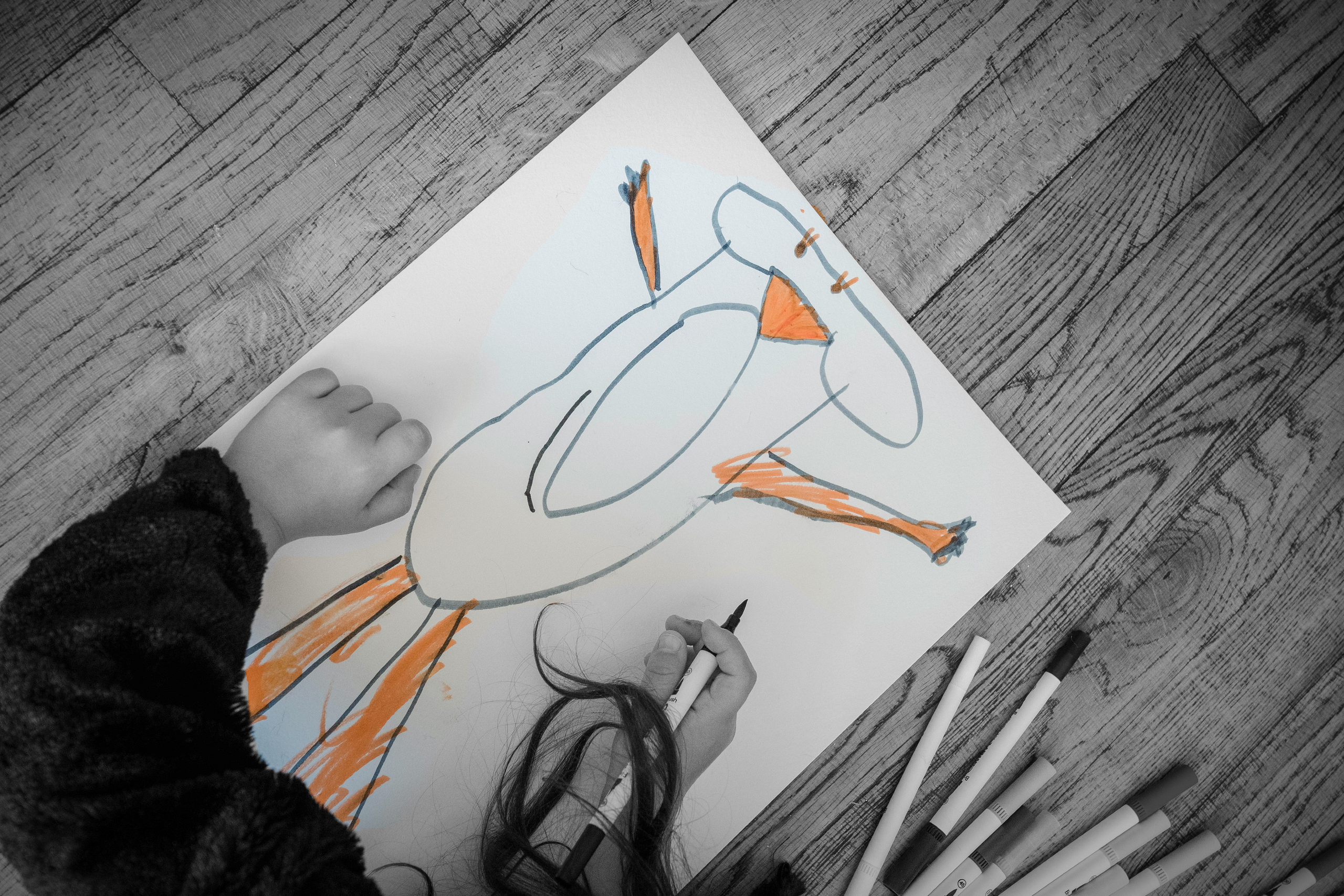
We don’t tell children to stop drawing just because they won’t become Picasso. We don’t tell people to stop humming just because they won’t sell out stadiums.
The Quiet Revolution
This is where the real revolution begins—not in grand gestures or manifestos, but in the small acts of creation. In choosing to make something, anything, instead of consuming. Turn off your phones for fifteen minutes and write a poem no one will ever read. Sketch the view from your window instead of taking a photo for Instagram.
Badly-written stories instead of another Netflix binge-watching. Wobbly ceramic bowls instead of Amazon purchaes. A buggy website built from scratch instead of another social media profile. Garden plots with more weeds than vegetables.
Acts of resistance against a system that wants to keep us passive, scrolling, consuming.
Finding Our People: the Weaving of Community
Two people, then three, then more, finding each other in the spaces between screens, in the gentle rebellion of making things by hand. We are not meant to create alone. Our ancestors knew this—they gathered in circles to weave baskets, to tell stories, to pass down the knowledge of their hands. Creation is a form of communion.
We need to rebuild what author Lewis Hyde calls “the gift economy”—spaces where creation and sharing happen outside market logic.
When we gather, we’re unraveling the threads of a system that wants us isolated, consuming, always reaching for the next purchase to fill the void. Each stitch we sew, each loaf we bake, each line we write is an act of defiance.
The system relies on our isolation and disconnection—from each other, from our own creative capacities, from the simple joy of making. It needs us to believe we are only consumers, that our role is to watch and buy and scroll. When we create together, we remember otherwise.
They’re out there, these others who feel the itch to make, to grow, to create. You’ll find them in community gardens, in libraries, on stranger corners of the Internet, in co-ops and seed exchanges.
The key is to move slowly, to let these connections grow like plants—organically, with patience. To resist the urge to formalize or monetize or optimize. To trust in the power of small gatherings and quiet persistence.
The Politics of Creation
Make no mistake—this is political work. Every time we choose to create instead of consume, to share instead of buy, to gather instead of isolate, we’re casting a vote for a different kind of world. We’re saying: another way is possible.
This resistance looks like teaching children to make their own toys, starting tool libraries where resources are shared, building local food networks, creating repair cafes, and writing our own stories instead of consuming corporative narratives.
It’s slow work. Work that doesn’t scale well or translate easily into metrics. Work that happens in kitchens and garages and community centers, in the spaces between algorithm-approved content.
The Web We Lost (And Can Find Again)
Remember when the internet felt more like a collection of weird personal gardens than a shopping mall? When people built strange, beautiful websites about their obscure interests, not for profit but for the joy of sharing?
That internet still exists, in pockets. You’ll find it on Dreamwidth and Neocities, where people still code by hand. On small Discord servers where creators share works in progress. In Substack newsletters that feel like letters from a friend. On Mastodon instances where algorithms don’t rule, and in RSS feeds that let you choose what you see
These are the kind of spaces reminding us that technology can serve creation rather than consumption. That we can build digital tools that connect rather than isolate, that encourage making rather than merely watching.
Neo-Counterculture: The Practical Revolution
The term “counterculture” might evoke images of 1960s protests or punk rock rebellion. But today’s resistance needs to be subtler, more sustainable. It looks like:
Digital Minimalism
Technology isn’t our enemy—mindless consumption is. The key is choosing tools that serve creation rather than distraction. Digital artist Jer Thorp argues, “The problem isn’t technology itself, but the way it’s designed to extract value from us rather than add value to our lives.”
- Using e-ink devices
- Choosing Linux distributions over Windows or MacOS
- Building personal websites with basic HTML/CSS on Neocities
- Joining Mastodon instances instead of corporate social media
- Using RSS feeds to curate information instead of algorithmic feeds
Analog Practice
- Keeping commonplace books filled with quotes and observations
- Writing letters by hand and participating in mail art exchanges
- Using film cameras to make photography deliberate again
- Growing herbs in windowsills
- Making zines with paper and staples
Community Building
- Starting craft circles in living rooms
- Hosting skill-share workshops
- Creating local seed libraries
- Organizing community gardens
- Building tool libraries for shared resources
Rest as Revolutionary Practice
In her groundbreaking work “Rest Is Resistance,” Tricia Hersey (The Nap Bishop) argues that rest is a form of political resistance in a culture that demands constant productivity. This applies equally to creation—true creativity requires fallow periods, times of apparent “nothing” and of boringness, that are actually essential to the creative process.
Practical applications of restorative rest:
- Dedicated nap spaces in your home
- Digital sabbaths (24 hours offline)
- Morning pages written before checking devices
- Meditation corners free from screens
- Reading physical books before bed
Small Acts of Creative Resistance
Begin with tiny rebellions:
*1. Write one paragraph before checking your phone in the morning
2. Draw what you see outside your window, no matter how it looks
3. Plant one seed and watch it grow
4. Make one meal entirely from scratch
5. Send one handwritten letter
6. Build one webpage about something you love
7. Record one song, even if it’s just humming
8. Take one photo with intention, not for social media
9. Write one poem that no one will ever see
10. Create one small thing every day for a week
The Path Forward
This movement—if we can call it that—won’t look like movements of the past. It won’t announce itself with protests or manifestos. Instead, it grows like mycelium, in networks just below the surface, connecting and nurturing and transforming.
Creation is reclaiming our humanity from the machines of consumption. Every act of creation, no matter how small or imperfect, is an act of resistance against the forces that would rather see us scrolling mindlessly through our lives.
Start where you are. Use what you have. Make what you can.
The goal is to make creation as natural as consumption has become. To build a world where making is normal, where amateur art is celebrated, where creativity is understood not as a rare gift but as a fundamental human right.
We will change things through small, consistent acts of making. Through communities that value the handmade, the slow-grown, the imperfect but authentic.
We create, therefore we resist.
We create, therefore we live.
We create, therefore we are free.
Comments
To comment, please sign in with your website:
How it works: Your website needs to support IndieAuth. GitHub profiles work out of the box. You can also use IndieAuth.com to authenticate via GitLab, Codeberg, email, or PGP. Setup instructions.
Signed in as:
No comments yet. Be the first to share your thoughts!