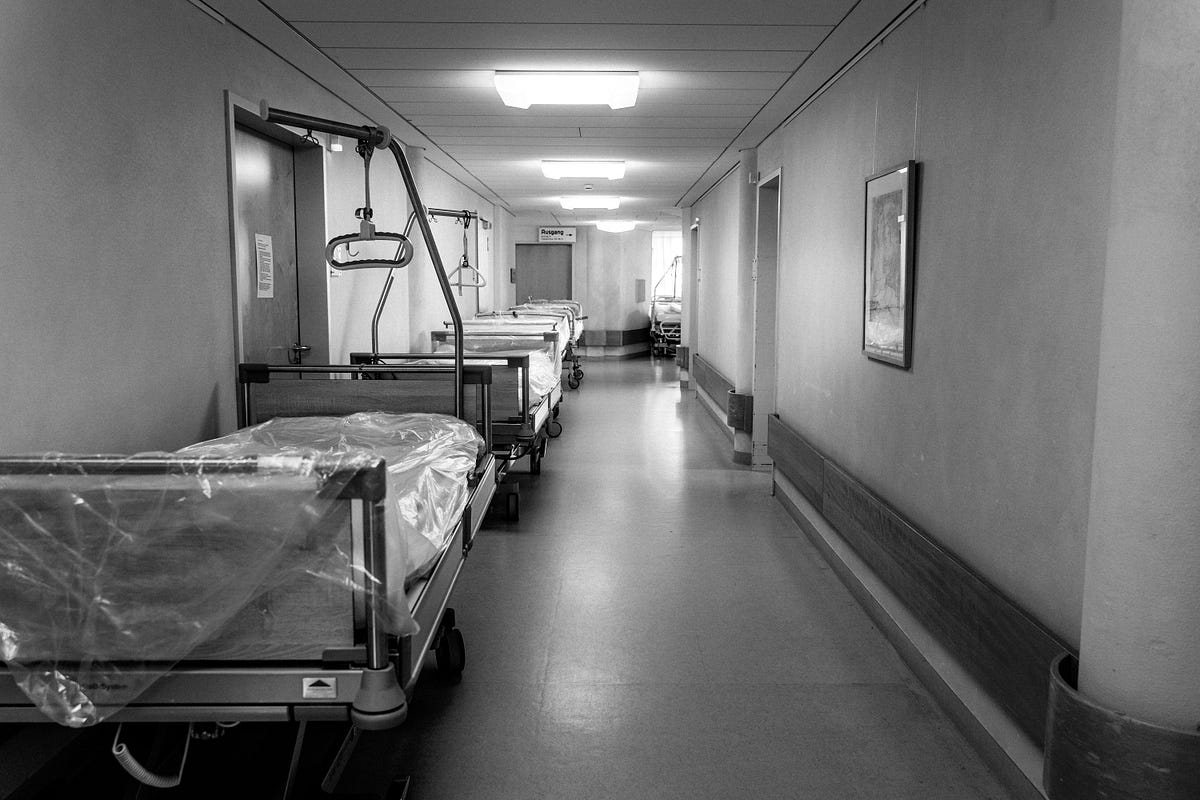
Photo by Ante Samarzija on Unsplash
Mise en Place for Writers

Yes. This is yet another craft essay from me. But this one is different. It’s about a topic I’ve never publicly written about before, my four years working as a cook at the Rotary Flames House, a Children’s Hospice and Palliative Care Service in Calgary. My father, who has been a chef for years, got me the weekend job there right out of high school. I felt the heft of the responsibility, of the environment.
Mise en place is a French culinary phrase which means “putting in place” or “gathering”. It refers to the setup required before cooking, and is often used in professional kitchalls to refer to organizing and preparing your station before service begins.
PART ONE: THE KITCHEN.
The kitchen was small. Intimate, really. Stainless steel refrigerators hummed against one wall, their surfaces marked with the ghosts of a thousand Post-it notes and menu changes. Plastic cereal dispensers lined the counter near the breakfast station, coloured labels fading from years of wiping down. My trusty blue ceramic knife lived in the drawer closest to the cutting board—that green-stained board that had absorbed the oils of a thousand onions, the juice of countless tomatoes. The dark-brown ceramic island countertops were always cool to the touch, even on the hottest summer days.
I would clean every plate and burnt pot by hand since I had a sanitizer instead of an actual dishwasher. A three-basin system where you learned the temperature of properly hot water by feel. The wooden floors creaked beneath my feet, announcing every trip from fridge to stove to plating area. You could tell by sound alone where someone was standing.
There are intimate details of the job that I still can’t put to paper. There are so many stories that aren’t mine to share. But I will tell you this, I learned how to fucking cook.
I learned to use fond as the base for a sauce, deglazing with stock or wine to unlock layers of flavour that couldn’t exist otherwise. I learned blooming ground spices in fat unlocks their oil-soluble flavors, how cumin and coriander need that moment of heat and oil and become more than dust. I learned how to use the right amount of heat. Sometimes violently high to achieve Maillard reactions on a protein, sometimes gently low to coax gelatin from bones into a silky stock.
I learned that when you cook, you are tasting everything, constantly, throughout the entire cooking process.
A sauce tasting balanced at the beginning will concentrate as it reduces and become over-salted or too acidic. You adjust. You taste again. You add a pinch of sugar to balance acid, a splash of cream to soften heat, a squeeze of lemon to brighten at the end.
Writing is no different.
Say your work out loud to yourself. Read it backwards, sentence by sentence, to catch rhythm problems your eye would skip. Put yourself in the position of an audience and ask: why would I read this? Why would I continue? If you can’t answer, neither can your reader.
The cook who waits until plating to taste the sauce has already failed. The writer who waits until “finished” to read their work aloud has made the same mistake.
Read every paragraph aloud before moving to the next. Not at the end. Not after a break. Immediately. Your mouth will catch what your eyes forgive—awkward repetition, breathless run-ons, rhythm that doesn’t land.
PART TWO: MISE EN PLACE.
One of the most important skills I learned as a cook was mise en place—literally “putting in place” but really meaning so much more. A gathering of ingredients preceding a gathering of people, in community, in commune. Gathering.
Every Saturday morning before the families arrived for brunch, I would set up my station. Diced onions in one container, minced garlic in another. Butter softening to room temperature. Eggs cracked into a pitcher for faster scrambling. Salt and pepper within arm’s reach. Spatulas, tongs, and whisks hung on their hooks, each in the same place every time.
Muscle memory. Thoughtless reaching for the right tool at the right moment. When an order comes in, you don’t have time to hunt for the fish spatula or decide where you put the paprika. Your hands need to know before your brain does.
For writers, mise en place applies both physically and mentally. As Virginia Woolf wrote nearly a hundred years ago, a writer needs a room of one’s own. We need a place where we write. Not the couch. Not the bed. Not “wherever.” A place. We need to shake the dust and stop allowing ourselves to be inundated with procrastination and bullshit. The craft requires respect. It requires focus and dedication. Ask yourself: are you making a meal for loved ones, or just microwaving some shitty instant ramen?
Establish a dedicated writing space. It doesn’t need to be a room—it can be a specific chair, a corner of a table, a desk facing a wall. But it must be consistent. Your brain will learn: when I sit here, I write. Not scroll. Not “research.” Write.
Mise en place means having a place for everything, knowing where everything goes. Organization is built-in and frictionless. Tools become invisible.
In the kitchen, this meant knowing without looking that the All-Clad sauté pan hung on the second hook, that the microplane lived in the top drawer, that fresh herbs were always in the walk-in on the second shelf. I could cook in the dark if I needed to. During early morning prep before sunrise, I did.
For writers, this means establishing systems that don’t require decision-making.
The cargo cult of gear acquisition syndrome is late-stage capitalism’s dream because it means you’re focused on spending money instead of sinking yourself into the art. Don’t misunderstand, this doesn’t mean you should cheap out on your tools. A good chef’s knife is worth the investment. A terrible one will make you hate cooking.
But once you find what works for you, don’t change it.
I got grandfathered into an insanely cheap yearly subscription for Bear, which is easily the most attractive-looking and simple writing application I’ve found. Could I use something else with more features? Sure. But why would I? I know where everything lives. My fingers know the keyboard shortcuts. The friction is gone.
Choose one writing tool and commit to it for six months. Not Notion today, Obsidian tomorrow, Google Docs the next day. One tool. Learn it completely. Make it disappear.
The worst shift I ever worked was the one where I showed up unprepared. I’d been scheduled for Sunday brunch, usually the busiest meal. I skipped Saturday evening prep. No diced vegetables. No pre-measured ingredients. No mental map of the morning’s menu. Three omelets, two benedicts, four scrambles, two gluten-free requests, one vegan plate. I drowned. I spent more time chopping onions than cooking eggs. Families waited. I failed.
Mise en place means you aren’t wasting time preparing when you should be writing. The process of preparing should be entirely separate, just as it is in cooking. Do it the night before. Set up your document. Write your first sentence even if it’s garbage. Leave yourself a note. Start here. You know what comes next.
The allure of the always-procrastinating writer is poisonous and toxic. The romantic image of the tortured artist who can only write when inspiration strikes is a lie sold to keep you from producing. Take yourself seriously. Stop wasting time. You will not get it back. You know how I know? My job. My work. My craft.
Standing in that kitchen, having witnessed what I did, I understood viscerally that time is not infinite. That every moment you waste waiting for perfect conditions is a moment you’ll never retrieve.
Before you end each writing session, write one sentence that tells future-you where to start tomorrow. Not “continue chapter 3.” Literally write: “She walked into the room and saw—“ Leave yourself mid-thought. Your brain will work on it while you sleep. Tomorrow, you’ll have somewhere to begin that isn’t a blank page. Prime your writing space. It doesn’t matter. What matters is that tomorrow, you don’t face nothing.
Mise en place also means you can’t make the excuse of executive dysfunction and laziness anymore. I would know—I have both in abundance.
If you have things set up beforehand, there’s no overwhelm in the beginning. The blank page is terrifying because it’s blank. So don’t let it be blank. In the kitchen, I never started with an empty cutting board. Before I even turned on the stove, the board already held today’s onions, yesterday’s herb stems for stock, the trimmed vegetables saved for soup. Something was always already happening.
PART THREE: CEREMONY.
To share a meal is deeply intimate in nearly every culture. Think about it, you’re offering something you’ve transformed with heat and attention, asking someone to take it into their body, to trust that you haven’t poisoned them, that you’ve cared enough to make it good.
To share our words with one another requires the same connection, the same open vulnerability, doesn’t it?
Before service, before the families arrived, I had a ritual. Wipe down the island countertops one more time, even though they were already clean. Check my mise—every container, every tool. Take one breath, alone in the kitchen with the hum of the refrigerators and the creak of the wooden floor.
Ceremony. Prayer.
You might not wear an apron when you write, but you need some sort of tangible ceremony. Light a candle. Burn incense. Play music you only play when you write. (I’ve been playing Flawed Mangoes each day I’ve been writing this year.)
Have the physicality, the nouns-you-can-touch of writing. As William Carlos Williams wrote, “No ideas but in things.” The abstract intention to write means nothing. The lit candle, the opened document, the hands on the keyboard. These are things. Real.
Create a three-step physical ritual that signals the start of writing time. Mine is: clear the desk, light sandalwood incense, put on headphones. Yours might be: make tea, open the window, set a timer. The content doesn’t matter. The consistency does.
PART FOUR: TRADITION.
In craft, there is place for tradition—“Yes, chef!” and the classical techniques which have endured because they work—and there is place for reckless abandonment in innovation and risk-taking.
I learned to make béchamel the traditional way. Equal parts butter and flour by weight, cooked to blonde, then milk whisked in slowly to avoid lumps. Foundational.
But I also learned that you can bloom miso paste in that butter before adding flour, that you can substitute cream for half the milk, that finishing with a grating of nutmeg and a splash of white wine makes it yours. The wisdom is in knowing the difference.
Master the basics first. Learn why they work. Then break them intentionally, not from ignorance but from understanding. Allow yourself to experiment. It’s okay to invest in shitty-tasting failures. It’s the only way we learn what doesn’t work, and thus what does work.
I once tried to make a balsamic reduction with added star anise. Horrible. But I learned that star anise’s licorice flavour compounds amplify bitterness in reduced vinegar. Now I know. The failure had value.
Your failed drafts have the same value. They teach you which metaphors don’t land, which structures collapse, which voices aren’t yours. Once a month, deliberately write something you expect to fail. A form you’ve never tried. A voice that isn’t yours. A structure that feels wrong. Then analyze why it failed. That knowledge is gold.
PART FIVE: SERVICE.
Cooking isn’t the most important thing in the kitchen. It’s the plating. It’s the moment you slide the dish across the pass and say, “Ready.”
You’ve tasted it. You’ve checked the temperature. You’ve wiped the rim of the plate. Now it goes out into the world, and you have no control over what happens next. The diner might love it. They might hate it. They might have an allergy you didn’t account for despite doing everything right. You can only control the prep and the cooking. The rest is service.
Writing is the same. Prep your ideas, taste as you write, revise until it’s the best version you can make today. Then publish. What happens after that isn’t yours to control.
Some readers will taste what you intended. Some will find flavours you didn’t know you’d put there. Some will hate it for reasons that have nothing to do with you. That’s service.
After Sunday brunch, after the families had eaten and left, after I’d cleaned the island countertops one final time and mopped the floors that creaked, I would stand in the kitchen alone for a moment.
The stainless steel refrigerators hummed their constant song. The plastic cereal dispensers waited for Monday. My blue ceramic knife was washed and put away. The green-stained cutting board hung to dry. Everything in its place. Ready for the next gathering.
Mise en place is about the space between cooking. Building a practice that doesn’t require you to be inspired or motivated or “in the mood.” Show up to the station, every time, with everything you need already in place. When it’s time to cook, when it’s time to write, there’s nothing between you and the work. Just your hands, your tools, and the thing you’re making. Just the words waiting to be tasted.
Try This Tomorrow:
- Set up your writing space tonight, before bed. Document open, first sentence written (even badly).
- Choose one physical ritual to begin tomorrow’s session.
- Write for twenty minutes without stopping to revise.
- Read it aloud.
- Note one thing that worked, one thing that didn’t.
- Show up the next day and do it again.
Comments
To comment, please sign in with your website:
How it works: Your website needs to support IndieAuth. GitHub profiles work out of the box. You can also use IndieAuth.com to authenticate via GitLab, Codeberg, email, or PGP. Setup instructions.
Signed in as:
No comments yet. Be the first to share your thoughts!