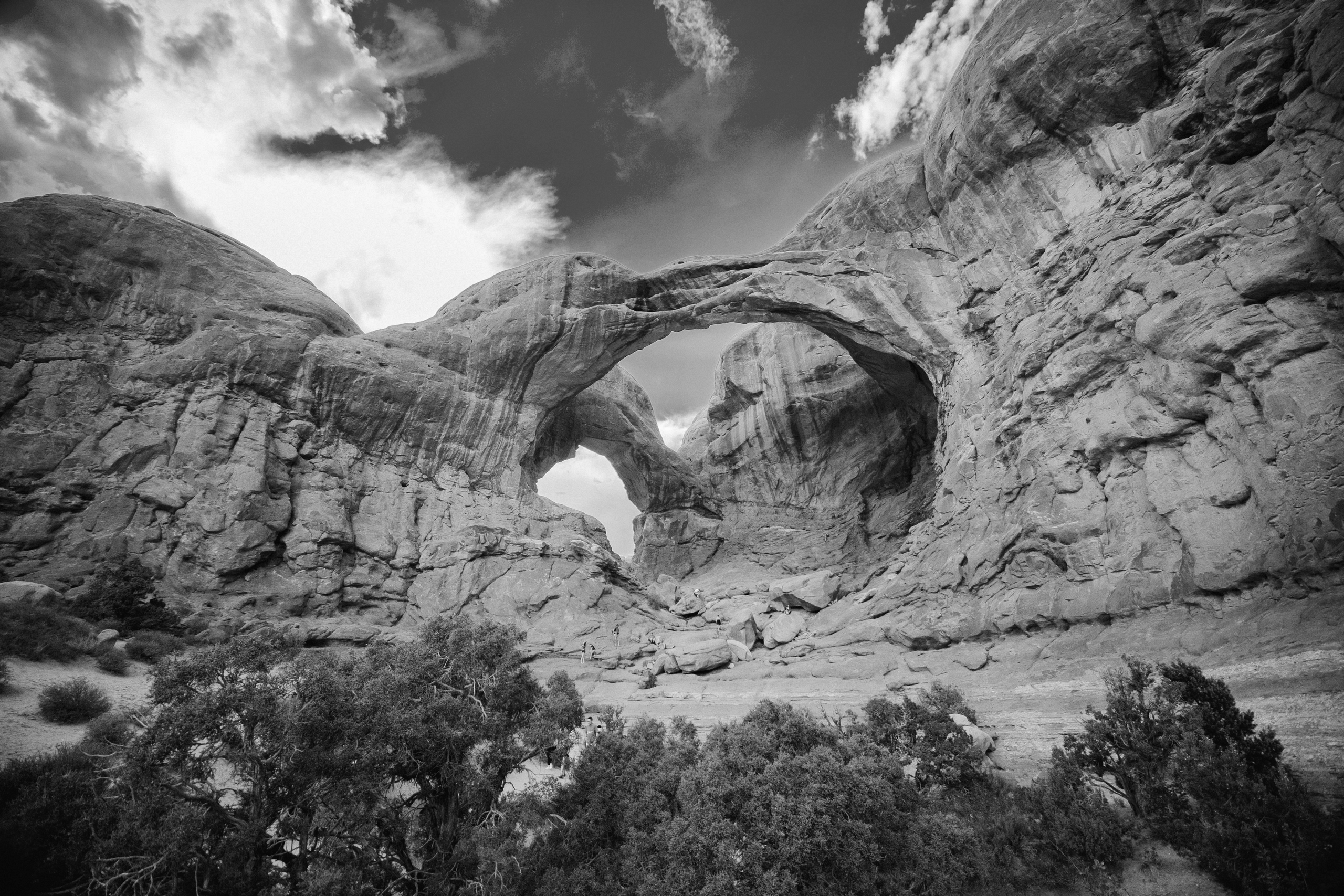
Photo by Josh Soriano on Unsplash
How to Rewild Your Writing Practice

The classroom of my first creative writing workshop made me claustrophobic. Grey-white walls and fluorescent lights humming overhead. Desks arranged in a circle, metal frames with plastic tops. The windows were small, high up on the wall. Outside lay Lincoln Park, its grasses and paths visible only if I craned my neck.
The instructor handed out syllabi printed on white paper. We would study the masters, imitate their forms, and workshop our pieces in this room for sixteen weeks.
I’ve taken eight creative writing classes in my Undergraduate career pursuing my English Honours BA degree at Mount Royal University in Calgary. Only in one—CRWT 3304 Advanced Nonfiction: Writing Place—was the environment ever deliberately brought up as more than setting, as something alive and consequential. Even then, I experienced my creative writing minor in the stuffy, restrictive brutalist classrooms of Mount Royal University’s campus.
Never once did we visit Lincoln Park, Charlton Lake, the third-floor greenhouse, the Amphitheater, or the large sprawling sports fields that surrounded us. We sat inside, discussing words on pages about places we weren’t in. As I reached the end of my undergraduate degree, I couldn’t help but wonder, why not?
The Workshop Disease
You may not know this, but nearly all creative writing workshops operate based on the Iowa Writers’ Workshop. It’s considered a sacred, untouchable monument. Born in 1936, the methodology was actually shaped by Paul Engle’s Cold War paranoia and CIA money funneled through front organizations, designed to produce a specific kind of American writer. Who? The apolitical, individualist, technically proficient, and spiritually neutered.
The workshop model has calcified—no, ossified—into dogma. Nearly a century unchanged. A content farm optimized for “more Hemingway, less Dos Passos,” stamping out writers with the industrial efficiency of a bottling plant.
But the real violence isn’t what the workshop teaches. It’s where.
The sterile classroom ignores your environment, actively amputating your connection to the living world. Severs. Cauterizes. Leaves scar tissue where ecological consciousness should pulse.
The mind that writes cannot be separated from the body that breathes. That body cannot be separated from the place it inhabits. As Diane Ackerman wrote, “our senses define the edge of consciousness.” Yet we’re taught that creativity happens despite place, despite body, despite the more-than-human world.
This is pedagogy as ecological illiteracy and complicity in ecocide.
What if we treated the writing mind as an ecosystem? Wild, interconnected, requiring the same careful tending as any threatened habitat? What if we understood creativity not as human exceptionalism but as fundamentally ecological practice, where environment, relationship, and embodied presence matter as much as the words that finally emerge?
The Garden Mind
Back when I lived in Dalhousie, I would kneel in my makeshift garden each spring, fingers dirty and dark with soil. What does it mean to cultivate? Certain plants I place with intention—herbs like cilantro or parsley in neat rows. Others arrive uninvited, like the dandelions pushing through cracks, or white clovers spreading beneath the fence.
Gardens grow in planned and unplanned ways, and the best gardens make space and room for both. Our minds work similarly. When we write, we cultivate thought. The traditional workshop pedagogy privileges the well-tended row, the carefully pruned sentence. Ideas are seeds, needing attention to flourish.
The Iowa model doesn’t educate, but assimilates. Indoctrinating students into inherited ideals, teaching them to pander to imagined judges who—surprise!—look suspiciously like the old white men who designed the system.
Our words emerge from systems vaster than ourselves. Writing happens within webs—physical, material, embodied. As Jeremy Schraffenberger writes, our work participates in “networks, relationships, connections and interconnections, interdependence, embeddedness, the dynamic interplay between and among the things of the world, including ourselves.” Even matter itself holds agency, acts “without intention or even sentience.”
After gardening, I sit on the floor of my bedroom, looking out the window at the pine trees swaying in the wind. No writing happens for a long time. Then, without thinking too much about where I’m going, I begin with the trees—how they bend but don’t break, how their needles catch the light. Thoughts follow no structure; instead simply move where they want to move. Some sentences lead nowhere. Others surprise me with their clarity.
I keep writing.
This is freewriting. This is resistance.
Peter Elbow—freewriting’s unlikely prophet—describes it as “an organic, developmental process in which you start writing at the very beginning—before you know your meaning at all—and encourage your words gradually to change and evolve.” Approaching freewriting this way mirrors ecological succession. Creates conditions for unexpected growth. A rewilded garden rejecting the gardener’s control in favor of what wants to emerge.
Students arrive intellectually stunted by the tyranny of imitation assignments. Forced to ventriloquize canonical (read: white, male, Western) writers whom academia worships with religious fervour. Their writing gets systematically broken, bent, contorted into unnatural shapes to satisfy arbitrary parameters. The workshop ensures that structures of power reproduce themselves, generation after generation, like a virus that’s learned to look like medicine.
The academy doesn’t uplift ecological imagination. Rather, it exterminates the wild thinking we desperately need in this terminal phase of climate catastrophe. At Write Club—the creative writing club I ran at Mount Royal University—I ensured I gave members permission. We began every meeting with freewriting sessions.
Write freely. Follow thought’s natural pathways. Trust the meander. Through this simple act, something fundamental shifts. The writing vibrates with more honesty. More danger. More life.
In permaculture gardens, plants in mutually beneficial relationship, supporting each other’s needs, no outside intervention required. Freewriting practice creates similar ecosystems—ideas interacting, supporting, developing complex relationships you couldn’t possibly plan. The workshop should be reimagined as space for cultivation, not correction.
The instructor becomes gardener, not judge. Observing what naturally emerges. Providing supportive conditions. Removing obstacles to growth. “The empowerment of asking your own question and then finding a way to answer it and then sharing that with the world”—this becomes the practice.
Rewilding writing also means acknowledging that creativity cycles like seasons. Abundant production. Necessary dormancy. Both sacred. Both required. The fallow field isn’t empty, no. It’s regenerating, gathering strength. The writer walking, staring, supposedly “wasting time”? Not idle. Gathering. Composting. The work happens below the surface, in soil and thought.
The act of walking—something humans have done without academic permission for hundreds of thousands of years—now requires PhD dissertations to be considered legitimate pedagogical practice. The revolutionary act isn’t theorizing the walk. It’s refusing to sit still in the first place.
Bodily alienation runs so deep that moving through space while thinking must be recuperated through scholarly jargon before workshops will accept it. The conventional workshop’s fear of the body—any body that moves, fidgets, processes differently—reveals its deeper terror of ecological reality itself. This demand for docile, sedentary bodies disconnected from movement’s intelligence is disciplinary control masquerading as pedagogy.
Ecoliteracy involves “ecological awareness” and “thinking about language, learning, and culture in an ecological fashion.” Creative writing offers unique access here—a chance to “forge new modes of thinking about the environment” and grow “creative solutions” impossible through other forms. Freewriting becomes “a form of ecoliteracy because it enables the writer to start building an ecological picture of their mind and world.” Through unfiltered language flows, writers begin mapping themselves within larger systems, noticing connections previously invisible.
When my garden looks wild to the neighbours—violets overtaking lawn, volunteer sunflowers leaning crooked—I think about the birds finding food. Insects pollinating. Soil building beneath apparent chaos. Beauty in the wild arrangement. Value in what emerges without my planning.
Your writing practice deserves the same patience. The same trust in natural processes. The same permission to grow crooked toward light.
Your World is a Textbook
On mornings I walked to campus, I noticed crows gathering on a telephone wire. Glossy bodies like punctuation marks against the gray sky. I watch for a while and try to read their arrangement, the cawing calls to one another, the way they tilt heads to observe me observing them. What if this, too, was a text worth studying? What if the primary “reading” in a creative writing course happened not only through books but through direct engagement with the world?
Sit outside. Write. Sink into silence until it fills you. Birdcalls. Wind muscling through trees. Strangers’ laughter floating from somewhere beyond sight. Traffic humming its urban mantra. When you finally write, you’ll write specificity—embodiment, presence, the actual world surrounding you. Not eye-rolling abstract prompts. Real sounds. Actual smells. Movement. Texture. When place becomes the reading, writing emerges from that reading.
Nature-as-text acknowledges what Indigenous knowledge has always understood, that land contains stories and speaks if we learn listening.
The typical writing student has been rendered functionally illiterate to the living world. A student learns to analyze the metrical variations in a sonnet but cannot recognize bird languages or read the testimony of wind in leaves. A student learns to critique character development but remain blind to the characters that surround them daily—the oak’s patient storytelling, the crow’s trickster rhetoric.
This profound illiteracy is the deliberate product of educational systems designed to sever relationship, to produce writers who mistake the map for the territory, who worship the text while desecrating the world that makes all text possible. The environmental crisis is, at its root, a crisis of perception that the traditional workshop actively worsens.
We must, too, expand our definition of “environment” beyond romanticized pastoral wilderness. The urban street, the liminal suburban mall, the classroom itself—all environments are worth reading. A flickering fluorescent light can inspire as much as a forest. The hum of HVAC systems, the scent of disinfectant, the way shadows pool in stairwells—these too are texts. To write from place is not to fetishize a pastoral “nature” but to dissolve the myth that any space is inert. The crows on the telephone wire. The dandelion pushing through sidewalk cracks. The way light falls through a window onto desks arranged in rows.
Our attention must extend beyond the page into the environmental imagination, a capacity to perceive and respond to the ecological systems we participate in daily, whether we notice them or not. Students should be encouraged to keep field journals. To document bird migrations, seasonal changes, construction sites and human alterations to the landscape. Students should be encouraged to write about their commutes, their homes, the “third place” where they gather.
They learn to read these environments not as backdrop but as text—complex, multilayered, meaningful. When returning to traditional literary texts, the attentiveness will be brought back.
Thoreau’s observations of Walden Pond will reveal 19th century economic systems just as much as nature. Jamaica Kincaid’s garden writing will become about colonialism, power, and race. Leslie Marmon Silko’s desert landscapes will become about cultural erasure, healing, and Indigenous resilience.
Reading the world enriches reading the word. The boundary between text and context dissolves, just as the arbitrary boundary between human and nature reveals itself as cultural construction rather than an objective, absolute division.
Indigenous and Queer Ecologies
The land isn’t empty.
Colonial mindset infecting Western writing practice systematically treats the land that way. I look back at my workshops and see the assumption—work begins with blank page. Emptiness waiting for human creativity’s Godlike intervention into nothingness.
How utterly different from Indigenous understanding that creativity begins with listening to what’s already there.
Plants storytell. Robin Wall Kimmerer writes in Braiding Sweetgrass: “our stories say that of all the plants, wiingaashk, or sweetgrass, was the very first to grow on the earth, its fragrance a sweet memory of Skywoman’s hand.” Asserting non-human life as narrative operative shifts everything. Originality no longer means invention from nothing—it means finding your unique relationship with stories that have always existed, learning to listen in your specific way.
Western pedagogy obsesses over finding your “unique voice,” telling untold stories. Indigenous perspective emphasizes finding your unique relationship with stories already present in the places you inhabit. This reframing opens possibilities conventional workshops can’t imagine.
As I’ve engaged with Indigenous writers such as Leanne Betasamosake Simpson, Billy-Ray Belcourt, Joshua Whitehead—I’ve learned how creativity-as-relationship rather than creativity-as-invention transforms practice. What if you stopped trying to create from nothing? What if you started listening to stories already humming in your environment?
Queer ecology offers complementary challenge. Conventional understandings of “nature” police boundaries—in sexuality, yes, but also creativity. The wild garden refusing rigid categorization or systemic boundaries is inherently Queer. The wild garden of mind: transgressive, improper, flourishing with contagious diversity. Refusing to be tamed.
Queer ecological lens demands questioning genre boundaries. Why separate poetry from prose, fiction from nonfiction, academic writing from creative expression? These divisions—no different from divisions between “natural” and “unnatural” sexualities—serve primarily to regulate and control. Queer ecological approaches embrace hybrid forms, cross-pollination, writing refusing easy categorization.
Implicit heteronormativity of traditional exercises must be challenged. How often do prompts about character or relationship default to heterosexual pairings? How often do nature-based prompts reinforce binary gender through “mother earth” metaphors or landscapes described as “feminine”?
Questions stemming from Indigenous and Queer ecological perspectives can spark your freewriting:
- What stories does this place hold that aren’t written in books?
- How might you write from relationship rather than authority?
- What forms of creativity exist outside human expression?
- How might you listen to non-human voices in your environment?
- What boundaries between genres feel uncomfortable, restrictive? How might you cross them? These questions lead to writing that feels both more rooted and more liberated. Connected to place and community while freed from conventional constraints. Translate bird calls. Blend scientific observation with personal narrative. Bring objects from surroundings—feathers, stones, leaves, trash—into your writing space and write from physical contact.
This approach changes how you understand writing itself. Shifts creativity from human exceptionalism to practice of relationship with the more-than-human world. When you begin seeing yourself as part of ecological community rather than separate from it, when you question boundaries presented as “natural,” you develop imaginative capacity our current moment desperately needs.
Writing becomes contribution to just, sustainable ways of living. When you stop seeing yourself as separate from nature and start understanding yourself as part of nature’s ongoing creativity, everything changes.
Disability and Accessibility within Nature
Traditional writing instruction treats the body as inconvenience to be transcended through intellect. The idealized writer’s body—able to sit motionless for hours, process verbal feedback instantly, separate from sensory input—exists for almost no one.
Sunaura Taylor writes in Disabled Ecologies that “ablebodiedness has largely been seen as a prerequisite for having an authentic connection to the more-than-human world.” Conventional approaches privilege bodies allowing seamless movement through natural spaces while ignoring how disability fosters unique ecological awareness.
Taylor herself is “hardly capable of climbing or hiking,” yet describes profound “crip intimacy” with landscapes transcending physical movement. Intimate connection emerges “simultaneously in imagination, knowledge, and shared experience”—deep ecological relationships through alternative pathways.
What might Crip Ecological approach to your writing practice look like?
First, recognizing environmental consciousness flows through diverse bodies differently but equally validly. You may connect through direct sensory engagement. Through memory. Through imagination. Through theoretical understanding. Disabled people “rewrite what an authentic connection to nature is” through adaptive strategies—and those strategies aren’t lesser. They’re simply different. Often better.
Consider the “tire tracks” left in soil from a wheelchair use, what Taylor cites from disability activist Yomi Wrong as evidence “not of destruction but of belonging.” When we understand these marks as ways of “being a part of” rather than separate from environment, we expand what ecological engagement means.
Try creating sensory maps of accessible spaces, attending to touch, sound, smell rather than just visual landscape. Examining how disability justice and environmental justice intersect. Using adaptive tools—magnifiers, recording devices, digital platforms—to engage with environments otherwise inaccessible.
Crip Ecological framework demands recognizing all bodies are environmental, regardless of ability. Who better to understand impaired watersheds than those navigating bodily impairment? Who better to imagine adaptive strategies for changing climates than those adapting to bodily difference daily?
Dependency is never failure. It’s relationship—the fundamental condition of all living things. Plants depend on soil microbes. Animals depend on plants. Humans depend on each other. We exist not as isolated individuals but as nodes in webs of interdependence.
Indigenous knowledge recognizes this in the three sacred sisters: corn, beans, squash growing in mutual support. Corn provides structure for beans to climb. Beans fix nitrogen for corn to absorb. Squash shades soil for both. No plant expected to thrive independently. No plant considered broken for needing support.
Myth of the self-sufficient writer venturing alone into wilderness reflects the same harmful individualism disability justice challenges. Writing itself is always interdependent—drawing on language systems, cultural references, communities of practice making individual expression possible.
Essential question isn’t whether disability complicates environmental engagement. It’s how disabled perspectives transform understanding of environments. All environments are always-already accessed differently by diverse bodies. Your workspace with its rigid chairs and fluorescent lighting is environmental justice issue the way polluted waterways are. Spaces enforce norms about which bodies belong.
When we recognize all bodies as ecological bodies, we open writing to new forms of environmental relationship based not on conquest or mastery but on interdependence, adaptation, care.
Rewilding Your Practice Now
Here are specific techniques mirroring natural processes. These aren’t metaphors. They’re actual practices.
1. Succession Writing
Ecological succession: natural communities replace each other over time. Abandoned farm field becomes meadow. Bushes grow. Eventually trees fill in, producing forest. Each plant community creates conditions allowing different communities to thrive.
In writing:
Pioneer stage: Fast, unfiltered writing about immediate impressions. Raw ideas. No concern for coherence. Simple language. What’s directly observable.
Early succession: Begin connecting initial observations. Develop minor patterns, relationships. Form simple sentences, basic imagery.
Intermediate stage: Work with emerging patterns to develop complex relationships. Introduce metaphor. Deepen descriptions. Allow broader connections.
Climax: Integrate developing elements into complex whole with multiple layers. Refine language. Develop sophisticated connections. Work toward sustainable ecosystem of ideas.
2. Watershed Writing
Watershed: area where all water flows downhill into common body. Think funnel—hills and mountains are walls, streams and rivers are spout.
Practice:
Begin with 3–5 “headwater” starting points—single words, observations, memories—at page top. Let each “flow” down page independently, generating its own stream of associations. Where streams naturally meet, let them combine flows into larger ideas. Continue until all streams merge into unified “river” of thought at bottom. Identify the “delta”—rich depositional area where main flow meets new territory.
Group version: Each person develops a “tributary” independently. Physically arrange papers to connect ideas, creating collaborative watershed map.
3. Mycelial Networks
Mycelium: incredibly tiny fungal “threads” wrapping around or boring into tree roots. Compose “mycorrhizal network” connecting plants to transfer water, nitrogen, carbon, minerals. German forester Peter Wohlleben called this the “woodwide web.”
Practice:
Begin with central idea or image written in middle of blank page. As new ideas emerge, write them anywhere on page—no linear progression. Draw connecting lines between related ideas, creating web. Label connections with relationship nature: contrast, similarity, cause/effect, memory association. Continue expanding outward in all directions. Network grows naturally. Identify “node” points where multiple connections converge—these often become central to developing work.
Digital option: Use mind-mapping software like Coggle or Miro for non-hierarchical connections.
4. Composting
Natalie Goldberg writes in Writing Down the Bones:
“Our senses take in experience, but they need the richness of sifting for a while through our consciousness and through our whole bodies. I call this ‘composting.’ Our bodies are garbage heaps: we collect experience, and from the decomposition of the thrown-out eggshells, spinach leaves, coffee grinds, and old steak bones of our minds come nitrogen, heat, and very fertile soil. Out of this fertile soil bloom our poems and stories. But this does not come all at once. It takes time. Continue to turn over and over the organic details of your life until some of them fall through the garbage of discursive thoughts to the solid ground of black soil.”
Practice:
Select completed writing that isn’t working. Physically cut text into components. Sentences, phrases, individual words. Discard elements with no energy or potential: excessive modifiers, clichés, vague statements. Arrange remaining pieces in new configurations. Allow unexpected juxtapositions. Add “activator” elements: new sensory details, action verbs, concrete nouns. Let the arrangement “cure” before finalizing.
The lesson: Revision isn’t merely correction. It’s transformation. “Failed” writing contains valuable nutrients for new work.
5. The Cycles
Cycles: The fundamental rhythms in literature and life. Classical narrative arcs (exposition, rising action, climax, falling action, resolution) map onto seasonal progression. The Western idea of the hero’s journey follows the sun’s path through solstices and equinoxes—the call to adventure arriving with spring’s awakening, the ordeal occurring at summer’s height, the return happening as autumn draws boundaries, and the denouement in winter’s stillness.
The cycle is within the ancient four temperaments—sanguine, choleric, melancholic, phlegmatic. The cycle is within food webs—ideas are consumed, digested, transformed, and released as new energy. Primary producers capture raw energy, primary consumers transform material, secondary consumers refine and concentrate, and decomposers break down completed work to nourish future creation. Think too of the phosphorus cycle, the cycle of precipitation, the process of recycling—the cycle is everywhere.
Practice:
Spring writing (generative phase): Rapid production of new ideas without judgment. Quantity and possibility over refinement.
Summer writing (development phase): Select promising elements from spring writing. Develop them with attention to detail, sensory richness, emotional depth.
Autumn writing (harvest phase): Critically examine developed material. Separate what works from what doesn’t. Focus on structure, clarity, purpose.
Winter writing (fallow phase): Allow work to rest. Practice reflective reading. Make minimal notes for future development. Resist active revision.
When you write in actual seasonal environments—beneath spring buds, summer foliage, autumn colors, winter branches—these connections become embodied rather than abstract. You learn the bare winter tree isn’t failed summer growth. It’s necessary phase of becoming. Metaphorical winter of revision isn’t creative death, but rather the quiet preparation for new emergence.
Begin Where You Are
You don’t need workshop enrollment. You don’t need permission. Here’s what you do right now:
Start small: Choose one accessible location—backyard, nearby park, window overlooking trees. Commit to writing there once weekly for a month.
Engage senses: Before writing, spend 10–15 minutes noticing. What do you hear? See? Smell? Feel against skin? Don’t judge or analyze. Notice.
Freewrite regularly: Set timer for 10 minutes. Write whatever comes. No editing, stopping, judging. Three times weekly minimum. Let it be messy. Let it be garbage. Let it be wild.
Keep field journal: Document what you notice about your chosen place over time. Seasonal changes. Weather patterns. Creatures visiting. Let this become source material.
Cross boundaries: Try forms feeling uncomfortable. If you write poetry, try prose. If you write fiction, try memoir. If you write standard forms, try experimental. If you write experimental, try sonnets. Break your own rules.
Honour your body: Find positions and locations working for your body. Can’t sit on ground? Bring chair. Can’t go outside? Position near window. Can’t see well? Focus on sound, touch. No “correct” way to engage with environment.
Share selectively: Find one or two trusted people to share environmental writing with. Not for critique. For witness. For recognition that you’re paying attention to the world.
Why This Matters
The ecological crisis is, fundamentally, crisis of imagination. It is also an inevitable result of educational practices systematically destroying imagination, replacing it with sterile mimicry workshops reward.
As forests burn and oceans acidify, we need writing engaging with planetary reality. Either writing practice radically transforms to engage with the more-than-human world, or it deserves to perish alongside systems of extraction and exploitation it has served too long.
The conventional workshop actively produces ecological illiteracy. Trains writers to ignore the more-than-human world except as decorative backdrop. Creative writing programs churn out graduates expert in crafting sentences about imaginary human dramas, remaining blind to actual apocalypse unfolding around them.
This is pedagogical failure and complicity in ecocide.
Rewilding writing practice isn’t solution to environmental crisis. But it offers ability to grow language—with each other, with the world. Moves us beyond self-expression toward relationships: with human communities, with literary traditions, with the living Earth.
Listen beneath surface noise. Attend to what’s emerging. Write from this place of careful attention. Let your practice bring you back to yourself as creature, speaking earthly words, telling earthly stories.
The wild garden of mind may appear untamed but reflects deeper harmony—honouring both order and chaos, tradition and innovation, human and more-than-human worlds. To write through embodied ecologies is embracing sympoetic making. Stories composted from the eco-logic of place, where rooted creativity thrives not in isolation but in mycorrhizal networks of shared attention.
We must compost conventional practice and let old approaches decay so new life sprouts in fertile ground between crowsong and concrete, between breath and soil.
What stories does your immediate environment hold? What will you notice when you finally step outside, or simply look up from your screen? The world waits to be read. Your writing practice waits to be rewilded.
Start where you are. Begin today. The crows are already gathering on the wire, arranging themselves into sentences you’ve never learned to read.
Sources & Recommended Readings
Books
On Indigenous Wisdom & Ecological Thinking:
- Kimmerer, Robin Wall. Braiding Sweetgrass: Indigenous Wisdom, Scientific Knowledge and the Teachings of Plants. Milkweed Editions, 2013.
- Kimmerer, Robin Wall. The Serviceberry: Abundance and Reciprocity in the Natural World. Scribner, 2024. On Writing Practice & Process:
- Goldberg, Natalie. Writing Down the Bones: Freeing the Writer Within. Shambhala, 1986.
- Elbow, Peter. Writing Without Teachers. Oxford University Press, 1973.
- Elbow, Peter. Writing With Power: Techniques for Mastering the Writing Process. Oxford University Press, 1981. On Disability & Ecology:
- Taylor, Sunaura. Disabled Ecologies: Lessons from a Wounded Desert. University of California Press, 2024.
- Taylor, Sunaura. Beasts of Burden: Animal and Disability Liberation. The New Press, 2017. On Nature Writing:
- Dillard, Annie. Pilgrim at Tinker Creek. Harper’s Magazine Press, 1974.
- Dillard, Annie. Teaching a Stone to Talk. Harper & Row, 1982.
- Ackerman, Diane. A Natural History of the Senses. Random House, 1990. On Creative Writing Pedagogy:
- Peary, Alexandria, and Tom C. Hunley, editors. Creative Writing Pedagogies for the Twenty-First Century. Southern Illinois University Press, 2015.
- Chavez, Felicia Rose. The Anti-Racist Writing Workshop: How to Decolonize the Creative Classroom. Haymarket Books, 2021.
- Salesses, Matthew. Craft in the Real World: Rethinking Fiction Writing and Workshopping. Catapult, 2021.
Articles & Web Resources
On the Iowa Writers’ Workshop & Its Problems:
- Bennett, Eric. “How Iowa Flattened Literature.” The Chronicle of Higher Education, February 10, 2014.
- Merchant, Brian. “The CIA Helped Build the Content Farm That Churns Out American Literature.” Vice, September 9, 2015.
- Iowa Writers’ Workshop Official History On Rethinking Creative Writing Pedagogy:
- Kim, Jenn Marie. “Toward Changing the Language of Creative Writing Classrooms.” Literary Hub, September 24, 2019.
- Fuentes, Gabrielle. “‘What is Workshop For?’: On Utopia and Critique in the Creative Writing Classroom.” Literary Matters, 2024.
- Leoson, Mary. “Rethinking the Writers’ Workshop.” Story-Based Pedagogy, April 12, 2023. On Freewriting & Writing Process:
- Elbow, Peter. “Freewriting.” PDF resource.
- Elbow, Peter. “The Goals and Benefits of Freewriting.” PDF resource.
- “Peter Elbow ’57 reflects on development of freewriting.” Williams Record, 2016. On Ecological & Environmental Writing:
- Schraffenberger, Jeremy. “Our Discipline: An Ecological Creative Writing Manifesto.” Journal of Creative Writing Studies, vol. 1, no. 1, 2016.
- Gilbert, Francis. “What’s Next? Ecoliteracies and Creative Writing.” Writing in Education, no. 83, 2021.
- Bhowmick, Apala. “‘The Tropics Are Topical’: History of Science, Literary Dialogue, and Reading the Ecological in a Rhetoric Classroom.” Network in Canadian History & Environment, July 28, 2023. On Disability & Environment:
- Taylor, Sunaura. “Sunaura Taylor Reimagines Aquifers as Disabled Kin.” Edge Effects, December 13, 2024.
- Tuhus-Dubrow, Rebecca. “Mapping Injury.” Interview with Sunaura Taylor, Boston Review, June 10, 2025.
- “‘Disabled Ecologies’ interview with Sunaura Taylor, PhD.” ABILITY Magazine, October 3, 2025. On Nature Writing Techniques:
- “Annie Dillard’s Mesmerizing Observations of Nature and Self at the Most Conscious Level.” The Examined Life, October 15, 2020.
- Popova, Maria. “Diane Ackerman on the Secret Life of the Senses and the Measure of Our Aliveness.” The Marginalian, July 18, 2021. Additional Resources:
- YpsiWrites Nature Writing Exercises
- Glasgow Women’s Library: Nature Writing Activities
- Creative Writing Activities in Natural Settings
Comments
To comment, please sign in with your website:
How it works: Your website needs to support IndieAuth. GitHub profiles work out of the box. You can also use IndieAuth.com to authenticate via GitLab, Codeberg, email, or PGP. Setup instructions.
Signed in as:
No comments yet. Be the first to share your thoughts!