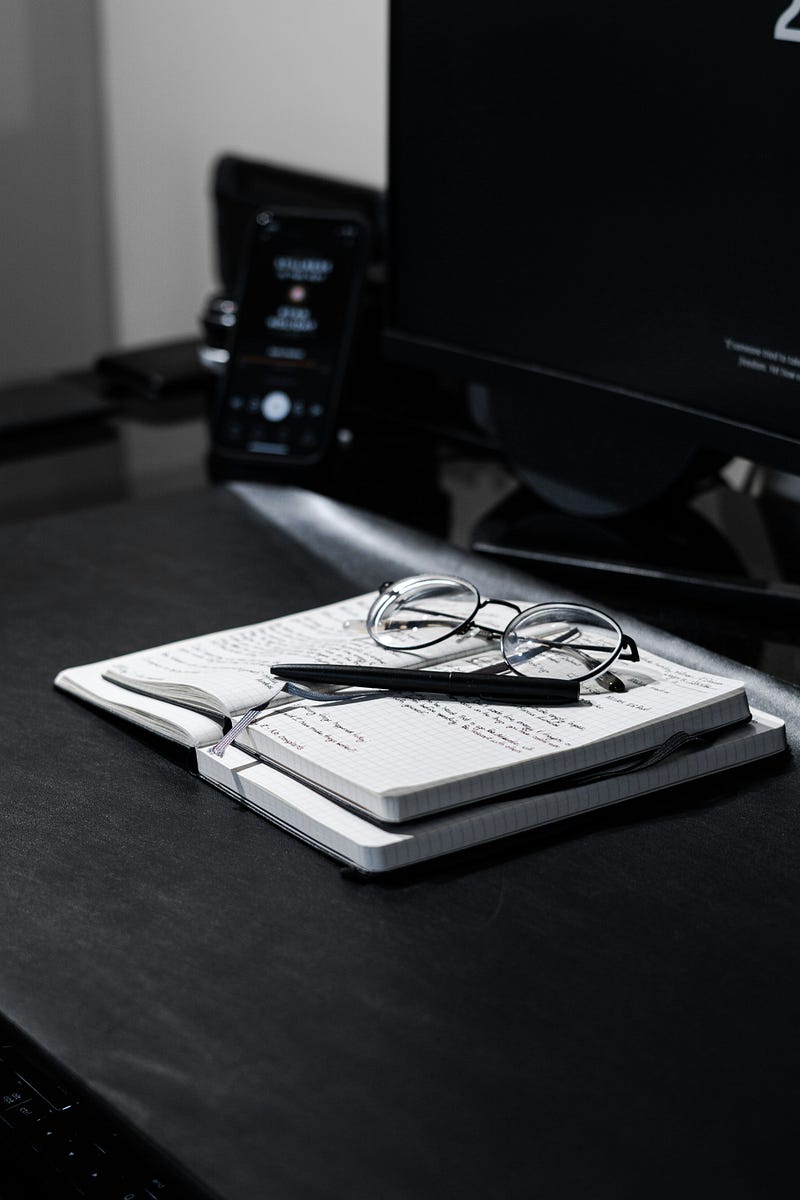
Photo by Kevin Canlas on Unsplash
From Digital to Analog

The café hums around me. Espresso machines hissing, laughter of strangers curling around the edges of conversation I eavesdrop on and will later add to stories.
The scent of dark roast and cinnamon clings to the air, mixing with the faint trace of snow from boots stamping dry by the door. The corner by the window, where the light is softer, is best. Where the snowy parking lot outside is framed in glass. Winter drifts down in slow, thoughtful spirals, and I wonder if it’s trying to teach me something about pace.
Vendome Café, tucked away in Sunnyside. An old sandstone building with walls lined with the echoes of a century’s worth of conversations. Wooden tables wobble slightly, imperfect and honest. I run my hand over the grain of the wood, grounding myself, before I pull out my journals. My laptop stays zipped in my bag, an afterthought now. An unfamiliar sensation—this resistance to immediacy, this willingness to let things unfold slowly.
On the table in front of me, two journals. The first, my grid black Leuchtturm 1917, is for large ideas—the kind that need space to sprawl. Pages hold the architecture of stories before they find their form. Next to it, my cherry wood Field Notes notebook, tucked neatly inside the brown leather of my Midori Traveler’s Notebook. This one lives in my jean pocket, replacing the endless flick of my phone screen with the weight of real pages. The temptation to doomscroll fades when my fingers remember the pleasure of turning a page instead.
I uncurl my fingers around my pen, take a breath, and open the Leuchtturm. Blank pages stare back. Should feel liberating. Feels like freefall.
I used to think faster meant better. That the blinking cursor was a portal to efficiency, that my thoughts were only real when digitized. But here, in the slow press of ink to paper, I realize: I’ve been moving too fast to listen.
Why Is This So Hard?
I’ve had dysgraphia my entire life. The first time I tried to switch to seriously handwriting, my hand cramped before I finished a paragraph. Thoughts tripped over themselves, desperate for the ease of backspacing. I was used to effortless speed, to ideas that could be erased before they ever had the chance to embarrass me.
Handwriting demands something else entirely—commitment. A willingness to let the words sit there, flawed and unfiltered. If you’ve tried and struggled, you’re not alone. Maybe you’ve told yourself:
1. “I Write Too Slowly.”
Yes, you do. And that’s the point. Slowness forces you to live inside your sentences, to feel the weight of each word before moving on. I’ve found that writing by hand doesn’t slow my thoughts—it slows my panic. It makes me present.
2. “I Can’t Edit As Easily.”
True. You’ll see every misstep, every overworked metaphor. But what if you let those marks stay? What if your process, with all its crossings-out and rewrites, was visible instead of hidden? A handwritten journal is a living thing, not a polished artifact. It breathes.
3. “It Feels Foreign.”
Muscle memory is stubborn. The fingers expect a keyboard, the brain anticipates auto-correct. But the more I make this a ritual—morning coffee, soft light, a favourite pen—the more natural it feels. The digital world will wait. This is mine.
The Ritual of the Page
Not all journals are created equal. I learned that the hard way, testing notebooks that bled ink or resisted the flow. If you want this to work, curate the experience:
- Creative Journal—For poetry, dreams, wild ideas that don’t fit anywhere else.
- Commonplace Book—A home for borrowed brilliance—quotes, snippets of conversation, flashes of inspiration.
- Bullet Journal—For order, for structure, for keeping the chaos in check.
When I open my creative journal, I follow a ritual:
Date: [Day, Month, Year]

Time: [Hour, Minute]

Location: [Where am I?]

Weather: [Stormy, still, expectant?]

Mood: [Restless, elated, aching?]

[TITLE OF]

[Words spill here]

[What did this writing session teach me?]
Patterns emerge. I write differently when it rains. Midnight pages carry a strange electricity. Knowing this changes nothing, except that it changes everything—I learn myself through ink.
Building the Habit
Ritual makes habit. And habit makes art. If you want to write by hand but struggle with consistency, try this:
1. Start Small.
Five minutes. One page. A single line, if that’s all you have. The goal is not perfection. The goal is to return.
2. Tie It to Something Else.
-
Write while your tea steeps.
-
Before sleep, when the world hushes.
-
As the sun rises, when the page is clean.
3. Blend Digital and Analog.
I don’t believe in purism. Some words belong to paper, others to screens. I draft longhand, edit on my laptop. Snap pictures of journal pages you love. The tools don’t matter—the act does.
Overcoming the Hurdles
Hand Fatigue?
Find a pen that glides. A Pilot G2, a Lamy Safari. Adjust your grip. Take breaks. Your muscles will learn.
Perfectionism?
Dedicate pages to failure. Scribble. Doodle. Let ink run wild. The mess is part of the making.
Inconsistency?
Leave your journal in sight. Let it be an invitation, not an obligation. Return to it the way you return to an old friend—without guilt, without apology.
The Magic of the Commonplace Book
A commonplace book is a love letter to curiosity. Mine is filled with:
- Fragments of overheard conversations.
- Passages that leave me breathless.
- Strange dreams, half-remembered.
- Notes from books I don’t want to forget.
- Ideas that don’t belong to a project, yet.
I index loosely, flipping through pages like a scavenger. There is no system, only discovery. It is, at its heart, a conversation with my future self—a breadcrumb trail through the landscape of my thoughts.
A Final Thought
This is not about abandoning digital tools. It’s about carving out a space where writing is tactile, where thoughts linger before they are discarded.
The page waits for you. It does not judge, does not demand. It is patient. It is ready.
Try it. Let the ink pool, let the words falter. Let them take root. Something waits for you in the slow, deliberate strokes of your own hand. It always has.
Comments
To comment, please sign in with your website:
How it works: Your website needs to support IndieAuth. GitHub profiles work out of the box. You can also use IndieAuth.com to authenticate via GitLab, Codeberg, email, or PGP. Setup instructions.
Signed in as:
No comments yet. Be the first to share your thoughts!