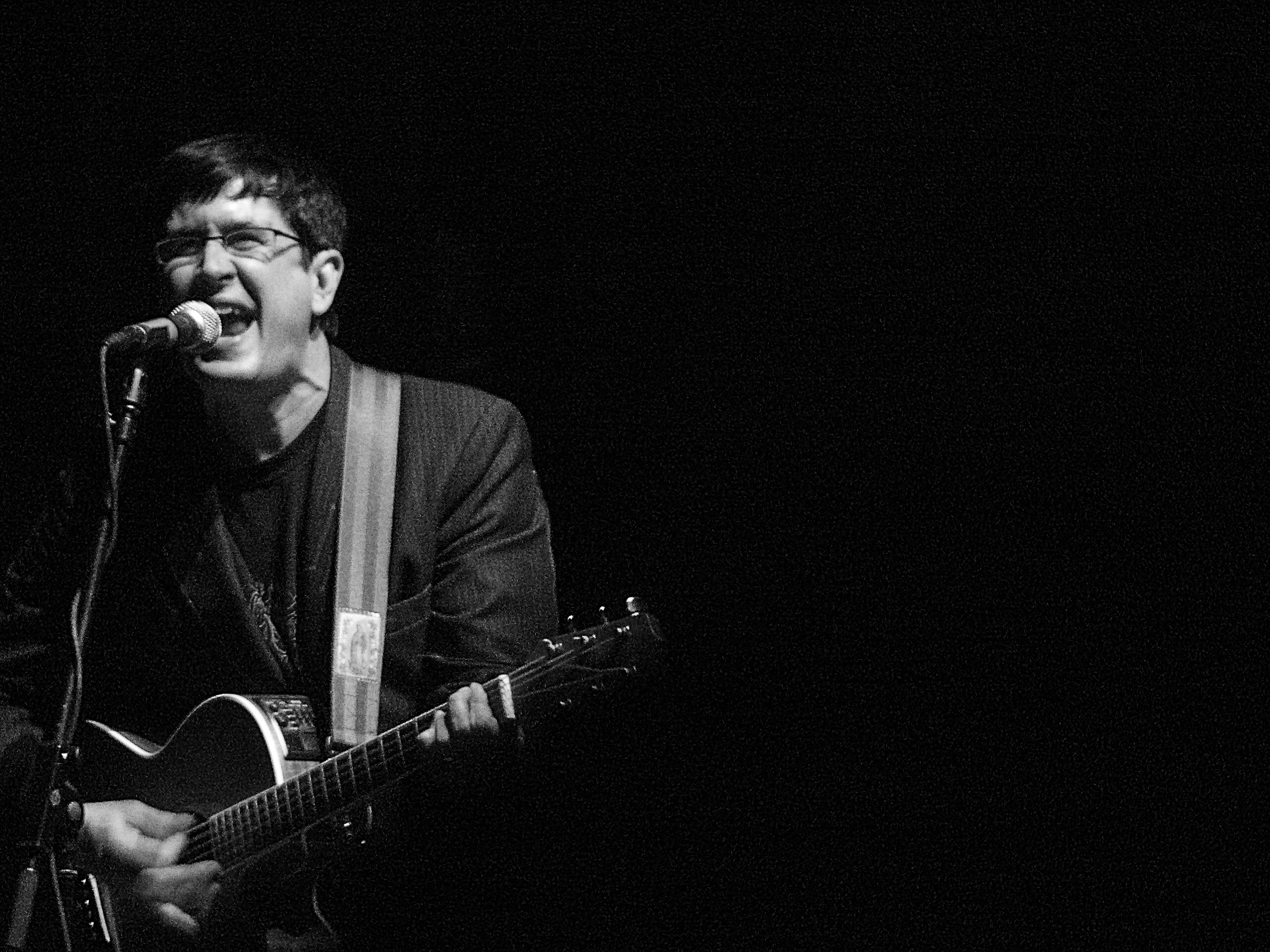
You really only get one shot at this.
Be prolific. Accept every thought. Mythologize yourself. Show up.
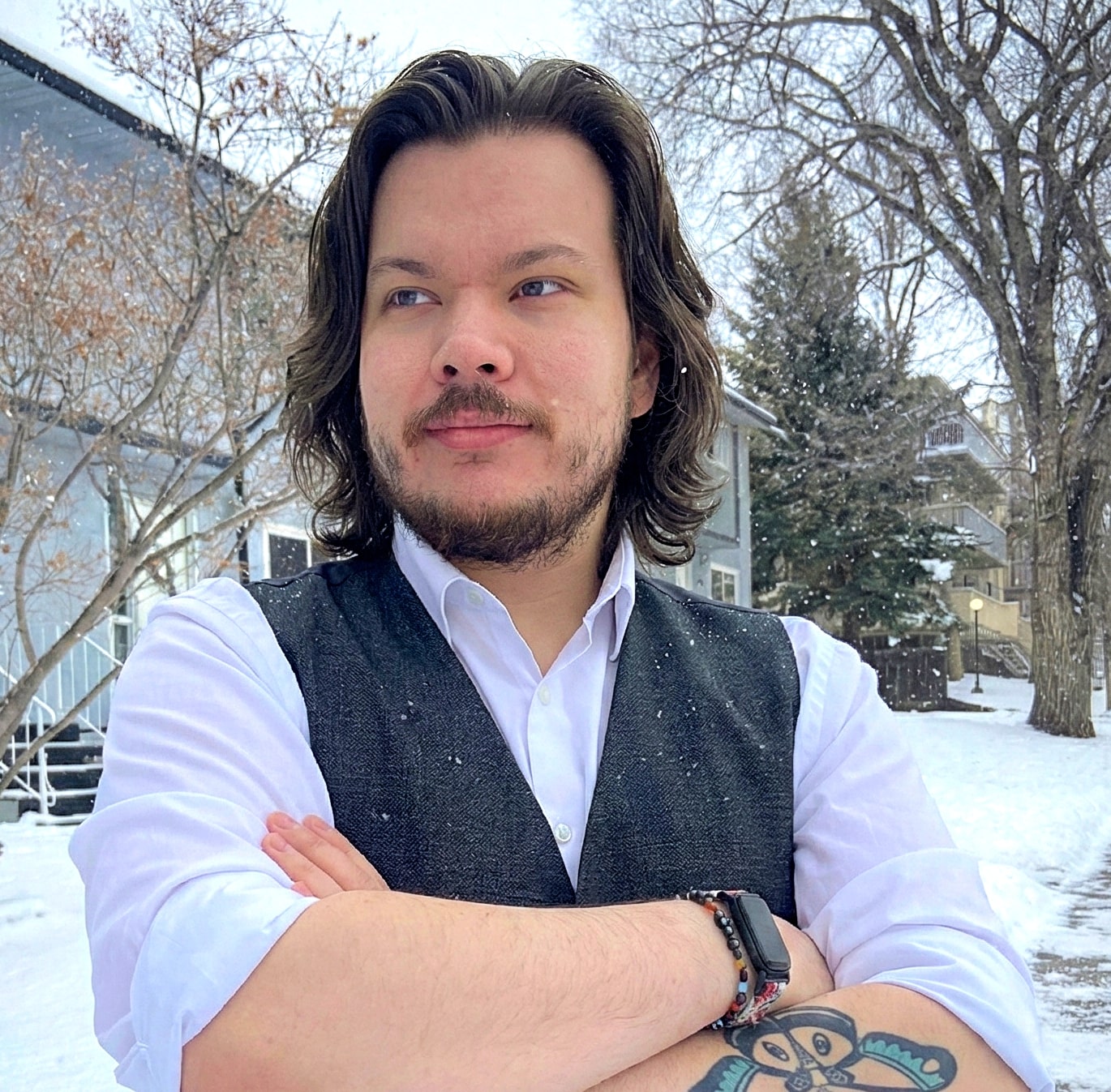
You know No Children. Maybe you know This Year. Those two songs, the bitter divorce anthem and the defiant survival hymn, have soundtracked countless breakups and breakthroughs, racked up millions of streams, and cemented the Mountain Goats in the indie rock canon.
But most casual fans don’t realize those two songs are drops in an ocean of over 600 songs that John Darnielle (primary and originally sole member of the band) has written across three decades. Six hundred songs. Three National Book Award-nominated novels. Countless tours, collaborations, and creative experiments. Darnielle has been building one of the most staggering bodies of work in contemporary music and literature, and not through genius or inspiration or perfect conditions, but through a straightforward-yet-radical method.
If you’re an aspiring writer paralyzed by perfectionism, waiting for the right tools or the right moment or the right idea, then this essay is your intervention. Want to be a good writer? Write like John Darnielle. Write like the Mountain Goats.
John Darnielle began his songwriting career decades ago, when he was working as a psychiatric nurse at Metropolitan State Hospital in Norwalk, California. The facility specialized in Spanish-speaking patients, and Darnielle worked in employee housing for $200 a month, passing medications and teaching patients how to manage assaultive behavior. John has been open about his past, about how he overdosed on heroin after being in the throes of addiction, waking up handcuffed to a hospital bed, which was an experience that catalyzed changing his life for the better.
It was during this period, living in that bare employee housing, that Darnielle bought a cheap guitar and started writing songs, recording them on a Panasonic RX-FT500 boombox he could barely afford at Circuit City. As he put it, “There were better ones, but I only had $110. I didn’t have $130.”
John has written over 600 songs. How is this done? By not being pretty about the process. By scribbling with fervor in a dollar-store coiled notebook instead of delicately being careful with your writing. By embracing what Darnielle calls the demystification of the creative process,. Treating writing as labour, not mystique.
Darnielle’s early recording setup with the Panasonic boombox with its audible hiss and mechanical wheel-grind became foundational to understanding his method. The machine’s limitations were collaborators instead of obstacles/restraints. As documented in academic analysis of lo-fi practices, the hiss became part of the aesthetic, an audible reminder that perfect tools aren’t prerequisites for meaningful work.
This lo-fi period, spanning from 1991’s Taboo VI: The Homecoming to 2002’s All Hail West Texas, demonstrates how constraints can nurture rather than limit creativity. The boombox recordings were “so tied to improvisation and spontaneity that the values were entirely different,” as Darnielle explained in a recent interview. If he caught something that only happened once in the moment, which characterized all those early recordings, he didn’t worry whether it was technically “good.” The spontaneity itself was the value.
Darnielle’s songwriting process begins with improvisation instead of planning. He describes sitting down with a guitar, playing chord progressions, and ad-libbing words until characters/story emerges. Momentum and creation opens doors which planning cannot see.
The process involves improvising words to chord progressions, then teasing out whatever narrative surfaces. There’s no mapping out, no elaborate pre-planning, only the faith that something worthwhile will emerge through the act of making itself.
This method extends to his fiction writing as well. When facing a novel, Darnielle acknowledges that unlike songs which he writes “really fast,” novels require coming back every day, or letting them sit for weeks before returning. The consistency of presence matters more than any individual session’s output.
After leaving the psychiatric hospital, Darnielle enrolled at Pitzer College from 1991 to 1995, studying English and classics while continuing to write and record music. His education at Pitzer, where he earned his bachelor’s degree in English and Classical Studies, profoundly shaped his approach to storytelling. He studied “The Canterbury Tales” with professor Barry Sanders and called the course “absolutely the most illuminating thing for me.”
During college, he started showing up at an open-mic night on campus and playing the songs he’d been writing. People seemed to like them, and things sort of took off from there. There is importance in the consistent output even while pursuing formal education, as the two were feeding each other rather than competing.
VOLUME AS CREATIVE STRATEGY.
Visualize and imagine what your body of work is going to look like when you’re on your deathbed. What will be more important to you: having one or two pieces of great work with everything else hidden away because it wasn’t up to your standard? Or dozens of pieces of good work with the behind-the-scenes drafts and outlines and unfinished work available to the public?
Darnielle’s catalogue of 600-plus songs spanning decades demonstrates that quality emerges from quantity, not despite it. With writing, the idea of quality over quantity is, for the most part, myth. You learn to write by writing. The more output there is, the better that output is going to be.
His approach treats each piece as both complete in itself and raw material for future work. When something isn’t working, Darnielle doesn’t usually throw it away. “I have all these notebooks, and I’ll keep the file so I can harvest lines or whatever. That’s how I think of it: you’ve made sort of a creature, and if the creature turns out not to be usable, you can still take its kidneys and put them into a new creature.”
The truth is, writer’s block doesn’t exist. It is a tricky psychological barrier. A hockey player doesn’t get skater’s block. The act of writing is always available to us. We can always write something and write badly. The constipation we feel at times is when we want to edit. When we want the initial output to be better than what we’re currently capable of.
Darnielle’s approach dissolves this block through reframing. He considers songwriting and creative work as labour, not inspiration-dependent mysticism. As he puts it, “if you work Monday through Friday, some days you’re crushing your job, and other days you’re just not. Maybe you have the same amount of sleep—it’s not that you’re hungover, some days you just don’t seem to have as much reserve to draw on.”
The same principle applies to writing. You show up, you do the work, and you accept that some days will be better than others. The consistency of showing up matters more than the quality of any individual session.
Do not concern yourself with anything other than that raw input. The ore of your writing is what’s the most important. Bad writing can be improved, can be organized, refined and distilled. No writing/the blank page cannot. It is eternally blank until you give up the ego and just start writing whatever shit is fumbling in the engine of your mind.
Darnielle had an evolution from lo-fi recordings to studio albums. His shift over the years to piano and more complex harmony shows how iterative practice naturally heightens craft. The expansion followed output, not the other way around. The early, rough recordings provided the foundation—the ore—that later refinement could transform into more polished work.
The sacredness found in the writing process is not cancelled out by the feral, profane act of writing any silly thing out. It must be written. The lo-fi period of the Mountain Goats demonstrates that sacredness in art is compatible with feral, first-take immediacy. The hum on those tapes is the sound of process happening in real time, not a lack to be erased.
In 2002, Darnielle signed to 4AD for the release of the surprisingly polished Tallahassee, marking a significant shift from his boombox era. This transition didn’t represent abandoning his core Philosophy but rather applying it to new contexts. In 2011, he switched to Merge Records with All Eternals Deck, which was recorded in four different studios with four different producers, including death metal legend Erik Rutan of Morbid Angel and Hate Eternal.
The willingness to work with such diverse producers across multiple locations demonstrates another key principle: experimentation and variation in process can reveal new dimensions of craft without requiring perfection from the start.
Perhaps no work better exemplifies Darnielle’s method of mining personal experience than The Sunset Tree (2005), which revolves around the house he grew up in and the people who lived there. The album was written after his sister called in December 2003 to tell him their abusive stepfather, Mike Noonan, had died.
One of John’s early memories was of Noonan throwing a drinking glass across the room at his mother’s face. Noonan started hitting John around age six, and the abuse continued through his teenage years. In the album’s liner notes, Darnielle dedicated it to “any young men and women anywhere who live with people who abuse them” with the message: “you are going to make it out of there alive, you will live to tell your story, never lose hope.”
Starting in early 2004, while touring We Shall All Be Healed in Europe, Darnielle began writing lyrics that came directly from his memories. Pull from your own life, mythologize what you’ve been through, create throughlines and themes. Most of which can only be done in retrospect.
PRACTICAL EXERCISES.
If you’re not a poet, push yourself to write a poem a day. If you’re not a storyteller, push yourself to write a vignette or flash fiction a day. Create characters and keep putting them in different situations, different settings. And then describe those settings, describe the action, not the abstract.
Following Darnielle’s model, here are specific practices:
- Daily improvisation sessions: Write one short scene or vignette daily using an improvised first line as a prompt, then expand only what “catches” on the second pass.
- Medium rotation: Alternate instruments or mediums weekly (guitar/piano, pen/voice memo) to destabilize habits and surface new patterns. As Darnielle advises, “If it strikes you as hilarious, follow it. There’s so much joy in how you write.”
- Fragment harvesting: Keep a running, date-stamped “ore” file of stray lines and images; set weekly sessions to stitch unrelated fragments together into drafts.
- Constraint embrace: Use whatever notebook, app, or recorder is at hand. Let the mess exist and mine it later. The point is presence—capturing sparks before they dissipate. Poetry critic Harold Bloom wrote that good writing is inevitable, not predictable. Do not go gently into that good night, do not write what is expected, do not buckle and surrender to the well-paying tropes and cliches.
Bloom’s concept of inevitability, which is to say that truly powerful writing feels like it could not have been otherwise, emerges from the deep engagement with craft that Darnielle exemplifies. It’s not the predictability of bad poetry rhyming ‘strife’ with ‘life,’ but rather the sense that every word is precisely where it needs to be.
This inevitability comes not from getting it right the first time, but from having written enough to develop the instinct for what serves the work. Darnielle’s massive output provides the foundation for those moments when a line “snaps” and makes him laugh—the recognition of something that feels both surprising and absolutely right.
Art is for art’s sake, yes, and writing is for writing’s sake. But you are writing your voice, you are etching a carving of yourself and what comes from the unexplained qualia of your mind. Understand that there is no person on Earth that has the same instances of subjective, conscious experience as you do.
What you have is worth sharing, worth telling. Like John, pull from your own life, mythologize what you’ve been through, create throughlines and themes, most of which can only be done in retrospect, in putting the constellations of events together in hindsight. We cannot know the arc of our narrative while we’re living it, we can only project and make astrological predictions for ourselves.
Darnielle’s work exemplifies this principle through his unflinching examination of his own experiences, the abusive stepfather chronicled in The Sunset Tree, or his time in addiction and recovery as addressed in his NPR interview, or his years as a psychiatric nurse. These experiences, filtered through years of daily writing practice, become the raw material for art that is personal yet universally resonant.
As he articulates his Philosophy, he writes for himself, but through that self-focus creates “a strange connection” where “strangers communicate through this third thing, which is a body of work.”
Darnielle has applied his prolific method to fiction writing with remarkable success. His debut novel Wolf in White Van was a National Book Award nominee and finalist for the Los Angeles Times Book Prize for first fiction. When writing it, doubt actually helped him. He wanted to ensure that someone who couldn’t stand his music would still read the book and say, “Got to give it up, man. That’s a good book.”
He followed this with Universal Harvester (2017), which was a finalist for the Locus Award, and Devil House (2022), about which the New York Times wrote it is “never quite the book you think it is. It’s better.” All three became New York Times bestsellers.
Songwriting and fiction writing remain “two distinct parts” of Darnielle’s life, separate callings that nonetheless share the same fundamental approach. Show up, do the work, let volume build craft.
MINDFUL CONSUMPTION.
Of course, this does not mean you aren’t constantly and consistently consuming good work either. We are consumerists by default in this world, we are constantly taking in other people’s work. This is where we must be mindful and careful, we must intentionally curate what we’re reading and watching and listening to for the sake of our art. This is our fertilizer.
Darnielle’s songs and novels are steeped in literature, scripture, wrestling culture, and subcultural histories, not trends he’s chasing, but deep engagements with material genuinely shaping his sensibility.
In conversation, he enthuses about recent works in translation, including Croatian author Miljenko Jergovic’s 1,000-page epic Kin, and explains his college thesis on Joan Didion, which he connects to The Texas Chain Saw Massacre.
The goal is selective depth. Build a personal repertoire and lattice of references that your work can refract, expand, and synthesize through your own voice.
THE DAILY PRACTICE.
The John Darnielle method, ultimately, comes down to showing up daily.
Improvise into form. Discovery precedes design. Embrace imperfect tools, let constraints define aesthetic. Store and revisit fragments. Volume comes from accumulation, not epiphany. Allow growth to emerge from repetition. New techniques follow from continued practice.
Most importantly, treat the work as work. “While there is magic in it,” Darnielle reminds us, “the bottom line is that it’s work. It’s labour. That’s what makes it noble.”
To be prolific you must be improvisational, be unafraid of imperfection, and build on the understanding that great work emerges not from waiting for inspiration but from the daily practice of making, regardless of conditions. This is the Mountain Goats method. There are no perfect tools or ideal optimizations. Darnielle’s career stands as proof that the most important instrument is simply the willingness to begin.
SOURCES.
- Rolling Stone AU—“The Slow Climb: How The Mountain Goats’ John Darnielle Became The Best Storyteller In Rock”—https://au.rollingstone.com/music/music-news/the-slow-climb-how-the-mountain-goats-john-darnielle-became-the-best-storyteller-in-rock-625/
- NPR Transcript—John Darnielle Interview (2015)—https://www.npr.org/transcripts/348736199
- Songwriters on Process—“John Darnielle (The Mountain Goats)”—https://www.songwritersonprocess.com/blog/2017/5/15/john-darnielle-the-mountain-goats
- Cambridge University Press—Academic analysis of lo-fi practices—https://www.cambridge.org/core/services/aop-cambridge-core/content/view/6BD7476E537B63017D99B7167DFDFE7B/S0261143018000041a.pdf
- Daniel Semo—“Liner Notes: Mountain Goats Lo-Fi Era”—https://www.danielsemo.com/writing/liner-notes-mountain-goats-lo-fi-era
- Tone Glow—“Tune Glue 004: John Darnielle (The Mountain Goats)”—https://toneglow.substack.com/p/tune-glue-004-john-darnielle-the
- TIME Entertainment—“Mountain Goats’ John Darnielle on Songwriting for Tormented Souls”—https://entertainment.time.com/2012/09/25/mountain-goats-john-darnielle-on-songwriting-for-tormented-souls/
- Indy Week—“John Darnielle Discusses Harrowing First Novel”—https://indyweek.com/culture/art/john-darnielle-discusses-harrowing-first-novel/
- The New Yorker—“John Darnielle Wants to Tell You a Story”—https://www.newyorker.com/culture/the-new-yorker-interview/john-darnielle-wants-to-tell-you-a-story
- IMDb—John Darnielle Biography—https://www.imdb.com/name/nm4453140/bio/
- Los Angeles Times—“John Darnielle: Musician, Novelist, Ethicist of the Lurid”—https://www.latimes.com/entertainment-arts/books/story/2022-01-19/john-darnielle-musician-novelist-ethicist-of-the-lurid
- PopMatters—“Searching for John Darnielle”—https://www.popmatters.com/searching-for-john-darnielle-2495776481.html
- Broad Sound Magazine—“The Broad Sound Interview: John Darnielle” (2025)—https://broadsoundmag.com/2025/06/30/the-broad-sound-interview-john-darnielle/
- Last.fm—The Mountain Goats Wiki—https://www.last.fm/music/The+Mountain+Goats/+wiki
- Faronheit—“Album Review: The Mountain Goats—All Eternals Deck”—https://faronheit.com/2011/03/album-review-the-mountain-goats-all-eternals-deck-merge/
- All Hail Substack—“2005: The Sunset Tree”—https://allhail.substack.com/p/2005-the-sunset-tree
- Spectrum Culture—“Holy Hell: The Sunset Tree Turns 20” (2025)—https://spectrumculture.com/2025/07/16/holy-hell-the-sunset-tree-turns-20/
- Awkward Botany—“Botany in Popular Culture: The Sunset Tree by The Mountain Goats”—https://awkwardbotany.com/2015/08/05/botany-in-popular-culture-the-sunset-tree-by-the-mountain-goats/
- Howland Echoes—“Flashback Friday: The Mountain Goats—The Sunset Tree”—https://howlandechoes.com/2016/10/flashback-friday-the-mountain-goats-the-sunset-tree/
- Little Village Magazine—“John Darnielle Talks Songwriting, Storytelling and ‘Goths’ Ahead of The Mountain Goats’ Return to Iowa City”—https://littlevillagemag.com/john-darnielle-talks-songwriting-storytelling-and-goths-ahead-of-the-mountain-goats-return-to-iowa-city/
- The Woolf and Maus Blog—“Inevitability and Bloom”—https://thewoolfandmaus.wordpress.com/2009/06/26/inevitability-and-bloom/
- SPIN—“SPIN Interview: John Darnielle”—https://www.spin.com/2011/04/spin-interview-john-darnielle/
- NPR—“As A Lyricist And Novelist, The Mountain Goats’ Lead Man Writes About Pain”—https://www.npr.org/2015/09/11/439189592/as-a-lyricist-and-novelist-the-mountain-goats-lead-man-writes-about-pain
- Bookshop.org—John Darnielle Contributors Page—https://bookshop.org/contributors/john-darnielle
- The Creative Independent—“Musician and Novelist John Darnielle on Debating Your Inner Critic”—https://thecreativeindependent.com/people/musician-and-novelist-john-darnielle-on-debating-your-inner-critic/
- Slate—“Devil House Book Review”—https://slate.com/culture/2022/01/devil-house-john-darnielle-book-review-mountain-goats.html
- NPR—“John Darnielle’s ‘Devil House’ Review”—https://www.npr.org/2022/01/26/1074710053/john-darnielle-devil-house-review-true-crime-mountain-goats
- Publishers Weekly—“John Darnielle Is On A Roll”—https://www.publishersweekly.com/pw/by-topic/authors/profiles/article/72658-john-darnielle-is-on-a-roll.html
- Esquire—“John Darnielle: Mountain Goats Devil House Interview”—https://www.esquire.com/entertainment/music/a38867790/john-darnielle-mountain-goats-devil-house-interview/
Comments
To comment, please sign in with your website:
How it works: Your website needs to support IndieAuth. GitHub profiles work out of the box. You can also use IndieAuth.com to authenticate via GitLab, Codeberg, email, or PGP. Setup instructions.
Signed in as:
No comments yet. Be the first to share your thoughts!