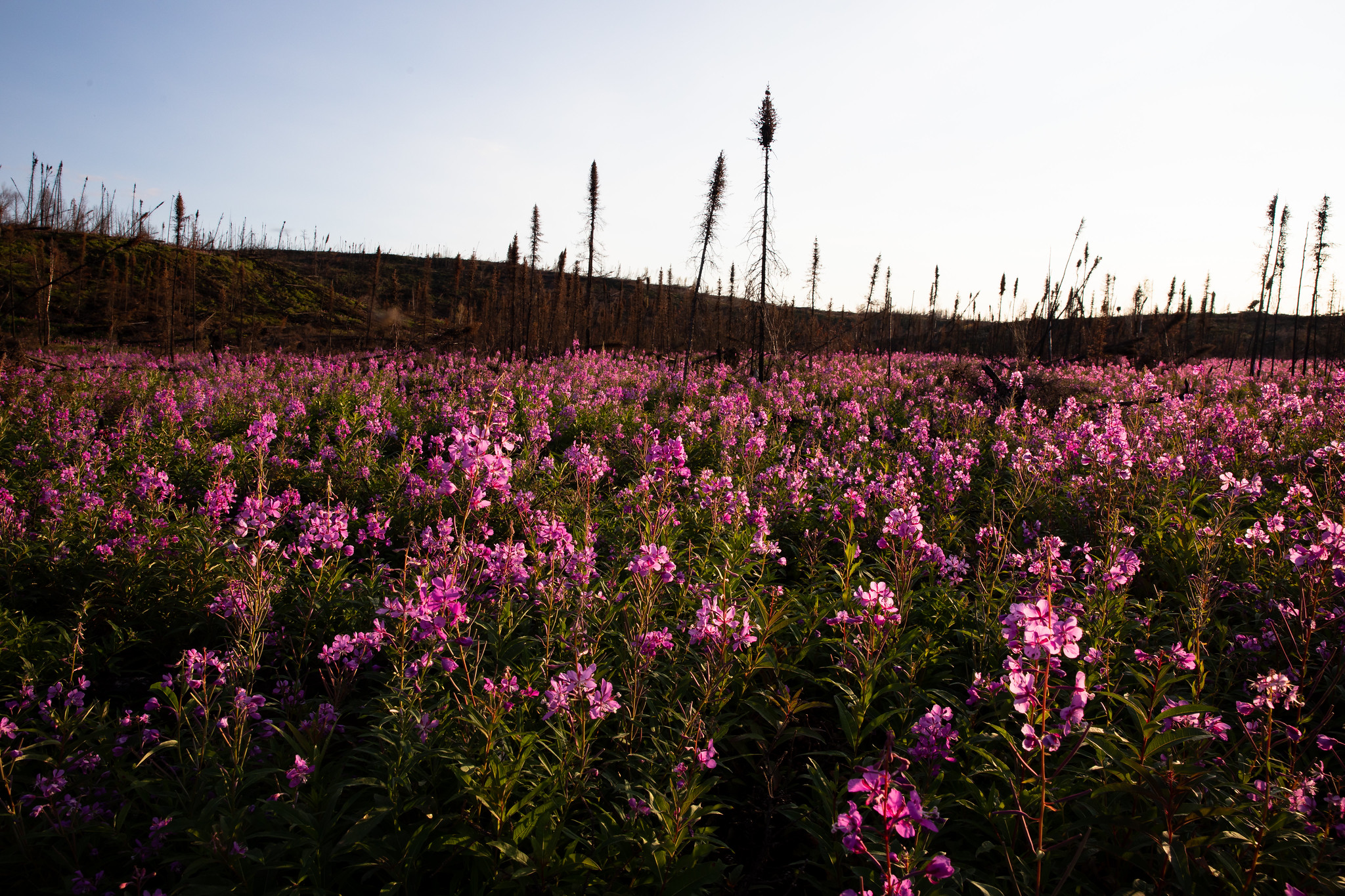
Kenai Fireweed in August by Lisa Hupp/USFWS | Source
Announcing Fireweed Writing School
The fireweed is an interesting flower, it doesn't wait for soil to cool. Before anything else dares push through scorched earth, before ash settles into earth again, the fireweed arrives. Brilliant magenta stalks rising from devastation. Rhizomes that have waited decades underground, patient, and then suddenly explode into growth. Sometimes within weeks of the burn.
In London after the Blitz, it bloomed from grey rubble where bombs had fallen. Locals called it "bombweed," these impossible flowers, pink-purple and delicate, claiming territory from ash.
Renewal through persistence. Our ability to grow not despite devastation, but because of it. To always continue. To be first.
This is the spirit I'm building a writing community around.
I.
You want to be a writer. You are brimming with stories inside of you waiting to be told. Where do you begin? I think a good answer to that question is right here. Fireweed Writing School.
Fireweed Writing School will be an online creative collective focusing on a mission with two simple objectives: making you write better and making you write more.
I am starting this online school because it is exactly what I needed myself when I started writing over fifteen years ago. A community of like-minded (and weird) creatives and a focal point for the sacred art of writing.
I'm not going to bury the lede here. A lot of courses are on websites with expensive subscription models and ridiculous price tags. This is different.
I'm not tied to any corporation or company. I'm fully independent with nothing to upsell you with. What I'm announcing here is a writing school that charges $5* per class, running every two weeks, for a total of $10 per month.
* In Canadian dollars, so it's probably even cheaper for you.
II.
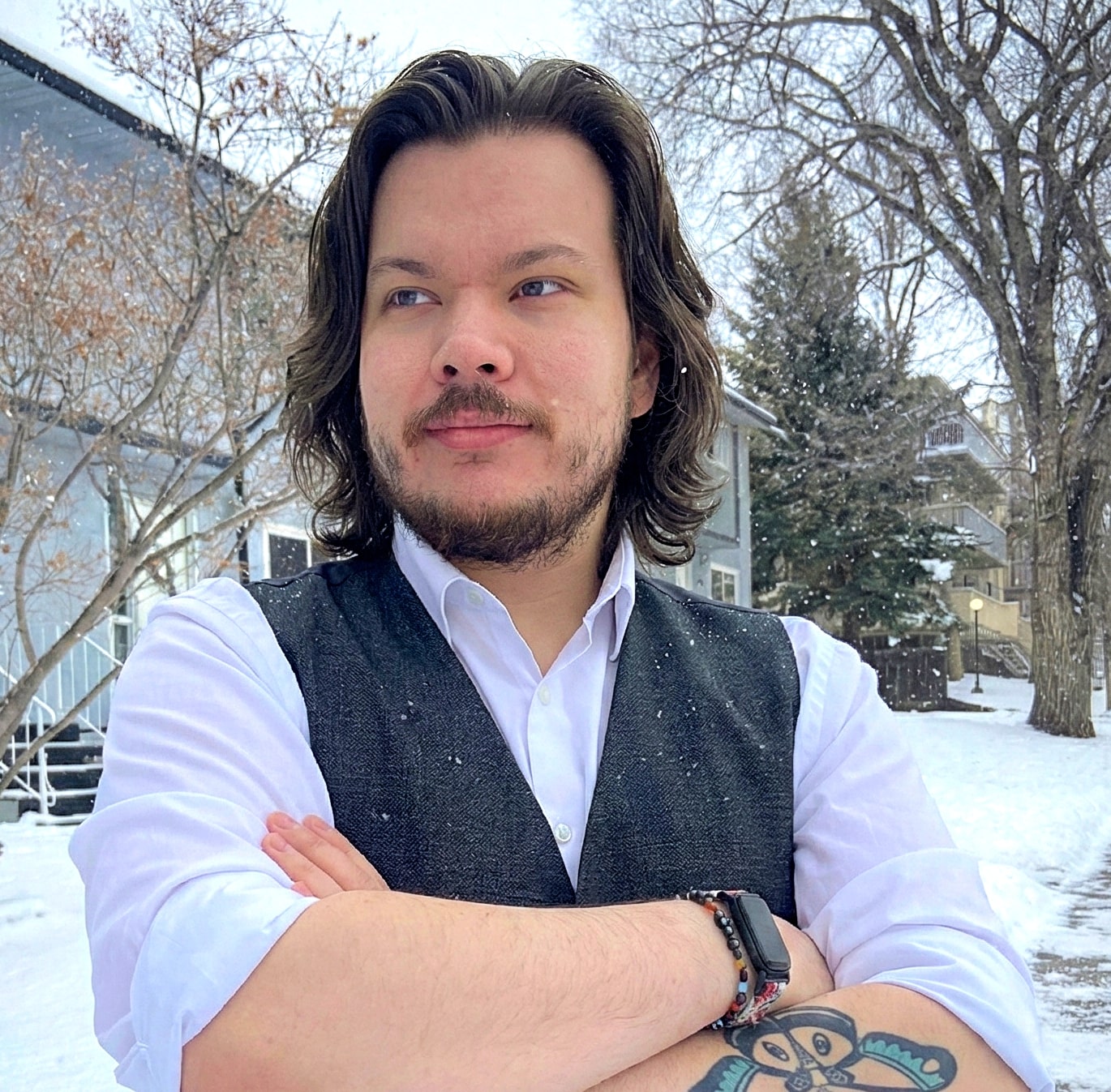
Who am I to say I have what it takes to be paid to teach you? I think that's an excellent question. My name is Brennan, but my friends call me Kenny. I started writing seriously over fifteen years ago. I've been writing poetry and in my journals for a decade and a half. Over one million words and hundreds of works.
I've independently published nine of my own books, five of which are available on Gumroad. Not only did I do the writing, but I did the cover design, layout, formatting, and copyright. These books span over 1,500 pages total.
I recently graduated from Mount Royal University with a 3.8 GPA majoring in English Honours with a minor in creative writing. During my time in school, I published a scholarly article on Indigenous resilience and my honours thesis which examined the importance of the English Degree and writing in today's age.
I also founded Write Club, a creative writing collective of young adults that grew from a couple students to 100+ members. I was the president of this club where we hosted open mics, fundraising events, and I ran dozens of workshops with hundreds of students for three years. We published two anthologies under my tenure: "On the Fringe: A Collection of Filth" and "On the Fringe: A Collection of Community", which are available to buy.
I'm a Queer Red River Métis, I know how important it is to centre marginalized voices and be mindful of how political writing is. Our voice and our ability to have a platform is directly imbued into my teaching.
What am I up to now? Well, I'm making a living by being a writer full-time on Medium. I write articles on writing craft, literary criticism, digital culture, and Indigenous studies. I've published 200+ articles with my top pieces reaching 30,000 views. I write enough to have this be my job, and I'll be honest, it's my dream job.
That's exactly what I want to offer you.
III.
NaNoWriMo imploded. The organization that once provided structure for thousands of aspiring novelists collapsed under its own weight. Forum moderation failures that left minors unsafe. A terrible AI stance alienated writers who needed the organization most. High-profile resignations. The disconnect so profound between leadership and community that even donated support was met with silence, blame, and deflection.
On March 31, 2025, Executive Director Kilby Blades announced the closure, citing "financial struggles and community vitriol." No acknowledgement of harm. No recognition of grace offered and refused. An empty space now exists where that institution used to be.
There is an empty space there, now. And I'm not trying to replace NaNoWriMo, but the Fireweed Writing Club takes that empty space and plants something new.
IV.
My focus is Imagist-first. No ideas but in things. William Carlos Williams wrote those words in 1927, in Paterson. The physician-poet who delivered more than 2,000 babies, made innumerable house calls to the working-class triple-decker "Bayonne boxes" of Northern New Jersey, and somehow found the time to revolutionize American poetry. He died in Rutherford, the same New Jersey town where he was born. Consistency. Groundedness. The belief that "to speak about ideas, emotions, and abstractions, we must ground them firmly in the things of the world."
I'm going to teach you to avoid abstraction. To kill clichés and tropes before they murder the work. To create something genuinely your own.
Abstractions are lazy. They let readers fill in their own meanings, which sounds democratic but actually creates distance. The concrete image, like the specific noun or the particular verb? That's what creates connection.
I want to teach writers to witness. To go out into the world, interact with it, find things, be curious, observe. To prioritize face-to-face experience and analog writing.
V.
The biggest barrier is psychology, not talent. Every aspiring writer I've worked with carries some version of the same wound: a self-imposed psychological barrier that tells them they can't, they shouldn't, they're not good enough. This barrier has a hundred names like imposter syndrome, perfectionism, or fear of judgment, but it all amounts to the same thing: silence.
There is no writer's block. You just write dogshit sometimes, and that's okay.
A hockey player doesn't get skater's block. A chef doesn't get cooking block. The act of writing is always available to us. We can always write something, even if it's bad. The constipation we feel is when we want to edit before we've created, when we want the first draft to be better than we're currently capable of producing.
The radical liberation I offer is the permission to write badly. Permission to write every day even when you don't feel like it. Permission to stop pressing backspace.
Write without editing. Write without stopping. Write garbage knowing the garbage composts into something rich.
VI.
What will we do? There will be several different components to this school. The biggest will be the workshops, where I'll lead and facilitate. These won't be your typical Iowa-style workshops that were made popular during the Cold War era.
Instead, I'll make sure the author is seen and heard. Drawing from anti-racist workshop practices outlined in Felicia Rose Chavez's The Anti-Racist Writing Workshop, we'll create a safe space for creative concentration where participants retain their own authority and artistic preferences throughout the creative process.
In addition to workshopping, I'll give you assignments. Beyond the assignments, I'll help you figure out how to carve time, space, and energy into your life for writing. For a lot of us, that seems impossible. And that's exactly what Fireweed School is here for.
This is also a community-driven collective, meaning we'll produce work together. There will be an active social channel, zine-making, and you'll have a chance to contribute to an anthology at the end of the semester.
I also want you to prioritize analog writing. I want you to keep a commonplace book dedicated to this class. A physical notebook where you allow yourself to get imperfect and messy. Collect quotes, observations, fragments, sketches of ideas.
Also, build your own reading list. I'll show you how to find books. Anna's Archive, Library Genesis, your local library, used bookstores. You'll curate your own literary education based on what you actually want to read, not what some syllabus demands.
Most importantly, I will do every assignment I ask you to do. Dogfood. If I'm not willing to do the work myself, I have no business asking you to do it.
VII.
These assignments and workshops are not "for fun" to be discarded later. These are meant to be cultivated into published work. From idea to first draft. From first draft to revision. From revision to query letter. From query letter to submission. From submission to publication.
I want to take you through the entire process. Not because getting published is the only valid outcome (it isn't) but because finishing work and sending it into the world is part of the craft. Too many writing classes treat publication as someone else's problem.
It's not. It's ours. We will create our own publication. What can we give the world? What do we collectively, as a class, enjoy and want to see more of? The answers to those questions will shape what we build together.
VIII.
I will also teach student writers how to be literary citizen journalists. Understanding the landscape of publication, of literary communities, of how work moves through the world. It means learning enough tech to get your own website and own your digital land.
The platforms will fail you. Substack will be acquired or pivot. Twitter has already burned to the ground. The only thing you truly own is your domain, your site, your email list.
I will teach you how to claim that for yourself.
IX.
A balance must exist between lifting the gates on academic ivory-tower elitism and recognizing that we must put in the work. We are not designed for expediency. We have so much of it already. So much content optimized for engagement rather than meaning. Writing existing to fill algorithmic slots.
This class asks you to slow down. To struggle. To revise and revise again. To read work that challenges you. To write work that challenges you. That doesn't mean gatekeeping. The craft is available to anyone willing to do the work. But willing to do the work is the key phrase.
I will not teach shortcuts.
X.
Finally, do not come to my class expecting to make it big or make a lot of money. You must want to elevate the craft of your writing. You must want to learn how to write every day even when you don't feel like it. I will not teach you to be a famous, wealthy author. I can't promise that, and anyone who does is lying.
But I will teach you how to be a writer.
By the end of your experience with me and this project, you will have a body of work. Actual pages. Actual publications. Actual evidence that you showed up and did the thing.
That's what I can promise.
Interested?
I truly believe writing is medicine, and that there is something sacred when community is cultivated in good faith. I hope you'll sign up below and join me this summer and make this happen.


Comments
To comment, please sign in with your website:
How it works: Your website needs to support IndieAuth. GitHub profiles work out of the box. You can also use IndieAuth.com to authenticate via GitLab, Codeberg, email, or PGP. Setup instructions.
Signed in as:
No comments yet. Be the first to share your thoughts!