
Figure of the Royal Magnificence, Immortality and Progress in the Fine Arts by | Source (edited by the Author)
A More Perfect Morality: The Progressive Failure of Ethics
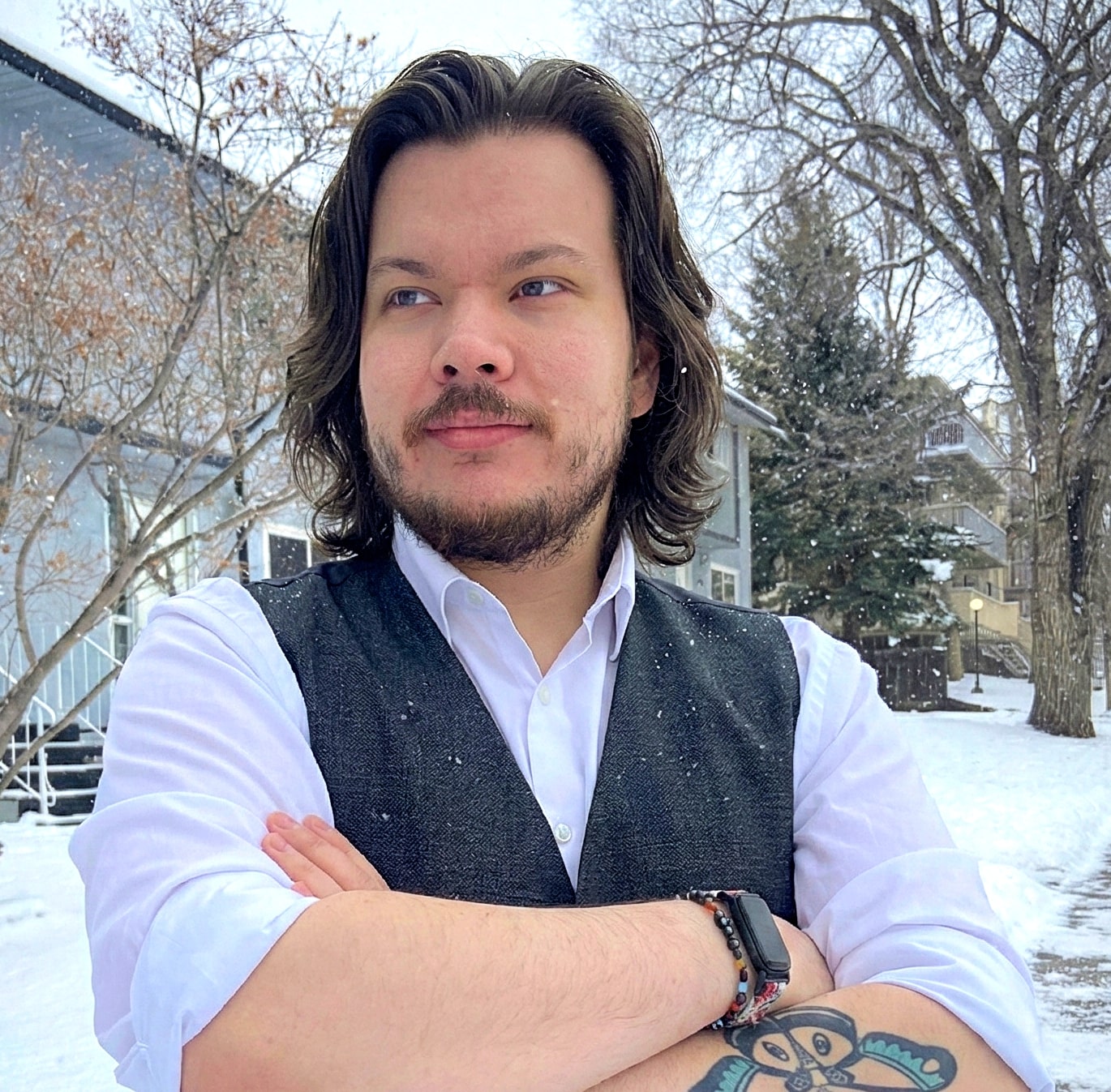

Silence often follows reading the news. Not peace. Silence settling in your chest. You put your phone face-down on the table. The coffee in the mug you're holding has gone lukewarm. The songbirds outside are still chirping, oblivious. You have to decide: do I carry this, or do I set it down?
Most of us set it down.
Prelude
Inalienable. Inherent. Birthright. There are terms we use when we are discussing rights that we, as human beings, ought to be given from birth and maintain until death.
And we know this is heartbreakingly far from the case.
Our liberal democracy is built upon the notion of universal rights for all human beings. For what is the worth of a value system that is selective and allows exceptions? There cannot be a line drawn between those we believe deserve survival, compassion, and care. I believe there has been a systemic, existential failure in the education, communication, and enacting of universal rights and liberties.
I'm inspired to write this after reviewing the 2025 CBC Massey Lectures by Alex Neve, which he dedicates to the attempt at renewing universal human rights, and excellently articulates how selective we are with them. Neve is a former Secretary General of Amnesty International Canada, and his message is not a partisan one. It is a moral message. A damning message.
I wish it was easy to fingerpoint here, but it isn't. I witness liberals and leftists selectively pick-and-choose the way conservatives do. This is a common, widespread normalization and desensitization. I've seen those that do not even try to hide that they don't believe in universal rights, compassion, and dignity.
This is not about purity testing or litmus testing politics. This is not about being holier-than-thou. Rather, we must not ignore certain groups in favour of others. We cannot allow ourselves to succumb to the tribalism and othering, regardless of how warranted or justified we can articulate it to be.
Of course, those who find their rights infringed are most often the marginalized. Many individuals belong to multiple marginalized groups, compounding their experiences of oppression. Intersecting identities mean intersecting exclusions. And the most consistent pattern in both conservative and liberal moral failure is the same. The further someone is from our immediate community, the easier it becomes to stop counting their life.
I will name and count them.
I. Palestinians
I've written about this at more length here, but let me offer you something. There was a bakery in the Rimal neighbourhood of Gaza City. I cannot tell you the owner's name. I can tell you it sold kaak—a sesame-crusted rings of bread, ancient recipe, flour, anise, and oil. There were mornings when people stood in line outside waiting for the pastry, the scent carrying down the street, neighbours calling to each other across the line, arguments about football, a child tugging on a sleeve.
The bakery no longer exists. The neighbourhood no longer exists. The UN has estimated that 92 percent of residential buildings in Gaza have been damaged or destroyed. That's a statistic about the smell of bread on a Tuesday morning. About where someone's grandmother learned to make tea. About which streets a person knew so well they could walk them blind.
I want you to sit with the particular quality of Western attention to this. More than 100,000 killed by October 2025 according to the Max Planck Institute, the majority of them civilian, confirmed even by Israel's own leaked military database. The word "genocide," used in the UN's own formal September 2025 inquiry, in Amnesty's 296-page report, and in Human Rights Watch's findings still causes people to pause, to hedge, to ask for more context. As if the children amputated in field hospitals with no anaesthetic hadn't provided enough.
Omar El Akkad understood what was coming and said it in October 2023, before most people had processed what was beginning: "One day, when it's safe, when there's no personal downside to calling a thing what it is, when it's too late to hold anyone accountable, everyone will have always been against this." The same retroactive absolution that swallowed Vietnam and Iraq. Majorities who supported those wars have since quietly revised their memories into opposition. We are watching the revision begin in real time, before the rubble has even been cleared.
And the hatred doesn't stay overseas. It lands here. After October 7, 2023, the Council on American-Islamic Relations reported a 178% increase in Islamophobic incidents across the United States. A woman in a hijab on a Calgary train, followed. An Arabic name on a job application, discarded. A child with a Syrian accent at recess, surrounded. War exports hatreds, arriving quietly, in schools and offices and transit cars. And we call the hatred something else, or we call them nothing at all.
II. Congolese and Sudanese
Consider the weight of a phone in your hand. The specific heft of it. The glass warm from your palm. Inside it, in the battery, in the circuit board, in the components that make the thing work at all is coltan from the eastern Democratic Republic of Congo. Coltan (columbite-tantalite) is a dull black mineral ore found in abundance beneath the soil of a region that has been at war since 1996. The DRC sits on an estimated $24 trillion in untapped natural resources and remains one of the poorest countries on earth. This is mechanism rather than a contradiction.
People who mine the coltan in your phone do so in conditions of extreme violence, more than 7 million people displaced internally, the M23 rebel group backed by Rwandan ground troops having seized Goma in early 2025, a city of two million people. The DRC is the deadliest conflict since World War II. It has been running, with brief pauses, since before most of the people reading this were born. And you are holding the reason for it in your hand right now. This is why Western governments are not involved, but in fact are structurally disinclined toward involvement. The extraction continues. Your phone demands it, your computer demands it. Anything with capacitors that hold charge and manage power demands it.
In Sudan, the killing is of a different and more visible register. The Rapid Support Forces, the formal, military-sanctioned descendant of the Janjaweed militia that committed the Darfur genocide in 2003, stormed a hospital in el-Fasher in October 2025 and murdered an estimated 460 people: doctors, nurses, patients in their beds. The WHO called it one of the largest massacres ever recorded at a medical facility. Genocide Watch has placed Sudan at Stage 9 of its Ten Stages of Genocide: Extermination. The US State Department has formally used the word genocide.
The blood of the dying was documented from satellite imagery as visible from orbit. We could see it from space. We watched from space and did nothing.
III. Rohingyans and Uyghurs
Her name is not a name I have. That is the first problem. The Rohingya are a people so thoroughly erased from legal personhood that the 1982 Myanmar citizenship law stripped their right to have rights. Stateless. Paperless. Born into a country that officially does not accept their existence.
In 2017, the Myanmar military burned her village. I don't know which village. I know it was one of hundreds. Soldiers came at dawn, and I imagine the birds, the cookfire, the ordinary textures of waking. Before all being replaced by smoke. She fled through rice paddies and crossed a river, carrying what she could carry, and arrived in Cox's Bazar, Bangladesh, the largest refugee settlement on earth. Over 1.3 million people living in bamboo and tarpaulin on a strip of delta land. Her children, if she had them there, have never lived anywhere else. People have grown up knowing exactly one geography. In 2024, over 7,800 Rohingya attempted sea crossings to reach somewhere else—anywhere—and over 650 drowned or went missing. The boats keep leaving anyway.
Who has been prosecuted for this genocide? Nobody.
Now, picture a mosque in Kashgar, a city that has been Muslim for over a thousand years, with its dome removed and a red star installed in its place. Picture the Arabic calligraphy scraped from the walls. Picture a man in his sixties who has memorized the Quran being handed a pamphlet in Mandarin and told this is now his culture. Picture his daughter, separated from him at a checkpoint, placed in a boarding school where she is not permitted to speak Uyghur, not permitted to pray, not permitted to be, in any recognizable way, who she is.
In Xinjiang, the mechanism is bureaucratic, not military, making it easier to argue about. Between 800,000 and 1.8 million Uyghurs have been detained since 2017 in facilities the Chinese government calls vocational schools. Uyghurs account for 34 percent of China's incarcerations despite being less than one percent of the population. An erasure program pretending to be a justice system.
Sixty countries, many Muslim-majority nations, have signed statements calling this an internal affair. Trade agreements over human bodies. The mosque stands, defaced, and the world has largely decided not to notice or enact against it.
Over 80 brands use the forced labour of the Uyghurs. Corporations like Apple, Amazon, Samsung, and Nike. It was reported last year that nearly £1 billion worth of goods were imported via direct flights from Xinjiang.
IV. The Global South and the Climate Crisis
The flood takes her rice paddy first. Three days of rain that should have been one, the river over its banks by Sunday morning, the water the colour of the topsoil it's carrying. A topsoil that took generations to cultivate. Topsoil required for the family's survival. The farmer and her children move to higher ground. They take what they can. She has done this before. She will do it again.
She did not build a coal plant. She has never owned a car. Her lifetime carbon footprint is a rounding error next to a single transatlantic flight by someone attending a climate conference in Geneva to discuss people like her.
The ten countries most vulnerable to climate change are almost exclusively in the Global South. The World Bank projects that 216 million people could be displaced within their own countries by 2050, from regions that did not industrialize on the back of fossil fuels, that did not lobby governments for decades to suppress climate science, that do not receive the trillions in annual fossil fuel subsidies that wealthy nations quietly continue to hand to the companies that made the problem.
This is colonialism. The extraction economy which impoverished the Global South in the 19th and 20th centuries is the same economy filling our atmosphere. The debt the Global South owes to Western financial institutions was generated, in many cases, by the same colonial disruptions that prevented these nations from industrializing on their own terms. And now the climate bill falls on the people least responsible for it and the least equipped to pay it.
When the floods come for the farmer's rice paddy, the Western response has been to build taller border fences against the people the floods displace. To call migration a crisis while engineering it. To hold summits.
V. Trans People
What does it mean to be fourteen years old and to have your body become a legislative debate?
An actual debate. With procedural motions, committee hearings, amendments, a vote, a signature, a press conference. The Premier at a podium talking about your hormones. Your doctor's treatment plan discussed in Question Period. The private architecture of your puberty reviewed by people who have never met you and will never meet you, who refer to you as "children like this" and "these situations" and "protecting kids," whose idea of protection is removing the care that, for you, is the difference between a livable life or wanting death.
The teenager whose name at school, the name their friends call them, the name on their notebook? Now something a teacher is legally required to report to their parents, as the government has decided the child cannot hold this piece of themselves as their own. The letter sent home. The conversation the child has been dreading. The family dinner that changes.
In June 2025, the Court of King's Bench found that Bill 26 would cause "irreparable harm" to gender-diverse youth and blocked it. The Alberta government's answer was to invoke the notwithstanding clause. The first time in Canadian history a government has used it to remove access to essential healthcare. Bill 9 received royal assent December 11, 2025.
A 2024 study published in Nature Human Behaviour found similar legislation in the US was associated with a 72 percent increase in suicide attempts among trans and non-binary youth. The government has read the research and proceeded. Student Quin Bergman said their sibling was driven to suicide by the onslaught. "It's stuff like what the government is doing that makes people lose hope."
In Canada, 59% of transgender and gender-diverse people experience violent victimization, compared to 37% of cisgender people. The legislation ratifies that violence.
VI. Women
She made it home. That's the whole sentence. She made it home from the bar, from the parking garage, from the late shift, from the path through the park she took because it was faster. She put her keys in the bowl by the door and exhaled.
This is the sentence women have been running their lives around for as long as there have been women running their lives. Constant, low-frequency calculations of who is behind you, how far, how late it is, whether the street is lit. White-knuckle instinctive grip on the keys. The text to a friend: home safe. So normalized that most women don't even register it as fear. It is simply how you move through a world that has never fully decided you deserve to move through it safely.
In Canada alone, 187 women and girls were violently killed in 2024. One every other day. Half of them killed by a partner or ex-partner. A person whose voice they knew, whose hands they had trusted. 77% were killed in a private location. The bedroom. The kitchen. The place they were supposed to be safe. At least 154 children were left without a mother. Two of the victims were pregnant.
Globally, nearly 50,000 women and girls were killed by intimate partners or family members in 2024. The most dangerous place on earth for a woman is, statistically, her own home.
Our passivity, including the progressive, well-meaning, allyship-performing kind, is a form of permission.
VII. Black People
In the spring of 2020, during the George Floyd uprisings, I watched thousands of people post a black square on Instagram. It was a Tuesday. The square meant to signal solidarity. By Wednesday, Black organizers were asking people to stop. The squares flooding hashtags which were supposed to be used to share safety information and bail fund links.
By Thursday, the squares were still going up. By the following year, most of those accounts had moved on.
This is the texture of progressive anti-Black racism. A performative gesture that prioritizes the white ally's feeling of having done something over the Black organizer's need for the thing to actually be done. The book on the shelf. The hashtag. The statement and press release followed by business as usual.
I have watched it in organizing meetings, in environmental movements, in literary communities, in music scenes. The way a Black woman's analysis gets called "too narrow" or "too personal." Code for we want your labour and your presence, but not the specific shape of your grievance. Black intellectuals naming anti-Blackness in progressive spaces are accused of fragmenting the coalition. Coalition-building somehow always requires Black people to do the work while waiting for their issue to come up on the agenda, which it never really does.
History is consistent. Labour movements excluded Black workers while rallying for the white working class. Feminist waves centred whiteness. Progressive coalitions treated racial justice as a special interest to be deferred. The main work is never done. The deferral is the point. The Movement for Black Lives has documented this well. The difference between symbolic solidarity and structural change, and how profoundly easy it is to perform the former while avoiding the latter.
Colourism within Black communities. The policing of Blackness by Blackness. These too are wounds colonialism wrote, and they are not separate from the conversation. It's all connected.
And be sure anti-Black racism is not a class problem, and solving poverty will not solve racism. It's a comforting lie because it lets us avoid the uglier truth. According to the Economic Policy Institute, Black workers with college degrees are still less likely to be employed than their white counterparts, and when employed, are less likely to hold jobs that match their education level. Black high school graduates face an unemployment rate double that of similarly-educated white graduates. Credentials don't close the gap. The deliberate performance of non-threatening professionalism is exhausting, and they are a tax levied exclusively on Black people. Race is not a proxy for class. It never was. And every time we reduce one to the other, we let the actual structure off the hook.
VIII. Indigenous Peoples
There is a reserve in northern Ontario where the tap water has not been safe to drink for over 20 years. The children there have grown up knowing this. Simply a fact of their life the way weather is. The way distance from the city is a fact. Except it's a policy choice. A political decision, renewed by inaction every year, in a country that has more fresh water than almost anywhere on earth. The federal government has broken its own promises on this repeatedly. The boil-water advisories continue. Tap water stays unsafe. Somewhere, in the capital, someone is drinking city water from a glass, reading a report about the situation, scheduling a land acknowledgement while tabling the response.
Indigenous women in Canada are 12 times more likely to be murdered than non-Indigenous women. The National Inquiry into Missing and Murdered Indigenous Women and Girls published 231 Calls for Justice in 2019. I'm sure they sit in binders as names keep accumulating.
I am a card-carrying MMF member, Red River Métis, though largely detached from my culture and heritage. I've written at length about the Pretendian problem, how every grant that goes to someone who falsely claims Indigeneity is a grant that didn't go to someone who needed it and earned it. Every award, every speaking engagement, every shelf of "Indigenous literature" in the bookstore that has a fraudster's name on the spine. These are specific losses. A specific First Nations writer who didn't get the residency. A specific young Inuit poet who didn't see herself in the canon because the canon was occupied by someone who had no right to be there.
There's been a near 10-fold increase in people identifying as Métis between 1996 and 2016 by white Franco-Québécois settlers. The Manitoba Métis Federation and Métis Nation-Saskatchewan have both withdrawn from the Métis National Council over it. The Red River Métis are standing alone against the dilution. I am proud of that. I am also exhausted.
And the languages? An estimated 90 at various stages of endangerment in Canada. Language is a way of being in relation. The names for plants, for weather, for grief, for light and season that can't be wholly translated. When they die, they don't become another language's words. They become silence.
IX. The Chronically Ill
She asked you to wear a mask. You sighed, culturally trained to see the request as unreasonable. There's a sigh before you say "I'll just step outside." She noticed the pause. She notices every pause. She has spent two years noticing them.
She isn't being paranoid. She had COVID twice, the second bad enough to land her in emergency, and her heart has not been right since. Long COVID affects an estimated 65 million people globally. Symptoms ranging from chronic fatigue to cardiac dysfunction to cognitive impairment, many of them permanent. She teaches, or she used to, before the brain fog made it impossible to hold a sentence's structure across a full paragraph. She applied for disability. The form asked her to prove she was impaired. The form was seventeen pages long.
I've written about this already. The short version is that the decision to declare the pandemic over was a political one, not a scientific one. The virus didn't receive the memo. And the people with compromised immune systems, with chronic conditions, with the elderly relatives they care for? They're living in a world that has decided their risk is an acceptable externality. The language tells you everything. "Living with COVID." As if she has a choice about it. As if it's a houseplant she decided to keep.
Capitalism produces this logic necessarily. If you cannot be productive, you are a burden. The pandemic made the logic visible. And now the visible thing has been asked to go away. But the person in the mask is still standing there, and the sigh is still there in the pause, and she is still noticing.
X. The Mentally Ill
Marsha Linehan developed Dialectical Behaviour Therapy, now the gold-standard treatment for Borderline Personality Disorder, because she had BPD herself. She was institutionalized as a teenager in Hartford, Connecticut. She was placed in isolation. She was given electroconvulsive therapy. She was told, in the language of her era, that she was simply difficult. She went on to become one of the most influential clinical psychologists of the twentieth century. She did not achieve this by not having BPD. She achieved it while having BPD, and the therapy she built is the first treatment that actually works for people with the condition, because it was built by someone who understood from the inside what that condition actually felt like.
BPD is primarily a trauma response. People with the diagnosis have histories of abuse, neglect, or both. The condition is characterized by fear of abandonment. And we have built a culture, in allegedly compassionate spaces, of pre-emptive abandonment of people with this diagnosis.
NPD carries a different stigma, more "monster, full stop." The word narcissist has escaped clinical housing entirely and now gets applied to ex-partners, politicians, difficult coworkers, anyone whose selfishness made you feel small. What gets lost in that sprawl is the actual disorder. A fragile, defended self-structure that peer-reviewed research in BMC Psychiatry links primarily to adverse childhood experiences. Neglect, emotional abuse, and, in a cruelty the disorder seems almost designed to obscure, parental overvaluation that taught a child their worth was conditional on performance rather than inherent. Not every person with NPD has a trauma history, and the etiology is multifactorial, but the clinical picture of someone with NPD is a person who learned, very young, that their real self was unacceptable, and built an armoured replacement. The grandiosity is scar tissue. We see the armour and we name it evil and move on, and the child who needed something different doesn't get discussed at all.
I tell you this because online, right now, in spaces that identify themselves as "progressive and trauma-informed", the diagnosis of BPD or NPD has become a warning label. There are communities built around identifying and avoiding people with the diagnosis. There are checklists for "recognizing and avoiding a narcissist." There are guides to "protecting yourself from people with personality disorders." The language sounds like harm reduction and the practice of stigma, wearing the costume of safety.
DID, Dissociative Identity Disorder, also gets mocked. Performed as Halloween costume. Dismissed as attention-seeking, even as measurable neurological differences are documented in peer-reviewed research. Different brain activation patterns between identity states. Different physiological responses. The body, doing what it learned to do to survive what happened to it. And we respond to that survival strategy with contempt, and then we call ourselves progressive and somehow mean it.
XI. The Poor
Nobody is born conservative. Nobody emerges from the womb hating immigrants, voting against their own interests, or resistant to the programs that would materially improve their lives.
This is manufactured. Precision-engineered, over generations, with newspapers and radio stations and cable news networks and social media funded by people whose wealth depends on the working class not organizing.
What is the mill town to do after the mill closes? The main street with the boarded storefronts. The hardware store that's been the same family for four generations, the sign still up, the windows dark. The kids who leave and don't come back. The older generation left holding the memory of a place that no longer exists, trying to understand what happened and why.
When someone hands them an easy explanation: immigrants took your jobs, urban elites look down on you, the problem is them! The explanation has emotional coherence when there's no factual coherence. A villain is created. It gives you somewhere to put the grief. As Thomas Frank documented in What's the Matter with Kansas?, cultural grievance has been systematically fed to working-class communities as a substitute for economic justice for as long as providing economic justice has threatened the people funding the narrative.
The left's response is contempt. "White trash." "Flyover country." The smug certainty that these people are simply stupid, or racist, or both. These are people who have been failed by every institution that was supposed to serve them and have been handed a story that explains their failure in terms they can act on. Contempt is not a political strategy. It is the luxury of people who have never needed anyone's political coalition to survive.
Holding this complexity is the actual work. Someone can be simultaneously exploited by capital and complicit in racism. Someone can be worthy of care and solidarity even while holding views we find harmful. Our project is of transformation, not purity.
XII. Sex Workers
She has a client at 9 and another at 11. Between them, she makes coffee, checks her phone, and wonders if she remembered to defrost something for dinner. The work is work. The hours between the work are hours.
What makes her life dangerous is the law surrounding the work and the social contempt that the law reflects and produces. Globally, sex workers face a 45 to 75 percent chance of experiencing sexual violence on the job, according to the Sex Workers Project. How violence lands depending on whether the work is criminalized, because a systematic review published in the American Journal of Public Health found criminalization is the primary structural driver of violence against sex workers, not the work itself.
In settings where the work is criminalized, the violence is not monitored, not registered as an offence, and in some cases is perpetrated by the police who are (nominally) there to prevent it. New Zealand fully decriminalized sex work in 2003 and research consistently documents improved workplace safety, better access to health services, and meaningful police protection compared to criminalized settings. The law made her safer. In most places, the law makes her less safe and then blames her for the outcomes.
A 2025 systematic review in the Journal of Sexual Aggression found sex workers are blamed for their victimization, seen as less credible, and viewed as deserving of violence. That victim-blaming leads directly to lower rates of reporting and worse mental health outcomes. We have constructed a legal and social environment in which a person can be raped, and the default public response is a shrug that it comes with the territory. That consent, once given professionally, cannot be subsequently withheld. These views are embedded in how police take reports, how courts evaluate testimony, and how the culture discusses what happened to her (if it discusses it at all).
The loudest voices for criminalization often come from people who describe themselves as protecting women. Feminist abolitionists, religious conservatives, suburban city councillors concerned about the neighbourhood. All certain they know what's best for a population they have not asked, and whose own organizations, like Amnesty International and the World Health Organization, have called for decriminalization on human rights grounds.
The protection being offered is a raid. A criminal record. The coffee going cold on the counter between appointments, interrupted by a knock that turns the rest of the day into something she will not report, because reporting it will cost her more than staying silent.
XIII. The Disabled
The wheelchair stops at the curb. A curb that does not have a cut. A small concrete lip, six inches high, the product of a city planning decision made decades ago by someone who was not thinking about this person, and who did not need to think about this person, because this person was not legible to the system as someone whose movement mattered. A smooth curve would have cost almost nothing to install.
Often, ableism is an absence. The ramp that doesn't exist. The website not navigable by screenreader. The job interview in a building with no elevator. The accommodation request quietly filed and never actioned. According to Statistics Canada's 2022 Canadian Survey on Disability, 27% of Canadians, that's 8 million people, live with one or more disabilities. Their employment rate is 62% compared to 78% for people without disabilities. It drops to 26% for those with very severe disabilities.
The gap is not due to the disability itself, but by workplaces, transit systems, hiring practices, and built environments designed around a body that many people do not have.
The poverty rate for disabled Canadians is nearly double that of non-disabled Canadians. Disability assistance rates in every province are below the poverty line. The government has decided, in measurable dollar terms, that people whose disabilities prevent them from working deserve to live in poverty. Below the threshold we have defined as the minimum. Canada spends 0.8% of GDP on disability supports, which is the fifth lowest in the OECD, behind Norway and Denmark, who spend 4.5%. This is a policy choice renewed by inaction every budget cycle.
Accommodation is regarded as generosity rather than obligation, a favour the non-disabled grant rather than a right the disabled hold. The person in the chair at the curb is not waiting because the world forgot them. They are waiting because the world made a decision, structurally, that their right to movement was optional.
XIV. The Houseless and Drug Users
A man sits in a doctor's office in 1997. His back has been ruined by twenty years of physical labour. The doctor writes him a prescription for OxyContin. The pamphlet says it's not addictive. The pamphlet is lying, and the company that wrote it knows so.
Purdue Pharma, owned by the Sackler family, launched OxyContin in 1996 with a documented, deliberate campaign to convince physicians that long-acting opioids were not addictive. Internal documents revealed they knew otherwise. They tracked, internally, that doctors who attended their company-paid weekend retreats wrote more than double the OxyContin prescriptions afterward. Revenue grew from $48 million in 1996 to over a billion dollars by 2000. The man in the doctor's office became dependent. His prescription ran out or became too expensive.
Fentanyl was cheaper. Over 500,000 Americans have died of opioid overdose since 1999. Over 136 people die from opioid overdose every single day in the United States.
The Sackler family withdrew over $10 billion from Purdue Pharma during the years it was being sued. They remain one of the wealthiest families in the United States. Purdue pleaded guilty in 2007, paid fines, and continued its marketing strategies. The 2025 settlement bars the Sacklers from selling opioids.
Not one family member faced prison.
The man who started in the doctor's office in 1997 is now, thirty years later, managing withdrawal in a tent behind a grocery store. His tent gets seized by municipal bylaw enforcement twice a year. People walking past describe the encampment as making the neighbourhood feel unsafe. They describe this on social media. They use phrases like "those people" and "lifestyle choices" and "it's really sad but." The story of how he got to the tent, with the doctor and pamphlet and billion-dollar lie with the Sackler family's name still on university building? That doesn't make it into the post.
XV. Children
The video starts with familiar characters. Spider-Man and Elsa from Frozen, in animation that approximates the official Disney style closely enough to fool a three-year-old. The thumbnail was safe. The title was safe. The autoplay function on the tablet served it after the previous video ended, while the parent was in the other room making dinner, while the child sat with the screen in the blue light of the living room.
What was actually in the Elsagate videos, first widely identified in 2017, could only be described as evil. Characters being hurt. Bound. Botched surgeries. Injections with syringes. Sex. Gore. Millions of views. YouTube didn't distinguish between a child's engagement and an adult's. Both were equally monetizable. Both were "watch time." The engineers building the recommendation system were optimizing a metric. Unaware of the psychological harm being caused to three-year-olds in living rooms.
Systems are the problem, not just individuals. No one person decided to show disturbing content to children. A machine optimized for engagement produced the outcome. The child in the living room is downstream of a quarterly earnings call.
Beyond screens, children in poverty have no upward class mobility. They carry their parents' economic precarity in their developing neurology. Food insecurity in childhood has documented neurological impacts. The children in migrant detention, separated from their parents in rooms with foil blankets on concrete floors. The children sleeping in a car in November. Children whose school is the most stable place in their life, the one predictable room. They are people, fully, without the power to advocate for themselves. Have we earned the responsibility of the dependence they have no choice but to place in us?
XVI. The Elderly
In the spring of 2020, I watched people type (with their names attached) that it was acceptable for the economy to reopen even if it meant more elderly people dying. "They've already lived their lives" was said often, part of the texture of those weeks. Not whispered. Written, and liked, and shared.
Kostadinka's son Von placed her in a Scarborough nursing home in 2017, believing she would be safe there, that the professionals would care for her the way he couldn't while working full time. He set up a hidden camera because something felt wrong. The footage showed workers physically and emotionally abusing his mother — at least four different care workers, documented. The CBC investigation found that 85% of Ontario nursing homes repeatedly break provincial abuse laws with almost no consequences. No criminal charges. Lawyer Jane Meadus of the Advocacy Centre for the Elderly stated plainly that "a home has never been charged criminally for what I think is criminal behaviour." Von's partner watched the footage and said, it "was like a horror film. I will never be able to unsee those things."
Globally, 1 in 6 older people experience abuse in any given year. In nursing homes specifically, over 44% of residents report having been abused. These are not edge cases. These are the homes. The bedsore that eats through to bone because no one turned the patient. The medication missed because the staff was overextended and underpaid. The resident yelled at, then left alone.
We have constructed a culture that treats age as a market failure. A period of life where net productivity drops below zero and the person becomes a net drain. We outsourced the care of our elders to institutions with paper-thin margins and minimal oversight, and we are surprised when the margins and lack of oversight produce harm. The lucky among us will become old. We are architecting our own future abandonment.
XVII. Jewish People
Anti-Semitism is rising. The Centre for the Study of Contemporary European Jewry tracked the highest numbers of recorded anti-Semitic incidents in decades, across Europe, North America, and Australia. Synagogues with armed security at the door. A child who stopped wearing a Star of David outside the house. A family deciding not to display a mezuzah on the doorpost in a neighbourhood they have lived in for thirty years. These are decisions being made by people navigating a real and rising hatred.
Within this, there are Jewish people and organizations who have actively opposed Israel's conduct in Gaza. Those who have organized, marched, occupied government offices, been arrested. They're attacked for being Jewish and dismissed or excluded for being anti-Zionist. Isolated from Jewish institutional structures that have largely aligned with Israeli government positions. Jewish Voice for Peace and IfNotNow have faced sustained campaigns not just to discredit them politically but to delegitimize their Jewishness, as if dissent from a government's actions required surrendering membership in a people.
This is a binary forced onto people who refuse it. You carry both the grief of what is being done in your name and the grief of being excluded from the spaces mourning it. Anti-Semitism and anti-Zionism are not the same thing. This distinction requires holding two things simultaneously, in a culture that prefers maps with only two colours on them. Both things. At once. Without resolution.
XVIII. Immigrants and Refugees
At 5 a.m. in December 2025, in a neighbourhood in Minneapolis, federal agents with battering rams took a door off its hinges. This was Operation Metro Surge. Two thousand federal agents deployed to the Twin Cities, described by ICE Acting Director Todd Lyons as the "largest immigration operation ever" conducted by the agency. Schools went into lockdown. Children didn't go to school. Businesses emptied. Revenue in immigrant-owned businesses dropped 60% as communities stopped going outside.
A Venezuelan family with lawful refugee status had agents arrive at their door with guns drawn. They arrested the son. The daughter later asked if the soldiers were going to come back. The mother said: "In Venezuela, pro-government paramilitary groups act this way. They cover their faces; you can only see their eyes." She had crossed an ocean to leave this behind. She was sitting in Minneapolis when it arrived again.
Two civilian protesters, both US citizens, were shot and killed by ICE agents. Minnesota's Somali community, the largest in the United States, a community that built mosques and restaurants and schools and mutual aid networks in the Twin Cities over thirty years, was specifically targeted. Donald Trump publicly called Somali people "garbage." ICE arrested over 220,000 individuals nationally in 2025, over 75,000 without criminal records.
This is happening in the country whose maps include our cities in the weather report.
XIX. Gender, Sexual, and Romantic Minorities
The gay teenager in rural Alberta still cannot not come out to his parents before he leaves home. Maybe he never does. Maybe he moves to the city at eighteen, finds his people, builds a life and spends twenty years performing a careful omission every time he calls home for Christmas. According to a review of population-based BC Adolescent Health Survey data, 33% of GSM youth reported having attempted suicide, compared to 7% of youth in general. The Centre for Suicide Prevention's research is blunt about the cause. The family rejection, the homophobic bullying, the isolation and the particular exhaustion of being a secret. A 2023 Statistics Canada study published by Health Reports found that 2SLGBTQ+ youth in Canada were significantly more likely to report negative social interactions than their cisgender heterosexual peers, directly linked to worse mental health outcomes across every measure studied.
And the bisexual at the community meeting is not entirely trusted. On the right, they are Queer. But in Queer spaces they are provisional. Biphobia lives comfortably inside organizations haning pride flags in their windows. Sexuality Research and Social Policy found bisexuals face discrimination from both heterosexual individuals and the lesbian and gay community. A double-sided exclusion consistently linking to higher rates of depression, anxiety, and suicidal ideation than among gay or lesbian people. The umbrella, it turns out, has edges.
The aromantic person has been told there is something wrong with them, you'll meet the right person someday, haven't you tried therapy, are you sure you don't just have intimacy issues? Aromanticism is so thoroughly erased in research and clinical practice that healthcare providers frequently have no framework for it at all, and respond with pathologizing. The DSM has, historically, treated lack of sexual desire as a disorder. The experience of not wanting something has been classified as a disease.
Intersex people face the more visceral: surgery, performed on infants and children, to make their bodies conform to a binary they did not choose. Amnesty International and the UN have condemned these "normalizing" procedures as a human rights violation, performed without consent, causing lifelong pain and loss of sensation, and done in secret. The medical chart listing a different procedure, the parents sometimes told not to discuss it. The child grows up in a body that was altered before they had language for what was done to it.
These are the experiences of people who are, even within progressive spaces committed to inclusion, often treated as too complicated, too specific, too much. Footnotes of the footnote of the liberation movement.
XX. Incarcerated People
When a man enters a prison in the United States, the first thing taken from him is his name. He becomes a number. It is the formal, designed mechanism of a system requiring him to stop being a person in order to function. The uniform. The number. The cell. The authoritarianism that governs every movement of every hour. All of it is designed, in the language of the Brennan Center for Justice, around "custody and order," not around the human being inside the uniform.
Antoine Davis, in a 2023 essay in the Seattle Journal for Social Justice, describes a man named Chatman who had no prior criminal record, one terrible moment and a life sentence. After nearly a decade of incarceration, Chatman's mother died unexpectedly of cancer. He had maintained a high GPA, facilitated a rehabilitation program, displayed exceptional behaviour throughout his sentence. He asked to attend his mother's funeral. Permission was granted. On the day of the transfer, the prison reversed the decision. He never got to say goodbye. Davis writes that these scenarios "crush the spirit of incarcerated people." Bureaucracy chains people to what they were, regardless of who they've become.
Research published in Criminology found correctional staff in focus groups across Kentucky consistently framed incarcerated people using language like "monsters," "evils," and "nightmares." A normalized strategy for navigating an institution whose architecture demands dehumanization to function. When your job is to control people in cages, you are helped by not thinking of them as people.
What is prison for? Rehabilitation? The longer someone spends incarcerated, the less likely they are to stay out after release. Public safety? Prisons as currently designed produce people with post-incarceration trauma, severed family ties, no employment prospects, and a criminal record that closes every legal door. In Norway, where prisons are built around dignity. A young man convicted of a violent offence wears jeans and a baseball cap and is described by his guards with the word hopeful. Recidivism is a fraction of the American rate.
More than 95% of people in American prisons will eventually be released and return to live near you. We are building the neighbors we will have.
XXI: Romani and Dalits
The Romani child is placed in the special school, and not for her abilities. Across the Czech Republic, 26 percent of students in segregated special programs are Roma, while Roma make up only 3.5 percent of the total primary school population. This is policy. The curriculum in the special school is restricted. The doors it opens are narrower. The child will leave it more constrained than she entered.
The Romani people have been in Europe since the 14th century, having migrated from northern India, and have been persecuted since. Enslaved in the Danubian Principalities for centuries, exterminated during the Holocaust in what they call the Porajmos (the Devouring), subjected to forced sterilization programs that continued in Czechoslovakia into the 1980s. The OHCHR note the persecution and exclusion of Roma did not begin with Nazism nor did it end with it. According to the EU Fundamental Rights Agency, 80% of Roma surveyed across Europe live below their country's poverty line. A third of Roma households have no tap water. Roma children ho hungry. Half of Roma and Travellers surveyed experienced hate-motivated harassment in a single year. 83% of Italians held unfavourable views of Roma. This is the water that the Romani child sits in, every day, in the special school she was placed in before anyone asked.
Across the world, in the Indian subcontinent, the Dalit man goes to the barber.
On August 18, 2024, in Karnataka, a 26-year-old Dalit man named Yamanurswamy Bandiha went to a salon for a haircut. The owner demanded payment before the service, made insulting remarks about Yamanurswamy's caste, and stabbed him with a pair of scissors. Yamanurswamy died at the hospital. This incident was not exceptional. It was one of a documented series of many anti-Dalit attacks in a two-month period in 2024 alone.
Dalit means crushed, broken, oppressed. The people it names were formerly called Untouchables. An estimated 240 million people in India are Dalit, a quarter of the population, and the caste system that determines their status has been formally illegal since India's constitution was adopted in 1950. It continues anyway, as the belief that someone born into a particular family is impure, contaminating, and less than human is not a belief that dissolves because a constitution is signed.
Upper-caste members who are touched by a Dalit, or whose shadow is crossed by one, traditionally undergo religious purification rituals. One million Dalits work as manual scavengers, cleaning latrines and sewers by hand. This work is is inherited. The debt can be passed to the next generation. The bondage is generational.
Journalist Yashica Dutt, author of Coming Out as Dalit, describes her childhood as a constant performance of not being who she was. Her family passed as upper caste, changing their names, their food, and their behaviour. "Your daily life is a struggle to fit in," she says. "You can never be truly comfortable."
The caste system travels. In diaspora communities in Canada and the United Kingdom and the United States, embedded in family structures, marriage restrictions, workplace hierarchies. The ocean does not wash this off.
The UN Human Rights Committee, reviewing India in July 2024, pointed to the ongoing caste-based violence. Forced displacement, mob attacks, even lynchings. Impunity is the architecture. The law exists but enforcement does not. And the barber shop in Karnataka is open again, and someone else walks in.
XXII. Animals
I say this knowing it is the most uncomfortable entry on this list, because it implicates most of us directly, including me.
Walk through a factory hog barn, if you ever get the chance. The smell hits you before the door is fully open. Ammonia from the accumulated waste, concentrated enough to burn the eyes. The pigs are in gestation crates barely wider than their bodies. A pig has roughly the cognitive complexity of a dog. Solving problems, recognizing individuals, able to feel boredom and distress. These pigs cannot turn around. They stand on concrete and cannot turn around, for months, in a room full of other pigs who also cannot turn around. The screaming does not stop. You can't get used to that sound.
Broiler chickens are bred to grow so fast that their legs fracture under their own weight before they reach slaughter age (six weeks). Most never see sunlight. The floor is covered in months of accumulated litter, ammonia concentration high enough to cause chemical burns on the breast and legs of birds who can barely stand. There are 9 billion of them in the United States alone, per year.
The dairy cow searches for her calf for days after it's taken. The lowing carries. You don't need to anthropomorphize this to be troubled by it, you only need to hear it.
Approximately 80 billion land animals are killed for food globally each year. Industrial animal agriculture accounts for approximately 14.5 percent of global greenhouse gas emissions, more than all transportation combined. I'm not asking for purity. I'm asking for the same honesty I'm asking for everywhere else in this piece. The moral logic that says we should care about suffering, that we should be compassionate, that we should not cause unnecessary suffering to sentient beings. If we apply it consistently, then it should reach the barn doors. The fact that it's uncomfortable to open does not make the barn not exist.
XXIII. None of Us Are Free Until All of Us Are
I am not writing this to perform a comprehensive audit of human suffering and leave you with nothing. I am writing this because of the way we sort people: those whose deaths register and those whose deaths don't. Whose suffering qualifies as the real emergency? Who gets the vigil and who gets the silence? Who has a face on the news and who gets a statistic in a policy brief nobody reads?
None of us can care about everything at once. But are the limits of your attention and solidarity principled or tribal? Who are the people you don't think about? Is the shape of your compassion was carved by genuine ethics or by proximity? By who you see, who you're related to, who looks like you, who the television decided to show you.
Universal rights are only worth something if they are universal. A commitment to human dignity that makes exceptions is simply not a commitment to human dignity. It is a commitment to the dignity of the people you prefer. Those who already look like you, live near you, share your politics, speak your language.
As Einstein wrote in a 1953 letter: "The world is in greater peril from those who tolerate or encourage evil than from those who actually commit it." We are the bystander problem. We are standing here with our phones in our pockets. And the plain-clothed agents are taking someone's father, and the tent city is being destroyed, and the water on rez is still undrinkable, and the nursing home resident's bedsore is eating through to bone, and there are still 12,000 empty chairs at tables where people should be sitting.
Violence against one human being is violence against all, as it demonstrates the principle that some lives can be violated. And once that principle is established, it is only a matter of which lives. We are always closer to the excluded than we imagine. We are always nearer the next exception than we think.
We must be strong, vocal advocates of all, not a select few. The work of building that freedom is not finished. Really, it has barely begun.
I already know what some of you are thinking: "yes, he's right about all of it, except for that one section". The one group you feel was included unfairly, or that you think doesn't quite belong in the same conversation. You've read this far nodding, and then you hit the section that made you stop nodding, instead composing a response. I want you to notice that. I want you to sit with the fact that your exception, the carve-out you're reaching for, the "but that's different!" forming in your throat.
This is the mechanism my essay is about. This is how it works. Not with villains who announce their contempt. With reasonable people who believe in universal dignity except for this one group, for reasons they find entirely persuasive. We always do.
Comments
To comment, please sign in with your website:
How it works: Your website needs to support IndieAuth. GitHub profiles work out of the box. You can also use IndieAuth.com to authenticate via GitLab, Codeberg, email, or PGP. Setup instructions.
Signed in as:
No comments yet. Be the first to share your thoughts!