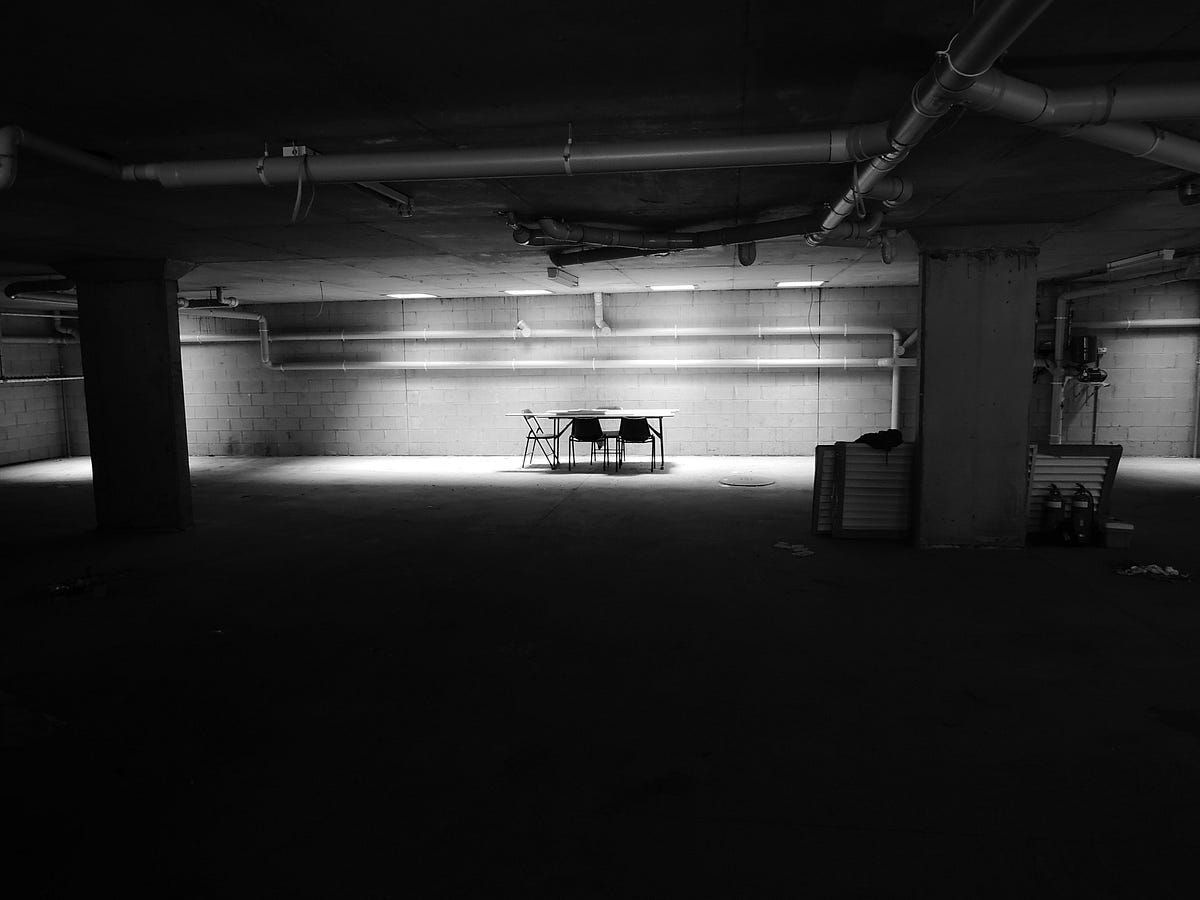
Photo by Jonny Clow on Unsplash
29: Done.
In the overpaid parking lot outside my final exam, I stand frozen, neither student nor graduate, a body suspended between states. The April air carries Calgary chill—spring in theory, but winter in practice. Four years of words and pirated textbooks, readings and writings, distilled into a three-hour block of frantic scribbling, and then: nothing.
I held my pencil too tight, knuckles pallid against its surface, as I scratched out answers on my final English exam. The second-floor hallway in the Faculty of Arts building smelled of dead air and abandoned coffee cups. I submitted my paper exactly three years, seven months, and eighteen days after starting this degree, at age twenty-four—after dropping out of high school, after cooking at a children’s hospice for years, after failed attempts at computer science and information technology. After everything.
No fanfare. Just the anticlimactic click of a classroom door closing behind me for the last time. I walked down the cement stairwell alone. No confetti. No ceremonial marker between student and graduate. Just the quiet rhythm of my footsteps echoing against bare walls.
Ten days earlier, I’d rented an Airbnb near Chinook Mall for what was meant to be both birthday celebration and farewell party. I’d cleaned meticulously, arranged furniture to maximize conversation pockets, my mom stayed up all night the day before preparing so much food. I’d imagined laughter echoing off walls, tearful goodbyes, promises to visit Winnipeg. I’d imagined connection. Instead, I watched the clock as the scheduled start time came and went. Messages pinged: Running late. Something came up. Not feeling well.
I’m so grateful to those who did arrive. The absence of bodies made their presence more conspicuous. We drank and talked, but the conversation felt performative, everyone careful to avoid mentioning how many weren’t there. How many didn’t come to say goodbye. Is this how things end—not with ceremony but with unanswered text messages?
After nearly four years of essays about identity, place, and belonging, where am I? My degree is present in memory but absent in substance. My transcripts show a 3.8 GPA, but numbers say nothing about the nights spent wrestling with impostor syndrome, about feeling both too white to claim my Métis heritage fully and too Indigenous to fit seamlessly into academic spaces. The murky waters of identity never clarify, no matter how many theoretical frameworks you apply.
Outside, Calgary’s air carried the mineral scent of melting snow from the Rockies. Mohkínstsis. I sat on a bench near the library where Write Club first gathered with a handful of members, now grown to over one-hundred, and tried to feel something appropriate for the occasion. Triumph, perhaps. Validation. Instead, I felt the slight tremble in my hands that precedes my heart’s rebellion—the familiar warning of PSVT that ambulance visits and emergency rooms have taught me to recognize.
“You get your degree yet, Kenny?” asked a facilities worker I’d befriended during late-night writing sessions.
“Just finished my last exam.”
“Congratulations,” he said, continuing to empty trash bins nonchalant, unaware that his mundane labour would endure longer than my academic achievements ever could.
Good poets will craft metaphor about butterflies emerging from chrysalides, about rivers meeting oceans.
Don’t mention how the butterfly feels disoriented in first flight. Don’t mention how the river mourns the loss of its banks when dissolving into saltwater vastness.
I look down at my hands. The same hands that typed 750 words daily through streaks and broken streaks. The same hands that smudged sweetgrass and white sage, attempting to reconnect with traditions I barely understand. The same hands that wrote love poems to Connie and manifesto poems about “bloodwriting”—a term for the vulnerable, visceral truth that academic language often obscures. These hands have published eight poetry collections and still feel like a forgery when I introduce myself as a writer.
My backpack weighs heavy with books I should return to the library—theory texts dissecting postcolonial identity and disability narratives that provided frameworks for understanding but never quite fixed the fractures in my sense of self. What use is literary theory when standing at the precipice of thirty with student debt and no clear path forward?
During my second year, a professor asked our creative writing class to explain why we write. The answers were predictable: to express myself, to process emotions, to tell stories. I said something equally trite.
The truth I couldn’t articulate then: I write because I am still the halfbreed high school dropout searching for coherence. I write to make sense of being white-passing with a father whose skin carries the olive complexion I didn’t inherit. I write because at the children’s hospice, I sat with small bodies transitioning between life and death, and those liminal spaces became the only places where reality felt honest. I write because language is the one inheritance nobody could take from me.
The truth I understand now: writing isn’t just documentation but creation—kotodama—words that don’t merely describe but conjure. Poetry as spellcasting, not art.
In the parking lot, a magpie perches on a car, iridescent feathers capturing light in ways science can explain but never account for. I think about all the essays I’ve written about home: Killarney neighborhood with its aging bungalows, Winnipeg Beach with its forgotten childhood memories, Alternative High School with its second chances. None of these places fully contained me.
Perhaps that’s the paradox of an English degree? You spend years learning how to dissect and articulate the human experience, only to discover that the most profound truths resist language entirely. You learn to read between lines while simultaneously trying to write your own.
I’ve walked the red road imperfectly. I’ve led Write Club with the awkward authority of someone who never planned to lead. I’ve accumulated knowledge without wisdom, publications without confidence, a degree without certainty.
The magpie flies away as I approach. I walk to the bus stop beside the parking lot and get onto the bus, set my backpack on the seat beside me, and rest my forehead against the metal bar. The future stretches before me—unmapped, unmarked, unwritten.
I am twenty-nine years old with ten thousand unfinished poems rattling in my chest. I don’t know what comes next, but I know this: Every atom of my blood was formed from this soil, this air. Every word I’ve written bears witness to that truth. And in the spaces between what’s been written and what remains to be said, I find myself—not finished, not transformed, but continuing. The engine starts. The university grows smaller in my rearview mirror. Ahead, the murkiness remains. Drive toward it anyway.
The Clubhouse sits empty today, Wednesday at 4:30pm, when normally thirty students would be crammed between these walls. I’ve left instruction manuals, passwords, contact lists. I’ve left the way for new leadership, encouraged new executive members, documented three years of knowledge. I’ve made myself irrelevant, as good leaders should.
But did I ever matter to begin with? This question haunts as I pack banker boxes of anthologies and club records. I’ve spent years building community among strangers, creating space for voices unlike my own, advocating for marginalized writers. And yet.
I think of the Valentine’s Day fundraiser two months ago, my fingers cramping as I typed personalized poems for strangers on a vintage Royal. We raised money for literacy programs, created moments of surprise and delight. I think of the students who found voice and audience. I think of the anthology we published, physical proof of our collective existence.
What remains is not the people, but the work we did together.
My bedroom window faces a blue sky city I’ll soon leave behind. I’ll soon be half-packed, books in boxes, walls stripped of art. My body has been increasingly unreliable this final year. Heart palpitations sending me to emergency rooms, anxiety narrowing my world to smaller and smaller spaces. There are whole buildings on campus I never entered because I couldn’t face the weight of being perceived.
“What have you learned?” a professor asked me in a hallway, as if four years could be summarized in a sentence.
I’ve learned to read Derrida without panic. I’ve learned that poetry can be medicine when written from bone and blood rather than theory and ambition. I’ve learned that community is necessary but insufficient, that connection is both vital and unreliable, that people will disappoint you not because they don’t care but because care itself is complicated and often inconvenient. I’ve learned that agoraphobia has less to do with physical spaces than with the emotional exposure of being seen—really seen—by others.
The Red River runs north, contrary to what seems natural. When I return to Winnipeg, I’ll be moving against expected currents too—back to family instead of away, back to cultural roots instead of professional advancement, back to a city many leave but few return to.
What will they make of me there, this prodigal with poems instead of profits? Will my father recognize the person I’ve become?
In the parking lot outside my final exam, I stand still, watching clouds move across mountains I no longer have the right to call mine. Four years of struggle, of dropping out and returning, of 3 AM writing sessions and panic attacks before-and-after presentations, of building a GPA that might open doors to futures I’m not sure I want.
The personal is political. Every choice carries weight beyond the individual. My choice to leave Calgary, to return to Winnipeg, to prioritize cultural reconnection over career advancement—my statements about what matters.
What matters is the growth—not the degree but the direction. What matters is the bloodwriting—the words that cost something to produce, that emerge not from academic theory but from lived truth.
There are boxes to tape, goodbyes still to attempt. There is a long highway east, and somewhere beyond it, the convergence of rivers where I began.
Comments
To comment, please sign in with your website:
How it works: Your website needs to support IndieAuth. GitHub profiles work out of the box. You can also use IndieAuth.com to authenticate via GitLab, Codeberg, email, or PGP. Setup instructions.
Signed in as:
No comments yet. Be the first to share your thoughts!