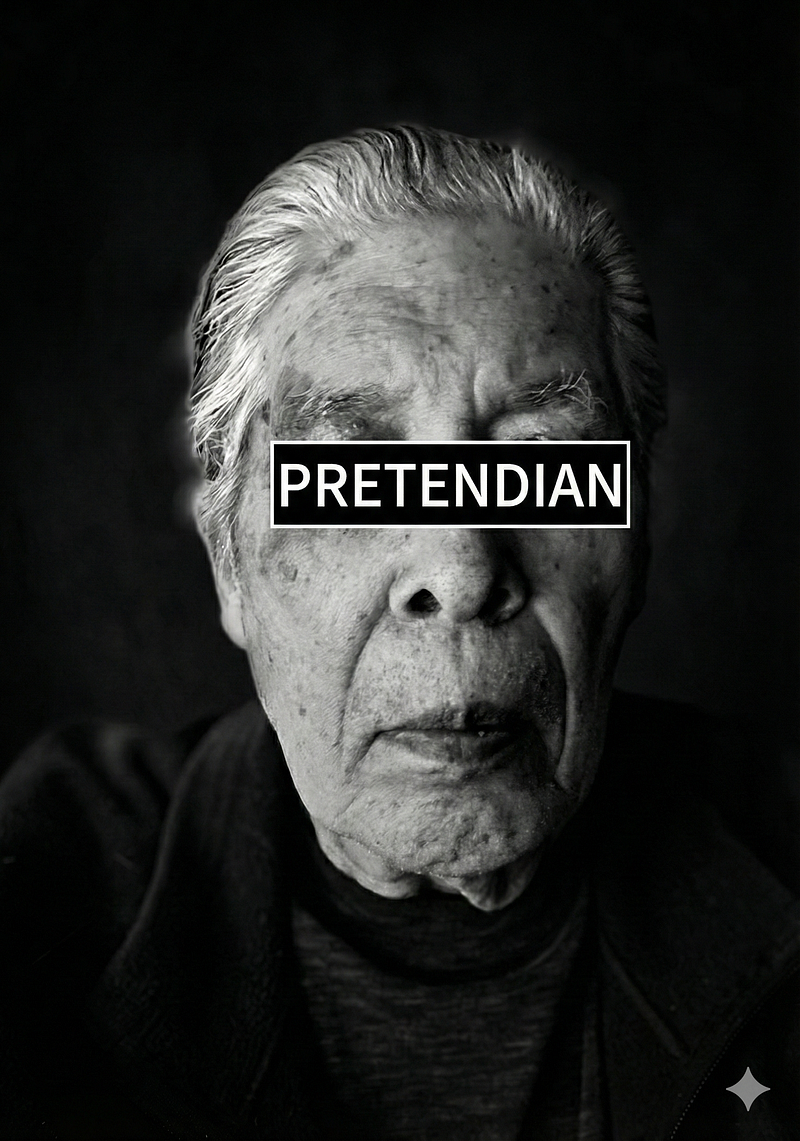
Source | (Edited by the Author)
We’ve Known About Thomas King for Over Ten Years.
Canada has had a Pretendian problem for a long while now. Every couple years (sometimes more frequently) a new story breaks. Somebody investigated. Fraud uncovered. Lies exposed.
But this is not simple. This is not something you can point to and grasp all at once, fully formed.
In this case in particular, on November 24, 2025, Thomas King, the 82-year-old award-winning author of The Inconvenient Indian and Green Grass, Running Water, Companion of the Order of Canada, and one of the most prominent voices in Indigenous literature for over four decades, published an essay in The Globe and Mail titled “A most inconvenient Indian.” In it, he revealed that genealogical research found no Cherokee ancestry in his family tree, despite his lifelong belief and public identification as Indigenous. King’s work has shaped how generations of Canadians understand Indigenous issues. His books have been taught in universities across North America. He has received grants, awards, and positions designated for Indigenous voices. What is there to do about this?
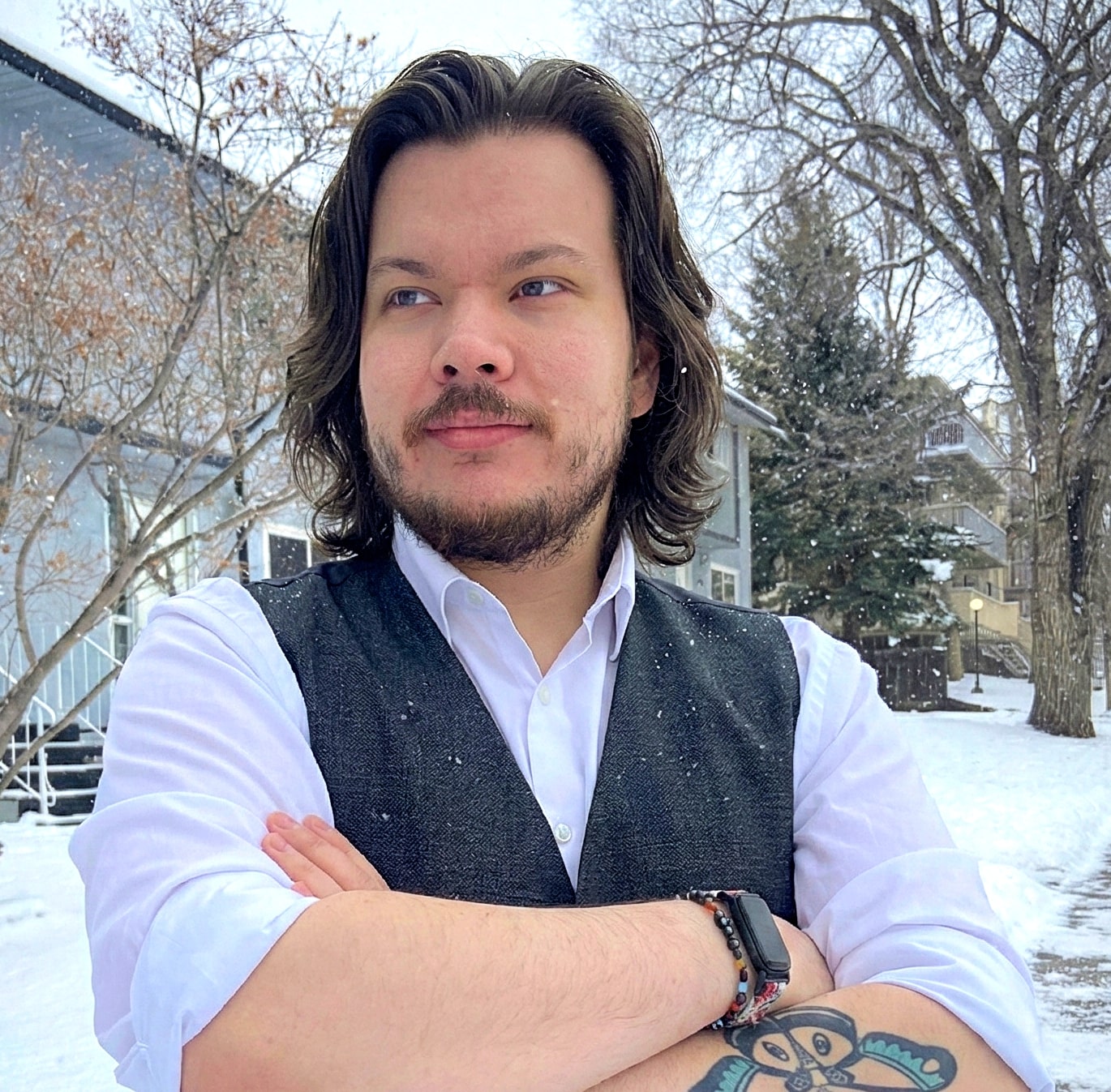
To begina a response to this, I need to start with positionality. I’m a card-carrying MMF member, Red River Métis from Winnipeg, though largely detached from my culture and heritage. I have light skin and I often read as white. When I was in university, I spent months researching and reading Indigenous literatures. I was trying to understand myself, trying to excavate who I really am. That work included reading the works Thomas King.
So, let me steelman both sides of this.
King’s work has done good insomuch as it opened the eyes of many Canadians toward Indigenous issues. He opened a door in CanLit for Indigenous authors to enter the canon. There’s the possibility he genuinely didn’t know (though this is murky at best) and carried “a good heart” even without the blood. And what is blood, anyway?
Yt people treat these revelations like bloodsport. Foaming at the mouth, eyeing it as cancel-culture drama, reveling in another fraudster called out. This is blood quantum fetishism wearing a progressive mask.
When in reality this is tragedy. Heartbreak. Frustration. Rage.
This is not discourse for you. This is not idle debate. This is erasure, this is nullification of Indigenous work. This is embarrassment and shame and the particular exhaustion of eye-rolling at predictable harm. How many awards and funds went to King that could have gone to someone else? This perpetuates the Pretendian story, feeding this poisonous culture within Canada and beyond. How many conversations about Indigenous Peoples and their work have yt people derailed by bringing up one of these controversies, simply because they know more about the scandal than they do actual Indigenous work?
The Performance of Caring
I see people (I keep repeating, yt people) in their orange shirts, posting on social media about the mass graves and the horrors of residential schools. What’s your praxis? Do you put your money and effort and time where your mouth is? Are you doing the real, hard work?
Do you still cross the street when there’s an NDN man walking your way? Do you ignore and feel disdain when you encounter one of us that tries to start a conversation with you in public?
Pretendianism is performance, but so is the act of giving a shit about us. #Landback rings so hollow when nobody is earnestly calling for the dissolution of Canada’s federal government. When nobody is leaving the cities built on treaty land. When there’s still just shit drinking water on countless rez. When anything tradish is still exotic and othered and marginalized.
Performative allyship is the ecosystem that allows pretendians to flourish. When caring about Indigenous people becomes a social media aesthetic rather than actual solidarity, when guilt replaces action, when “raising awareness” substitutes for material change is exactly when the frauds slip through. Because if you’re not actually in relationship with Indigenous communities, how would you know the difference between someone real and someone performing?
What enables pretendians? Non-Indigenous people not understanding Indigenous relationships, not detecting flaws in identity stories, being reluctant to question claims, and guilt about treatment of Indigenous people which became particularly acute following the Truth and Reconciliation Commission’s report. The same settlers who won’t question a pretendian are the ones posting about TRC and doing nothing material.
They Knew. We’ve Always Known.
The Cherokee equivalent in America is what Canada’s Métis People face. But first, you need to understand why and how.
Cherokee is the most frequently falsely claimed Indigenous identity in the United States. Claiming Cherokee became a socially acceptable way for white Americans to claim “Indianness” without having to prove anything or connect to any living community.
There’s a mythology around it, the “Cherokee princess grandmother.” The idea that Cherokees “hid in the hills” to avoid the Trail of Tears, passing as white to survive. Compelling. Romantic. Entirely fabricated.
As Cherokee genealogist David Cornsilk explains, there are 30 rolls made of Cherokees between 1817 and 1914. Thousands of linear feet of records created by colonials, missionaries, U.S. officials, schools, travelers and newspapers that trace Cherokee ancestries to the mid-1700s. Much of this paper trail was created by the tribe itself. Cherokee people are among the most documented Indigenous peoples in North America.
The pretendians like the Andrea Smiths, the Thomas Kings, the Ward Churchills, all rely on the ignorance of the general public and even Indian Country regarding how well documented Cherokees actually are. The myths didn’t originate with Cherokee people. They’re the product of two centuries of non-Cherokees trying to lay claim to Cherokee lands and treasury, if not by force, then by subterfuge.
When someone claims Cherokee ancestry without being able to name which of the three federally recognized Cherokee tribes they’re connected to, without being able to name family members on the rolls, without being able to point to actual Cherokee people who claim them back, then that’s the tell. Real Cherokee people have relations and relatives in the tribe. They have documentation. They have community that recognizes them.
In Canada, the Métis face a parallel but more insidious appropriation. White French-descendants have discovered they can claim “Métis” identity based on a single Indigenous ancestor six, eight, twelve generations back, or sometimes based on nothing at all except “family stories” and aspirational genealogy. They mobilize colonial myths about universal French-Indigenous “métissage” (mixing) in New France to claim that all French-Canadians are, essentially, Métis.
It’s a lie. As Leroux documents, while all available evidence from the French regime (1608–1763) suggests that Indigenous women only rarely married French settlers, scholarly research and popular culture have nonetheless turned the “myth of metissage” into a relatively uncontroversial truth in Quebec and French Canada. At its basis is a nationalist belief in the innate kindness of French settler colonialism in New France, especially as it relates to its British counterparts.
The actual Métis Nation—my nation—is a western-based Indigenous people whose culture grew out of specific kinship relations with the Plains Cree, Saulteaux, Assiniboine, and Dene. We developed our own political institutions, linguistic practices (Michif), and cultural forms. We’re not just “mixed.” We’re not half-and-half. We’re a distinct people with a distinct homeland.
But “Eastern Métis” organizations reject this. Some claim to represent the “only remaining Indigenous people in Quebec,” arguing that status First Nations people on reserves are somehow less authentic. One organization stated: “We present this document to you as the only direct descendants of Québec’s First Peoples whose members were not all killed by microbial shock… Your creation of reserves, which began in 1831–32, forced only the most miserable among us to live there.”
Read that again. They’re claiming that actual First Nations people are “the most miserable” while they—white people who’ve lived as white people for generations—are the true inheritors of Indigeneity.
This is what Cherokee people face with the “Cherokee princess” pretendians. This is what Red River Métis face with the raceshifters. Different mechanisms, same violence. The appropriation of Indigenous identity by settlers who want the cultural cache without the lived experience of colonization, who want to claim our heroes and our trauma without ever having faced our struggles.
Both Cherokee people and Red River Métis have been saying this for years. We’ve been pointing at the frauds. We’ve been doing the genealogical research. We’ve been publicly naming names.
And institutions haven’t cared. Universities haven’t cared. Publishers haven’t cared. Award committees haven’t cared.
Until the media makes it a scandal, pretendians are protected by a wall of settler guilt and institutional inertia that says “Who are we to question someone’s identity?” Surely The Globe and Mail are the first to report on this, right?
Wrong.
David Cornsilk, the respected Cherokee genealogist, publicly named Thomas King back in 2015 alongside Andrea Smith, Ward Churchill, and Rayna Green as people who “rely on the ignorance of the general public and even Indian Country regarding how well documented Cherokees actually are.”
Five years ago, a Reddit thread documented Cherokee community members expressing frustration: “It’s been pretty frustrating to the Cherokee community to see this guy claim us, pretend to represent us, yet have no connection to us.” One commenter noted that Cornsilk had reached out to King, but “King has ignored him.”
The Tribal Alliance Against Frauds has called King a “pretendian” since at least 2022, publishing his lineage going back five generations, including more than 40 ancestors—none of whom are Indigenous.
So when King says he only learned this year, when he wasn’t invited to the Vancouver Writers Fest and believed it had something to do with the rumour he wasn’t Indigenous, I have questions. When the Cherokee community has been trying to tell you for a decade, when genealogists have been trying to reach you, when your own colleague Michelle Latimer’s Indigenous identity came under scrutiny in 2020 after she directed the documentary adaptation of your book The Inconvenient Indian, why didn’t you verify then?
King said he didn’t think DNA tests were accurate when it came to Indigenous genealogical markers. That’s convenient. That’s a door left deliberately ajar.
The Raceshifting Epidemic
I believe in Canada, the problem is far more insidious than individual pretendians. I am not Status Indian. My People are not part of the National Métis Council. Why? Because of the phenomenon of raceshifting in Canada. Raceshifting.com defines it clearly:
The rise of the so-called “Eastern Metis” in the eastern provinces (Ontario, Québec, New Brunswick, and Nova Scotia) and in New England (Vermont, New Hampshire, Maine). The Métis Nation is a western-based Indigenous people whose culture grew out of kinship relations with the Plains Cree, Saulteaux, Assiniboine, and Dene. The so-called “Eastern Metis” are instead an example of what is referred to as race-shifting or self-indigenization, a process that, in the case of this research project, involves white French-descendants inventing and claiming an “Indigenous” identity, often in opposition to actual Indigenous peoples.
The numbers are staggering. Darryl Leroux’s research documented about 75 organizations involved in the race-shifting movement, with almost 60 “Eastern Métis” court cases filed in Quebec, New Brunswick, and Nova Scotia. In Quebec and New Brunswick, there was nearly a 10-fold increase in people identifying as Métis between 1996 and 2016. Almost all of this increase is due to white Franco-Québécois and Acadian settlers “becoming” Indigenous. Nearly 30 “Métis” organizations were founded during the same period.
This is as alarming as it is systemic. And I see nobody giving a shit about it. Despite numerous and diverse Indigenous Peoples coming out and condemning this, these false orgs and all of their peoples are still recognized and rarely ever questioned.
My People Stand Alone
I am proud of being part of a People who decided to resign from national council rather than bending the knee. I am proud. But I am also so full of rage and exhaustion.
The Manitoba Métis Federation withdrew from the Métis National Council in September 2021 after a 2019 resolution where 3,000 delegates unanimously supported withdrawal “should MNO continue to be allowed a seat at the governance table while they—by their own admission—have nearly 80% non-Métis Nation Citizens in their registry.” Let me repeat that, eighty percent.
In September 2024, Métis Nation-Saskatchewan also withdrew from the MNC, citing the same concerns about MNO’s recognition of communities without ties to the historic Métis Nation. Two of the three founding members have now left. The Red River Métis are standing alone against this tsunami.
Meanwhile, the Métis Nation of Ontario’s membership grew to over 125,000 by 2021, far exceeding historic estimates. Where did these people come from? Who benefits?
The Material Harm is Real
Let’s be explicit about what pretendians do. They take up grants, scholarships, jobs and positions earmarked for Indigenous candidates. They steal the spotlight from genuine Indigenous artists and leaders. They capitalize on historical and ongoing trauma. When pretendians become prominent figures as writers or filmmakers, where does that leave actual Indigenous people trying to become writers and filmmakers themselves?
King admits to having received financial grants and other benefits in his career from being seen as Indigenous, though he plans to return only the National Aboriginal Achievement Award from 2003, stating “the rest of my awards are based on my writing, not my ethnicity.”
This argument is hollow. How many Indigenous-specific speaking engagements? How many invitations to represent Indigenous perspectives? How many times was his work elevated because he was seen as an Indigenous voice? How many times did a publisher choose him over an actual Indigenous writer?
And here’s the institutional betrayal, even when it is clear someone has fabricated their Indigenous identity, institutions often back them, with colleagues arguing the person’s deceit “shouldn’t overshadow their ‘good work.’” Without media coverage and public scrutiny, pretendians would likely remain in their positions. The Yellowhead Institute’s research shows that pretendians exploit institutions, weak identity verification processes, and insufficient cultural competence.
“Good intentions” don’t matter when the system enables fraud.
An opera production of King’s Indians on Vacation was cancelled after Indigenous community members raised concerns. That’s material harm. That’s careers affected. That’s Indigenous artists who could have had that opportunity.
This Essay Is Work
This essay is labour. To channel my rage and make it palatable, to provide resources and utility so this isn’t just a ranting vent post more suited for LiveJournal. But I do the work. I have survivance in my blood.
I’m not going to pretend to be objective about this. I’m not going to couch my anger in academic language or hedge my rage with “both sides” equivocation beyond the steelman I offered at the beginning. The steelman collapses under the weight of the timeline.
King had a decade to verify. He had colleagues exposed. He had the Michelle Latimer controversy literally adapt his book. He had Cherokee genealogists reaching out. He chose not to look.
At 82 years old, King writes that he feels “as though I’ve been ripped in half, a one-legged man in a two-legged story.” I understand his pain is real. But Cherokee people have been living with the pain of watching him speak for them, write for them, represent them. For forty years. Who weeps for them?
The Questions That Remain
Do we continue reading King’s work? Is there merit there still? And if so, what is it?
Maybe his fiction can be read as fiction by a good writer, period. But it should never again be taught as Indigenous literature. It should never be marketed as Indigenous storytelling. The Indigenous literature sections of bookstores should remove his work. Universities teaching Native American literature should strike him from syllabi.
We must centre actual Indigenous voices in those conversations—not King’s, not more white guilt, not more wringing of hands.
The real work is ensuring the next generation of Indigenous writers gets the opportunities King took. The real work is questioning every institution that enabled this. The real work is asking why Cherokee genealogists were ignored. The real work is demanding verification processes that are community-led, not self-identification boxes on grant applications.
Institutional protocols verifying Indigenous identity risk further isolating Afro-Indigenous people from their communities if not done thoughtfully, potentially causing “the doubling-down of paper genocide.” That’s real. We need to be careful. But careful doesn’t mean toothless. It means rigorous and community-centered.
The Tri-Agency Indigenous Citizenship and Membership Affirmation Policy represents a path forward: requiring proof of membership, connection, or citizenship to an Indigenous community when applying for opportunities reserved for Indigenous Peoples. This replaces the self-identification approach. It’s a start.
What Comes Next
King expects a “firestorm.” He’s right. But this isn’t about him. This is about the nearly 10-fold increase of white settlers “becoming” Indigenous in Quebec and New Brunswick. This is about the 75 organizations, the 60 court cases, the systematic erasure. This is about the Manitoba Métis Federation and Métis Nation-Saskatchewan standing alone while the rest of the Métis National Council dilutes us out of existence.
This is about every Indigenous writer who didn’t get the book deal, didn’t get the tenure track position, didn’t get the speaking engagement, because someone like King was there instead.
This is about survivance. About the work of writing this essay when I could be doing literally anything else. About channeling rage into something constructive instead of letting it eat me alive. About my card-carrying status in a federation that chose to stand alone rather than be swallowed whole.
I end where I began. This is tragedy and heartbreak and frustration and rage. But it’s also clarity. Thomas King’s revelation isn’t new information. It’s new acknowledgment. And that difference matters.
The Cherokee community tried to tell us. The genealogists tried to tell us. NDNs online five years ago tried to tell us. We didn’t listen. Or rather, the institutions that elevated King didn’t listen. They didn’t care to verify. Why would they? He said the right things. He wrote beautifully. He made settlers feel enlightened.
But feeling enlightened isn’t the same as doing the work. Feeling enlightened is its own kind of performance. The work is listening when Cherokee people say “he’s not one of us.” The work is asking for verification before handing out awards meant for Indigenous voices. The work is centering community recognition over self-identification. The work is uncomfortable and rigorous and necessary.
The work is admitting that sometimes the most inconvenient Indian is the one who was never Indian at all.
Comments
To comment, please sign in with your website:
How it works: Your website needs to support IndieAuth. GitHub profiles work out of the box. You can also use IndieAuth.com to authenticate via GitLab, Codeberg, email, or PGP. Setup instructions.
Signed in as:
No comments yet. Be the first to share your thoughts!