
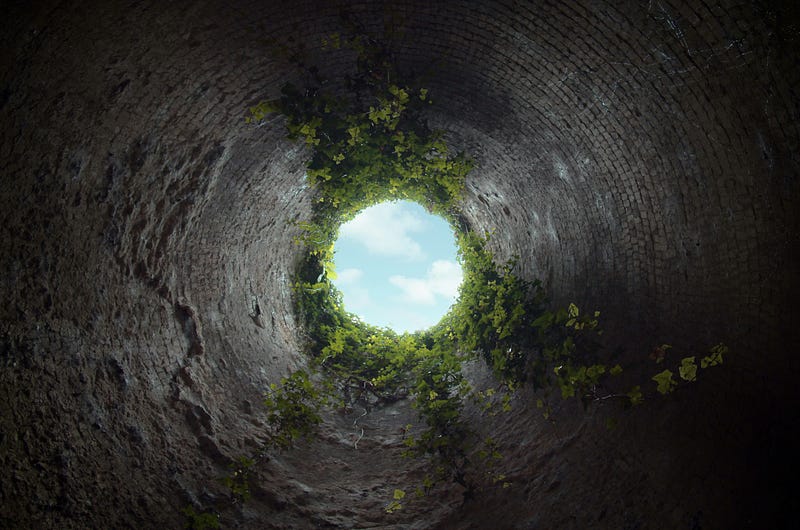
Photo by Viktor Talashuk on Unsplash
Want to be a good researcher? Go down rabbit holes.

There’s something scandalous about admitting some of my most valuable intellectual breakthroughs haven’t come from systematic literature reviews or carefully planned research queries. My best work comes from getting lost on Wikipedia at 2AM, following hyperlinks from medieval astronomy to Byzantine iconography to the Philosophy of mathematics until I’ve forgotten what I was searching for.
This phenomenon has a name, the “wiki rabbit hole” or “wiki walk.” The metaphor comes from Lewis Carroll’s Alice’s Adventures in Wonderland, where Alice follows the White Rabbit into his burrow. Like Alice’s journey, what starts as a simple query can lead to wonderlands of knowledge we never anticipated. This kind of meandering isn’t procrastination dressed up as research, rather, going down the rabbit hole reveals connections and generating insights that systematic inquiry alone can’t produce.
Three styles of curiosity
Berkeley researchers describe three distinct curiosity styles: hunters, busybodies, and dancers.
- Hunters pursue knowledge with focus, zooming in on connected concepts and seek specific answers and follow targeted paths. This is the research method professors praise.
- Busybodies explore loosely connected networks, collecting novel snippets about a wide range of topics and are classic rabbit hole explorers—starting with the French Revolution, ending up on competitive cheese rolling.
- Dancers leap to new ideas and put existing ones together in novel ways, connecting distant dots to make entirely new meaning. Their style shows up as creativity and interdisciplinary thinking. A 2024 study of nearly half a million Wikipedia users found that dancers briefly link disparate concepts across traditionally siloed areas. This may be the most direct path from curiosity to creativity.
When serendipity meets sagacity
Fleming discovered penicillin. Becquerel discovered radioactivity. Both accidents, right? Not quite. Serendipity is what happens when attention, creativity, and wisdom let researchers recognize potentially valuable unexpected findings.
When Becquerel discovered radioactivity, he combined his background in luminescence with his knowledge of X-rays and his willingness to investigate unexpected observations. Logic and chance work together.
Wikipedia rabbit holes operate on similar principles. You can’t orchestrate serendipity, but you can create conditions favourable to it. Hyperlinks provide infrastructure. Curiosity provides momentum. Prior knowledge provides the framework for recognizing valuable connections. “Micro-serendipity” is created through these factors, the small-scale discoveries found through navigation.
And, sure, the hunter’s focused approach has its place when you need comprehensive coverage or when preparing for assessments. Structured research ensures you meet academic standards and achieve measurable outcomes. But systematic and serendipitous research are not mutually exclusive. Research on combining exploratory and structured learning shows robust knowledge consists of conceptual and procedural knowledge, and they develop together through different tasks.
Exploratory tasks enable students to manipulate representations and discover underlying concepts. Structured tasks let students practice problem-solving step-by-step. The optimal approach combines both exploration generates questions and hypotheses. Then, systematic investigation tests and refines those ideas.
Wikipedia’s network structure shows that most users enter via search engines, explore through hyperlinks and external sources, then leave by clicking references. The platform exhibits “small world preferential attachment,” highly connected articles on general topics serve as hubs, while specialized articles form clusters around them.
You can navigate to related-but-distant topics through short paths. Unlike traditional research moving linearly from question to source to answer, Wikipedia navigation is lateral and hyperlinked. Individual articles function as mutually dependent entities constituting a sort of living web system. The networked structure affords moving through information space guided by connections others have made, also known as social navigation, not dissimilar to the desire paths found in our physical world.
Digital literacy isn’t a technical skill.
Rabbit hole exploration requires digital literacy. Navigating information in digital environments requires abandoning older linear approaches like reading books cover-to-cover and instead using lateral approaches like natural language searches, hypermedia text, keywords, and databases.
The shift involves developing the ability to construct meaningful search parameters, generate appropriate keywords, and manage results. But it also requires “information literacy,” the capacity to locate, evaluate, and synthesize digital information.
When looking at “productive failure,” students who attempted ill-structured problems before well-structured ones outperformed their counterparts in both types. The ill-structured problems required students to discover how to structure and solve them by abstracting concrete information, much like exploratory Wikipedia navigation.
Struggling with open-ended exploration before focused inquiry enhances learning. Getting temporarily lost in the rabbit hole is preparation.
Serendipity in discovery learning contributes to active and meaningful learning by promoting exploration, emotional engagement, and reconciling ideas and experiences. By contrast, there is research suggesting readers whose Wikipedia foraging was more constrained showed higher levels of depression and anxiety than those with less constrained exploration. Negative mood is linked to narrowed or ruminative attention.
If different curiosity styles serve different purposes, it has implications for pedagogy. As researchers noted, a child with hunter-like curiosity may struggle if assessed using methods that favour the busybody style, or vice versa. We need to actively teach students when each approach is appropriate.
Wikipedia navigation works for early stages of inquiry—discovering what questions to ask, what connections to explore, what domains intersect unexpectedly. Systematic research comes later, like tracking down primary sources, reading academic literature, and verifying claims. Rabbit holes generate the maps and systematic inquiry fills in the territory. Multiple studies show Wikipedia-based assignments can foster digital literacy, information literacy, and critical thinking.

An ecological view of research
What I’m arguing for is recognizing different approaches as adapted to different epistemic environments and purposes. Systematic inquiry excels at comprehensiveness, rigour, and verification. Serendipitous exploration excels at creativity, connection-making, and discovery.
The Wikipedia rabbit hole represents a particular research environment, which is networked rather than hierarchical, associative rather than linear, exploratory rather than confirmatory.
The best researchers hunt when they need focus, browse when they need breadth, and dance when they need creativity. The best researchers know when to plan their research systematically and when to let themselves get lost, trusting that the path will lead somewhere worth going.
The most important discoveries come not from finding what we were looking for, but from noticing what we weren’t. The Wikipedia rabbit hole, for all its apparent chaos, might be one of the most democratic and productive tools we have for that kind of discovery.
Comments
To comment, please sign in with your website:
How it works: Your website needs to support IndieAuth. GitHub profiles work out of the box. You can also use IndieAuth.com to authenticate via GitLab, Codeberg, email, or PGP. Setup instructions.
Signed in as:
No comments yet. Be the first to share your thoughts!