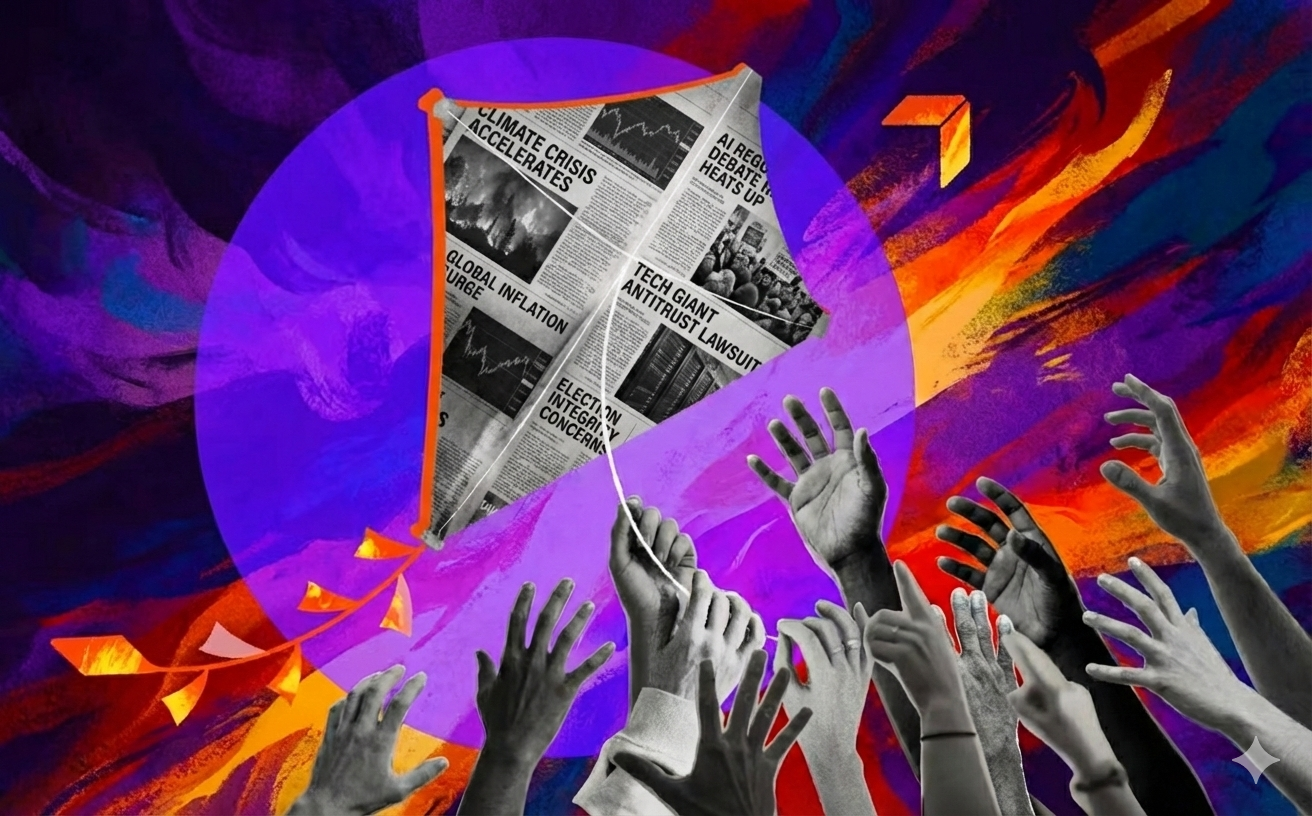
Source | (Edited by the Author)
Tough, but Fair: How to Elevate Your Craft from Blogging to Literary Journalism
There’s a scene in Better Call Saul that’s stayed with me for years. The show ran for six seasons from 2015 to 2022, and I watched it religiously—new episodes every week on AMC, on actual cable, the whole ritual.
Prologue: What a Drug Kingpin Can Teach Us About Ethics
In the second episode, two skateboarding twins accidentally target the wrong car in an insurance scam masterminded by lawyer Jimmy McGill. Instead of hitting their intended mark, they follow an elderly woman into her house… only to discover she’s the grandmother of Tuco Salamanca, a volatile drug kingpin. Tuco beats them unconscious with his grandmother’s cane, then drags Jimmy and the twins out to the desert, planning to kill all three of them.
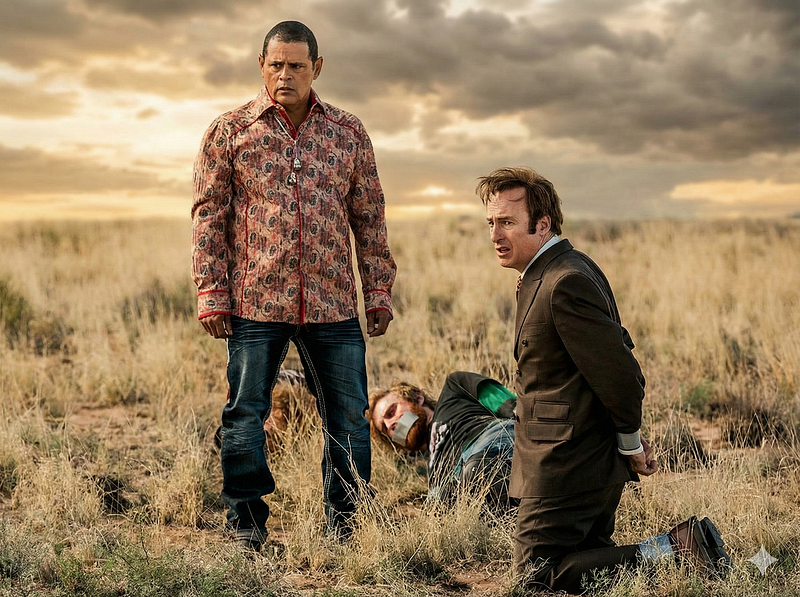
Jimmy, displaying the sharp-tongued persuasion that would eventually make him Saul Goodman, talks Tuco down from murder to breaking one leg on each twin—“a total of two legs”—arguing they can’t skateboard for six months and they’ll be scared of Tuco forever. How does he manage this impossible negotiation? By appealing to Tuco’s ego, arguing that people respect a criminal who’s “tough but fair,” not a complete psychopath.
Now, you’re probably wondering what the hell this has to do with literary journalism, but bear with me. The phrase stuck with me because it captures something essential about what we’re trying to do when we write for other people. Not the violence, obviously. The tension. The impossibility of holding two opposing truths at once. Being rigorous without being cold, being critical without being cruel, being honest while still being humane.
I think about this every time I sit down to write something I want other people to read. Not poetry, not fiction, not the journal entries I’ve been keeping since I was fifteen. The other stuff. Creative non-fiction. The essays that make claims about the world. The investigations that name names. The cultural criticism arguing someone else got it wrong.
The stuff that could actually hurt someone if I fuck it up.
Prologue 2: Before We Get to Creative Non-fiction, Let’s Talk About Webcomics
Before we get into the mechanics and the ethics codes and the pre-publication checklists, let me tell you about three things I think about when I’m trying to figure out whether a piece of writing is any good.

First, Homestuck. Andrew Hussie’s sprawling webcomic which ran from 2009 to 2016 and somehow became one of the most influential pieces of internet culture ever created. In it, there’s a death mechanic that’s stuck with me for over a decade.
When characters ascend to the “god tiers” in Homestuck, they gain what the narrative calls conditional immortality. They can only die permanently if their death meets one of two criteria: it must be either heroic or just. Die any other way, and they resurrect in a blaze of obnoxious flashing colours.
The distinction matters. Heroic means dying in sacrifice, in service of something greater. Just means dying as deserved consequence—getting what’s coming to you based on the full context of who you are and what you’ve done. As the narrative explains: “He’d done nothing to earn martyrdom, by which we might laud his fall as heroic. Nor had he tasted notoriety, to secure a death one may parse just.”
Not fair—just. There’s a difference. Fair means everyone gets the same treatment, the same neutral application of rules. Just means everyone gets what they deserve, weighted by context and circumstance and the totality of their actions.
When I’m writing about someone, particularly when I’m holding them accountable for something they’ve done, I ask myself, am I being just? Or am I just being fair?
Fair isn’t enough. Treating everyone exactly the same way means letting people with more power, more resources, more institutional protection off the hook. Being truly just requires acknowledging nuance, considering context, weighing the full story before rendering judgment.
The god tier clocks in Homestuck have a pendulum that swings between these two poles, measuring each death against both standards. I think about that pendulum when I’m editing. Is this piece heroic—does it serve something larger than my own ego? Is it just—does it give people what they deserve based on who they are and what they’ve actually done?
If it’s neither, maybe it shouldn’t be published at all.
More Sane Things to Consider
Of course, there’s also pathos, ethos, logos. The ancient Greek trinity of persuasion. Aristotle knew what he was doing. You need all three. Emotion alone is manipulation. Logic alone is tedious. Credibility alone is hollow. The best writing braids them together so tightly you can’t tell where one ends and another begins.
And also the qualitative versus the quantitative. It’s easy to stick to pure external facts—regurgitating what’s already been said, citing studies, stacking statistics. It’s equally easy to navel-gaze—talking endlessly about your personal experience without connecting it to anything larger. Good literary journalism does both. The numbers tell you what happened. The story tells you why it matters.
These are doctrines, not checklists. They’re qualitative by nature. They resist measurement. And they all circle back to the same central commitment, that the truth of the story must matter. Must always take precedence. I cannot glaze over what complicates my narrative. I cannot smooth out the contradictions. I cannot pretend I have it all figured out when I don’t.
Why Independent? Why Now?
Here’s my pitch, and I’ll be blunt about it. I believe I reach a far closer approximation of objectivity than most people writing for major outlets. Not because I’m smarter or better. Because I’m poorer and smaller and nobody’s paying me to say anything in particular.
I make money through Medium’s partner program, but all my work lives at my own URL https://blog.brennanbrown.ca and I can migrate platforms whenever I want. Nobody edits me. Nobody tells me what I can or cannot say. No advertising. No sponsorships. No grants, no bursaries, no affiliate links, no publications with editorial standards that might conflict with what I actually think.
I’m not trying to get published in academic journals or established mainstream media. I don’t want those things. They come with strings. Invisible at first, then suddenly very visible when you try to pull against them. When The New York Times or The Atlantic or whoever employs you, you represent them. Your politics become their politics become a liability they have to manage. You learn what not to say. You learn it so well you stop noticing you learned it.
I don’t have that problem because nobody knows who the fuck I am.
When the platform is a corporate newsroom with shareholders and advertisers and HR departments, the message is play nice. Don’t rock the boat too hard. Remember who signs your paycheck. When the platform is one guy in Calgary with a laptop and no boss, I can tell you what I actually think, and the worst that happens is you close the tab.
There’s incredible liberation in being ignored. But it doesn’t mean I don’t follow these responsibilities seriously. I could go viral. A specific person could read my work. The ethics matter precisely because I have no institutional oversight to catch my mistakes before they go live.
Let’s talk about what those ethics actually are.
Getting In the Weeds
What the Professionals Figured Out
The Society of Professional Journalists spent decades developing their Code of Ethics. Last major revision was 2014. It’s organized around four principles that I’m going to be going over and referring to in detail throughout my article here:
Seek truth and report it. Minimize harm. Act independently. Be accountable and transparent.
That’s it. Four pillars. Everything else is commentary. The code’s voluntary, not legally enforceable, but here’s what matters for freelancers like us:
“Being a freelancer doesn’t relieve a journalist of his or her ethical obligations. We should do everything possible to avoid conflicts of interest, real or perceived, in the course of our work. This is perhaps more important for freelancers, whose identity and potential relationships to a story may not be readily transparent.”
When you work for The Washington Post, readers can look up the paper’s corrections policy, check the masthead, file complaints with ombudsmen. When you work for yourself on Medium, you’re it. The whole operation. If you fuck up, there’s nobody to blame but you. If you’re biased, nobody’s fact-checking you. If you’re lazy with your research, nobody’s sending the story back for another draft.
The absence of institutional oversight isn’t freedom from ethics. It’s an intensification of personal responsibility. What does that actually mean?
Seek Truth and Report It (Or, How to Not Be Full of Shit)
The SPJ Code says:
“Take responsibility for the accuracy of their work. Verify information before releasing it. Use original sources whenever possible.”
Sounds obvious until you’re three hours deep into writing something and you need one more fact to make your argument work and Wikipedia says the thing you need it to say and you think: close enough. Not close enough. Not even a little bit.
I use “TK” as a placeholder when I’m drafting, which journalism shorthand for “to come.” (Medium actually supports this.) Means I know there’s a gap I need to fill. When I finish a draft, I search for “TK” to make sure nothing slipped through. Every TK has to get resolved. If I can’t verify it, it doesn’t go in the piece. Doesn’t matter how good it would sound. Doesn’t matter if I’m “pretty sure” I read it somewhere. If I can’t find it again, if I can’t link to the original source, it’s not true enough to publish.
This means using inline source citations for every claim that isn’t common knowledge. Not cluttered footnotes. Hyperlinks embedded naturally in the text. When I say a study found something, you can click through and read the study yourself. When I quote someone, you can verify I didn’t take their words out of context.
The SPJ Code also says to “gather, update and correct information throughout the life of a news story” and “be cautious when making promises about anonymity.” Journalism isn’t a one-and-done transaction. You publish something. New information comes out. You update. Someone contacts you to say you got their quote wrong. You check the recording. If they’re right, you fix it. If they’re wrong, you explain why the quote stands.
And anonymity? That’s sacred. If you tell a source you’ll protect their identity, you protect their identity. Full stop. Even if it costs you the story. Even if you get sued. The SPJ is explicit. “Never plagiarize. Never fabricate.” But also honour your agreements with sources.
Your word is the only currency you have. The trust is the whole game. Once it’s gone, you’re done.
Minimize Harm
The SPJ code says to “balance the public’s need for information against potential harm or discomfort. Pursuit of the news is not a license for arrogance or undue intrusiveness.” This is where it gets messy.
Let’s say you’re writing an investigative piece about someone who did something genuinely bad. Fraud, abuse, harm to vulnerable people. The public interest is clear. But this person also has a family. Kids, maybe. A spouse who didn’t know. Aging parents who are going to read your story and have to reckon with what their child did.
Do you use the person’s full name? Their photo? Details about where they live? What about the victims, do you name them? Do you include details that might help readers identify them even if you don’t name them directly?
There’s no formula. The SPJ gives you principles, not answers. “Show compassion for those who may be affected by news coverage. Use heightened sensitivity when dealing with juveniles, victims of sex crimes, and sources or subjects who are inexperienced or unable to give consent.”
Ask yourself whether each specific detail serves the public interest or just serves your desire to write a more dramatic story. If you can make the point without including a humiliating detail about someone’s personal life, leave it out. If the detail is the point, as in, if it’s evidence of the wrongdoing or necessary context for understanding what happened—then it goes in.
The SPJ tells us to “consider the long-term implications of the extended reach and permanence of publication.” What you publish on the internet is forever. Google doesn’t forget. The Wayback Machine doesn’t forget.
And minimizing harm includes harm to yourself. The Dart Center for Journalism and Trauma has resources on this. If you’re writing about violence, about trauma, about the worst things humans do to each other, you’re going to carry that. You need to know when to step back. When to bring in someone else. When to admit a story is too close to your own trauma for you to cover it fairly.
I worked at a children’s hospice for four years. There are stories from that time I’ll never write because I can’t write them without turning someone’s grief into content. Some things stay private. Some things stay sacred. The line isn’t always clear, but the question is always worth asking.
Act Independently
Here’s where independent journalism has a genuine structural advantage.
The SPJ code also tells us to “avoid conflicts of interest, real or perceived. Refuse gifts, favors, fees, free travel and special treatment. Deny favored treatment to advertisers and special interests and resist their pressure to influence news coverage.”
When you work for a publication, conflicts are everywhere. The company that advertises in your paper. The politician your editor went to college with. The tech company your publisher has investments in. The cultural organization that sponsors your podcast. You learn to navigate around them. You disclose when you can’t avoid them. But they’re always there, exerting subtle pressure on what you can and cannot say.
Nobody’s advertising with me. Nobody’s sponsoring me. I make money when people read my work on Medium, but Medium doesn’t get to tell me what to write. They have distribution guidelines for what gets boosted, but those are mostly about quality and journalistic standards. Exactly the standards I’m already trying to meet.
This means I can critique the platform I’m using. I can call out problems in the creator economy without worrying about burning bridges with my employer because I don’t have an employer. But let me be honest about the limits here.
I have biases. I have politics. I have friends whose work I want to succeed and bad faith actors whose work I want to fail. I have blind spots based on my identity. White passing, Queer, Métis, Canadian, cis-male presenting, nearly thirty, raised working-class but currently economically stable. All of that shapes what I see and how I see it.
The goal isn’t to eliminate bias. The goal is to be aware of it. To disclose it when relevant. To actively seek out sources and perspectives that challenge my assumptions. Maybe most importantly, to steelman the positions I disagree with, meaning, to present the strongest possible version of the opposing argument, the opposite of a strawman I can easily knock down.
When I write about something controversial, I try to write it in a way where someone who disagrees with me can say, “I think he’s wrong, but at least he understood what I was arguing.” That’s the bar. You can’t eliminate conflicts, but you can put them on the table and let readers decide whether they trust your judgment anyway.
Be Accountable and Transparent
This is the hardest one because it requires admitting you were wrong, publicly, where everyone can see it. The SPJ code says to “acknowledge mistakes and correct them promptly and prominently. Explain ethical choices to audiences. Respond quickly to questions about accuracy, clarity and fairness.”
Let’s talk about what this actually looks like.
Say you publish a piece. Someone emails you: “Hey, you said X happened in 2019, but it actually happened in 2020.” You check your sources. They’re right. You were wrong. Now what?
Option A: Quietly edit the post and hope nobody notices.
Option B: Edit the post and add a note at the bottom: “Correction: An earlier version of this article stated…”
Option C: Edit the post, add the correction note, and post about the correction on whatever social media platform you shared the original story.
The correct answer is Option B at minimum, Option C if it’s a significant error.
Why? Because research shows that corrections actually build trust rather than destroying it. People know we fuck up. They know journalism is hard. What they don’t trust is when we try to cover it up.
Here’s a format to use, adapted from corrections best practices:
Correction [Date]: This article originally stated X.
After publication, [source of correction] clarified that Y.
The article has been updated to reflect this. I regret the error.
Place it at the top if it’s a major factual error that changes the thrust of the piece. Place it at the bottom if it’s a minor error that doesn’t affect the main argument. Use strikethrough text for inline corrections if you want to show what you changed. But always, always note that you changed it.
The key phrase: “I regret the error.” Not “mistakes were made.” Not “the article contained an inaccuracy.” I made a mistake. I regret it. Take ownership.
Never correct something that wasn’t actually wrong just because someone complains. If someone disputes your reporting but you have the receipts, you stand by it. You can offer a clarification. You can add context. But you don’t let pressure push you into changing accurate reporting.
And if you’re not confident about a source, don’t include it. If you can’t verify it, it doesn’t go in. Better to have a weaker argument that’s bulletproof than a stronger argument built on shaky ground.
Why It Has to Be Beautiful
Everything I’ve said so far is standard journalism ethics. Verify your sources. Minimize harm. Correct your errors. Be transparent about conflicts.
But you’re not here to learn how to be a serviceable journalist. You’re here because you want to write literary journalism. The stuff Lee Gutkind, founder of Creative Nonfiction magazine, described as work that aims “to communicate information, just like a reporter, but to shape it in a way that reads like fiction.”
Literary journalism uses scene. It uses dialogue. It uses sensory detail and imagery and metaphor and all the tools of fiction. But it cannot fabricate events, composite characters, or invent dialogue. The literary techniques serve truth.
Gather your sources. Conduct your interviews. Verify your facts. You organize your materials. And only then do you start writing.
Good literary journalism doesn’t just report the facts. There’s immersion, making you feel what it was like to be there. Through careful attention to detail and deliberate choices about what to include.
When I write about that kitchen at the hospice, I can tell you how “I worked there for four years.” That’s journalism. Or I can tell you how “the stainless steel refrigerators hummed their constant song against one wall, their surfaces marked with the ghosts of a thousand Post-it notes and menu changes. My blue ceramic knife lived in the drawer closest to the cutting board—that green-stained board that had absorbed the oils of a thousand onions, the juice of countless tomatoes. The wooden floors creaked beneath my feet, announcing every trip from fridge to stove to plating area.”
Same facts. Different experience of reading. Both true. But one puts you there. This is what Barbara Lounsberry, in her book The Art of Fact, identifies as essential to creative nonfiction: “Exhaustive research” that allows “novel perspectives” combined with “The scene”—describing and revivifying context rather than just stating what happened.
The research has to come first. You can’t write the scene until you’ve lived it or talked to someone who did. You can’t include the telling detail unless you’ve done the work to find it. But once you have it, you’re obligated to make it good. To make it worth reading. To honour the truth by rendering it beautifully. Anything less is a failure of craft.
What We Owe Each Other
There’s an unspoken agreement between literary journalists and readers. The nonfiction compact, some call it. It goes like this:
I promise you that everything in this piece happened. I didn’t make it up. I didn’t exaggerate for effect. I didn’t create composite characters or move events around on the timeline to make a better story. I’m telling you the truth, with all the ambiguity and complication that comes with it. In exchange, you agree to trust me. To give me the benefit of the doubt when I make claims. To follow me down rabbit holes because you believe I wouldn’t take you there unless it mattered.
This compact is why fabrication is such a mortal sin in journalism. When Stephen Glass fabricated sources at The New Republic in the late ’90s, when Jayson Blair plagiarized and made up stories at The New York Times in 2003, it wasn’t just that they lied in their stories. It’s that they violated the compact. They took readers’ trust and turned it into a prop for their own ambition.
You can’t come back from that. Not really. Glass tried. He went to law school, passed the bar, even wrote a novel about his experience. The California Supreme Court refused to let him practice law. Why? Because a lawyer, like a journalist, depends on credibility. Once you’ve proven you’ll lie when it’s convenient, why should anyone believe you’ve changed?
There are no ethical shortcuts. No changing a quote to make it punchier. It matters. It all matters. The compact depends on radical honesty, even about the small stuff. Big lies are obvious. Small lies erode trust gradually, invisibly, until the whole structure collapses.
Indigenous Stories and Cultural Protocols
I’m Métis. My father’s family is from the Red River Settlement. I have certain connections and certain responsibilities, particularly when writing about Indigenous communities and issues.
The Indigenous Journalists Association (formerly the Native American Journalists Association) is explicit about this, “IJA recognizes Indigenous as distinct peoples based on tradition and culture. IJA encourages both mainstream and tribal media to attain the highest standards of professionalism, ethics and responsibility.”
What does this mean in practice?
It means recognizing that Indigenous communities have data sovereignty. The right to control how their stories are told. Consult with community members. Understand protocols around sacred knowledge, around what can and cannot be shared publicly. Be aware of historical trauma and ongoing colonization, and not retraumatizing people for the sake of a story.
Being Métis doesn’t make me Cree or Lakota or Navajo. Different Nations, different histories, different protocols. I can write about my own family’s experiences. I can write about broader Indigenous issues with appropriate sourcing and consultation. But I haven o authority over stories that aren’t mine to tell.
This applies beyond Indigenous journalism. Any time you’re writing about communities you’re not part of, especially marginalized communitie, you have additional ethical obligations. You need to:
- Seek diverse sources within the community, not just the most accessible voices
- Understand historical context and how your story fits into larger patterns of representation
- Consider harm not just to individuals but to the community as a whole
- Give subjects meaningful opportunity to respond to anything potentially damaging
- Be aware of your own limitations and when you’re not the right person to tell this story The SPJ code tells us to “seek sources whose voices we seldom hear.” But it’s not enough to just include diverse sources. You have to include them well. You have to give them context. You have to let them speak for themselves rather than filtering everything through your own perspective.
And you have to recognize when you’re not the right person to write this story. That your perspective, no matter how well-intentioned, will inevitably distort something important. That the most ethical choice is to step back and amplify someone else’s voice instead.
THE CHECKLIST
Here’s a handy checklist you can refer to if you’re interested in literary journalism:
Pre-Publication:
- Search for “TK” in the document to make sure no placeholders remain
- Verify every factual claim has a source I can link to
- Check spelling of all names, titles, organizations
- Confirm all quotes are accurate (check recordings if I have them)
- Run statistics and data points through basic sanity checks (Do these numbers make sense? Are the units correct? Am I comparing apples to apples?)
- Read the piece aloud to catch awkward phrasing and rhythm problems
- Ask myself: Did I give subjects a chance to respond to anything potentially damaging?
- Ask myself: Am I being just, not just fair?
- Ask myself: Would I feel okay with this if someone wrote it about me?
Sourcing:
- Every source clearly attributed within the text
- Links open to the actual source, not to an aggregator
- Mix of source types (primary sources, expert interviews, data, published research)
- No reliance on single sources for significant claims
- Screenshots or archives of sources that might disappear
Conflicts & Bias:
- Disclosed any relationships or conflicts that might affect perception
- Sought out sources that challenge my assumptions
- Represented opposing views fairly (steelmanned, not strawmanned)
- Checked my own blind spots based on identity and experience
Literary Elements:
- Scene-setting includes sensory details, not just visual
- Dialogue (if any) is either direct quotes or clearly marked as paraphrase
- Metaphors and imagery serve the truth, don’t distort it
- Varied sentence length and rhythm
- Voice is present but doesn’t overwhelm the reporting After publication, I save a dated copy of the published piece in my own archive. Medium lets you edit after publishing, which is useful for corrections but also means you need your own record of what you actually published.
FURTHER READING AND RESOURCES
If you’re serious about doing this work, here’s where to deepen your practice.
Ethics Frameworks
- Society of Professional Journalists Code of Ethics—The essential text, revised 2014
- International Federation of Journalists Global Charter—International perspective emphasizing journalist’s responsibility to public over employers
- Indigenous Journalists Association—Critical resources for covering Indigenous communities
On Corrections
- American Press Institute: How to Correct Errors Effectively—Craig Silverman’s comprehensive guide
- Trusting News Corrections Toolkit—Practical worksheets and frameworks
- Poynter: 9 Tips to Fix and Learn from Corrections—From academics and working journalists
Literary Journalism
- Creative Nonfiction—Lee Gutkind’s foundational work
- “The New New Journalism” by Robert Boynton—Contemporary literary journalism in practice
- “Telling True Stories” edited by Mark Kramer and Wendy Call—Nieman Foundation guide to narrative journalism
- “You Can’t Make This Stuff Up” by Lee Gutkind—Complete guide to writing creative nonfiction
Trauma & Harm Reduction
- Dart Center for Journalism and Trauma—Essential for covering violence, trauma, disaster
- Poynter Ethics AdviceLine—Real-time help with ethical dilemmas
For Deeper Study
- “The Art of Fact” by Barbara Lounsberry—Defining creative nonfiction
- “The Lifespan of a Fact” by John D’Agata—Truth versus accuracy debate
- IJA Reporting and Indigenous Terminology Guide—Critical for Indigenous coverage
Tough, but Fair
…Back to Tuco Salamanca for a moment.
The reason “tough, but fair” lands as dark comedy is that Tuco’s self-assessment is wildly wrong. He’s neither tough in any meaningful sense nor fair by any definition. He’s violent, erratic, and fundamentally unjust. The line works because it reveals his complete lack of self-awareness.
We take the phrase seriously and at face-value, though. What would it mean to actually be tough and fair?
Tough means you don’t soften the truth to make it more palatable. You don’t omit the difficult details because they complicate your narrative. You don’t let sources off easy when they’re dodging accountability. You ask the hard questions. You publish the uncomfortable findings.
Fair means you give everyone a chance to respond. You represent opposing views accurately. You acknowledge when the situation is more complex than your thesis would suggest. You correct your mistakes. You admit when you don’t know. You treat subjects as human beings who deserve dignity even when you’re holding them accountable.
The tension is that being tough risks being unfair. You might be so aggressive in pursuit of the story that you harm people unnecessarily. And being fair risks not being tough enough, then you might be so concerned with balance that you fail to say clearly when someone has done something wrong.
The work is holding both at once. Being rigorous in your reporting while being humane in your treatment of subjects. Being critical without being cruel. Being honest while still being kind.
This is what literary journalism at its best accomplishes. It tells hard truths beautifully. It holds power accountable while respecting human dignity. It synthesizes the quantitative and the qualitative, the logos and the pathos, the research and the story.
And it does all this while maintaining a compact with readers: I will not lie to you. I will not manipulate you. I will tell you what I’ve found and how I found it, and you can decide what to do with that information.
That’s the deal. Tough, but fair. Rigorous, but humane. Honest, but kind.
It’s harder than it sounds. Which is why most people don’t bother. Which is why, when you actually do it, it matters.
Comments
To comment, please sign in with your website:
How it works: Your website needs to support IndieAuth. GitHub profiles work out of the box. You can also use IndieAuth.com to authenticate via GitLab, Codeberg, email, or PGP. Setup instructions.
Signed in as:
No comments yet. Be the first to share your thoughts!