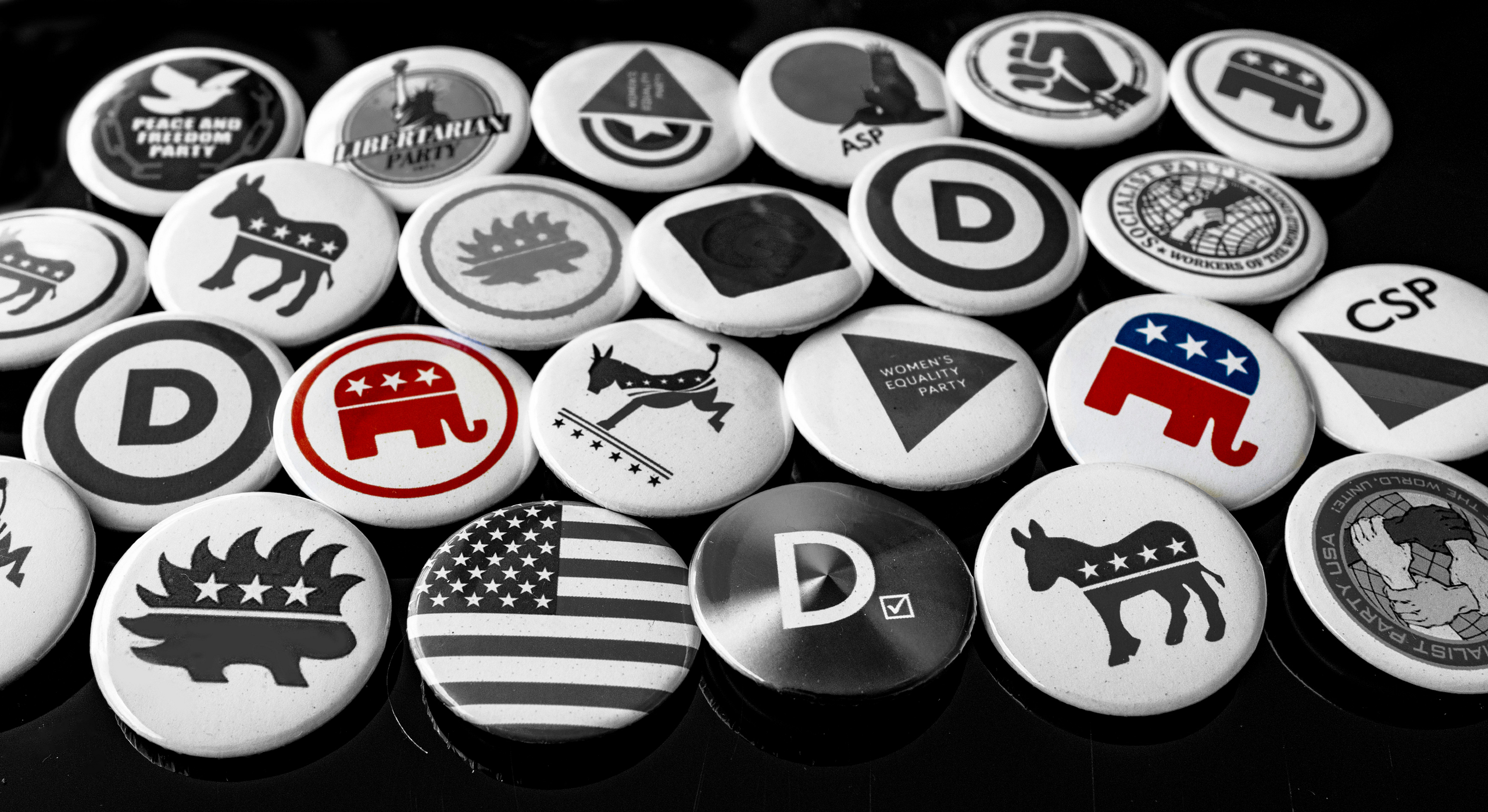
What do you stand for? What do you fall for?
The Misdirection

There’s something profoundly wrong with our country. This isn’t a hot take. It’s not political posturing. Walk into any coffee shop in Calgary or corner store in rural Alberta and you’ll hear the same refrain with different accents. The specifics change. Someone’s worried about their kid’s school, another can’t afford their medication, a third is watching their small business bleed out. The underlying current is identical. Groceries cost too fucking much. The housing market reads like a practical joke. Your job, assuming you have one, demands everything and offers nothing. The institutions we were told to trust feel like they’re actively working against us.
We agree on the what. The material reality. The day-to-day grind of trying to survive in an economy that seems designed to extract rather than sustain.
But then comes the why and everything fractures.
Some say it’s immigration. Others point to over-taxation. There’s talk of a dangerous ideology infecting our institutions, of people being asleep when they should be awake, or is it awake when they should be… you get the idea. The explanations multiply like rabbits, each one offering a neat target, a clear enemy, a simple solution that somehow never quite materializes.
Most of these explanations are symptoms being mistaken for causes. And that confusion is not accidental.
The Numbers.
Let’s start with something concrete and inarguable. The top 1% of Americans now hold 30.8% of all wealth in the country, up from 22.8% in 1989. Meanwhile, the bottom 50%—half the country—holds 2.8%.
But it gets more precise, more obscene. In 2024, the 19 richest billionaires increased their share of national wealth from 1.2% to 1.8%, the largest single-year increase ever recorded. These nineteen people. Not nineteen thousand. Nineteen.
During the same period you’ve been watching grocery prices climb? These individuals added $1 trillion to their collective wealth. One trillion dollars. While you’re deciding between paying for your kid’s medication or fixing your car’s transmission, Musk’s net worth is 1.6% of GDP, the largest personal fortune in human history.
100 billionaire families spent $2.6 billion on political contributions in 2024, representing 16.5% of all political donations. In 2000, billionaire election spending was $18 million. We’ve gone from $18 million to $2.6 billion in less than a generation.
You’re not imagining the feeling that the system is rigged. It is. Just not in the way you’ve been told.
The Machinery of Misdirection.
Why do so many people—good, intelligent, hardworking people—support policies that demonstrably make their lives harder?
The easy answer, the one that gets trotted out by smug coastal elites in think-pieces, is that rural and working-class conservatives are duped. Stupid. Voting against their interests because they don’t know any better.
That’s bullshit. And it’s also a convenient way to avoid examining the actual mechanisms at play.
Research shows something more nuanced and more troubling. Conservative leaders convince followers of two things. First, that the world is full of threats; second, that supporting that leader is the only protection. When you believe you’re under siege, you’ll accept a lot of collateral damage to feel safe.
Studies have found that less-educated voters are more susceptible to fear-based tactics and symbolic patriotism, causing them to prioritize cultural identity over economic self-interest. This isn’t about intelligence, since education and intelligence are different things entirely. This is about having the tools and time to parse complex information when you’re working two jobs and barely keeping your head above water.
The system is designed to keep you too exhausted to see it clearly.
The wealthy monopolize their parties through massive donations, pushing the conversation toward moral and cultural issues rather than economic policy. This forces everyone else into an impossible choice: vote your values or vote your wallet. Pick your identity or pick your rent money.
It’s a false dilemma. It’s remarkably effective.
“But What About…”
Let me address the elephants in the room, because if I don’t, you’ll dismiss everything else I’ve written.
Immigration. You’ve been told immigrants are taking jobs, driving down wages, draining social services. The data tells a different story entirely. Immigration boosted U.S. job growth by 100,000 jobs per month in 2023 and added 0.1 percentage points to GDP growth. The Congressional Budget Office—not some liberal think tank, but career civil servants doing math—projects that immigration will boost GDP by $8.9 trillion and lower federal deficits by $900 billion through 2034.
In 2023, while immigration was at high levels, the unemployment rate for U.S.-born workers hit a record low. Immigrants aren’t taking your job. The person who owns the company and decided to pay poverty wages while buying their third yacht—that’s who’s taking your job.
Government programs. You’ve been told they’re wasteful, that they create dependency, that they’re why your taxes are high. Reality check: federal assistance lifted 40 million people out of poverty in 2011, including 9 million children. Programs like SNAP, the Earned Income Tax Credit, and housing assistance don’t just put food on tables today—they lead to better school performance, improved health outcomes, and higher earnings when kids grow up.
You know what’s actually expensive? Poverty. Medical emergencies that could have been prevented. Kids who can’t learn because they’re hungry. The social programs you’ve been told to resent are the cheapest investment we can make in a functioning society.
Taxes. The richest 400 families in America paid an effective tax rate of 23%, lower than the 24.2% paid by the bottom half of American households. You’re mad about taxes? Be mad at the right people. The family working three jobs between them pays a higher percentage than someone with a net worth measured in billions.
Our Backslide.
Democratic backsliding is occurring in an unprecedented number of wealthy countries, including the United States.
I’m not talking about your party losing an election. I’m talking about the systematic weakening of democratic institutions through legal methods rather than outright coups. Elected officials attacking election officials. Courts being packed. Basic norms of governance being treated as optional.
Research from the Chicago Center on Democracy shows that high levels of income inequality increase the risk of democracy sliding into autocracy. When wealth concentrates, so does power. When power concentrates, democracy becomes decorative rather than functional.
Between 2017 and 2019, one-third of Americans said they wanted a “strong leader who doesn’t have to bother with Congress or elections”. Think about that. A third of us are so frustrated with the system that we’d rather burn it down than fix it.
I understand that impulse. I do. But autocracy doesn’t liberate you.
The Divide.
You were right about the fact that there is a fundamental divide in this country. You just misidentified it.
It’s not left versus right. It’s not urban versus rural. It’s not educated versus working-class or white versus everyone else—though these divisions get weaponized to keep us from seeing the real line.
The divide is between people who work for a living and people who own for a living. Between those whose wealth comes from labor and those whose wealth comes from capital. Between the 99% whose material conditions are genuinely precarious and the 1% who hold $43.45 trillion.
“But I might be rich someday.” No, you won’t. I’m sorry. The odds are worse than winning the lottery, and the lottery is designed to be unwinnable. Over the past three decades, America’s most affluent families have added to their net worth while those at the bottom have dipped into “negative wealth,” where the value of debts exceeds assets. The game is rigged. Not by immigrants or trans people or whatever culture war boogeyman is trending this week, but by people who benefit from you being angry at your neighbor instead of looking up.
(What They Don’t Want You to Know)
Right now, Republicans control the House, Senate, and Supreme Court. Not the Deep State. Not the Swamp. The people you were told would fight for you.
Have your groceries gotten cheaper? Has housing become more affordable? Is your job less demanding and better paid? Are you less lonely, less anxious, less certain that the future is bleak?
The truth is simpler and more painful than conspiracy. There is no elaborate system of clever manipulation. The chaos is real. The randomness is genuine. And we only have each other.
That’s scarier than believing in puppet masters and secret plans, because it means the solution isn’t as simple as electing the right person or exposing the right corruption. It means we have to do the work. Together. Across the lines we’ve been taught to see as uncrossable.
An Invitation.
I believe we have more in common than we’ve been allowed to notice. You’re struggling. I’m struggling. The person you’ve been told is your enemy? They’re struggling too.
And somewhere, a handful of people are adding billions to their wealth while spending billions to make sure we stay angry at each other instead of them.
The cultural war you’re fighting is a distraction. Your class matters far more than your color, your gender, your religion, or who you love. The material conditions that make your life harder—truly harder, in ways you can feel in your bones—are created and maintained by people who benefit from your division.
Immigrants aren’t your enemies. Neither are the people who look different, love different, or vote different than you. Your enemy is the person who owns fifty houses while you can’t afford one. Your enemy is the CEO who made 351 times what their average worker made while laying off staff to boost stock prices. Your enemy is the billionaire who pays a lower tax rate than you do and then tells you the problem is that your neighbor gets food stamps.
I’m not asking you to change every belief you hold. I’m not asking you to abandon your values or your community or your sense of who you are.
I’m just asking you to look up instead of around. To ask who benefits from your anger being directed at other working people. To consider that maybe you’ve been mad at the right things for the wrong reasons.
Because they’re counting on us staying divided. Our exhaustion is their wealth. Our confusion is their power. Our fighting each other is their insurance policy.
Why This Conversation Never Happens Anymore.
Let me be honest, nobody really writes stuff like this anymore. And there are good reasons for that.
The modern Republican party actively advocates for policies that harm—and yes, kill—marginalized people. Trans kids denied healthcare. Immigrants detained in conditions that would violate international law if we were honest about what they are. Women dying from pregnancy complications because abortion bans prevent doctors from intervening. Black communities over-policed and under-served. These are material harms with body counts rather than policy disagreements.
If you’ve supported these policies, you should have gotten the message loud and clear by now. The people you’re hurting have been screaming it. The data has been published. The obituaries have been written. There comes a point where claiming ignorance becomes indistinguishable from choosing cruelty.
So why am I writing this? Why bother?
Because I still believe—naively, stubbornly—that you are reachable. That you still view people who are different from you as human. That you possess the intellectual humility to admit when you’ve been wrong, or at least when you’ve been lied to. That you are angry and scared and exhausted, and you grabbed onto explanations that felt true without examining whether they were.
I’m not writing to convince fascists and I’m not interested in debating people whose fundamental position is that certain categories of humans deserve fewer rights, less safety, or no existence at all.
But if you’re someone who’s been swept up in the current—if you’ve found yourself nodding along to rhetoric that, when you really think about it, sits uncomfortably in your chest—then this is for you. If you’ve ever looked at policy outcomes and felt a flicker of doubt about whether you’re on the right side, this is for you. If you still believe that good faith conversation matters, that changing your mind is a strength rather than weakness, that we’re all just trying to figure out how to live decent lives in an indecent world—this is for you.
Acting in good faith doesn’t guarantee we’ll agree. But it does guarantee the attempt is worth making. And right now the attempt is all we have left.
Comments
To comment, please sign in with your website:
How it works: Your website needs to support IndieAuth. GitHub profiles work out of the box. You can also use IndieAuth.com to authenticate via GitLab, Codeberg, email, or PGP. Setup instructions.
Signed in as:
No comments yet. Be the first to share your thoughts!