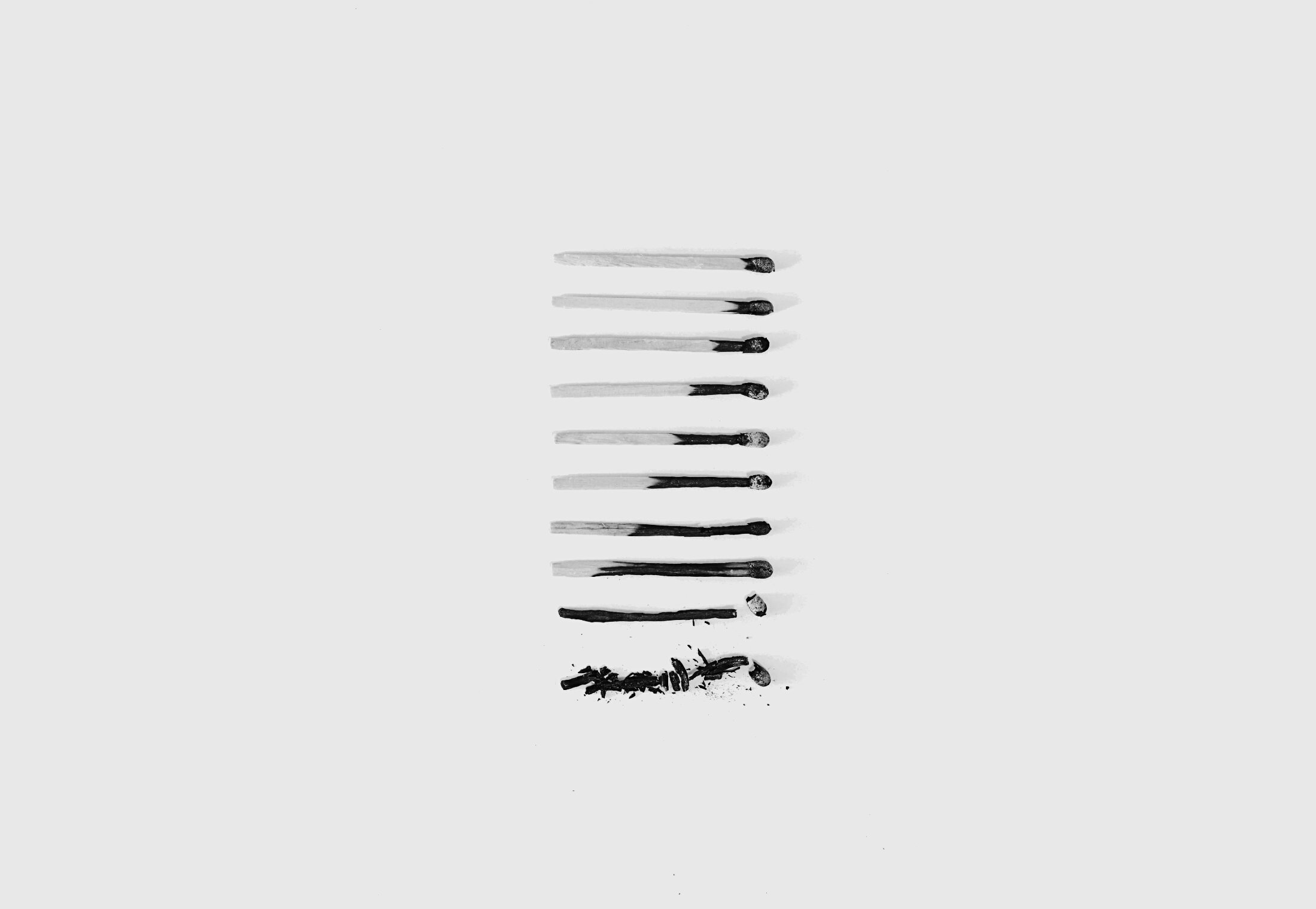
We can only keep doing this for so long without you. | Source
The 1% Rule: An Open Letter to Everyone Who Doesn't Post Anything Online
Hi there. If you post online—as in, you create original content—then this article isn't for you. If you're an artist or a writer or share anything, really. I'm not talking to you.
This is addressed to the other 99% of the Internet.
Yes, that's right. Only 1% of the Internet actively creates new content. The rest are the reel watchers. The silent readers. The page scrollers. The lurkers. The invisible heart that allows everything online to function.
I want to talk to you directly. Yes, you.
I'm sure there are a multitude of reasons as to why you don't post anything online. And I do think they're good reasons. I'm not going to churn hustle culture or hollow inspiration at you. No, I know that wouldn't work.
I am treading carefully here because I need you to understand something important: you have power. You have immense unused power. We know the loudest voices are the most persuasive. Squeaky wheel gets the grease.
When we hear "the one percent," where does our mind go? Those who hoarde. The disproportionately and immensely powerful elite. It is a brutally unfair reality that such a small amount of people have so much power due to near-impossible to change systematic foundations.
The Internet, though? It isn't like that. The 1% of the Internet is by choice, it is elective. You can join this 1%.
An incredibly small amount of Internet users are creating what we are looking at on a daily basis. And I think you'll agree with me that there is a lot to be desired.
A 2024 study out of Indiana University found that just 0.25% of X users were responsible for around 75% of all posts considered low-credibility or misinformation, some being verified, lending falsehoods an air of legitimacy. The platforms aren't built to fix this. They're built for engagement, and outrage drives engagement. Accurate, careful, boring-old truth does not.
It isn't only politics and news. When it comes to health, over 80% of the top 500 mental health videos on TikTok contained misinformation. Roughly 70% of adults use the internet as their primary source of health information, and among 18-29 year-olds social media is now the most common news source altogether.
Content creators earn more when their content generates higher views and engagement, and misinformation consistently generates higher views and engagement. Platforms profit from hosting it. The algorithm is working exactly as designed.
And so, we end up in a situation where the voices shaping our shared reality are the ones willing to be the loudest, the most provocative, or the most commercially palatable. Influencer marketing research has documented harmful effects across six major themes: dangerous products, misinformation, unrealistic beauty standards, comparison culture, deceptive consumption, and privacy violations. This is what the current 1% has built, largely by default, Not because they're evil, but because the incentive structure of corporate social media demands it.
You, though, are not that.
The thing is—and this is really important—I'm not saying to start posting on Instagram or TikTok. I'm not asking you to become an influencer on a harmful social media app created by a corporation that drains people of their mental health.
What I'm asking is that you consider joining the Independent Web. Look at the human-made, human-first, human-friendly alternatives and contribute.
Here are a few of the lowest-barrier ways to get started:
If you want to write: Bear Blog is about as close to frictionless as it gets—free, no trackers, no JavaScript, no algorithm. Just your words on a page. If you want something with a warmer community built right in, Micro.blog is natively IndieWeb and cross-posts to Mastodon and Bluesky automatically. It starts at $1/month and is one of the most thoughtfully designed spaces on the web. For the absolute simplest on-ramp, Mataroa lets you start a blog in under two minutes with built-in email subscriptions and zero configuration.
If you want to send a newsletter: Buttondown is free for your first 100 subscribers, built by a human being who is famously transparent about what the product is and isn't, and is one of the few newsletter tools that doesn't treat you like a growth metric.
If you want a social experience: Mastodon is the Fediverse's answer to Twitter/X—decentralized, ad-free, and run by independent communities rather than shareholders. You choose a server that fits your values and connect to the broader network from there. Pixelfed does the same thing but for photos—think Instagram without the surveillance. If you want an old-school forum and more resources, join the 32-bit Café Discourse.
These spaces, more than anywhere else on the Internet, embrace the messy and imperfect. You can do it ugly. It's okay. There is a warm, friendly community of people that are waiting for you.
Obviously, our boots-on-the-ground efforts take priority. You need face-to-face physical interactions with those around you. But how do we plan those things? And how do we spend the rest of our time when we're not at events or in-person hangouts? And what about those who cannot, for whatever reason, attend things in-person?
We are a technology-dependent species. There is no way of getting around this without extreme, radical sacrifice. In the meantime though, we have healthier and more fun alternatives.
As you might have heard, the United States government has attempted to subpoena Google, Facebook, Reddit, and Discord. These are not user-friendly platforms.
On the IndieWeb, we can organize. We can cultivate solidarity. We can curate our consumption. We can maintain and share radical joy as resistance to oppression and violence.
But it doesn't exist without creators. It doesn't exist without people. People like you. The person reading this that doesn't comment. You.
I don't need to convince all of you, or half of you. I figure I only need to convince 3.5% of the rest of the Internet to start making a change. According to the Carr-Ryan Center For Human Rights, "[n]onviolent protests are twice as likely to succeed as armed conflicts – and those engaging a threshold of 3.5% of the population have never failed to bring about change."
And I think to myself: what if this can translate? What if there is something replicable here?
We can change what the Internet looks like. There are so, so many more lurkers than there are influencers or industry plants. There is no reason for the loudest voice to be considered the most correct.
If you ever thought to yourself that you wanted to start sharing something with the world—anything at all—I promise that right now is the time. We put off the important-but-not-urgent. At some point, we need to shrug our shoulders and say fuck it. Why not?
If you need help with anything, email me at mail@brennanbrown.ca and I'll answer any question you have. This isn't some sort of marketing bullshit tactic. I am just so certain this can do so much good, and I am determined to see it happen.





Comments
To comment, please sign in with your website:
How it works: Your website needs to support IndieAuth. GitHub profiles work out of the box. You can also use IndieAuth.com to authenticate via GitLab, Codeberg, email, or PGP. Setup instructions.
Signed in as:
No comments yet. Be the first to share your thoughts!