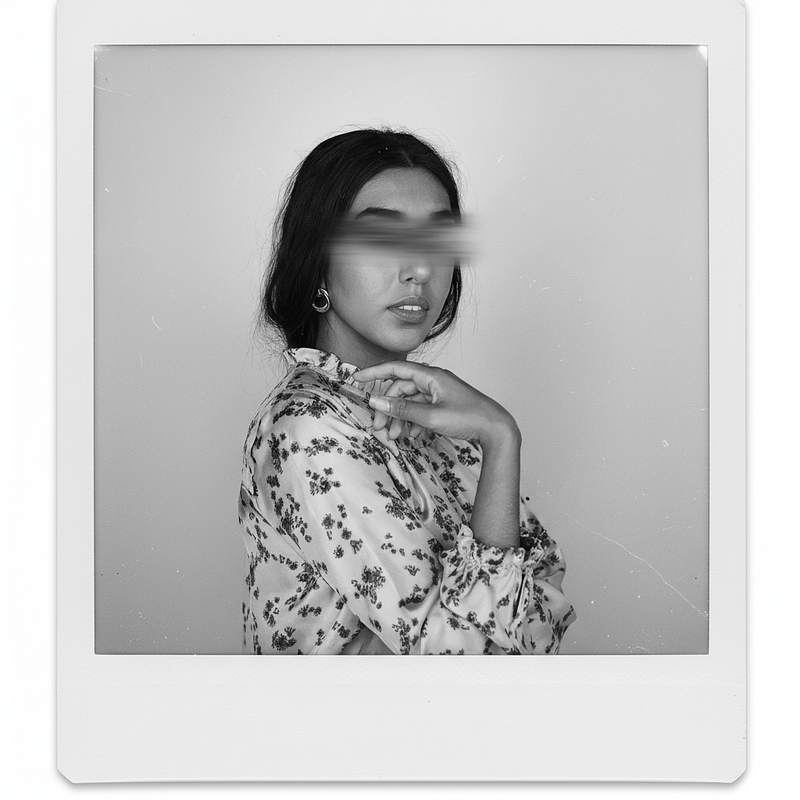
Source (edited by the author)
In Defence of Rupi Kaur


What is a poet allowed to be? For much of the modern era, the answer has been dictated by a familiar archetype. The solitary genius, often obscure and always allusive, their poetry a fortress guarded by the gatekeepers of academia. Into this entrenched world came Rupi Kaur, a Punjabi-Canadian woman sharing illustrated verses on Instagram. She managed to scale the walls and opened the gates for millions, becoming one of the most famous—and fiercely maligned—poets in the world.
I want to throw my hat into the ring and start this essay by stating my own credentials. I recently completed my English Honours degree with a 3.8 GPA. I ran a creative writing club for three years as president. I’ve published several poetry chapbooks and I’ve published articles analyzing poetry in the past here on Medium.
Most importantly, I’ve been writing poetry since I was 15-years-old in grade 8. I’ve been a poet for half of my life.
And I’ve watched this tired debate unfold with a growing sense of unease. The criticism that Rupi Kaur’s work is simplistic or “cringe” is a familiar chorus, one I’ve often heard echoed in many literary circles. Both online and in classrooms while getting my degree. But the sheer venom of the backlash reveals a deeper, uglier truth about who we believe poetry is for, and what kind of voice—particularly a young, female, Brown voice—is permitted to claim it.
This is not a defence of Kaur’s literary techniques, which I myself do not emulate. This is, instead, a defence of the radical (and lifesaving) act of making poetry matter again. Kaur proved that verse could be a living, breathing conversation instead of a relic on a syllabus.
But to understand the revolution she sparked, and why it was so necessary, we have to go back to where it began.
An Oral Retelling of #Instapoetry
The story begins on Tumblr in 2013. Rupi Kaur started sharing her poetry there, building a community around South Asian women before transitioning to Instagram in 2014. She initially thought posting poetry on Instagram was “silly” because it was a platform for hot photos and cute puppies, but she decided to share her illustrated work anyway.
Then came March 2015. Kaur posted photographs of herself with menstrual blood stains on her clothing and bedsheets, part of a visual rhetoric course at the University of Waterloo. Instagram removed the images. Her viral critique of the company’s censorship as misogynistic brought massive attention to her poetry. Her self-published debut Milk and Honey eventually surpassed Homer’s Odyssey as the best-selling poetry of all time.
Instapoetry emerged thanks to social media, specifically Instagram and Tumblr, with poems crafted to be shared. Usually no longer than a few lines, extremely direct, and in aesthetically-pleasing fonts, often discussing subjects like sexuality, mental health, love, feminism, and domestic violence.
The commodification of poetry is something we have to be mindful of. But it was being commodified long before Kaur. Where was poetry before her in our modern times? Tucked into greeting cards, read at wedding receptions and funerals. Professional greeting card writers worked for companies like Gibson Greetings, churning out verses with “rhythm and rhyme,” “brevity and precision.” Poetry compressed into a few carefully chosen words designed to sell sentiment. Maya Angelou partnered with Hallmark.
The greeting card industry built an empire on commodified verse, with companies paying hundreds of dollars per accepted poem, all carefully calculated to speak to the heart and soul of consumers. Poetry was already a product, Kaur just changed the distribution model.
The Wave Has Subsided?
The evidence tells a fascinating story. In 2017, poetry sales were twice what they were in 2016, and 12 of the top 20 best-selling poets were Instapoets. By 2018, 28 million Americans were reading poems, which was the highest percentage in almost two decades. In Canada, the numbers were even more pronounced, during 2017, 80% of all poetry books sold were written by Instapoets.
But by now? Instapoetry “is mostly deemed cringe-worthy,” and according to recent scholarship, the majority of new Instapoetry is no longer being written in the same style that made it popular. Kaur is no longer a guest on late-night talk shows or popping up on a lot of people’s TBR lists. The initial wave, an explosion of lowercase feelings and line breaks, has subsided.
Why I Don’t Write Like That: IMAGES.
Often times, when I read this kind of poetry, I think “hm, this is a shower thought. This would be a fairly good Tweet.” But no, it is typically not poetry the way lowercase or noise typically is not considered music. There is usually a stanza (maybe two) and a feeling is described. An abstract notion that the reader is assumed to understand because the vernacular and the emotion are so universal, so steeped in our current cultural zeitgeist.
I come from an imagist school of thought. The Imagist movement emerged in 1912, largely attributed to poet (and, er, fascist) Ezra Pound. The genre emphasizes clarity, precision, and the direct expression of images. Nouns-you-can-touch. The concrete. These writers sought to eliminate unnecessary words and ornamentation. The focus, instead, is on sharp and vivid images to convey emotion.
William Carlos Williams, a prominent Imagist, famously stated “no ideas but in things”—meaning poetry should focus on concrete, tangible images rather than abstract concepts. This approach discards ornate language, opting instead for clarity, simplicity, and raw honesty. Key Imagist principles included:
- direct treatment of the thing without unnecessary explanation
- using as few words as possible
- focusing on precise, concrete imagery rather than vague generalizations. A common restatement of Imagist rules today is well-known by writers. “Show, don’t tell.”
Think of Williams’ “This Is Just to Say”—the infamous poem about eating plums from the icebox. Delicious. Sweet. Cold. The poem gives us the texture of the fruit, the chill of the refrigerator, the tactile reality of theft and apology. It doesn’t tell us “I feel guilty” or “pleasure is complicated.” It gives us plums. Only the plums.
I think if one figures this out, if they describe the external what rather than the obvious (only to them) feeling and abstract emotion, then they are well on their way.
Now, I very much understand this does not sound like a defence. Give me a minute.
Accessibility as Radical Act
What Rupi Kaur, and other Instapoets, have done is made the genre accessible. Extremely accessible. You no longer need an English degree or a bogged-down understanding of the (white, cis, het) Western canon to appreciate or write poetry. The floodgates were let open.
Let me tell you, I am so sick and tired of the typical pedagogy of a poetry class. I’m tired of reading the same handful of poets when there are hundreds more to read, in so many different languages. Anything that expands the canon does good for humanity.
And, in this, I see Kaur as a supremely good gateway into poetry. To appreciate her and her work means you can be gently and easily nudged to read Mary Oliver or Robert Frost, other accessible and, in my opinion, excellent poets.
With this, I would much rather somebody read Kaur than read no poetry at all.
It is so tiring seeing so much of Gen-Z cynically criticize her and then end the discourse there. And we need to talk about what is underneath this criticism. The backlash Kaur has experienced often has an aggressive, even sour tone, and as one critic notes:
“Kaur is another victim of the very toxic and misogynist world in which we live. And any woman, especially women of colour, who have the courage and audacity to own their power and use their voices will be maligned.”
Her demographic makes her ripe for ridicule: other young woman. Like many pop musicians before her, she commits the sin of engaging with a demographic whose taste is often seen as a byword for bad quality. The interests of young women have been ridiculed and belittled for generations. The Bell Jar by the Pulitzer Prize winning author Sylvia Plath is now “beneath” some people, now that it has become synonymous with edgy teenage girls.
There’s xenophobia there, too. Misogyny tinted with contempt for a Punjabi-Canadian woman who writes about patriarchy within her own community, who speaks openly about her father silencing her mother at the dinner table, who uses her surname (Kaur) to reflect on the struggles and beauty of her ancestors.
Yes, there are legitimate criticisms about plagiarism allegations—about similarities between her work and poets like Nayyirah Waheed. Yes, we should discuss how she responded to those accusations. Yes, her work is often simplistic. But let’s not pretend that the virulence of the backlash exists in a vacuum, disconnected from the misogyny and xenophobia that targets women of colour who dare to be successful.
(Bad) Poetry Matters
Poetry is not a luxury, and yet it is in a constant fight for its life in the harsh, anti-intellectual, increasingly illiberal world we are currently living in. I would much, much rather people read and write quote-unquote “bad” poetry than none at all.
I will, of course, refer to the groan-worthy Dead Poets Society and reiterate:
“We don’t read and write poetry because it’s cute. We read and write poetry because we are members of the human race. And the human race is filled with passion. And medicine, law, business, engineering, these are noble pursuits and necessary to sustain life. But poetry, beauty, romance, love, these are what we stay alive for. To quote from Whitman, ‘O me! O life!… of the questions of these recurring; of the endless trains of the faithless… of cities filled with the foolish; what good amid these, O me, O life?’ Answer. That you are here—that life exists, and identity; that the powerful play goes on and you may contribute a verse. That the powerful play goes on and you may contribute a verse. What will your verse be?” ― N.H. Kleinbaum, Dead Poets Society
Where to Go From Here
If #instapoetry was your gateway, consider this an invitation to explore the vast and varied landscape of poetry that awaits. Engaging with poetry doesn’t mean solving a riddle crafted by an elite few.
For Beginners
The goal is to find work that resonates, then gradually build the confidence to explore further. The resources below are chosen to equip you with a gentle, friendly foundation. Demystifying the craft and emphasizing that poetry is—more than anything—about paying attention to the world and learning how to articulate what you find there. Start here to learn the tools of the trade (sound, image, and line) and discover how reading widely is the first and most important step to writing well.
Mary Oliver’s A Poetry Handbook is essential. Written in a pleasant and lucid style, it covers sound, line, poetic forms, tone, imagery, and revision, illustrated with poems by Robert Frost, Elizabeth Bishop, and others. Oliver stresses the importance of reading poetry widely and deeply, and urges poets to consider their first draft “an unfinished piece of work.”
Online Resources:
- The Poetry Foundation offers comprehensive resources including poems, readings, poetry news, and educational materials
- Coursera’s “Sharpened Visions: A Poetry Workshop” by California Institute of the Arts is a free course covering key poetic terms and devices
- OpenLearn’s “What is Poetry?” is a free course designed to illustrate techniques behind traditional forms of poetry
- The Poetry School (UK) offers workshops, online classes, and downloadable courses
- The Loft has been teaching poetry outside universities since 1974
Indigenous, Queer, POC Poets
To read only the traditional, white Western canon is to see only a sliver of what poetry can be. Vibrant, essential work in contemporary poetry is happening in communities that have been historically marginalized by the literary establishment.
The poets listed here are centering experiences of Indigeneity, queerness, and racialization, transforming poetry into a space for radical truth-telling, survival, and celebration. Their work challenges erasure, explores the complexities of identity, and reclaims narrative power. Engaging with these voices is essential for understanding the full, living body of the art form today.
Indigenous & Two-Spirit Poets:
- Tommy Pico (Queer Indigenous writer)—Nature Poem, IRL, Junk, Feed
- Jake Skeets—Eyes Bottle Dark with a Mouthful of Flowers
- Natalie Díaz (Mojave poet)—explores Indigenous identity, erasure, legacy, and queerness
- jaye simpson (Oji-Cree Saulteaux indigiqueer)—it was never going to be okay
- Qwo-Li Driskill (Cherokee)—Walking With Ghosts: Poems Queer Poets & Poets of Colour:
- Danez Smith—[Insert] Boy, Don’t Call Us Dead
- Ocean Vuong (Vietnamese American)—Night Sky With Exit Wounds
- Andrea Gibson (Queer slam poetry icon)—Lord of the Butterflies
- Saeed Jones—Prelude to Bruise, Alive At The End Of The World
- Ryka Aoki (trans)—Seasonal Velocities
- Eduardo C. Corral—Slow Lightning
- Justin Phillip Reed—Indecency Essential Anthology: “Nepantla: An Anthology Dedicated to Queer Poets of Color” edited by Christopher Soto—includes Audre Lorde, James Baldwin, June Jordan, Ai, Pat Parker, Natalie Diaz, Ocean Vuong, Danez Smith, and many more.
Non-English Poetry
Poetry is a global conversation, one that has been ongoing for millennia and in thousands of languages. Limiting yourself to English is like listening to one instrument in the orchestra. Translation is an art in itself—a new lens through which to view a poem, but it is not a replica of the experience of reading the poem in its original language. Regardless, there’s still an offering of access to different rhythms, metaphors, and ways of seeing the world.
From the mystical longing of Persian Rumi to the sharp, imagistic beauty of Chinese classical verse, exploring poetry in translation shatters parochialism, reminding us that the human desire to make meaning through language is universal.
Publications & Organizations:
- Modern Poetry in Translation (MPT)—The premier magazine dedicated solely to poetry in translation, founded by Ted Hughes.
- Poetry Translation Centre—Showcases contemporary poems from Africa, Asia, the Middle East and Latin America.
- Poetry International—A comprehensive online resource featuring international poets, searchable by country and name.
- Arc Publications—Publishes translated poetry from Europe and beyond.
- The Poetry Foundation’s Translation section—A collection of translated poems, essays, and articles. Online Archives:
- Poetry In Translation by A.S. Kline—Open access archive offering modern translations of Dante, Ovid, Goethe, Homer, Virgil, Baudelaire, and many others.
- Electronic Poetry Center (SUNY Buffalo)—A gateway to innovative poetry, including extensive links to digital projects and publications from around the world. Key Poets to Explore:
- French: Baudelaire, Rimbaud, Éluard, Apollinaire
- German: Rilke, Goethe, Celan
- Spanish/Latin American: Pablo Neruda, García Lorca, Octavio Paz
- Russian: Akhmatova, Mandelstam, Tsvetaeva
- Turkish: Nazim Hikmet
- Chinese: Classical masters like Li Po and Tu Fu
- Arabic: Contemporary voices like Dalia Taha A Note on Finding More:
A great way to discover new poets is to “follow the translator.” If you love a translation by someone like Edward Snow or Robert Fagles, look for what other poets they have translated. Translators are curators of taste.
The Final Word
Rupi Kaur is not the poet I am. She’s not the poet I aspire to be. And she is far, far more successful than I ever will be. She is a poet who has made millions of people think about poetry, read poetry, write poetry. She has made young women feel seen. She has challenged taboos around menstruation, sexual violence, and the bodies of women of colour.
Is her work perfect? No. Is mine? No. But the powerful play goes on. And she has contributed an incredibly important verse. What will yours be?
Comments
To comment, please sign in with your website:
How it works: Your website needs to support IndieAuth. GitHub profiles work out of the box. You can also use IndieAuth.com to authenticate via GitLab, Codeberg, email, or PGP. Setup instructions.
Signed in as:
No comments yet. Be the first to share your thoughts!