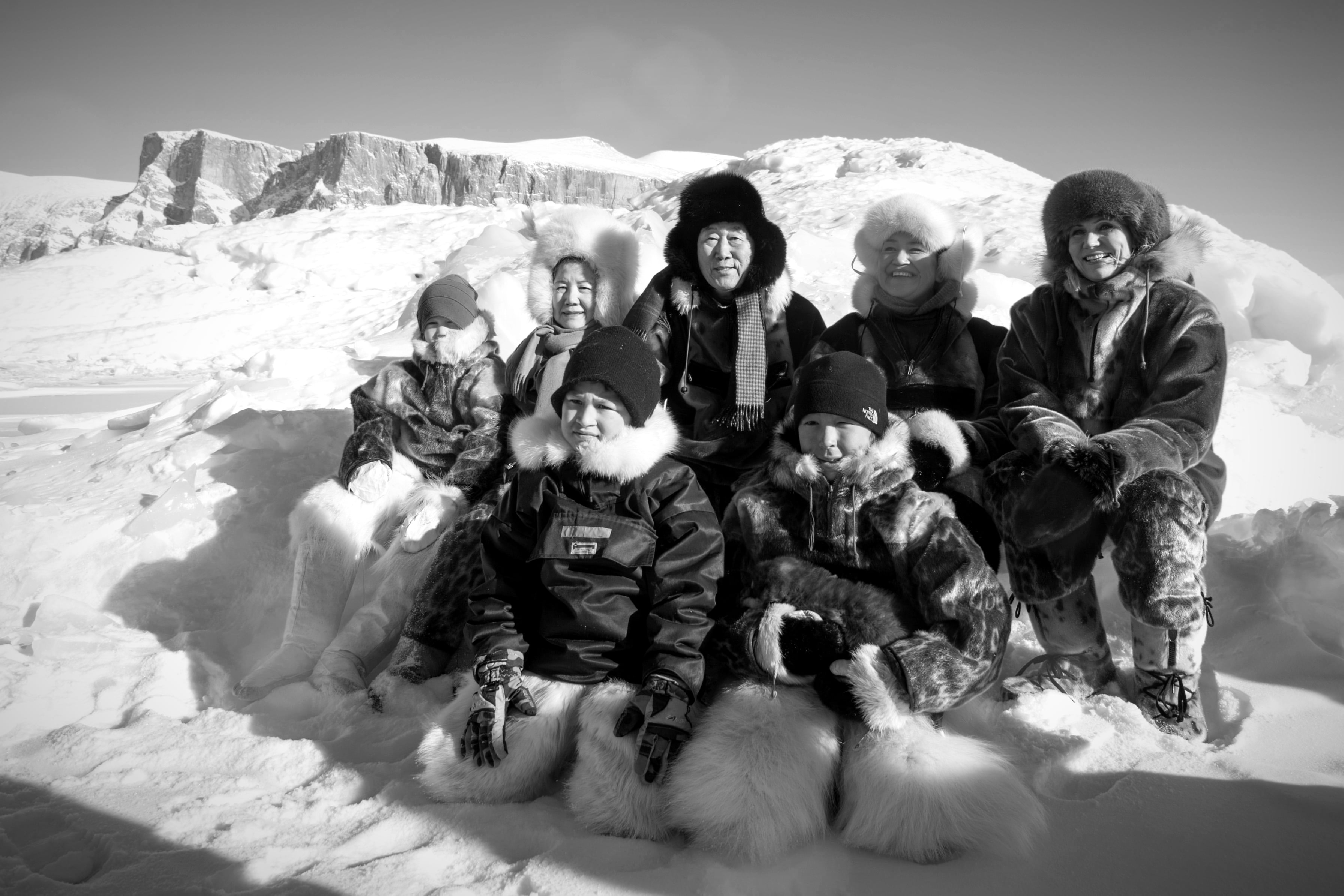
Secretary-General Visits Greenland to See Impact of Climate Change. Source
Greenland Belongs to the Inuit
We have, regrettably, been privy to Trump's desire of taking over Greenland in an imperial, hostile manner for a long while now. I don't know how many people even remember how he announced the claim during his first presidency back in 2019, when he wasn't banned on Twitter, and when Twitter existed.
Back then, the claim was regarded as a "meme", a rather hilarious proposition only in how absurd it was. The logistics were impossible. There was no gravity pulling the claim back to the actual living world.
How things have changed. The progressive few (and yet always growing) have been telling everyone else over and over that claims like these were, in fact, not made in jest.
We have been promised that ICE, who has turned into Trump's Schutzstaffel, would detain every undocumented immigrant in the country. We have been promised that education in the United States would collapse as we know it, that social security and any other public benefits would be irreversibly transformed for the worst. None of this has been bluffing or hypothetical rhetoric. It is all happening.
Where we stand now is pundits on Fox News and elsewhere now trying to ascertain the logistics and probability of a United States takeover of Greenland. Trump's cabinet is preparing plans, and instead of impeachment and sanctions, the world is carefully hedging just how exactly grim and atrocious such a takeover would be.
And this isn't actually about Greenland. Trump has made numerous comments about Canada being the 51st state, has said that Cuba needs to fall, and that it would be 'OK' launching strikes in Mexico to fight drug smuggling.
When you line all of these comments up alongside the fact that the president of Venezuela was kidnapped by the United States, and Trump recently posted a photo of himself as "sitting president" of the country, the picture becomes clear. Trump wants the United States to be the United States of Americas, north and south.
Such aggression, on such a scale, has not been witnessed since the second world war. And yet here we are, clutching our pearls in uncertain terms, dislocating our cognitive capabilities towards a new frontier of dissonance.
Who are the Greenlanders?
All of this, though, is mere prelude. Is mere context. I do, in fact, want to discuss Greenland specifically, because there is a specific conversation I don't see anybody having.
The current pop culture rhetoric looks at Greenland being threatened by Trump and rightfully being land owned by Denmark.
But Greenland is 90% Inuit, 90% Indigenous. Where are their voices in this conversation?
"We don't want to be Americans, we don't want to be Danes, we want to be Greenlanders,"Greenland Prime Minister Jens-Frederik Nielsen and four party leaders said in a statement Friday night.
The Inuit population of Greenland has been fighting for sovereignty of their land for decades. Positive progress was being made. And now, perhaps all of that progress is catastrophically gone.

As though when a crybully nation such as the United States comes into the fray, any sort of optics of caring or valuing Indigenous livelihood is tossed away. The white men must determine who owns the land. History is the future is history.
The Inuit have inhabited Greenland for thousands of years, yet Denmark colonized Greenland in 1721 when missionary Hans Egede arrived to convert the population to Christianity. For over 230 years, Greenland existed as a Danish colony, with Greenlanders having no voice in their own governance. Denmark tightly controlled the island, restricting Greenlanders from commerce with other nations, suppressing Indigenous cultural practices, and forcing assimilation.
The Inuit have inhabited Greenland for thousands of years (Source)
It wasn't until 1953 that Denmark integrated Greenland as a county, ending its official colonial status, though this was done without a referendum, a point still controversial. The fight for true self-determination began in earnest in the 1970s. In 1979, Greenlanders achieved Home Rule, establishing their own parliament and gaining control over domestic affairs like education, health, and housing.
The most significant victory came with the 2009 Self-Government Act, passed after 75% of Greenlanders voted in favour. This historic agreement recognized Greenlanders as a distinct people under international law with the right to self-determination and the ability to pursue full independence through referendum. The Greenlandic language replaced Danish as the official language. Natural resources, including the vast mineral wealth and potential oil and gas reserves, came under Greenlandic control.
This was much more than administrative reorganization; it was the recognition of Indigenous sovereignty after centuries of colonial rule. The Inuit of Greenland were finally on a path to determining their own future, building economic self-sufficiency to support full independence. As the Greenlandic economy becomes less dependent on Danish subsidies—which currently constitute about two-thirds of the government budget—the path to full sovereignty becomes more viable.
That path is under serious jeopardy by a government responsible for the Trail of Tears and genocide of multiple Indigenous Peoples throughout Turtle Island. This should come as no surprise to anybody though, should it? Even in present times, ICE has detained Native Americans for being undocumented citizens, yet another example the pure absurdity bleeding from of our wild, wild wasteland.
And what makes this entire spectacle even more grotesque is that the colonial imagination does not merely express itself through statecraft and gunboats. It expresses itself through venture capital and strategic "investments." The moment Trump began floating the idea of "acquiring" Greenland, a constellation of billionaires—including Jeff Bezos, Bill Gates, Michael Bloomberg, Peter Thiel, Sam Altman, and Ronald Lauder—moved quickly to secure stakes in Greenland's freshwater, mineral, and energy sectors.
We are told this is about green innovation and rare earths and market opportunity, but the pattern is unmistakable: yet again, outsiders positioning themselves to extract value from Indigenous land without Indigenous consent. Billionaires treating Greenland as unregulated frontier for lithium and freshwater capitalism, and we continue the old territorial colonialism of Europe and the new resource colonialism of Silicon Valley. It is not enough for Greenland to be seized by a state—it must also be carved up by capital. The Inuit become incidental to the transaction, reduced to scenery in someone else's speculative prospectus.
Perhaps the most useful thing I can write here is that the fight for Indigenous sovereignty matters because it means actually being value-aligned and invoking proper praxis. We can argue amongst ourselves online about the right thing to say, or what the right take is on one of dozens of currently-ongoing atrocities, but that is not pushing us forward.
Our brothers and sisters, those who are keepers of this land, who understand the sacred around us, ought to be listened to. There is, within the Indigenous imagination, a hopeful possibility for a better future. A way through the horror, a way we can find light from the mere glints in our shared overwhelming darkness.
Trump's imperial warmongering threatens Greenland's political status. The United States now threatens to erase the hard-won progress of an Indigenous people's decades-long struggle for self-determination.
When powerful nations treat territories as chess pieces to be traded or seized, we return to the colonial mindset: Indigenous voices don't matter, centuries of occupation grant more legitimacy than millennia of habitation. The Greenlanders have made their position clear. The question is whether the world will listen. Or whether, once again, Indigenous sovereignty will be sacrificed to the ambitions of empires in bloodlust.
Learn More About Indigenous Greenlanders
For readers who want to go further, here are some resources on Kalaallit Nunaat (Greenland), and whose culture, language, and political identity shape the island's contemporary reality.
For Indigenous rights and political context, the International Work Group for Indigenous Affairs maintains a detailed profile on Inuit self-government, decolonization, and ongoing challenges.
To situate Greenland within broader circumpolar Indigenous politics, the Inuit Circumpolar Council (ICC) represents Inuit from Alaska, Canada, Greenland, and Chukotka and publishes position papers on sovereignty, environmental governance, and Arctic policy.
For deeper political analysis on devolution and independence, Northern Public Affairs has published work on sovereignty, the 2009 Self-Government Act, and the pathway toward full independence.
For cultural and historical background, Native Languages of the Americas provides accessible context on Inuit language, traditions, and cultural continuity:
Finally, UNESCO's profile on Kujataa, a World Heritage site at the edge of the ice sheet, offers insight into millennia of Inuit adaptation and land use.


Comments
To comment, please sign in with your website:
Signed in as:
No comments yet. Be the first to share your thoughts!