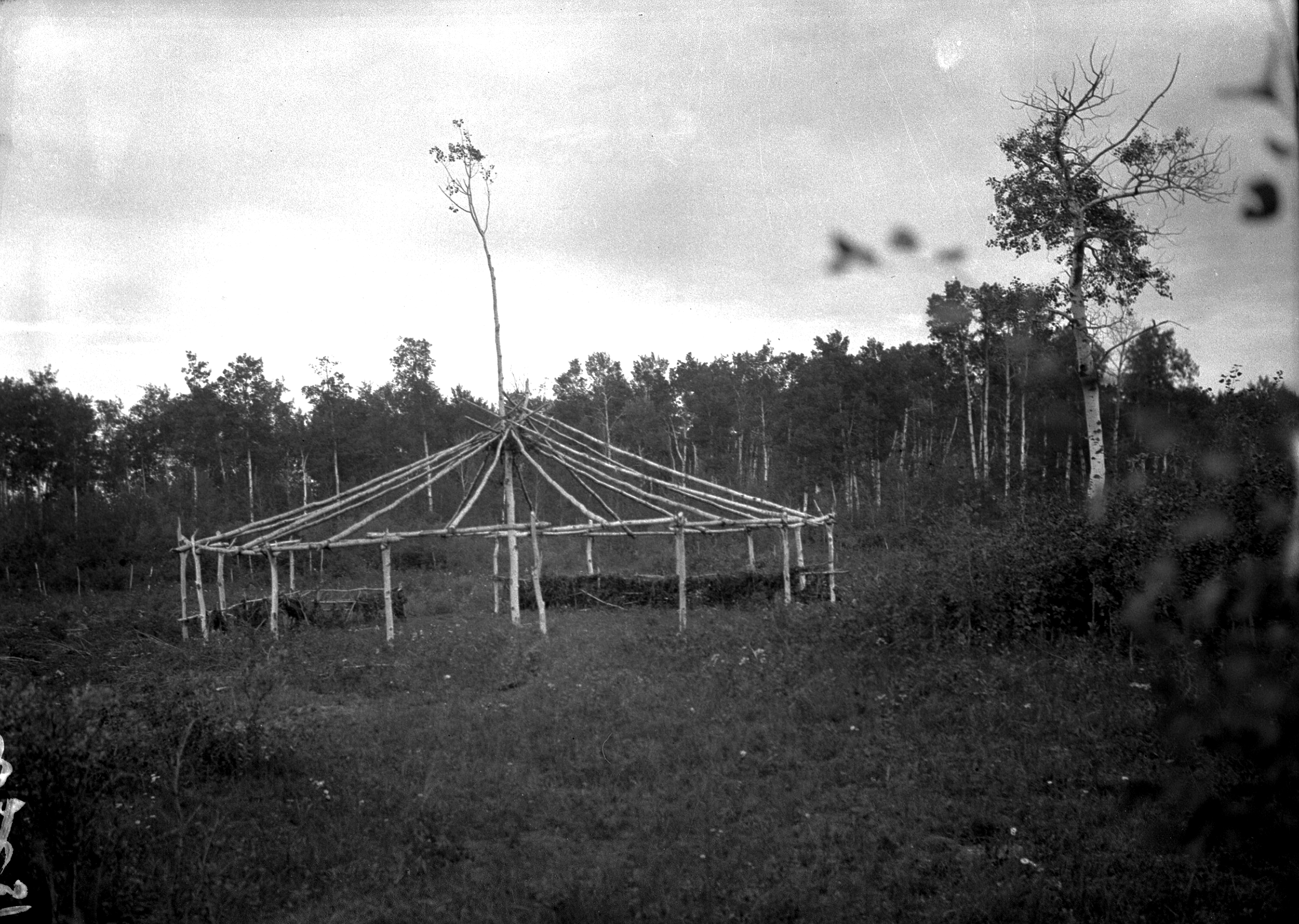
Circular Wood Frame Structure Used on Ceremonial Occasions—Waterhen River, Northern Saskatchewan
Ceremony
The email came on a Tuesday morning in October. I was at my desk in Calgary, watching the leaves turn that particular shade of blonde they get here in late autumn—not gold, not brown, something in between. Dying and beautiful at once.
Your story, “Mise en Place for Writers,” has been selected for a Boost!
I read it three times.
Ten years. One hundred and seventy articles. Previously getting only 3,600 views on my best-performing piece, “My Writing Process,” published in November 2017. Back when I still believed in tricks, hacks, and shortcuts. When I thought there was a right formula, right headline, right tags. And then Medium would finally see me.
Now, in 2025, the algorithm had finally blinked. I stood up. I needed to move.
December 2015. I was nineteen years old and convinced I had something to say. I published my first Medium article, “The Best Time to Start a New Year’s Resolution is Right Now” with the kind of confidence that comes from never having been edited. Five hundred words of generic advice wrapped in the certainty of youth.
Forty-three views. I thought: this is just the beginning. I was right, but not in the way I imagined.
Ten years means one hundred and twenty months. Five hundred and twenty weeks. I’ve worked five different jobs, dropped out of university twice, fell in love and broke up three times, published nine books, started a writing club, learned to code, unlearned to code, graduated with a Bachelor’s of Arts, had a breakdown in April that left me unable to leave my bedroom for two months. And slowly, in November’s frost, begun to find my way back to my desk.
Ten years means I’ve written about productivity systems and journal writing and quantified self. I’ve written about death and poetry and belonging. Most importantly, I’ve written that writing is ceremony, and ceremony requires patience, and patience is a kind of prayer.
The email didn’t change that. It just confirmed it. I put on my jacket and walked outside into the cold.
PART ONE: PACING.
The air bites. November in Calgary carries a specific cold—dry, sharp, the kind that makes your lungs work for every breath. I walk without destination, just movement, just the body needing to be in motion when the mind can’t sit still.
The leaves are blonde. This is the word that comes. Not yellow, not gold. Blonde like sun-bleached hair. Prairie grass in late summer. Once alive and green, and now preparing for another form entirely.
My hands are in my pockets. The right one touches the Midori notebook—brown leather, passport-sized, scuffed at the corners from two years of being carried everywhere. The left hand is bare, already cold. I should have worn gloves. I never wear gloves.
Henderson Highway. The name surfaces without being called. I haven’t lived in Winnipeg for over two decades, but my feet remember the walking pace of that street. The way it stretched from the house on Cheriton Avenue all the way to the Red River. The way autumn there smelled different. Something about the trees, or the river, or memory itself adding fragrance that wasn’t there.
I walked that street to Glenelm Elementary. I walked it to and from the bus stop. I walked it when I needed to think, when I needed to not-think, when I needed the body to solve what the mind couldn’t.
Now I walk streets with different names. Kensington Road, Memorial Drive, the pathways along the Bow River that will ice over in two weeks. The walking is the same. The body knows before the brain. This is what we carry. What survives.
I failed to move back home after graduation. April came and I was supposed to pack everything, drive eight hours northeast, return to the place where my Métis father was born, where his mother was born, where the blood memory lives in street names and river curves. Instead, I couldn’t leave my bedroom.
Agoraphobia means the world becomes too large and too small at once. Every door is a threshold you can’t cross. Every walk to the mailbox is a marathon. Your body revolts against motion even as your mind screams for it. I didn’t write for three months.
Or I wrote, but nothing finished. Nothing published. Just fragments in the Midori notebook. Just half-sentences that trailed into white space. The ceremony broken. The practice abandoned. The daily return to the desk. Gone.
But I cannot stay like that forever. I have survivance, the stubborn Métis insistence on continuing. November comes whether you’re ready or not. The frost forms. The leaves turn blonde. The cold bites. And one morning you wake up and you can walk to the end of the block. Then to the park. Then across the river.
Then you can sit at your desk and write a sentence. Then two. Then a story about a kitchen in a children’s hospice, about mise en place, about the preparation that happens before the work begins. And ten years after you started, someone at Medium decides this story is worth amplifying.
PART TWO: SHOWERING.
The best ideas come in water. The heat, the steam, the white noise of water on tile. Something about being naked and alone and temporarily free from the weight of the day. I stand under the shower for twenty minutes and think about hands.
My hands in the hospice kitchen, dicing onions at six in the morning while families slept upstairs. The way my hands knew where the knife was, where the cutting board lived, where everything belonged without looking. Muscle memory. Four years of Saturday mornings. The same prep, the same station, the same blue ceramic knife with the worn handle.
My hands now, typing at a keyboard. Different motion, same principle. The keys in the same place every time. The words appearing without conscious thought about which finger presses which letter.
My father’s hands, teaching me to make dough when I was eight. The way he could tell by touch if the batch needed more flour, more water, more time to rest. No measuring cups. Just hands that knew.
My grandfather’s hands. I never met him, but I’ve seen the photo. Working hands. Thick fingers. Hands that built things, fixed things, provided things.
The water runs hot as I think what made “Mise en Place for Writers” different? Not better. Different. The answer is I wrote from my hands. Not from research. Not from reading other articles about writing. Not from wanting to game an algorithm or chase a trend or position myself as an expert.
I wrote from four years of standing in a kitchen, prepping food for dying children’s families, learning that the organization before the work is what makes the work possible. And then I said, this is also true for writing.
Authority. That’s the word Medium uses in their guidelines. But authority isn’t credentials, or a degree or a certification or a byline. Authority is showing up to the station for four years. Authority is being able to say, without hesitation, without hedging: I was there. I did this. Here’s what it taught me.
Steam fills the bathroom and the ghost of approximation haunts me. To put yourself out there without genuine vulnerability is a type of sleepwalking. You need offerings. Specificity. Restraint. Structure. The ceremony taking place when you’re writing on a black mirror screen instead of speaking around a fire.
I turn off the water. Reach for the towel. Need to write this down before it evaporates with the steam.
PART THREE: FIELD NOTES.
The Midori notebook is on the bathroom counter. Brown leather, beaten up, pocket-sized. Inside: a Field Notes memo book, grid lines, kraft paper cover, waiting.
The traveller’s notebook is the holder. The Field Notes are replaceable. When one fills up, I archive it in a drawer and start fresh. Most of what I write in them goes nowhere. Shopping lists. Half-thoughts. Reminders to call my dentist. Debris of a mind forgetting everything not written down. But sometimes a line becomes a paragraph. A paragraph becomes a section. A section becomes the spine of an entire piece.
I dry off quickly, pull on clothes, uncap the pen. A Pilot G-2 07, black ink—nothing fancy—and write while standing: Authority = hands that know Restraint = stories not mine to share Structure = scaffold not formula, All of this = ceremony. Four lines. Each one took ten years to learn.
I think about all the notebooks before this one. Hilroy scribblers I kept in junior high school, writing bad poetry and worse Philosophy. The notebooks from university, margins filled with annotations and arguments with my professors. The Moleskines I bought when I thought the right notebook would make me a real writer. Each one was practice. Necessary.
Even filled with garbage. Especially the ones filled with garbage. You can’t learn what works without learning what doesn’t. You can’t develop authority without first writing with false authority. You find your voice by trying on a dozen voices that aren’t yours.
Ten years. One hundred and seventy articles. Practice.
PART FOUR: CEREMONY.
Back at my desk. November light coming through the window at an angle that means it’s past three o’clock. The blonde leaves are darker now, backlit, almost copper. I light sage first.
Grounding before work. Smell, smoke, and the small flame dying into ember. The acknowledgement that what I’m about to do matters, even if only to me.
I am not connected to ceremony the way I should be. I didn’t grow up with sweat lodges or smudging protocols or fluency in any of the languages my ancestors spoke. I am urban, displaced, hybridized, the product of colonial mixing that makes me both Indigenous and not Indigenous enough. But I have this. The smoke, the intention, the physical act of saying I’m here, I’m beginning, I’m present. And I have writing.
I light incense next. Sandalwood, today. The kind that comes in thin sticks from the Indian grocery store on Centre Street. Not tradish, not anything except what grounds me in my body and in this moment. The smoke rises straight up for a few inches, then curls, following air currents I can’t see.
Restraint. This is knowing what not to share. Knowing that dignity requires withholding as much as revealing. “There are intimate details of the job that I still can’t put to paper,” I wrote. “There are so many stories that aren’t mine to share.” This builds more trust with readers than any credential I could list. Restraint is how you show respect. Restraint is how you signal you were there, and you’re honouring what was witnessed by not exploiting it.
I light a candle last. Beeswax, unscented, burning clean and slow. I put it to the left of my keyboard where I can see the flame in my peripheral.
Structure. The candle is contained. The flame doesn’t spread. It burns within boundaries, converting wax to light, giving form to energy. Structure contains. Shapes. Transforming raw experience into something readable, shareable, useful. Not formula. Formula is following someone else’s pattern. Structure is finding the shape that serves your story.
Sage burning down to ash. Incense smoke thinning. Candle flame steady.
The body needs anchoring. Writing happens in physical space, on a physical desk, with physical hands on physical keys, and all of that requires gravity. The digital is weightless. The Internet is everywhere and nowhere. A Medium story exists in infinite copies on infinite servers in data centers I’ll never see.
But the writing of it happens here. In this body. In this room. With this sage, this incense, this candle. Ceremony is what transforms writing from content into offering. Into legacy.
Legacy is not going viral. Legacy is not Partner Program payments or magazine features or book deals. Legacy is building something that helps the next person build their thing.
I’ve open-sourced all my coding projects. Thousands of GitHub commits. Fifty repositories. Free for anyone to use, fork, modify, build upon. I’ve made my most important writing free and accessible. My Medium articles and blog posts. Every essay that might help someone figure out their own path.
This essay you’re reading right now, this is legacy work. This is me giving you the framework so you can build your own framework. Here’s what I learned in ten years. Take it. Adapt it. Make it yours.
Because what else do we have but this? What else is there but trying to leave something useful behind? The oral tradition is was about the story being passed forward, adapted, retold, kept alive. Not the storyteller.
We carry that tradition now on black mirror screens. We type instead of speak. We publish instead of perform around fires. But the principle remains, tell stories that help others tell stories.
The candle has burned down an inch. The sage is ash. The incense stick has collapsed into the holder. Outside, the light is failing. November days are short in Calgary. By four-thirty, the blonde leaves disappear into shadow. I’ve been writing for three hours.
This essay won’t be boosted. Meta-Medium stories only get Network Distribution—shown to people who follow me, no one else. Medium has made this clear in their guidelines. They don’t want the platform flooded with articles about writing on Medium. I understand that. I respect that. I’m writing this anyway.
PART FIVE: SANDCASTLES.
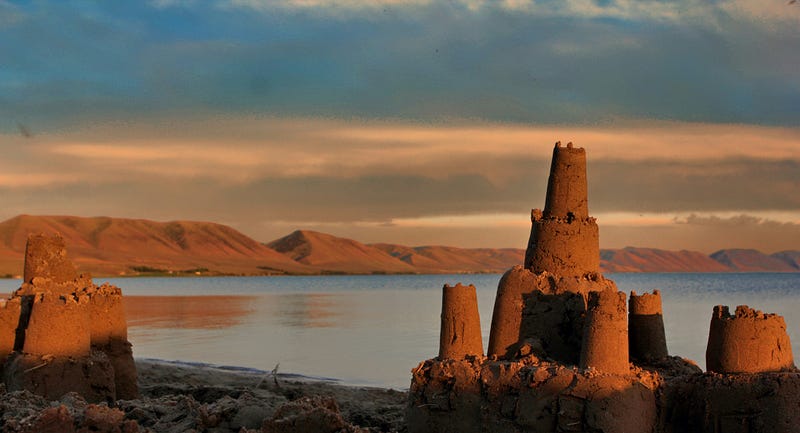
I’m building a sandcastle on a beach and the tide is coming. This is material fact, not metaphor. Everything I write will eventually be washed back into the digital ocean. Servers fail. Platforms die. Even Medium, which feels permanent right now, will eventually fold or pivot or become something unrecognizable.
My nine published books—paperbacks sitting in boxes in my closet—they’ll turn to pulp. The digital files will corrupt. The ISBNs will point to nothing. GitHub repositories will bitrot. The links will break. The code will become obsolete.
The medium is not the message. The medium is the temporary container for the message. The message itself—the thing trying to be communicated—that has a chance of surviving, but only if someone picks it up and carries it forward.
Sandcastles, though, are worth building even though the tide is coming. Especially because the tide is coming. The building is the point. The shaping with your hands. The brief moment of form before the formlessness returns. The offering to the temporary.
I have open sourced my work because someone might need it tomorrow, and tomorrow is all we have. This essay is for the person who’s been writing for five years, or eight years, or ten years, who hasn’t been boosted, who’s wondering if they should quit. Don’t quit. Persistent presence is the point.
My hands are on the keyboard. Hands that diced onions in a hospice kitchen. Hands carrying a Field Notes notebook in a Midori traveller’s notebook. Hands lighting sage and incense and candles. These hands know things.
Your hands know things too. The question is, are you listening to them? Are you writing from what you know in your bones, or from what you think you should know? Are you being specific, or generic? Are you showing restraint, or exploiting? Are you finding structure, or following formula? Are you persisting, or just repeating? Are you building something that might help the next person, or just chasing metrics?
This is your framework now. Not rules. Not guarantees. Not a formula that will get you boosted. But a ceremony. A practice. A way of approaching the work that honors both the work and the reader. Light your sage. Light your incense. Light your candle.
Or don’t. Find your own ceremony. Your own anchoring. Your own way of being present. Then write from your hands. Write the story only you can write, because only you have lived it. Write with specificity. Write with restraint. Write with structure that serves. Write for ten years if that’s what it takes. Write because the tide is coming and you’re building anyway.
Write because this is what we have. Write because your hands know.
EPILOGUE
It’s Friday now. A week since the email. The leaves outside my window are no longer blonde. Browning, curling, falling. Winter is coming. The Bow River will freeze. Pathways will close. The cold will deepen.
I’ll keep writing.
You have your own desk. Your own window. Your own ten years ahead or behind you. Scars and callouses and authorities. Structure waiting to be found. Sensory details that will prove you were there. Stories that aren’t yours to share, and knowing the difference is its own kind of power.
You have your own hands that know things. This is your framework now. Take it. Adapt it. Make it yours. The tide is coming. Build anyway.
Comments
To comment, please sign in with your website:
How it works: Your website needs to support IndieAuth. GitHub profiles work out of the box. You can also use IndieAuth.com to authenticate via GitLab, Codeberg, email, or PGP. Setup instructions.
Signed in as:
No comments yet. Be the first to share your thoughts!