Thoughts on Digital Third Spaces

You know that the Internet promised us connection. Instead it gave us surveillance.
I've written quite extensively about how people should own their own digital presence. I've tried to be persuasive in convincing people that the current status quo of corporate social media doesn't actually need to be the de facto Internet, and that we can return to an open, friendly culture of personal sites.
But one of the biggest criticisms I hear about the independent web is the inherent lack of social features. I understand this. Sure, you can set up EchoFeed or join a WebRing, but these aren't really intuitive or suddenly make your personal site a social media platform.
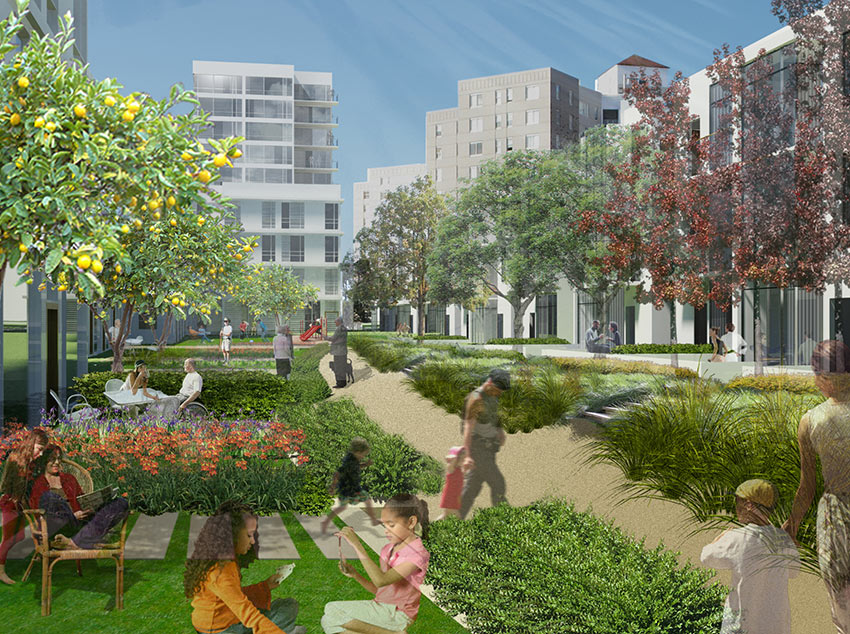
I believe what people are looking for is more of a communal town square, of being able to share and see what others are sharing. Social media has made this commonplace that it feels weird to be somewhere online that doesn't incorporate this design and experience. To me, this is a digital third space.
Which leads to the question: how can we make our Internet more of a third place?
This question is difficult to answer, in my opinion. I would even consider it dystopian or oxymoronic. The medicine for our isolation can only come from face-to-face (masked, please) contact. From touching grass. I do not think technology can mend our need for connection.
But, regardless, it is a question we ought to reckon with. For many, particularly those disabled, chronically ill, or physically marginalized for whatever reason, the digital may be the only available option. Do not ignore that there is a lot of privilege in assuming the real world is an option for all.
In what ways can we create and foster a healthy, sustainable third place on the Internet?
Definitions of Third Space
I suppose I should begin by defining what exactly a third space is, for those that don't know. Jordan Beal gives a great definition:
Sociologist Ray Oldenburg first introduced the concept of "third places" in his 1989 book The Great Good Place. Oldenburg advocates that to live a balanced, happy life, people need engagement in three realms — at home, work, and in third places. Third places act as a core setting for informal public life, offering connection, community, and sociability (Oldenburg, 1989). For adults, examples include cafés, parks, gyms, and other places centered around a common interest that fosters community and civic engagement. Very simply, third places can be thought of as societal glue. They bind people together to construct communities (Low, 2020).
Ray Oldenburg (1932-2022) defined third places as "a generic designation for a great variety of public places that host the regular, voluntary, informal, and happily anticipated gatherings of individuals beyond the realms of home and work." In his UNESCO essay co-written with Karen Christensen, he describes the seven characteristics of true third places:
- Neutral ground — You don't need an invitation, and anyone can enter
- Leveler — Everyone is on the same level, no status games
- Conversation is the main activity — Discussion, debate, gossip are part of the mix
- Accessible and accommodating — Easy to access, ideally walkable
- The regulars — There are familiar faces who create the atmosphere
- A low profile — Not expensive, unpretentious
- The mood is playful — Laughter is frequent, joking encouraged
Interestingly, malls were designed to be third spaces that were quickly consumed by commercialism. Austrian architect Victor Gruen envisioned shopping malls as community centers with public spaces for civic engagement. But as urban historian Margaret Crawford notes,
"Retail developers realized they could make money by taking Gruen's original third-place vision and turning it into a private, consumption-based environment that mimics the characteristics of a public space but lacks any actual publicness."
Gruen eventually disowned the mall concept altogether because of the way it had been commercially exploited. And now nearly every mall is on life support. Over a fifth of U.S. malls were shuttered in the last two decades, with another 25% estimated to close by 2025. From 2006 to 2010, the percentage of malls considered "dying" (40%+ vacancy) increased dramatically. Sound familiar?
The parallel to the Internet is unmistakable. What was designed as a decentralized network for sharing knowledge became a handful of walled gardens optimized for extracting attention and data.
Real Third Spaces Still Exist
I am extremely privileged to live in a city that actually has thriving, genuine third places I want to give a shout-out to, such as the Alcove Centre for the Arts and the Como Se Dice Collective. I am mainly writing this for the people who are living in community-hostile places, which is sadly many.
Luckily, creating a digital third space is far easier than the real life equivalent in nearly every way. The costs for a community space is exponentially cheaper, it is far easier to come-and-go, there are no physical accessibility barriers, etc.
What Makes a Good Digital Third Space?
Let's start with a baseline. What should we be looking for in a digital third space? I'm thinking, bare minimum:
Privacy-Respecting Infrastructure
A guaranteed lack of surveillance/privacy concerns. No data harvesting. No tracking pixels. No "engagement metrics" being sold to advertisers.
This immediately disqualifies most mainstream options. Which brings us to the elephant in the room...
Why Not Discord?
Discord is compromised. Multiple massive data breaches have exposed the platform's vulnerabilities:
- March 2023: A hacker accessed Discord's support ticket system, exposing email addresses, names, and government-issued IDs of users who contacted support
- August 2023: Discord.io breach affecting over 760,000 users, exposing encrypted passwords and billing information
- April 2024: Spy.pet scraped over 4 billion public messages from 14,000+ Discord servers, selling the data for approximately $5 in cryptocurrency
- 2024-2025: Multiple ongoing scraping operations continue to harvest user data, with one service claiming access to 1.8 billion messages
Discord's messages are not end-to-end encrypted — they're encrypted in transit but decrypted on Discord's servers, meaning Discord (and potentially others) can read everything you write. As Mozilla Foundation's privacy review notes: "Discord does collect a fair amount of data on its users and says it can share that data with third-parties... their privacy policy [is] pretty vaguely worded."
I would even go as far as to say you shouldn't have any sort of meaningful presence on it. At minimum, never share sensitive information, personal details, or anything you wouldn't want permanently archived and sold.
What About Slack?
Well, that's for work and your boss can read all of your messages.
According to extensive privacy research, your boss can read your Slack DMs. Even if you edit them. Even if you delete them. Even if you leave the company. Here's how it works:
- Free/Pro plans: Employers need to request access from Slack, but Slack's criteria are vague and requests are frequently approved
- Business+ plans: Employers can export data directly, no Slack approval needed
- Enterprise Grid plans: Even easier access with self-serve export tools
The fundamental issue: "According to Slack's terms, your employer is the 'Customer' and legal 'data controller' who owns and controls all content in the workspace, including every message and file you share." Slack is designed to serve employers, not employees.
Basecamp?
Basecamp could possibly be promising if its creator wasn't accused of fascist thinking.
David Heinemeier Hansson (DHH), creator of Ruby on Rails and co-founder of Basecamp, has become increasingly controversial. In September 2024, he published an essay lamenting that London is "no longer a city he wants to live in" because only a third of residents are "native Brit" (using whiteness as a proxy for Britishness) while praising Tommy Robinson, a far-right agitator with convictions for violent offenses and associations with extremist groups.
As developer David Celis writes: "DHH takes this growing multiculturalism in Britain and uses it to stoke fear... [his] verbiage disturbingly echoes the sentiments of the Ku Klux Klan (America for Americans)... This post is why I'm here right now, writing something much longer than the social media quips I've written over the years in response to his ongoing descent into far-right white nationalism and fascist rhetoric."
This follows the 2021 "Basecamp implosion" where DHH and co-founder Jason Fried banned political discussions at work (while simultaneously posting political content on company blogs), resulting in a third of employees leaving the company.
I understand how this looks. Like cynicism, like I'm looking for a reason to say every well has been poisoned. Like leftist purity culture, pearl-clutching, and moral grandstanding. But I do really think we owe it to ourselves and our community to have a sincerely good foundation to build upon. To be critical and well-read is not the same as finger-wagging or alarmism. Rather, it is to be measured and sincere in praxis.
Additional Requirements
Beyond privacy and ethical leadership, a digital third space needs:
- Strong, enforceable code of conduct — Clear community guidelines with transparent enforcement
- Multiple communication modalities — Text, voice, video as options, not requirements
- Accessibility by default — Screen reader compatible, keyboard navigation, alt text culture
- Data portability — You can export your content and leave
- Sustainable funding model — Not dependent on surveillance capitalism or venture capital
- Democratic governance — Community input on major decisions
- Events and rituals — Traditions, showcases, gatherings that build culture
- Space for creation, not just consumption — Tools for making, not just viewing
- Asynchronous by default — No pressure to be "always online"
- Cultural memory — Archives, history, ability to reference the past
The Closest Thing We Have
omg.lol is a genuine solution that I adore. There is an anti-fragility with its approach to community. You can use Mastodon, you can just post a status, you can join the IRC channel. Whatever works best for you.
Created by Adam Newbold (Neatnik), omg.lol explicitly rejects surveillance capitalism: "There's no AI in omg.lol, and there never will be. It's just real humans with real hearts here."
But this isn't exactly a third space because you do need to pay to get in, regardless of how affordable and worth it I might think it is. The cost barrier, however modest, excludes people. True third spaces are accessible to all.
Building Your Own
I would love to start my own digital third place. I started Write Club and I have learned valuable lessons from that, but it is more of tackling the logistics and infrastructure that I feel I would struggle with.
For any third space, digital or real, has to reckon with the tragedy of the commons. With how there will always be bad actors (regardless of if they are malicious or just ignorant) that require the optics and aesthetics of hierarchy, power structures, and authority.
I don't know if I could navigate issues that important with any sort of measured understanding of either praxis or theory in regards to them. Moderation is labor. Community care is labor. Maintaining infrastructure is labor. And all of it requires resources I don't currently have.
I would love to build a platform that's free and open, oriented towards cultivating and nourishing culture and art. But I know this is trying to re-invent the wheel and has been attempted countless times before by people far smarter than me who had access to far, far more resources and funds than I do.
What Already Exists (And Their Limitations)
The IndieWeb community is the closest thing to a digital third space that currently exists. It's decentralized, privacy-respecting, and built on principles of owning your own data. It's also:
- Technically demanding — Requires understanding of web development, DNS, hosting
- Fragmented — Everyone's on their own site, discovery is difficult
- Small — The community is tiny compared to mainstream platforms
The Fediverse (Mastodon, Pixelfed, etc.) solves some problems while creating others:
- Pros: Decentralized, no corporate ownership, community-moderated
- Cons: Instance moderation varies wildly, discoverability is poor, onboarding is confusing, servers can disappear taking your content with them
Matrix and Element offer end-to-end encrypted communication:
- Pros: Actually private, decentralized, open source
- Cons: Learning curve, smaller community, requires technical knowledge to self-host
No perfect solution exists yet. Maybe instead of waiting for one platform to solve everything, we need an ecosystem of interconnected spaces. Personal websites, small forums, chat servers, federated networks, all able to talk to each other through open protocols.
Moving Forward
Here's what I think we can do:
For Individuals:
- Own your domain. Start with Porkbun ($10/year) and Eleventy (free)
- Join omg.lol ($20/year) for infrastructure and community
- Be present on the Fediverse — Mastodon, Pixelfed, your choice of instance
- Use Webmentions to enable cross-site conversations
- Participate in WebRings and blogrolls
- Comment on others' blogs — actual, thoughtful engagement
For Communities:
- Self-host Matrix/Element for real-time chat
- Run a Discourse forum for asynchronous discussion
- Create shared Fediverse instances around interests/values
- Build digital gardens and knowledge wikis collaboratively
- Host regular virtual events — watch parties, reading groups, hack nights
- Document your community's history — make archives, not just feeds
For Developers:
- Build tools that respect users — no dark patterns, no data harvesting
- Make federation the default — interoperability over lock-in
- Prioritize accessibility — from the start, not as an afterthought
- Create export tools — users should always own their data
- Keep it simple — complexity is a barrier to entry
The uncomfortable truth is that digital third spaces may be impossible in the way we want them to be. The Internet fundamentally cannot replicate the embodied experience of being in a physical place with other humans.
As Ray Oldenburg argued, third places require:
- Beverages as social sacraments
- Regulars who create atmosphere
- The ability to "be seen" and recognized
- Low stakes social interaction
- Serendipitous encounters
The digital world struggles with all of these. You can't share a beer over Zoom. Regulars in Discord are usernames. Being "seen" online often means being surveilled. Every interaction leaves a permanent record. Serendipity is replaced by optimization.
But maybe that's not the point. Maybe digital spaces don't need to be third places in Oldenburg's sense. Maybe they need to be something else entirely. Fourth places, perhaps. Spaces with limitations embracing their unique affordances.
I'm building brennan.day as my contribution. It's not a third space. It's my space. But it's designed to connect to other spaces through POSSE, Webmentions, and RSS.
I'm writing publicly. I'm linking to others. I'm participating in the IndieWeb. I'm showing up.
And I think that's all any of us can do. Show up. Build our small corners of the web. Connect them to others. Resist the pull of convenience and surveillance. Choose the harder path of actually owning our digital presence.
The Internet doesn't need another platform. It needs more people willing to do the work of building community outside of corporate spaces. It needs more people who understand that convenience is not the same as connection.
Stop waiting for someone to build the perfect digital third space. Start building your own small space instead. Own your domain. Write on your own site. Link to others. Comment on their work. Show up consistently.
The digital commons we need won't be built by corporations or platforms. It will be built by us. One personal site at a time. It's slower. It's harder. It's less convenient. But it's ours.