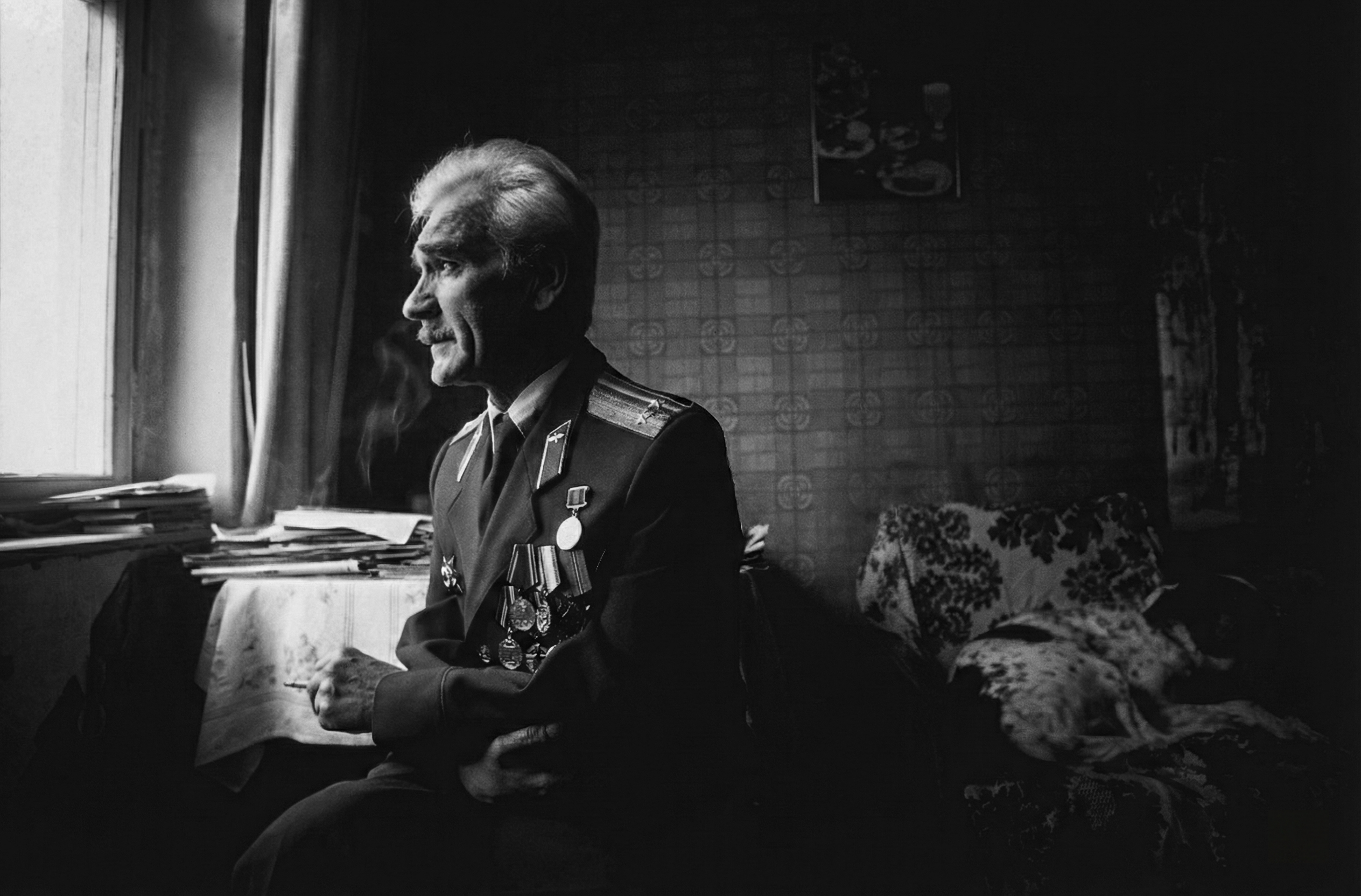
Stanislav Petrov, the man who made the decision not to fire at the United States after a faulty report from Russian missile detection indicated a nuke fired, preventing WWIII.
The Three Times the World Nearly Ended

History freezes in strange places. Not in decorated marble halls, or on blood-spilled battlefields mapped by generals. History is truly only created in bunkers that smell of sweat and fear, in submarines where the air runs thick as soup, in flooded basements lit by flashlights held in shaking hands.
The world has ended three times. You were there for each one. So was I. We just didn’t know it.
Sometimes, men hold the trigger and choose not to pull it. Men look into the mouth of annihilation and say, quietly, “No. Not today.” Men whose names you probably don’t know, whose faces never make the history books your children will read.
But we’re here because of them. Breathing. Arguing. Loving. Forgetting.
1. Twenty-Three Minutes to Save the World
The bunker walls were white. Not clean-white, but the kind of institutional white that absorbs light and gives nothing back. Serpukhov-15, sixty-two miles south of Moscow, September 26, 1983, just past midnight. The Russian winter hadn’t yet arrived, but wisps of wind snaked around the facility’s domes above ground, where the moon hung full and pale.
Below, in the underground command center, Lieutenant Colonel Stanislav Petrov sat in the commander’s chair. Forty-four years old. Dark curls threatening to slip from their combed-back position. Blue eyes threatening to glaze over from watching screens that hadn’t changed for hours. He was filling in for a colleague who’d called in sick. His day job was troubleshooting the main computer. But tonight? He was watching satellite data from Oko, the Soviet early warning system—Russian for “Eye.”
Buttons and beeps. The hum of refrigerated electronics. Patience meeting its match.
Then, a siren.
Not any siren. The kind that rattles your skull from the inside. The screens pulsed with the command: Запуск!—LAUNCH!
One intercontinental ballistic missile detected. Then another. Then another. Five missiles total. Heading toward the Soviet Union from the United States. The computer system indicated the reliability of information was at its highest level.
It was Petrov’s job—his only job in that moment—to pick up the phone. To relay the warning up the chain of command: Petrov to headquarters, headquarters to general staff, general staff to Yuri Andropov, who would approve a retaliatory strike. Launch on warning. Mutual assured destruction. The doctrine was clear.
“All I had to do was reach for the phone,” Petrov told BBC News in 2013. “But I couldn’t move.”
Twenty-three weeks earlier, Soviet fighters had shot down Korean Air Lines Flight 007, killing all 269 people aboard, including U.S. Congressman Lawrence McDonald. Tensions were hair-trigger. The Soviet Union as a system. Not just the Kremlin, not just Andropov, not just the KGB, but as a system was geared to expect an attack and to retaliate very quickly. It was very nervous. Prone to mistakes.
Petrov had a funny feeling in his gut.
The computer system was new. He didn’t trust it. Ground radar hadn’t picked up corroborating evidence. And he’d been trained: any U.S. first strike would be massive. Hundreds of missiles, not five. Five seemed illogical. Five seemed wrong.
So five minutes after the first siren, Lieutenant Colonel Stanislav Petrov decided not to report the alarms.
Then he sweated it out.
Twenty-three minutes. One decision. Billions saved.
Three weeks later, Petrov was reprimanded for failing to record the event in his logbook. He received no reward. The incident embarrassed his superiors and the scientists responsible for the system. He was reassigned to a less sensitive post. Took early retirement. Suffered a nervous breakdown.
He died in 2017, in relative obscurity, in his Moscow apartment.
“I was simply doing my job,” he said. “I was the right person at the right time, that’s all.”
2. Four Hours in a Flooded Submarine
October 27, 1962. Caribbean Sea, near Cuba.
Inside Soviet submarine B-59, the temperature had climbed to 45–50°C (113–140°F). The diesel-electric Foxtrot-class sub wasn’t designed for tropical waters. The ventilation system had malfunctioned in the Atlantic. Carbon dioxide levels rose. The crew of 78 could barely breathe. Sailors fainted. Headaches. Heat stroke. Rashes. Severe dehydration.
The constant noise from three propellers hammered exhausted eardrums. Metal barrel, sledgehammer. Boom. Boom. Boom.
They hadn’t surfaced in days. The batteries had run very low. The air conditioning had failed. The air was stale, hot, stuffy. The submarine was reaching above 50°C in some compartments. Oxygen depleting.
Above them: eleven U.S. Navy destroyers and the aircraft carrier USS Randolph, dropping practice depth charges. Small explosions meant to force the submarine to surface. Non-lethal. Warning shots.
But the B-59 crew had no contact with Moscow for days. They didn’t know whether World War III had already begun. Many thought the worst, that war had started, they were being attacked.
An intelligence officer later wrote in his memoirs: “The Americans hit us with something stronger than grenades and apparently an underwater charge. We thought the end had come.”
Captain Valentin Savitsky made a decision. “Perhaps the war has started at the top. Let’s blow it up! We will die, but we will sink them all—we will not become the shame of the fleet.”
The submarine carried a nuclear torpedo with a 10-kiloton warhead, only slightly less powerful than the bomb dropped on Hiroshima. On most Soviet submarines, launching it required authorization from two officers: the captain and the political officer.
But B-59 was different. It was the flagship. A third signature was needed.
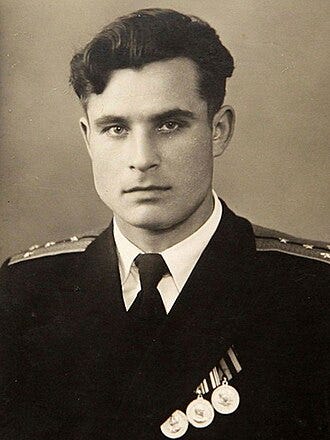
Vasily Arkhipov. Thirty-four years old. Chief of Staff of the submarine flotilla, also serving as executive officer aboard B-59. Equal in rank to Captain Savitsky, but more senior. And the only one who’d survived a nuclear accident before—the K-19 reactor failure in 1961, where he’d been exposed to massive radiation helping prevent a meltdown.
The political officer, Ivan Maslennikov, agreed with Savitsky. Launch.
Arkhipov said no.
An argument followed. Four hours of heated debate in the flooded, overheated submarine. The kind where you can taste the salt of other men’s sweat in the recycled air. Where the metal walls close in. Where every breath is borrowed.
Arkhipov remained calm. He was the only one who kept his cool, who understood that the Americans knew very well where they were, that the “attacks” had failed on purpose. He persuaded Savitsky that the charges were non-lethal, that they were not under attack. He suggested they surface and await instructions from Moscow.
Savitsky relented.
Late in the evening of October 27, B-59 surfaced. They were quickly surrounded by aircraft and helicopters, blinded with spotlights, warning fire across the bow, destroyers training guns on the hull. But no attack. In the distance, a U.S. Navy destroyer asked them to identify themselves.
The submarine withdrew. Crisis averted.
Thomas Blanton, director of the U.S. National Security Archive: “A man called Vasili Arkhipov saved the world.”
Arkhipov died in 1998, at age 72, from cancer likely related to his radiation exposure on K-19. The world didn’t learn about what happened aboard B-59 until 2002, forty years later, when retired Commander Vadim Orlov confirmed the submarines carried nuclear torpedoes and credited Arkhipov with preventing their use.
Four hours of arguments. Then rising to the surface. Then sailing home.
That’s it.
3. Waist-Deep in Radioactive Water
May 4, 1986. Chernobyl Nuclear Power Plant, Ukraine.
Eight days after the initial explosion and fire. The reactor core, around 185 tons of nuclear material, was still melting down and slowly burning through the concrete floor. Beneath it was a massive bubbler pool containing thousands of tons of water, used as coolant for the plant.
If the molten core reached the water, the resulting steam explosion would throw radioactive material across much of Europe, rendering it uninhabitable for hundreds of thousands of years. Some calculations suggested it would contaminate water supplies used by 30 million people and make northern Ukraine uninhabitable for over a century.
The pool had to be drained. Immediately.
But the valves controlling the sluice gates were located in a flooded corridor in a subterranean annex adjacent to the reactor building. In the dark. Under radioactive water. No remote control. Someone had to go down there and turn them manually.
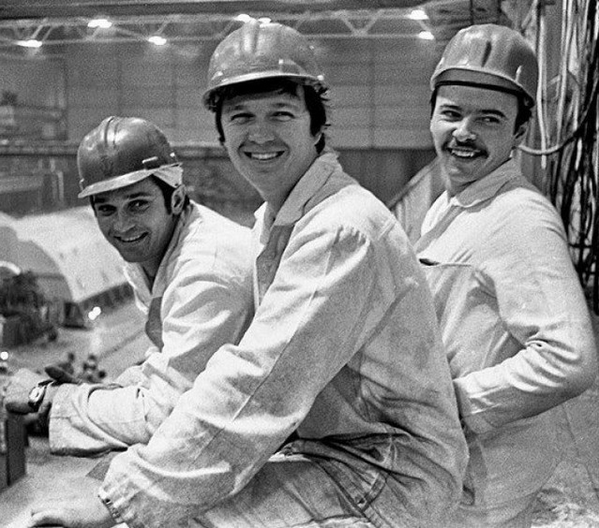
Mechanical engineer Alexei Ananenko. Senior engineer Valeri Bespalov. Shift supervisor Boris Baranov.
They put on wetsuits, respirators, carried powerful lights, a radio station, and dosimeters. Two each, one attached to the chest, one around the ankle. Ananenko brought an adjustable spanner in case the valve became stuck. The operational staff honestly warned them about the high risk of receiving a fatal dose of radiation. If they didn’t survive, their families would be taken care of.
The men descended into the semi-flooded basement levels beneath Reactor 4, beneath the melting core. The water reached up to their knees, though some accounts say waist-deep. Radioactive. Dark. The kind of dark where your light creates more shadows than it banishes.
“Everyone at the Chernobyl nuclear power station was watching this operation,” Ananenko later told Soviet media. “When the searchlight beam fell on a pipe, we were joyous: The pipe led to the valves.”
They found both valves. Nobody believed they could be opened—these valves were needed only for the installation period, when the concrete bowl was filled and checked for leaks. They hadn’t been touched in years.
Baranov held the light. Ananenko and Bespalov manually opened the drain lines.
It took about 15 minutes.
“We heard the rush of water out of the tank,” Ananenko said. “And in a few more minutes we were being embraced by the guys.”
When they returned and checked their dosimeters: 10 annual norms. Bad, but not immediately lethal.
Fire brigade pumps then drained the basement. The operation wasn’t completed until May 8. 20,000 tonnes of water pumped out. Europe didn’t become uninhabitable.
For years, the internet repeated a myth: all three men died within weeks, buried in lead-lined coffins. But the truth is simpler and stranger.
All three suffered radiation sickness. Black spots appeared on Ananenko’s legs—“radioactive tan,” he called it. They washed themselves repeatedly in the showers but kept setting off radiation alarms. The diving suits hadn’t protected them from the radiation.
But no, they didn’t die.
Ananenko continued working at Chernobyl for three more years as one of the liquidators. Bespalov worked at the plant until retirement in 2008. Baranov died in 2005 from a heart attack, age 64.
In 2018, Ukrainian President Petro Poroshenko presented all three with the Order For Courage. Ananenko and Bespalov received theirs in person. Baranov’s was awarded posthumously.
When asked about it years later, Ananenko said: “I never thought it might mean death. They only sent me because I knew how to do it. I was the one who knew where the valves were.”
Fifteen minutes. Knew where the valves were. Europe saved.
“I’m no hero,” he said. “I was just doing my job.”
Coda
I don’t think there are no statues tall enough. No medals heavy enough. No words grand enough. Three times, the world balanced on the edge of a decision made by people who were tired, frightened, far from home. Those who didn’t think of themselves as heroes and instead later shrugged and said they were simply doing their jobs. Following training, turning valves, making the logical choice.
We are all saved by the quiet refusal. Not by the person who wanted to be a hero, but by the person who happened to be there when the choice arrived.
Petrov’s gut feeling. Arkhipov’s calm. Ananenko’s wrench.
Twenty-three minutes. Four hours. Fifteen minutes. That’s how close we came. That’s how much time it took.
And now, here we are. Still breathing, still alive, still unaware of how many times we’ve almost stopped. Coffee still brews. The sun still rises. Children still laugh in playgrounds, oblivious to the fact that they exist because someone, somewhere, in the heat and the dark and the fear, decided to wait just a little longer before ending the world.
We owe them everything and we remember them hardly at all.
References
- “The Other Close Call of 1983,” Veterans Breakfast Club, https://veteransbreakfastclub.org/the-other-close-call-of-1983/
- “Stanislav Petrov: ‘I had a funny feeling in my gut,’” National Security Archive, https://nsarchive.gwu.edu/media/28890/ocr
- “Man Who Saved the World Dies at 77,” Arms Control Association, https://www.armscontrol.org/act/2017-10/news-briefs/man-who-saved-world-dies-77
- “Stanislav Petrov, Soviet Officer Who Helped Avert Nuclear War, Is Dead at 77,” TIME, https://time.com/4947879/stanislav-petrov-russia-nuclear-war-obituary/
- “Vasily Arkhipov Saved the World,” Beyond Nuclear International, https://beyondnuclearinternational.org/2022/10/16/vasily-arkhipov-saved-the-world/
- “If Vasili Arkhipov Were A Pushover, None Of Us Would Likely Be Alive Right Now,” Medium, https://asherkaye.medium.com/if-vasili-arkhipov-were-a-pushover-none-of-us-would-likely-be-alive-right-now-5f525d354661
- “Russian naval officer, the man who saved the world from nuclear war,” Telegrafi, https://telegrafi.com/en/Russian-naval-officer,-the-man-who-saved-the-world-from-nuclear-war-photo/
- “55 Years After Preventing Nuclear Attack, Arkhipov Honored With Inaugural Future of Life Award,” Future of Life Institute, https://futureoflife.org/recent-news/55-years-preventing-nuclear-attack-arkhipov-honored-inaugural-future-life-award/
- “Vasili Arkhipov: The Unsung Hero Who Saved the World from Nuclear Annihilation,” History Tools, https://www.historytools.org/stories/vasili-arkhipov-the-unsung-hero-who-saved-the-world-from-nuclear-annihilation
- “Three Men Who Saved Millions,” The Trumpet, https://www.thetrumpet.com/14007-three-men-who-saved-millions
- “Chernobyl Divers—Truth or Legend?,” ScubaBoard, https://scubaboard.com/community/threads/chernobyl-divers-truth-or-legend.588518/
- “The Real Story of the Chernobyl Divers,” History, https://www.history.co.uk/article/the-real-story-of-the-chernobyl-divers
- “Chernobyl Interview: Alexei Ananenko,” Exutopia, https://www.exutopia.com/chernobyl-interview-alexei-ananenko/
- “The Real Story of the Chernobyl Divers,” The Scuba Shop, https://www.thescubashop.co.za/the-real-story-of-the-chernobyl-divers/
- “The truth about the feat of three Chernobyl divers who saved millions,” Pictolic, https://pictolic.com/en/article/the-truth-about-the-feat-of-three-chernobyl-divers-who-saved-millions
Comments
To comment, please sign in with your website:
How it works: Your website needs to support IndieAuth. GitHub profiles work out of the box. You can also use IndieAuth.com to authenticate via GitLab, Codeberg, email, or PGP. Setup instructions.
Signed in as:
No comments yet. Be the first to share your thoughts!