My Best Advice for Medium Writers with No Followers
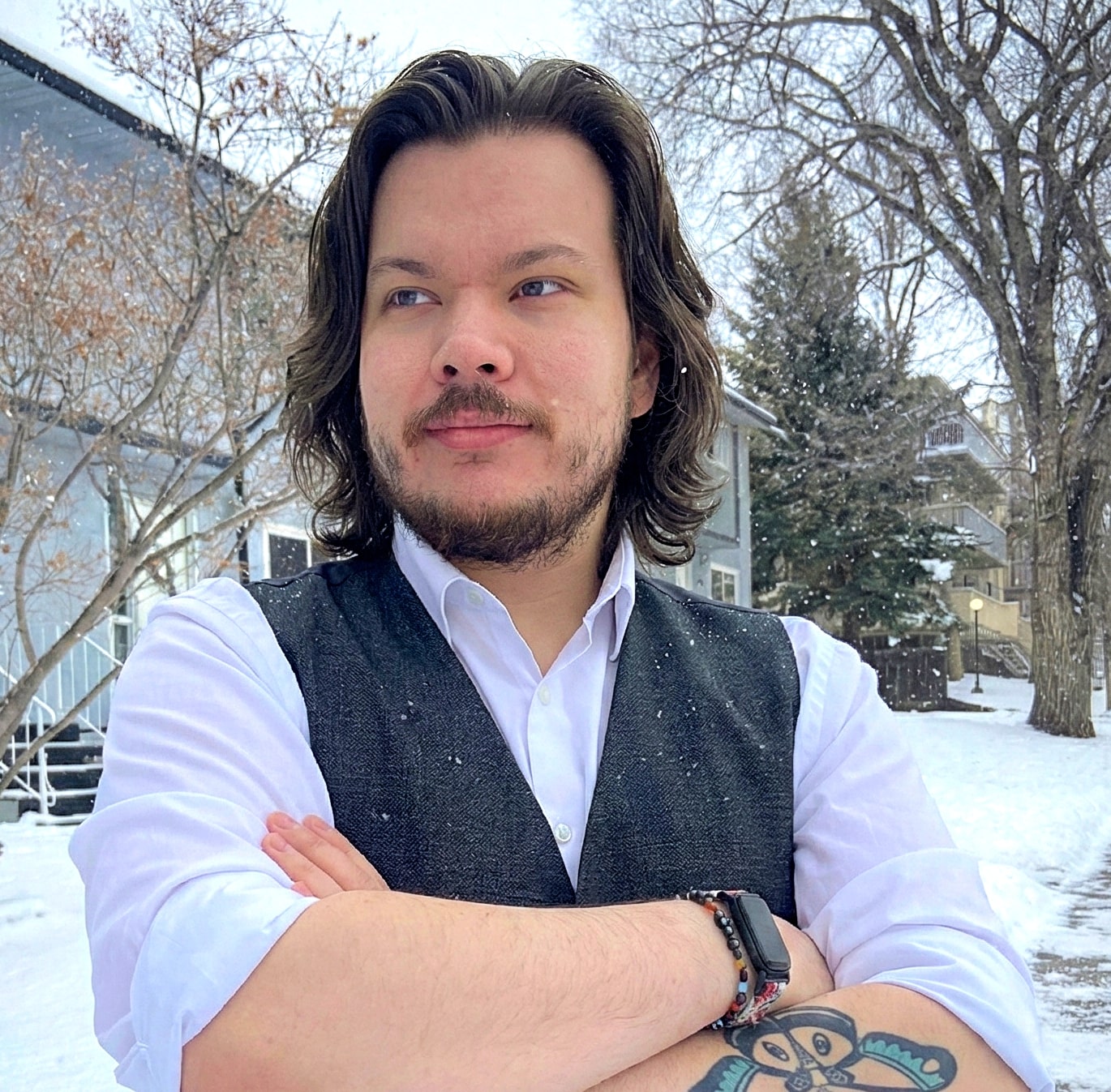
Jarred awake by my alarm at 6:47am. Thirteen minutes early, which meant I’d set it wrong again. November morning in Calgary. Pitch black outside my window, frost crystallizing on the glass in fractals I couldn’t quite make out. I sat at my desk in the dark, hands wrapped around lukewarm coffee from yesterday’s pot that I’d microwaved. My ritual begins. Open Bear, write garbage for thirty minutes, delete half of it.
The 7AM Revelation
After, I saw the calendar notification. Medium Writers Circle—NOW.
I’d completely forgotten. Signed up months ago when I was feeling optimistic and excited. Now here I was, unwashed, unshowered, clicking a Zoom link I’d buried under a dozen other forgotten commitments.
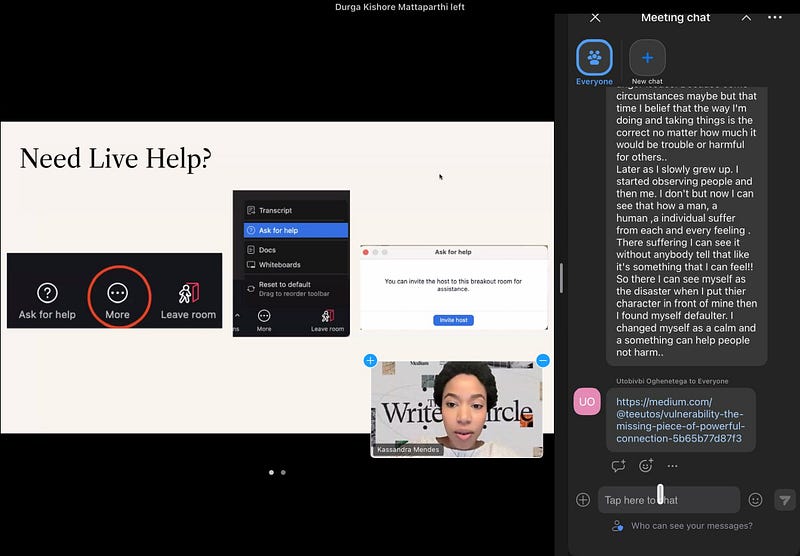
Five hundred people flooded into the call. The chat exploded.
“What’s the prompt?”
“Can you hear me?”
“I can’t find the breakout rooms”
“Is this recorded?”
“What’s the prompt?”
“WHAT’S THE PROMPT?”
A torrent. The same questions cascading over each other, nobody reading what came before, everyone shouting into the void simultaneously. This was community? This was connection?
The facilitators—gracious, patient, probably underpaid—explained we’d have fifteen minutes to write on one of four prompts:
What belief have you changed your mind about? What cultural norm deserves to evolve? A fictional world where everyone believes your old belief? Or just work on an unfinished draft. “Publish whatever you write with the topic #TheWritersCircle,” they said.
I picked the unfinished draft option. Coward’s choice. I’d been avoiding finishing a piece about how Annoyance is the Price You Pay for Community. (Hm, relevant?) The words weren’t coming. They never do when you need them.
Then we broke into rooms.
The Heartbreak
Ten of us. Smiling lovely faces in squares. Names I try to remember even though human memory doesn’t work that way in Zoom’s grid layout. We went around introducing ourselves—name, location, what you write about. The usual performance of digital gathering.
Yanmife, Bright Horizons who used to go by Graffique and writes children’s books, Lauren A Pink, Kriszti Van Aster trying to get back on track after a long writing block, Chike Onyeoguzoro writing poetic theology, Baykuş Abinizin Seyir Defteri
Check them out, give them a follow! Genuine people. Real writers. Each carrying their own reasons for being here at—I checked—9:30 AM their time, 7:30 AM, whenever. We all showed up.
I looked at their profiles and something shifted. I’d become the anomaly, the outlier, the uncomfortable proof that the lottery system works for someone. I was stopped cold by how these were good writers. Thoughtful. Articulate. Showing up to improve. Putting in the work. And Medium was giving them nothing.
Not followers. Not distribution. Not money. Nothing.
The Lottery
Medium operates on a lottery system now. Not officially, of course. Officially, there are three distribution tiers: Boost (human curators select your story for maximum distribution), General Distribution (matched to readers based on interests), and Network Distribution (only your followers see it).
The baseline is Network. Which means if you have eight followers, eight people might see your work. Maybe. If the algorithm feels generous. If they’re logged in. If they haven’t muted notifications. If the stars align.
You need 100 followers just to qualify for the Partner Program, which is the thing that lets you earn money. One hundred. For writers starting from zero, that’s Sisyphean. You’re writing for free, to an audience of no one, hoping “the algorithm” notices you, hoping a curator stumbles across your work, hoping for a Boost that might never come.
I’ve been Boosted four times. Four times in 170+ stories over ten years. My non-Boosted work? A few dozen views if I’m lucky. Sometimes twelve. Sometimes three.
The worst part? I can’t even explain what made the difference. My article about mise en place got Boosted. My piece defending Rupi Kaur got Boosted. My essay on AI’s authenticity crisis got Boosted. But dozens of other pieces, researched, revised, labour-intensive, vanish into the void.
It’s not merit. It’s not effort. It’s not consistency. It’s luck.
And Medium knows this. They hosted Medium Day—150+ sessions, thousands of attendees, all focused on “just start writing.” Beautiful sentiment. Hollow execution. Because starting isn’t the problem. Being found is the problem.
The Void (Or: Everyone’s Shouting, Nobody’s Listening)
After our breakout rooms, we returned to the main call. Three hundred people remained. 200 had already left. Can’t blame them. The facilitators encouraged us to “network” by posting our Medium profiles in chat.
The torrent returned. Worse than before. Everyone understood the assignment now.
Links scrolling past faster than anyone could possibly read them. Three hundred people simultaneously self-promoting to an audience of zero. Because here’s the thing: everyone was posting. No one was clicking.
It was performance. Theatre. The appearance of community without the substance. We were all shouting our URLs into the void, hoping someone—anyone—would care enough to click, while simultaneously doing the exact thing we hoped others wouldn’t do: ignoring everyone else to promote ourselves.
This is the crisis. Not AI. Not declining literacy. Not short attention spans. The crisis is that we’ve built systems where genuine connection requires more effort than anyone has energy for. The only way to be heard is to scream louder than everyone else. Writers who should be allies become competitors for scraps of attention.
The organizers were fantastic. They’re trying. They really are. They created this space, facilitated these conversations, hoped for magic. But you can’t solve a structural problem with a networking event.
The Mechanics (Or: What Actually Makes Writing Good)
Okay. Deep breath. Let’s talk about the elephant in the room.
Most writing on Medium isn’t very good.
I don’t say this cruelly. I say this as someone with a BA in English (Honours, 3.8 GPA, four years of craft study). I say this as someone who’s published nine books, founded a creative writing collective, and spent a decade learning—painfully, through failure—what makes prose actually work.
Good writing requires three things: mechanics (grammar, syntax, rhythm), creativity (what you’re saying and why), and voice (who you are, what makes you different).
Most Medium advice focuses on the first. Endless posts about headlines, subheadings, formatting. Tactics. Hacks. “Do this one weird trick for engagement!” But tactics without substance is just noise.
The real problem? Medium suffers an identity crisis. Who is it for? What kind of writing belongs here? The answer—everyone, everything—is functionally useless for aspiring writers.
In that breakout room, I saw writers from non-English speaking countries trying to write in their third language for maximum reach. Incredible effort. Admirable ambition. But where are the resources for them? Where’s the guidance on crafting prose when English isn’t your native tongue?
Do writers know the difference between a personal essay and a blog post, between memoir and journalism, between analysis and opinion? Not their fault. Medium treats all writing as identical “stories.” A flattening that erases genre distinctions and leaves beginners without roadmaps.
Writing for the internet requires different skills than writing for print. Online readers skim. They scan. They decide in three seconds whether to keep reading. This doesn’t mean dumbing down. It means clarity. It means opening with something that matters. It means every paragraph earning the next.
William Carlos Williams wrote “No ideas but in things.” Don’t tell me you’re sad, show me the empty coffee cup at 3 AM. Don’t tell me you’re frustrated, show me the crumpled drafts in the trash. Nouns you can touch.
But pure imagism isn’t enough either. Online readers want you. Your perspective. Your voice. The thing only you can say. Generic content gets buried. Personal, specific, weird content rises.
Which brings me to the final pillar, voice. This is the hardest. This is the thing that requires ten years and 170+ “failed” posts and countless workshops where someone says “this doesn’t sound like you” and you realize you’ve been performing what you think good writing should be instead of writing what you actually think.
Voice is permission to be yourself on the page. It’s saying “fuck” when that’s the only word that fits. It’s admitting you forgot about the Zoom call. It’s vulnerability without performance, honesty without martyrdom.
Medium claims to reward this. The curation guidelines say stories should answer: “Why is this particular writer writing this particular story?” But in practice? The algorithm favors whatever gets clicks. And what gets clicks is usually what’s already getting clicks.
The Solution That Isn’t (But Could Be)
After the main room dissolved, I sat at my desk as dawn started breaking. Still in the dark. Still drinking bad coffee. Thinking about those writers with eight followers. Thinking about the URL torrent. Thinking about the fundamental problem:
How do writers find each other when the platform actively prevents discovery?
Tumblr recently figured this out. They launched Communities—semi-private spaces where people gather around specific interests. Like subreddits but less toxic. Like Facebook groups but less algorithmic.
Here’s how it works: someone creates a Community around a topic—say, lyrical essays about food, or speculative fiction about AI, or poetry that doesn’t suck. They set it to public or private. They invite members. Posts in the Community stay in the Community—you can’t reblog them outside. It’s intimate. Contained. Intentional.
The genius? Posts don’t compete with the entire platform. They only compete within their Community. Which means good writing actually gets seen by people who care about that specific thing.
Medium desperately needs this.
Imagine a Community for debut novelists. Another for technical writers learning narrative craft. One for ESL writers supporting each other. One for poets who hate Instagram’s character limits. Dozens of them. Hundreds. Each with active moderators, clear guidelines, genuine interaction.
Not publications, those already exist and they’re competitive gatekeeping. Not tags, those are too broad and random. Something in between. More intimate than tags, more accessible than publications.
Tumblr went from closed beta to full launch in a year. Communities now have dedicated feeds, moderation tools, invite links, member limits that can be raised. It’s not perfect but it’s something. Infrastructure for connection.
Medium has the resources. They hosted a day-long festival with 150+ sessions. They have human curators. They have money (as they say, they’re profit-positive). What I think is lacking is imagination.
Or maybe they lack incentive. Because**,** uncomfortably, the current system benefits Medium.
When writers have no audience, they write for free hoping to be discovered. When most stories get buried, the ones that break through seem miraculous. Proof the system works. When earning money requires 100 followers, writers focus on gaming metrics instead of building craft.
It’s designed this way. Not maliciously. Just efficiently. A platform that extracts labour from thousands of writers while rewarding a handful creates more content than any curator could possibly review. More content means more pageviews means more subscription revenue.
I don’t have solutions. I have gripes and hypothetical and maybe one decent idea borrowed from a platform I use for my poetry. These meta-articles—writers writing about writing for writers, are actively suppressed by Medium’s algorithm because there are too many of them and they’re usually navel-gazing nonsense.
So I’m writing to the void again. That’s okay. The void occasionally writes back.
The Commitment
Here’s what I’m going to do, and I invite you to do it with me.
I’m going to actively search for good writers. Not by scrolling my homepage. Not by hoping the algorithm surfaces someone interesting. By actually looking.
Medium’s staff suggests this! Read stories, check the responses, find the person leaving the most interesting feedback. Follow them. Read their work. Actually engage.
Or: dive into Staff Picks. Not for the featured stories but for the writers behind them and, very importantly, their other (probably neglected) work. See who’s responding thoughtfully. Who’s asking questions. Who’s contributing something beyond “great post!”
Or: browse the Featured tab, all the stories publication editors chose to feature. Find publications aligned with your interests. Read their featured work. Follow writers who resonate.
It’s manual. It’s slow. It’s the opposite of what we’ve been trained to do by every platform built in the last decade. But maybe that’s the point.
What I learned in that breakout room with those writers is that we’re all just trying to be heard. We’re all sitting in the dark, drinking bad coffee, hoping someone out there cares about the thing we made.
The algorithm won’t save us. The curators can’t read everything. The platform doesn’t care about individuals—only aggregates.
So we have to care about each other. Intentionally. Actively. Despite the system designed to prevent it.
The Thanks
Massive gratitude to everyone who made The Writers Circle possible:
Maria Garcia with A-Culturated, Elle Becker with Chronically Ridiculous, David Cohen with The Crooked Circle, Sam Vaseghi with The Quantastic Journal, Caroline Topperman with Migrations Review, Mary Wise with The Partnered Pen, Oluwatobi Shokunbi with React Native Nigeria, Constance Williams with The Writer’s Voice, Emily Menez with Slackjaw, Eniela Vela with Swift Blondie, and Syed Faisal Haque with Python in Plain English.
And, of course, the people working at Medium. Terrie Schweitzer, Scott Lamb, Zulie Rane, Amy Widdowson, and Brik Olson.
You’re doing the work. You showed up. You tried to build something.
Tony Stubblebine, I don’t know if it’s enough. I don’t know if Medium will evolve or collapse or continue in this weird purgatory of almost-working. January 2025 was rough. Earnings dropped. Writers left. The platform feels less stable than it did six months ago.
But I’m still here. Still writing. Still hoping. And maybe that’s the point. Not success. Not virality. Not the Boost or the money or the followers.
Just showing up. Writing the thing. Finding one person who gets it.
That’s enough. That has to be enough.
Because at 7AM on a November morning, sitting in the dark with bad coffee, what else do we have?
Comments
To comment, please sign in with your website:
How it works: Your website needs to support IndieAuth. GitHub profiles work out of the box. You can also use IndieAuth.com to authenticate via GitLab, Codeberg, email, or PGP. Setup instructions.
Signed in as:
No comments yet. Be the first to share your thoughts!