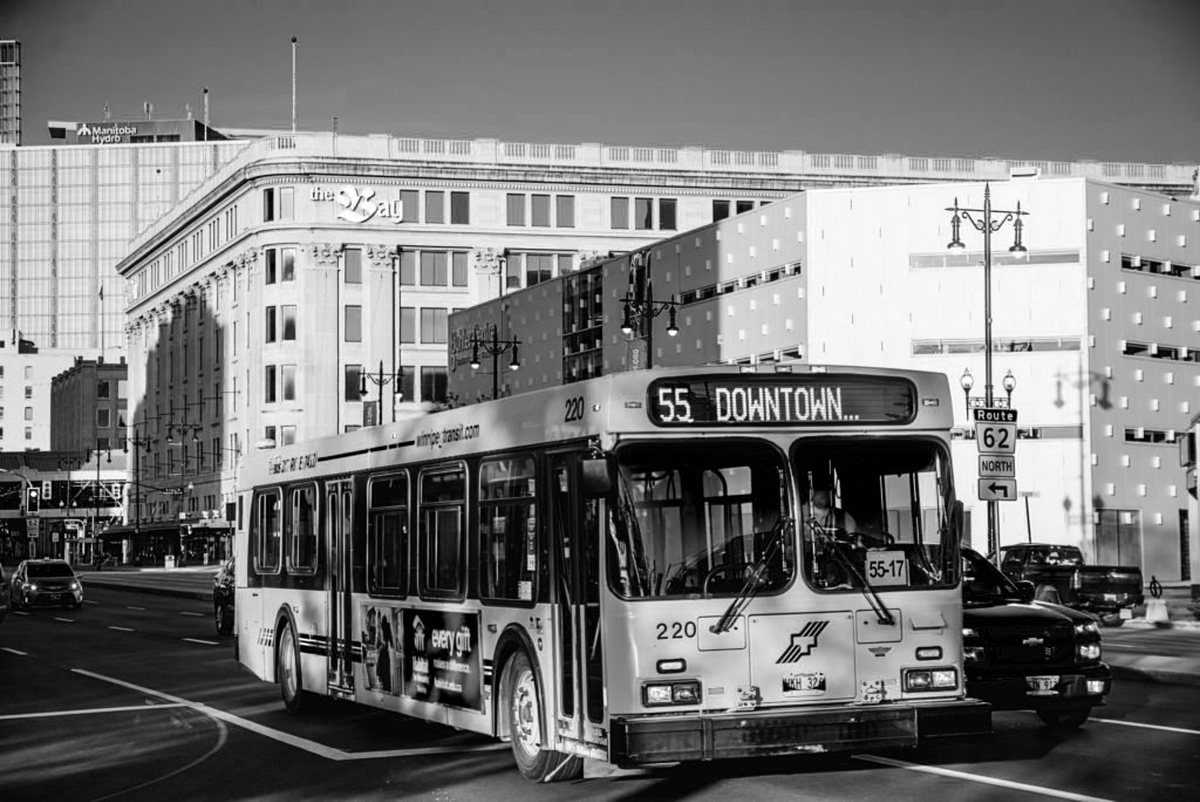
Welcome Aboard! | Winnipeg Transit
A Love Letter to Public Transit

One of my earliest memories is riding the Winnipeg Transit bus with my Mom, before I’d even started pre-school. We’d go on what I understood only as “adventures.” Though looking back, we were probably just running errands, maybe visiting the Munro Public Library in the strip mall where I’d make a beeline to the beige Windows 98 tower and matching CRT to play PBS Arthur games, or maybe check out another Mr. Men and Little Miss or Mercer Mayer’s Little Critter book.
But the bus itself. That was the real magic.
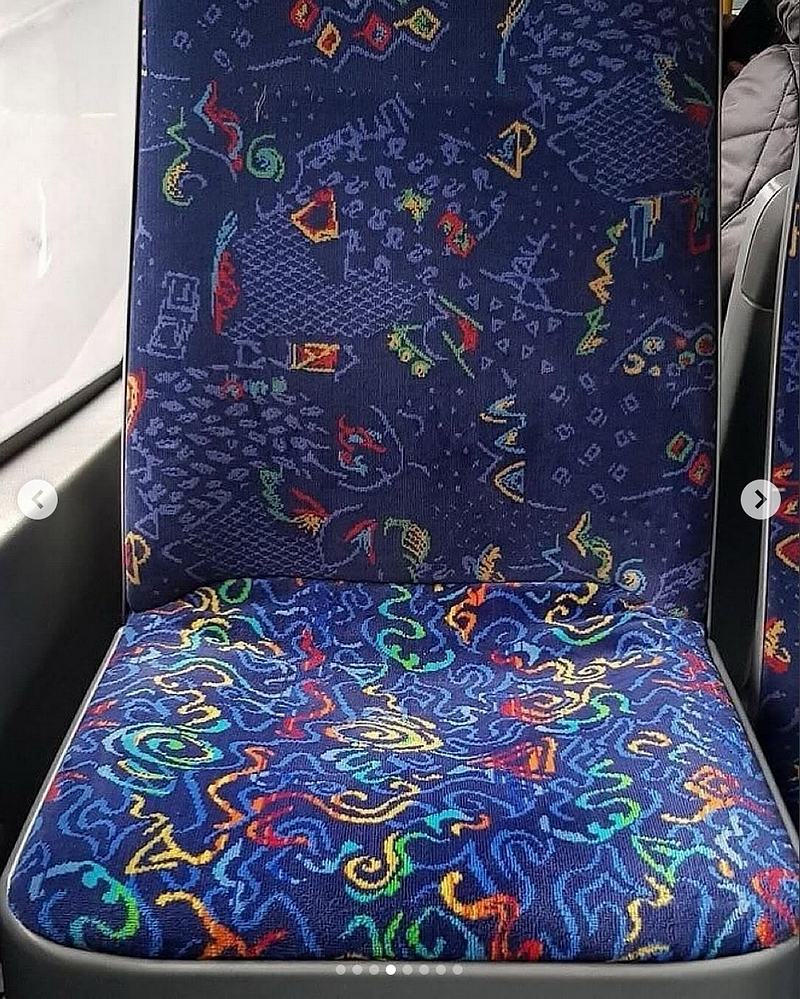
Massive vehicles, with seats upholstered in fun 90’s abstract moquette. You know, Memphis Group designs gone democratic, geometric shapes in turquoise and magenta that felt like sitting inside a Trapper Keeper. I’d greet the driver hello (Mom insisted), try to convince her we needed to sit all the way in the back (she sometimes agreed), and then the moment that made me feel like I controlled the universe: Pulling that bright yellow cord. DING! The sound of autonomy, of power, of a five-year-old telling a vehicle the size of a small house exactly when to stop.
Moving to Calgary only intensified this, with the C-Train’s red and blue lines spiderwebbing across all quadrants. That automated voice, monotone yet somehow warm, announcing each station. “Next stop: Sunnyside. Sunnyside Station.” The doppler effect of the train’s approach. The hydraulic hiss of doors. The texture of the yellow safety strip along the platform edge.
I know what you’re thinking. You’re about to list every legitimate criticism of public transit. The unreliability. The extended commute times. The social stigma. The tragedy of the commons. I get it. I do.
But nearly every complaint about public transit stems from one source, chronic underfunding. Calgary City Council recently approved $33 million to cover Calgary Transit’s revenue shortfall for 2025, but simultaneously approved over half a billion dollars for new suburban sprawl communities. The transit director literally used the phrase “really tapped out” when describing their situation. Only 10% of Calgarians live within walking distance of the primary transit network.
Fund it properly, and maybe—just maybe—things improve. Maybe I can even change your mind.
Part One: The Quiet Texture of Strangers
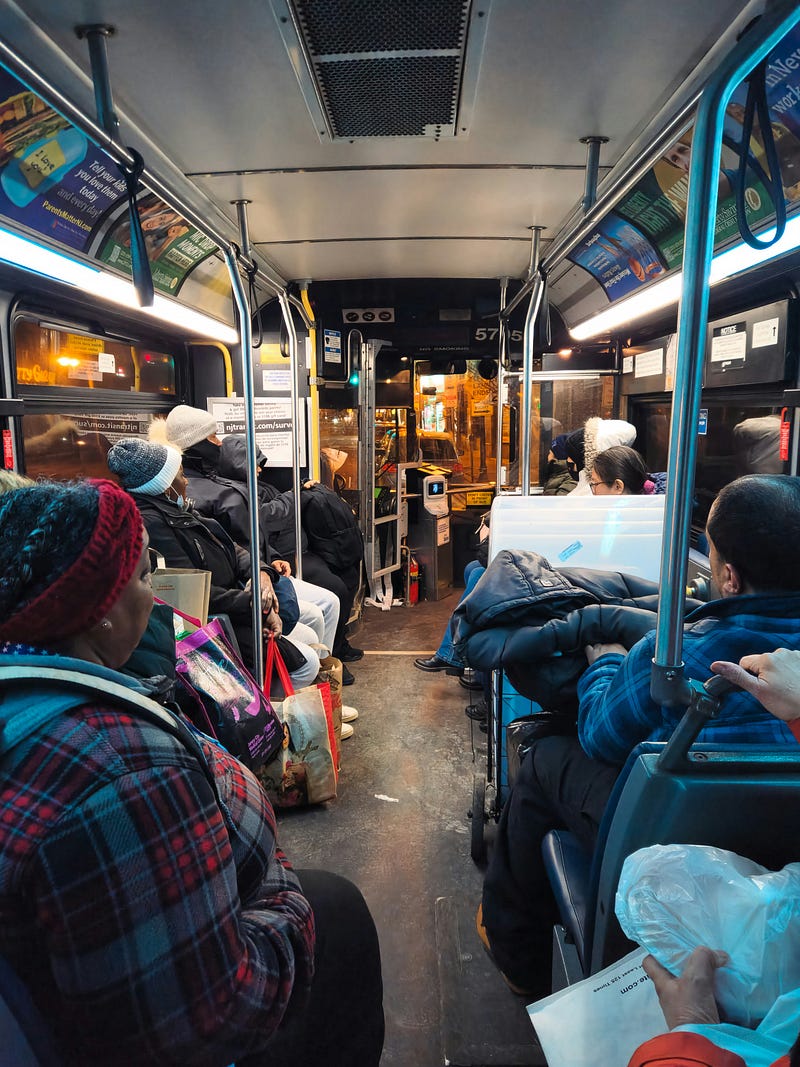
My mother taught me to pay attention. Not in a helicoptering, hypervigilant way, but in the way of someone who genuinely found other people interesting. She’d point out the way that elderly man carefully organized his grocery bags, lightest items on top. The teenager’s band shirt, Oh, that’s the Ozzy Osbourne, he’s good. The businessman’s thriller novel, Dean Koontz, that one’s scary.
There’s a richness to public transit which driving cars erases entirely. Call it sonder. The awareness that every stranger has a life as complex and valid as your own. You see people you’d otherwise never encounter. The elderly man with grocery bags at 2 PM on a Tuesday. The teenager with headphones, mouthing words to a song only she can hear. The businessman reading a paperback thriller, his tie slightly loosened.
Transit creates one of the last remaining spaces for meaningful interaction with strangers. I love watching regulars build rapport with drivers, those who take the same route at the same time every day, who’ve developed inside jokes I’ll never understand. I remember a woman once bringing her bus driver homemade cookies for his birthday.
There’s also personal freedom public transit provides, like reading a novel during your commute instead of white-knuckling through traffic. Listening to an entire album with your eyes closed. Watching the city scroll past the window like a film you’ve never seen before, noticing the mural on 17th Avenue that’s been there for months but you’d never spotted while driving.
The slow living public transit demands is revolutionary in a culture addicted to convenience. Yes, I’m one of those weirdos who genuinely loves waiting for the bus when there’s five feet of snow and the windchill drops below minus thirty. The world becomes so quiet. There’s solidarity with others waiting. We’re all in this together. Communal. I eavesdrop on conversations (I’m nosy). I watch what people are reading. In 2018, Japanese bus drivers in Okayama went on strike by continuing to drive their routes while refusing to collect fares. Free rides for everyone, hurting the company’s revenue without hurting passengers. That’s the kind of solidarity driving obliterates.
This entire dimension of human experience vanishes when everyone drives alone. In its place? Convenience. And sure, driving gives you more time for other things. But what are you doing with that extra time? Really? Scrolling? More work? The convenience we’ve gained has cost us the texture of being alive in public space.
Part Two: The Arithmetic of Danger
My mother rarely drove in Winnipeg. This was a choice, not a necessity, we weren’t wealthy. She chose the bus. And it was actually far safer for me.
Let me be direct, passenger vehicle death rates per 100 million miles are 60 times higher than buses. Sixty. Times. For every mile traveled, cars are 750 times more dangerous than commercial airlines. Driving a car is the single most dangerous thing most people do regularly.
This perception gap is structural and on purpose. Researcher Todd Litman explains that public transit creates “dread”, how we fear risks with low probability when they occur in confined spaces with strangers. Meanwhile, we underestimate the constant, grinding danger of being surrounded by two-ton metal projectiles piloted by drowsy commuters checking their phones.
Neighbourhoods oriented around public transit have one-fifth the traffic deaths per capita compared to car-oriented neighbourhoods. Traffic crashes cost American taxpayers $30 billion annually, with the total societal harm from motor vehicle crashes approaching $1.4 trillion. Not million. Trillion.
Yet we’ve built an entire continent around the assumption that everyone will drive. The 1956 Highway Act authorized 40,000 miles of highways, cementing America’s commitment to car infrastructure at the explicit expense of public transit and pedestrians. Car-centric planning drives up carbon emissions, raises household expenses by requiring car ownership, and perpetuates dangerous conditions for everyone who doesn’t drive.
But here’s where it gets complicated.
Part Three: The Safety We Don’t Talk About
I need to acknowledge my privilege here. I’m a man who finds comfort and solace on public transit, particularly late at night. This isn’t everyone’s experience.
I wonder now what my mother’s experience was. Did she ever feel unsafe on those buses? Did she ever have to deal with harassment I was too young to recognize? Did she choose seats strategically, map routes around danger, carry herself differently than I do now? We’ve never talked about it. Maybe we should.
Studies show that 64% of women in Mexico have experienced harassment on public transport, and up to 55% of women in the European Union report similar experiences. In the U.S., 75% of women surveyed reported experiencing harassment or theft while using public transportation, and 88% didn’t report it due to perceived indifference from authorities.
This is not acceptable. Full stop.
What frustrated me is that we’ve framed women’s safety on transit as if it’s an inherent problem with public space, when really it’s a problem of chronic underinvestment and misplaced responsibility. Some scholars argue that women-only cars place the burden of safety on women rather than addressing the systemic issues of perpetration and enforcement. That’s backwards.
Solutions exist, and they’re worth the price. Melbourne’s Secure Stations Program—better lighting, CCTV cameras, increased staff presence—reduced crime rates by 40%. Mexico City’s “Viajemos seguras” initiative created dedicated offices for reporting violence, trained security providers, and ran campaigns defining inappropriate behavior. Vienna simply surveyed women about their needs, then widened sidewalks, added ramps for strollers, and improved lighting.
These aren’t impossible asks. They’re choices about where we allocate resources.
And let’s be honest about the comparison point, even from a crime standpoint, public transit is generally safer than driving. You’re more likely to be a victim of violent crime in a car than on a bus. We just don’t perceive it that way because car violence happens in dispersed, isolated incidents rather than concentrated public spaces that make headlines.
Part Four: The Question of Convenience
My mother never seemed rushed to me. I realize now this wasn’t because she had unlimited time, I mean, she was working full-time and somehow managing to get a kid to the library and back. But there’s an inevitable pace when it comes to public transit. The bus came when it came. You planned accordingly. You brought a book.
How much convenience do we actually need? Seriously. How much has our quality of life improved by replacing the trip to Blockbuster with Netflix? Grocery shopping with delivery services? Physical music collections with Spotify? We’ve gained time, sure. Time we immediately fill with more work, more consumption, more screen time.
Driving allows you to do more things. But public transit allows you to be more present for the things you’re already doing. That’s not a small distinction.
Car-centric urban planning promotes sprawl, consuming more land per capita and necessitating extensive infrastructure that devours green spaces. In 2009, traffic congestion cost $87.2 billion in wasted fuel and lost productivity in the U.S. alone. And here’s a statistic that should haunt us: in Australia throughout the twentieth century, automobiles killed, injured, and maimed more people than war did to Australian soldiers.
We’ve normalized carnage because it happens slowly, individually, dispersed across time and geography rather than concentrated in a single traumatic event.
The infrastructure built isn’t neutral. Post-WWII zoning laws deliberately separated residential, commercial, and industrial zones, ensuring you couldn’t live above a shop or walk to work. Everything required driving. Car-oriented infrastructure was often delivered at the expense of poorer populations and ethnic minorities, cutting through neighbourhoods, eliminating pedestrian access to crucial amenities, erasing walkable communities in the name of automotive progress.
This wasn’t inevitable. It was lobbied for, legislated, constructed.

Part Five: The Memory Palace
I have such specific memories of childhood thanks to public transit. My mother holding my hand as we stepped off the bus. Heading home from errands, stopping at Zax Drive Inn. What I loved more than the burgers there was the arcade machine. The dinosaurs bubbled on the cabinet glass, blues & greens syruping under hum. Quarter-fed, the machine jingles a chrome face. I later learned the arcade game was called Bust-A-Move! I would candy-eye the rising orbs, my tiny syrupy fingers itching joystick, with Henderson Highway traffic-blurring outside.
This is all I knew. This is all I needed.
Public transit taught me how to exist in the world with other people. How to be patient. How to notice things. How to understand that my experience wasn’t universal, that the elderly woman struggling with bags needed help, that the crying child on the bus at 11 PM probably had parents working multiple jobs, that the man sleeping in the back corner might not have another warm place to go.
Cars abstract all of this away. They let us pretend we’re alone, that our choices don’t affect anyone else, that the infrastructure supporting our convenience doesn’t cost anything we should worry about.
Right now, Calgary is choosing between investing in its transit network or building more sprawl. The money exists. The question is what we value. Do we value the texture of shared public space, the environmental necessity of reducing car dependence, the basic accessibility that allows people without cars to participate in civic life? Or do we value the individualist fantasy of personal vehicle ownership regardless of its social, environmental, and human cost?
I know what my answer is. I learned it from my mom on those buses in Winnipeg, pulling that yellow cord, feeling the vehicle slow beneath my command, understanding, even then, that I was part of something larger than myself.
DING!
This is our stop.
Comments
To comment, please sign in with your website:
How it works: Your website needs to support IndieAuth. GitHub profiles work out of the box. You can also use IndieAuth.com to authenticate via GitLab, Codeberg, email, or PGP. Setup instructions.
Signed in as:
No comments yet. Be the first to share your thoughts!