How a Taylor Swift Lyric Gave Me an Existential Crisis

i. Prelude
The film canisters sit in a climate-controlled vault somewhere in Munich. A shot list is composed with over 450 camera positions. An hour of experimental colour tests performed, the film stock whirring through the camera, light and shadow dancing exactly as imagined.
This is all that remains of Alfred Hitchcock's unmade film Kaleidoscope. The master of suspense was reduced to tears when Universal executives, disgusted by the script, cancelled the project in 1968. The tests are said to be beautiful. The film would have revolutionized cinema technique. We'll never see it.
London After Midnight, starring Lon Chaney in 1927, now considered the "holy grail" of lost films, destroyed in the 1965 MGM vault fire along with hundreds of others, the silver nitrate burning at temperatures that could liquefy bone. Over 90% of films made before 1929 are gone forever. Think about that. Ninety percent. Not locked away in some archive—gone. Turned to smoke and ash. All those faces moving in lamplight, all those stories whispered in title cards, reduced to nothing.
And that's just the films that were made and lost. What about the ones never even filmed?
In 1942, Andrei Tarkovsky began adapting Dostoevsky's The Idiot. He died before it could be realized. Alejandro Jodorowsky's Dune, which would have featured Salvador Dalí, Orson Welles, Mick Jagger, with a soundtrack by Pink Floyd was killed before production began. Stanley Kubrick spent two years researching Napoleon, amassing 15,000 location-scouting photographs, 17,000 slides of Napoleonic imagery, historical advisors from Oxford. The studios wouldn't fund it. Too big. Too expensive. Historical epics were out of fashion at the time.
Then there's the yellow-tinted basement of the Auschwitz-Birkenau Museum, where Jewish prisoners' artwork sits in filing cabinets, claimed as property of the institution rather than the murdered artists who created them. Woodcuts made on New Year's Eve 1942. Sheet music composed in the Terezin ghetto. Plays performed in secret before the gas chambers. Julo Levin was a highly regarded artist until 1933, when the Nazis arrested him and forbade him to show his work publicly. Forced to instead work as a handyman at the train yard, he cleaned the blood from the wagons returning empty from the east.
How many other works have died in the thousand small violences of "no"?
ii. The Lyric
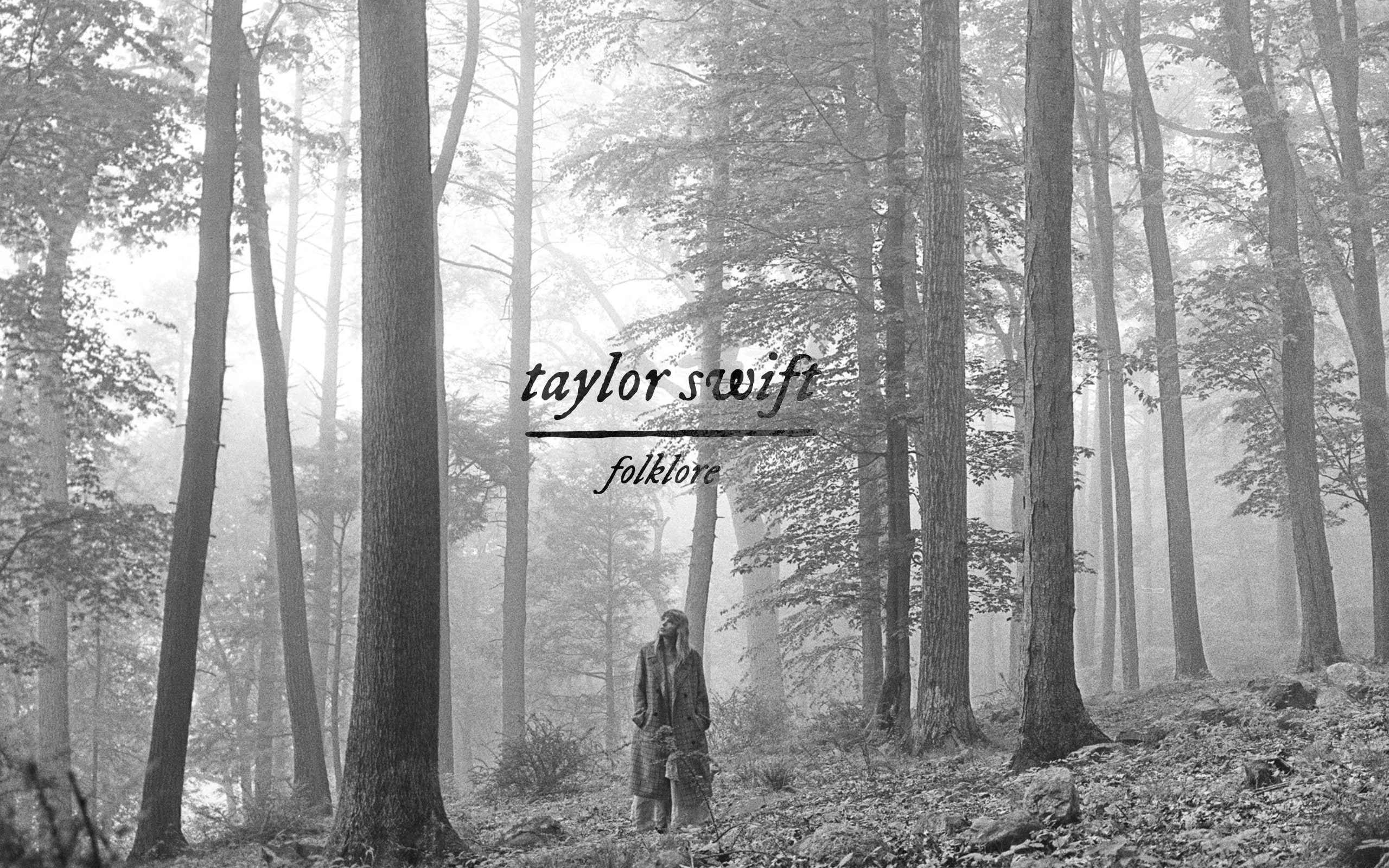
Yes, these are what I think about when I listen to Taylor Swift's "the one" from _Folklore _(her best album). There's a line that's been lodged in my skull like a splinter:
The correct interpretation of this line, according to Genius annotations, is about relationships. How the best love stories, like unmade movies, remain forever shelved, "trapped in the mythology of this idea." Swift is mourning a lost connection, trapped in romantic fantasy wondering what could have been.
But my brain, stubborn as always, refused the metaphor. It chewed on the words themselves, rolling them around like a stone in a shoe. I took it literally. What films have we missed?
How many would-be filmmakers never touched a camera? How many poets died with their best lines still unwritten? How many painters never picked up a brush because they were too busy surviving, because they were born in the wrong body or the wrong country or the wrong century, because someone told them no so many times that eventually they told themselves no? What creation is the world missing?
iii. The Gift of Creation
In The Gift: Creativity and the Artist in the Modern World, poet and essayist Lewis Hyde writes, "that a work of art is a gift, not a commodity. Or, to state the modern case with more precision, that works of art exist simultaneously in two 'economies,' a market economy and a gift economy. Only one of these is essential, however: a work of art can survive without the market, but where there is no gift there is no art."
Margaret Atwood, in her introduction to the 2019 edition, calls The Gift "the one book I recommend without fail to aspiring writers and painters and musicians." It explains "the core nature of what it is that artists do, and also about the relation of these activities to our overwhelmingly commercial society."
Hyde draws on Indigenous potlatch ceremonies, where goods were given away until the giver was hollowed out. He examines Walt Whitman's erotic generosity, his willingness to dissolve the boundary between self and other. He warns us, through Ezra Pound's descent into fascism, what happens when the artist becomes obsessed with market forces distorting their work. The central thesis is that moving art—the art capable of reviving the soul, delighting the senses, and offering courage for living—is received as a gift, regardless of whether we paid admission at the museum door.
iv. Gamble of the Harvest
When _I _create something, most of what comes out is unremarkable. Forgettable. I know this. Most of it won't be cherished by anybody or remembered fondly. My poems aren't Dickinson. My essays aren't Annie Dillard. My code won't revolutionize anything.
But I keep doing it. I keep going. I keep getting a little better. I keep building and improving and planting seeds in the garden—some will sprout, most will rot, and that's fine. That's the gamble of the harvest. That's the deal.
At some point, in a long while, there will be something of worth. I will eventually create something great. And I say this not from ego or delusion, but from pure mathematics. You apply overwhelming force and don't let up. You play chicken with your own doubts. Risk it all. The law of large numbers says that eventually, if you make enough things, one of them will be good. A few might be very good. And if you're lucky—if you're blessed—one might be great.
This is what I mean by the civic duty of the artist.
If anything, this goes beyond mere civility. We need to do everything in our power to let ourselves create because that's the point. Everything else,the day job, the survival, the performance of productivity, all of it is secondary to what we can passionately do, given enough time and effort.
It is a lot of work. It is probably the hardest work because it's what we're most psychologically barred from. The more important something is, the higher the stakes, the less likely we'll even start. The reality of failure paralyzes us from the gate.
Or we tell ourselves that making art is antithetical to survival. And in the grinding logic of capitalism? It often is. It can sound as though I'm speaking from a position of delusional privilege. But here's the truth that all the great religious traditions recognize: man cannot live on bread alone. We need meaning and beauty. We need those moments when something lifts us out of ourselves.
Without art—without the gifts we give each other through our creations—we're just biological machines processing inputs and outputs until we break down. With it, we become something else. Something larger.
This is the ethos of my purpose. I've been writing on Medium for ten years. Two hundred articles and counting across personal essays, literary criticism, Indigenous studies, disability representation, creative writing craft, digital minimalism. Most of it get double digits. I've self-published nine books, poetry chapbooks, essay collections, memoir. I founded Write Club, a creative collective in Calgary that's raised funds for literacy nonprofits and created space for marginalized voices. I've built 20+ open-source coding projects, Jekyll themes, Eleventy starters, static site generators. All of it freely given.
There's no money in this. It's probably one of the least lucrative ways I could be spending my time, measured in the currencies that supposedly matter. Dollars, followers, career advancement. I am not doing it for brownie points, either. I don't give a shit about salvation or redemption. I don't write because I think God is keeping score.
Art is gift, coming and going. It's a gift to the artist first, ask any creator about those moments when the work feels like it arrived from somewhere else, when the words pour out faster than you can type, when the solution to a problem appears fully formed in the shower. You didn't earn it exactly. You showed up, yes. You did the work. But the good parts, the parts that sing? Those feel gifted.
We are gift creatures. Our solidarity, our very humanity, comes from what we can give others.
v. The Pattern
Vincent van Gogh sold exactly one painting during his lifetime, to a close friend. Probably out of pity. He lived in grinding poverty with mental illness gnawing at him like rats in the walls. And he created nearly 1,000 works in his last two years. Today, his Sunflowers sells for $39.9 million. Irises for $53.9 million. Numbers that would have fed him for lifetimes. He dies at 37, a gunshot wound in a wheat field, never knowing.
Emily Dickinson published fewer than twelve poems while alive. She wrote 1,800. She retreated from the world so completely that she would speak to visitors only from behind a closed door, her voice disembodied and ghostlike. The people of Amherst knew her mostly as legend, as the woman in white in the big house who never came out. Her poems were discovered in a locked chest after her death, tied in bundles with ribbon, each one a small bomb of compressed language that would detonate across the next century.
Vivian Maier was a full-time nanny, died in 2009. Her street photography work was found by accident at an auction, stored in boxes, never shown in any gallery while she lived. Over 100,000 negatives. Now her photographs hang in major museums. Critics compare her to Helen Levitt and Robert Frank. But she saw none of it. She died unknown.
The pattern repeats. The pattern repeats. And repeats. The pattern repeats until you can't ignore it. We lose them. We lose them because genius is fragile and the world is hard. Because making art requires time and space and faith, and those are luxuries most people can't afford. Because recognition often arrives too late, if at all.
vi. 2026 is a Cultural Reset
"You know the greatest films of all time were never made" is obviously not about films. It is, somehow, about how we're living on this planet for a fragile, finite amount of time and we have something inert within us to give,_to gift. _We have skills, either by fluke or by hard, bloody-knuckle work. We owe it to ourselves and everyone else to cultivate those skills.
Not for recognition, or money. We do it because those unmade films haunt us. Because Vincent van Gogh should have lived to see people weeping in front of his paintings. Because Emily Dickinson should have known that her words would echo across centuries. Because every lost artist is a tragedy, yes, but also a warning_, This could be you. This could be me. This could be the person sitting next to you on the bus with a novel in their head they'll never write._
I refuse to be another ghost in that litany. I refuse to let fear or practicality or the sneering voice of "realism" silence what wants to be born through me.
This is what I'm trying to centre myself on for 2026. We're entering what feels like a cultural reset, a moment when we could tip toward darkness or tilt back toward light. To return to form. To trying. To a mustard seed of optimism that we can steer ourselves out of the apocalypse.
And you, reading this right now, are needed for this.
Not metaphorically. Not symbolically. You, specifically, with your particular gifts and strange obsessions and the things only you can make. We cannot have a bright, joyful future without you. I promise you that.
Because somewhere in you is something unmade. Maybe it's great. Maybe it's just good. Maybe it's weird and small and only three people will ever care about it. Make it anyway. Give the gift.
The world has lost too much already.