Image created by the author!
Why I'm Changing the License in Over 80 of My Code Repos After Talking to the Co-Creator of Fediverse

Like a lot of people new to coding and development, the amount of license options that were presented to me when I initialized my first git repository was confusing and overwhelming. Apache License 2.0, Mozilla Public License 2.0, Boost Software License 1.0? Just to name a few. I mean, we write code, we're not copyright lawyers.
There has been an effort made to make the process less confusing, such directing people to the site Choose a License, but dare I say, it's misleading.
Let me explain. (And don't worry, this applies to writers as well, read on.)
Introduction: Why Choose a License?
Let me start at the very beginning: why even deal with this and choose a license in the first place? The answer is, in my opinion, wonderful in how ideal and Utopian it is.
By default, when we create something and share it, the copyright is under exclusive copyright by default. This means that unless you explicitly include a license that specifies otherwise, nobody else can copy, distribute, or modify your work without being at risk of legal action. Even if you publish your code in a public repository on GitHub, while others can view and fork it, they technically don't have permission to use, modify, or share it for any purpose beyond that. But this is not what people choose when they create open-source code.
When you decide to have a public repository displaying your source code and choose an open-source license, you are making a declaration that you want your work to not only benefit you and the end-user, but everyone! You are allowing anybody to come by and tweak and build-upon the work you've done. Either to fork it into their own project, or to make a pull request and directly modify the codebase you began. Open source is about collaboration, about building on the shoulders of those who came before you, and letting others stand on yours.
It is principles like these that have allowed so much of the technology everyone uses to exist. So much of our modern technological infrastructure was created, and is reliant on, open-source software and its licensing. The Apache HTTP Server has been powering websites since 1995 and helped fuel the early growth of the World Wide Web. Linux runs on everything from smartphones to supercomputers. The web browsers we use, the encryption that keeps our data safe, the programming languages that power modern applications. All exist because developers chose to share their work under open licenses. Without open source, the internet as we know it wouldn't exist.
Free as in Free Speech, Not Free Beer?
There's another important distinction in the open source world that's often misunderstood: "free" doesn't necessarily mean "costs no money." When we talk about free software, we mean "free as in free speech, not as in free beer."
This distinction comes down to two different concepts: gratis (free of cost) and libre (freedom to use, modify, and share). You might have downloaded software that costs nothing, like Adobe Flash Player used to be, but you couldn't see how it worked, modify it, or share your improvements. That's free beer — nice to get, but it comes with no freedom.
Free speech, on the other hand, is about liberty. With truly free software, you have the right to:
- Run the program however you want
- Study how it works and understand its "secret ingredients"
- Redistribute it to help others
- Improve it and share those improvements so everyone benefits
It's this freedom that makes open source so powerful.
Permissible ≠ Copyleft
Now that we have the primer explanation out of the way, let me get to why I'm changing the licensing for all of my work.
Like a lot of people, when I took a look at the different license options, I saw that MIT made a lot of sense. It is short and simple, with the only condition being a license and copyright notice be used. Anybody can use my work for commercial use, patent use, private use, distribution and modification.
It is rather close to just releasing work under CC0 (which is similar to public domain, though public domain is not globally recognized the same way everywhere), except with it still being under your copyright and people being required to give you attribution.
Then, on IRC just yesterday, I had the immense privilege of talking to Dr. Matt Lee about licensing that opened my eyes to what I could be doing better.
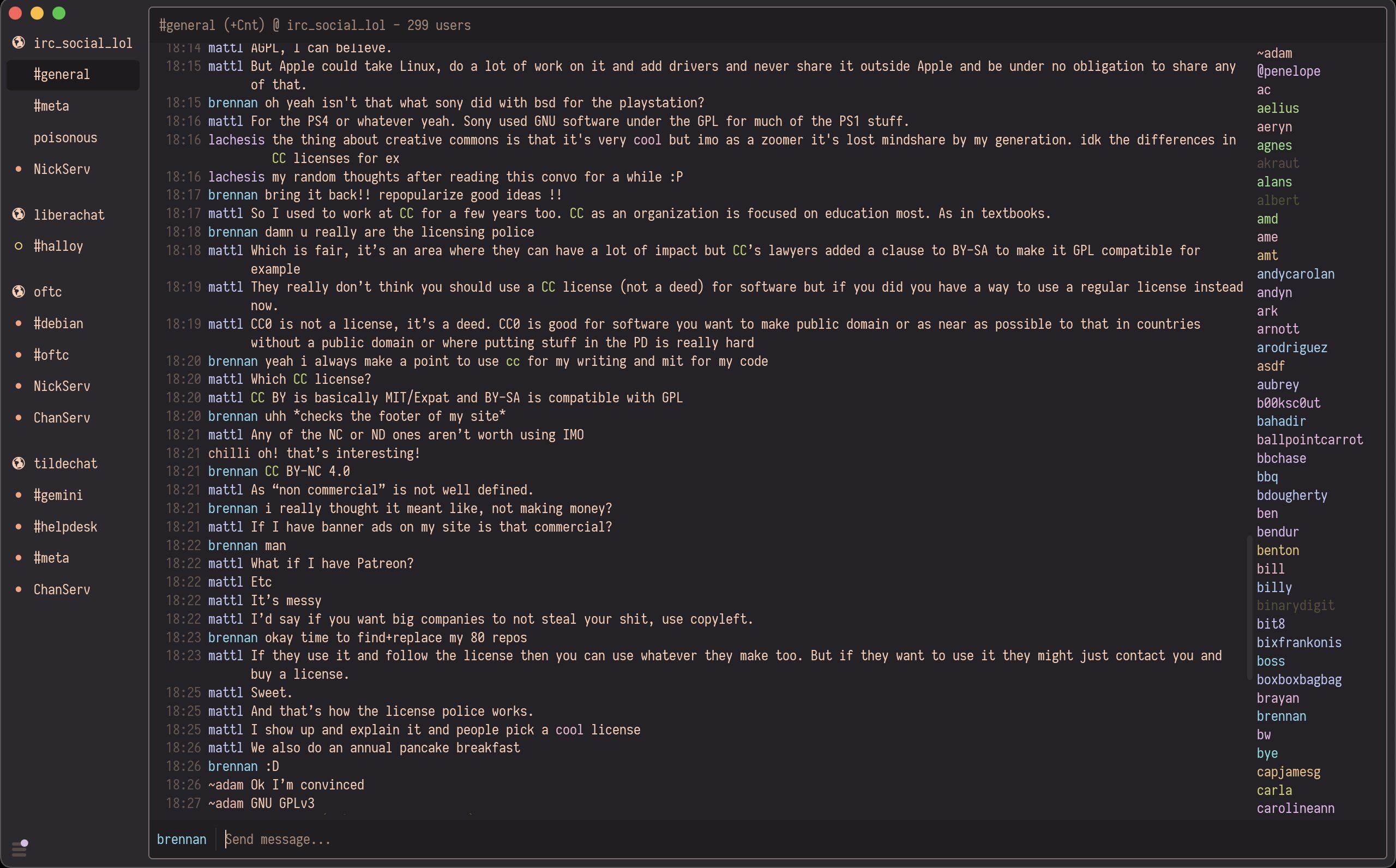
For those who don't know, Dr. Matt Lee is a public figure and technologist who co-created the Fediverse and co-founded Libre.fm and GNU social. He has worked as an advisor for the Social Web Foundation and has held positions at Creative Commons, the Free Software Foundation, GitLab, and Google. And there he was! Talking to me and helpfully explaining all this. Go hire him!
He (and a few others) explained to me that being as permissive as possible with your work is, in fact, not the answer. Look at what happened with FreeBSD and Sony's PlayStation. Sony took FreeBSD 9.0, a free and open Unix-like operating system, and used it as the foundation for the PlayStation 4's Orbis OS. Because FreeBSD uses a permissive BSD license (similar to MIT), Sony was legally allowed to take this decades of open-source development, build their proprietary system on top of it, and give nothing back to the community. They benefited enormously from free software without any obligation to share their improvements.
He went on to explain that if I wanted the best possible use-case for my work, then I wanted a copyleft license.
What is Copyleft?
Copyleft can be understood as the legal technique of using copyright law to ensure a work remains free. It reverses the restrictive nature of traditional copyright, instead of "all rights reserved," it's "some rights reserved, but these freedoms must be preserved."
When you apply a copyleft license to your work, you grant everyone the rights to use, modify, and distribute it. But there's a catch! If they modify your work and distribute it, they must release it under the same license. The code and the freedoms become legally inseparable.
This creates what some call a "viral" effect. If a company wants to use your copyleft code in their product and distribute that product, they have to make their entire derivative work available under the same open license. They can't take your free code, add their improvements, and then lock it away as proprietary software.
The strongest copyleft license that's popular to choose is the GNU Affero General Public License v3.0, or AGPL license.
It is very similar to the much more popular and well-known GPL license, but the "Affero" adds the crucial caveat that closes what's called the "network loophole."
With GPL, corporations only have to share their source code if they distribute the software. But in the modern age of Software as a Service (SaaS), companies can modify open-source code, run it on their servers, and let people access it over the internet without technically distributing anything. The AGPL requires that even if you're just running the software as a service and users access it over a network, you must make your source code available. This means that corporations who would use your work even in their own private servers would have to freely contribute their modifications back to the open source community.
What about for Writers? Creative Commons
I'm a writer in addition to being a programmer, and I neatly separate the licensing of my written prose content from my code with the use of Creative Commons.
Creative Commons (CC) is an international nonprofit organization that provides free, easy-to-use copyright licenses that give creators a standardized way to grant permission for others to use their creative works. Founded by Lawrence Lessig in 2001, Creative Commons was created to address the tension between our ability to share digital works globally and the restrictive nature of traditional copyright law.
Unlike software licenses, CC licenses are designed specifically for creative works like writing, photos, music, and art. They use a simple system of license components:
- BY (Attribution): Credit must be given to the creator
- SA (ShareAlike): Derivative works must use the same license
- NC (NonCommercial): Only non-commercial uses allowed
- ND (NoDerivatives): No modifications allowed
Now, similar to how I thought I was doing well enough by choosing MIT for code, I was using CC BY-NC for my writing. But Dr. Matt Lee explained to me how this, too, is problematic. Sure, in theory it might be a good idea to declare people can't use my work for commercial use, but what exactly is commercial use? To quote Dr. Lee directly: would banner ads on a site count? What about if they have a Patreon?
These concepts which I thought were well-defined simply aren't. The "NonCommercial" restriction is notoriously vague and can create legal ambiguity. And so, the best choice I have is parallel to AGPL, which is CC BY-SA, which means people simply have to utilize the same license if they're using my work.
Why Any of This Matters
To be honest, I'm used to seeing creatives sometimes put a strict copyright notice on their work, despite freely sharing it on the Internet. Maybe there will be intricate watermarks or a paywall (this article itself is paywalled, for instance) or something else.
I am a vocal advocate that artists need to get paid and recognized for their work, but to try and use copyright as a tool to make that happen is antithetical to what art is. The subculture of programming has figured this out. Give your work out freely, let others remix and take heavy inspiration and create better.
Remix culture has existed for as long as humans have created art. From folk tales being retold and modified across generations, to hip-hop artists sampling and remixing beats to create entirely new songs, to fan communities creating transformative works. Culture has always been about building on what came before. Sites like ccMixter and Freesound host thousands of Creative Commons-licensed audio samples that artists use to create new music. The entire open clip art movement provides free artwork for anyone to modify and build upon.
Wikipedia, one of humanity's greatest collaborative achievements, is built on CC BY-SA licensing. If your work is under that license, it can end up being immortalized on Wikipedia.
Really though, there is nothing the world needs more right now than community and art. We need to embrace copyleft as much as possible. There is no better fertilizer for our culture, no better protection against the increasingly hostile anti-intellectualism invading nearly every aspect of our lives.





Comments
To comment, please sign in with your website:
How it works: Your website needs to support IndieAuth. GitHub profiles work out of the box. You can also use IndieAuth.com to authenticate via GitLab, Codeberg, email, or PGP. Setup instructions.
Signed in as: