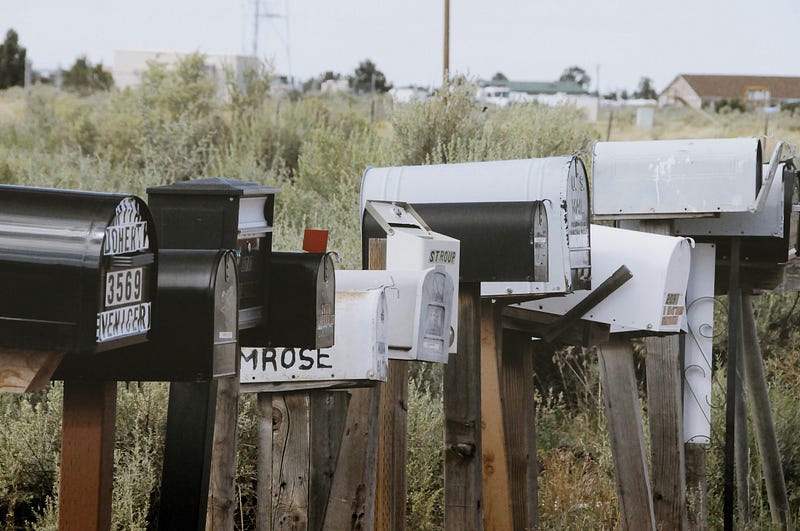
Photo by Yannik Mika on Unsplash*
Medium vs. Substack
In the quiet weeks since leaving campus behind, I’ve found myself in that strange liminal space familiar to anyone who’s completed a significant chapter of their life. The graduation gown remains unworn, commencement still weeks away, my apartment half-packed with cardboard boxes bearing cryptic labels. Books—Poetry. Textbooks—Theory. Notebooks—Write Club. Physical artifacts of four years distilled into categorized containers. What remains when you strip away student identity, leadership roles, and familiar routines? I find myself constantly taking inventory, counting what I’ve accumulated beyond the diploma that will arrive in the mail.
Platform Shifts: Why Substack?
After a decade of posting on Medium, I’m transitioning to Substack for several reasons—both practical and philosophical.
As I’ve written about in the past, Medium served me by providing a clean, distraction-free writing environment. I began by writing short pieces on my breaks while being a hospice cook. I could publish occasional reflections without commitment to consistency. The algorithmic approach to distribution never quite aligned with my goals, though. The truth? The platform prioritizes virality over community, reward-hacking over depth.
Substack offers a different model—one built around direct relationships with readers rather than feeding an algorithm. Consistency is encouraged through the newsletter format while allowing for the long-form, substantive writing I value. Most importantly, it creates space for the kind of literary citizenship I want to practice—writing that exists in conversation with readers rather than chasing engagement metrics.
This isn’t a technical shift but a conceptual one: moving from writing as performance to writing as correspondence. Each essay becomes a letter to specific people rather than content cast into the void hoping for clicks. It’s writing with responsibility to a community rather than the platform’s incentive structure.
Breaking Down Platform Differences
When choosing between Medium and Substack, there are several key differences writers should consider:
Audience & Community
Medium touts a massive internal readership—around 60 million monthly visitors according to Medium’s own reports. Its algorithmic “recommendations” and publications make it easy for new writers to surface to interested readers based on user interests and reading behavior. Writers report Medium as a “well-lit path in a forest,” offering SEO benefits, networking with other thoughtful writers, and a low barrier to entry for beginners.
Substack, by contrast, centers on subscriber-driven newsletters. Its audience grows more slowly: writers must often turn casual readers into loyal paying subscribers through email lists and community outreach. As one writer observed, “In two months on Substack, I gained only 47 subscribers, but enjoyed the ability to connect directly with readers.” Substack readers expect personal, niche content (e.g. specialized newsletters), whereas Medium’s readers expect broader essays or magazine-style posts.
Medium appeals to explorers and experimenters seeking broad exposure, while Substack suits those building a dedicated, niche audience.
Monetization Models
Medium’s Partner Program pays writers based on engagement: you earn from the time paying members spend reading your articles, as detailed by Medium. This means it’s free to start, but income depends on how much time Medium members spend reading your stories, as well as positive interactions like claps, highlights, and comments. Writers can also earn more through Medium’s Boost Bonus, where selected stories receive wider distribution. Notably, Medium discontinued its referral program in 2023, and as of April 2025, it no longer provides payouts for any legacy referral earnings. Income remains variable, influenced by Medium’s algorithm, member engagement, and content distribution.
Substack lets writers set monthly or annual subscription prices for newsletters. Substack takes a flat 10% fee, and writers keep all revenues above that (after paym ent processing), according to Beehiiv’s analysis. In practice, Substack offers more straightforward, direct income: readers simply pay the creator. As one blogger notes, “Substack monetization is straightforward: you set a subscription price and Substack takes 10%.”
Medium’s model can pay well for viral or highly engaged posts, but many writers turn to Substack for a steadier subscription revenue, especially when building a career around consistent content creation.
Ease of Use & Growth Potential
Medium is easy to start: just publish an article and let its discovery engine work for you. Its algorithm rewards consistency, so even new authors can gain traction without an existing following as noted by Beehiiv. For example, if rapid audience growth is the goal, “Medium’s algorithm may offer the easiest route” to new readers.
Substack requires more upfront marketing: authors must actively promote each newsletter issue and grow their list. Its growth is slower but more organic: readers who subscribe on Substack are highly engaged. One writer observed that after a year on Medium he had ~1,000 followers and steady earnings, while two months on Substack brought only 47 free subscribers—but he enjoyed Substack’s personal community vibe.
Culture & Communication Style
Medium’s culture tends to be communal and experimental. Its publications (thematic group blogs) feel like online magazines; commentary and networking are common. Writers describe Medium as having a “built-in community” that thrives on comments and idea-sharing.
Substack’s tone is more intimate and focused. Many newsletters feel like letters from an independent journalist or thinker—there is less “social” interaction but a stronger 1-to-1 reader relationship. As one blogger put it, on Medium he connected via SEO and thoughtful writers, whereas on Substack he “enjoyed the community vibe and the ability to connect directly with readers” according to a writer who uses both platforms.
Medium offers breadth and discoverability; Substack offers depth and personal connection.
The Piecemeal Approach: a Digital Garden
Not everything belongs in a newsletter. Different thoughts require different vessels. I’m developing what I call a piecemeal approach to writing—a ladder of forms that allows ideas to find their appropriate expression:
First come the fragments on Bluesky—observations, questions, lines of poetry still finding their form. These aren’t “content” but thinking-in-public, the literary equivalent of sketches on napkins.
These fragments sometimes coalesce into “microessays”—250–500 word explorations posted to Tumblr or LinkedIn, depending on their nature. Too substantial for social media but not yet fully developed essays, these serve as bridges between fragmentary thinking and structured argument.
The most promising ideas graduate to Substack articles—the 1,500–2,500 word explorations that form the core of my writing practice. Here I can develop ideas with nuance, bring in research, and craft language with care.
Finally, some articles reveal themselves as chapters of future books, growing beyond their original boundaries to become part of larger projects.
This ecosystem allows ideas to evolve organically rather than forcing every thought into the same container. It creates multiple entry points for readers while giving me permission to work at different scales.
This approach aligns with the concept of a digital garden, where ideas are cultivated over time, allowing for continuous growth and refinement. Unlike traditional blogs, digital gardens are non-linear and interconnected, resembling a networked collection of evolving notes rather than a chronological series of posts. As Vivian Qu describes, they are “a networked collection of ever-evolving notes,” emphasizing the importance of growth and change in the writing process.
By adopting this methodology, I create a space where ideas can be planted as seeds and nurtured into fully formed thoughts, much like tending to a garden. Inviting readers to engage with the evolution of ideas, witnessing their development from inception to maturity.
Setting Up a Sustainable Writing Practice
The transition from student to independent writer requires more than just platform selection—it demands intentional systems for sustainability. As I establish my post-academic writing practice, I’m focusing on several key elements:
1. Consistent Publication Schedule
Readers value reliability. I’m committing to a monthly newsletter on Substack, published at the start of the month. This regular cadence creates accountability for me and predictability for readers. The schedule is ambitious enough to maintain momentum but realistic enough to sustain over time.
2. Diverse Revenue Streams
While passion drives the work, practical considerations matter. I’m developing multiple income sources related to my writing:
- Substack subscriptions for those who wish to support the newsletter directly
- Soft-launching Patreon/Ko-fi for additional community features and personalized support
- Book sales through Amazon and Gumroad for my existing poetry collections
- Freelance services including manuscript feedback and writing consultations
This approach reduces dependence on any single platform while allowing readers multiple ways to engage according to their preferences and means.
3. Community Building
Writing thrives in community. Beyond publishing content, I’m creating spaces for genuine exchange, transforming the writing practice from monologue to dialogue, creating sustainability through meaningful connection:
- Comments sections that I actively moderate and participate in
- Monthly video discussions for paid subscribers to explore topics in greater depth
- Collaborative writing projects that invite reader participation
- In-person events when geographic proximity allows
Support Structures: Patreon and Ko-fi
Sustainability requires infrastructure. While I’m soft-launching Patreon and Ko-fi platforms, I want to be transparent about what these spaces offer and why they matter.
Rather than treating these as tip jars, I’m designing them as extensions of community—places where those who find particular value in my work can access additional resources while supporting its continuation. This includes author commentary on published work, manuscript feedback sessions, a small-group book club exploring texts that inform my thinking, and one-on-one writing consultations.
My qualifications for offering these services stem not just from formal education but from practical experience: three years leading Write Club workshops, editing our anthology, mentoring emerging writers, and publishing eight collections of my own. I bring technical knowledge of craft alongside sensitivity to the particular challenges faced by writers from marginalized backgrounds.
It could be argued—especially by me—that this is monetizing what should be freely available. But this creates sustainability for me for deeper engagement. The core of my writing—the essays, poems, and process documentation—remains accessible to all. The paid tiers simply offer more direct access and personalized attention for those seeking it.
The Books Already Written
As I begin this new chapter, I don’t start empty-handed. The past years have yielded tangible creative output—eight poetry collections available through Amazon and Gumroad. These books trace development as both writer and person:
The Dogwood Verses collects a decade of early work, showing the raw material from which my voice emerged. Selected Essays & Prose gathers my non-fiction explorations across the same period. Holy Waterfall: 16 New & Selected Poems for Mohkínstsis akápiyoyis & the Red River marks my first serious engagement with Indigenous identity and place-based writing. The Weight of Yr Heart explores love and connection through intimate lyrics. Most recently, Your Brother’s Keeper: A Love Letter to Dostoevsky and The Reaper and Her Sickle represent my more experimental work, engaging with literary tradition while pushing into new territory.
These collections are documentation of a journey already underway. The foundation upon which this next phase builds—evidence that following through is possible, that words accumulate into bodies of work when given consistent attention.
Looking Ahead
Platform decisions ultimately serve larger creative goals. As I navigate this transition, I’m keeping sight of what matters most: creating meaningful work that serves both artistic and community purposes. The shift to Substack isn’t about chasing trends but about aligning tools with values—finding the right container for the work I’m called to do.
If you’ve resonated with my journey so far, I invite you to join me in this next chapter. Subscribe to the newsletter, explore the books, engage with the conversations. This isn’t my story alone but part of larger narratives about how we make meaning together through language.
Comments
To comment, please sign in with your website:
How it works: Your website needs to support IndieAuth. GitHub profiles work out of the box. You can also use IndieAuth.com to authenticate via GitLab, Codeberg, email, or PGP. Setup instructions.
Signed in as:
No comments yet. Be the first to share your thoughts!