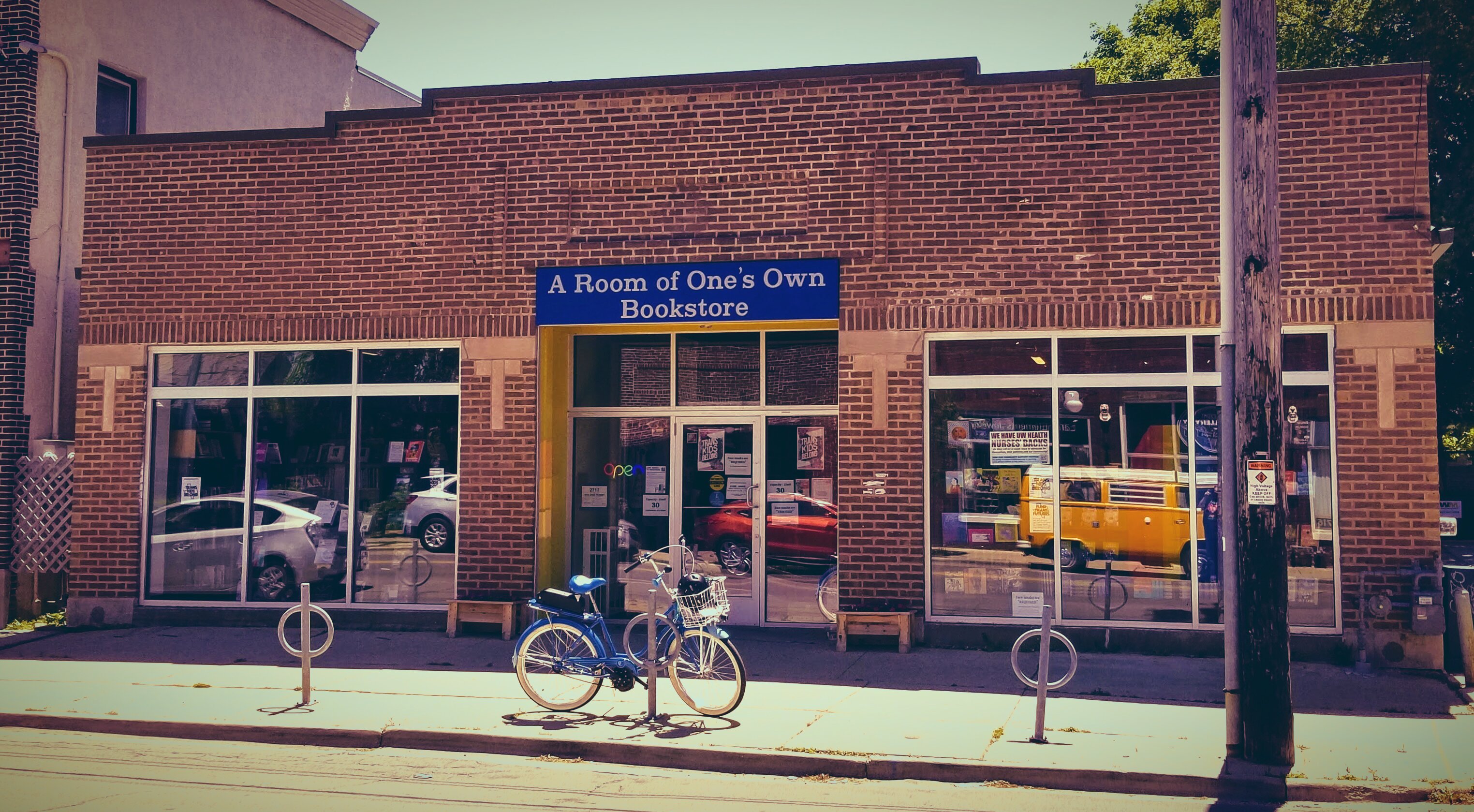
The front door of A Room Of One's Own bookstore in Madison, Wisconsin, United States | Source
A Room of One's Own in 2026 in 6 Parts: The Domain, the Material and the Immaterial

The Riddell library emptied as evening settled into night. My screen continued to glow in the half-light, the small moon above me through the glass pane. There's still many unwritten pages. It's March 2025. My final year studying literature, and there at the end, Virginia Woolf teaching me the most important lesson.
Nearly a year has passed since I graduated with my bachelor's of arts degree, majoring in English Honours, after a winding path brought me to Mount Royal University. And it's also been nearly a year since I first began writing this essay you're reading. I was in the final throes of my undergraduate career, taking a second-year introductory course I forgot to take much earlier. The circularity feels appropriate. I sat there, on campus at, still asking the burning questions about what exactly literature should be.
I'm sharing this piece publicly because I believe academic work shouldn't die behind university paywalls and gather dust in submission portals. Scholarship should be made accessible for the digital commons.
This essay feels relevant now, too, because I'm writing in public spaces, and I certainly value the claim of ownership and identity in these times where all is rented and leased and borrowed.
So, here is a meditation on Woolf, with a year's worth of revisions. I'm still trying to write with her kind of courage that allows consciousness to spill onto the page without apology.
For those unaware, Virginia Woolf pioneered and popularized stream-of-consciousness writing. She re-imagined writing as capturing life itself in messy immediacy rather than a distant, safe bystander witness. She wrote and physically engaged with her world, walking the street of London, the food and the people, feeling her body exist in space, rather than a disembodied intellect. I would even go as far as to say that our understanding of traditional blogging is largely owed to her and writers of a similar nature.
When Woolf wrote the essay A Room of One's Own in 1929, her argument was deceptively simple: "a woman must have money and a room of her own if she is to write fiction.".
Nearly a century later I am asking: what does the room look like now? The answer is infinitely more complicated than Woolf could have ever comprehended.

1. The Domain
First, let me make a direct tie to this with the IndieWeb. In the early 2010s, the University of Mary Washington launched "Domain of One's Own," to give students their own web domains and hosting, free of charge while at university, allowing the construction of "personal cyberinfrastructures." Students control;ed their own data, designing their own digital identity to create a meaningful online presence—regardless of whether it was academic, professional, or personal.
Anybody who's been in post-secondary education knows how Learning Management Systems annoyingly lock students into disposable, temporary course shells. Martha Burtis explained in her keynote, "Making and Breaking Domain of One's Own", how the institution had "abandoned the nascent spaces that might have let us continue to explore the Web as a flexible, open, and powerful platform".
Domain of One's Own recognized that, whether we like it or not, digital spaces are increasingly where we live our lives, and [we have a civic duty to teach students how to operate within these spaces, and that these platforms are coded spaces, built by humans with (sometimes maligned) business goals and political opinions.
My site, https://brennan.day, is my room. My corner of the Internet where I control infrastructure and my words persist independently and freely. But as much as I love this digital update to Woolf's vision, it doesn't end there.
Oh, were it so simple.
2. The Room of Colonial Violence
Alice Walker, most known for her novel The Color Purple wrote in her collection In Search of Our Mothers' Gardens, a challenge of Woolf's premise by asking "what then are we to make of Phillis Wheatley[1], a slave, who owned not even herself?" Walker sternly reminds us that the room has implicit leisure, a locked door, and an assumption of property ownership. It was itself "bought with blood money," built on colonial expansion and the exploitation of women in India and Africa. The white woman writer's economic freedom that Woolf celebrated came at others' expense. And that exploitation has only become more and more deep-wounded.
Gloria Anzaldúa offered a more radical revision in her "Letter to Third World Women Writers." She advises we wholly "forget the room of one's own. Write in the kitchen, lock yourself up in the bathroom. Write on the bus or the welfare line, on the job or during meals, between sleeping or waking. I write while sitting on the john." For Anzaldúa and countless writers who cannot afford the luxury of dedicated creative space, the room is a fantasy. The room is stolen moments and resilience.
Woolf's vision and the material realities of marginalized writers must be reckoned with. For in 2010, VIDA found that between 3 to 5 men were being published or reviewed for every one woman in leading magazines.
And what do you think happened in 2020 when the room was suddenly populated with many?
3. When the Room Collapsed / Fragile Spaces
The pandemic revealed fragility in virtual and physical rooms. When COVID-19 forced the world into lockdown in 2020, women writers found themselves without that proverbial room. Inside Higher Ed published "No Room of One's Own," documenting how submissions authored solely by women scholars declined sharply as domestic responsibilities. Childcare, homeschooling, emotional labour—these fell disproportionately on women's shoulders.
The (ongoing) pandemic reshaped work-from-home dynamics and destroyed boundaries between personal and creative space. Many women, especially mothers, juggled unpaid labour with writing careers in the same physical space, the same hours, the same breath. The room collapsed under the weight of everything it was asked to contain.
One writer described how "in crowded living conditions generated by the pandemic it is hard to find that 'room of one's own'" that Woolf declared essential. Another writer, perhaps with more privilege or less obligation, carved out writing time through "M.M.M."—meditation, morning pages, and movement, feeding on beauty in the midst of fear.
4. "It's a Mistake to Consider the Room Without All of Its Entanglements"
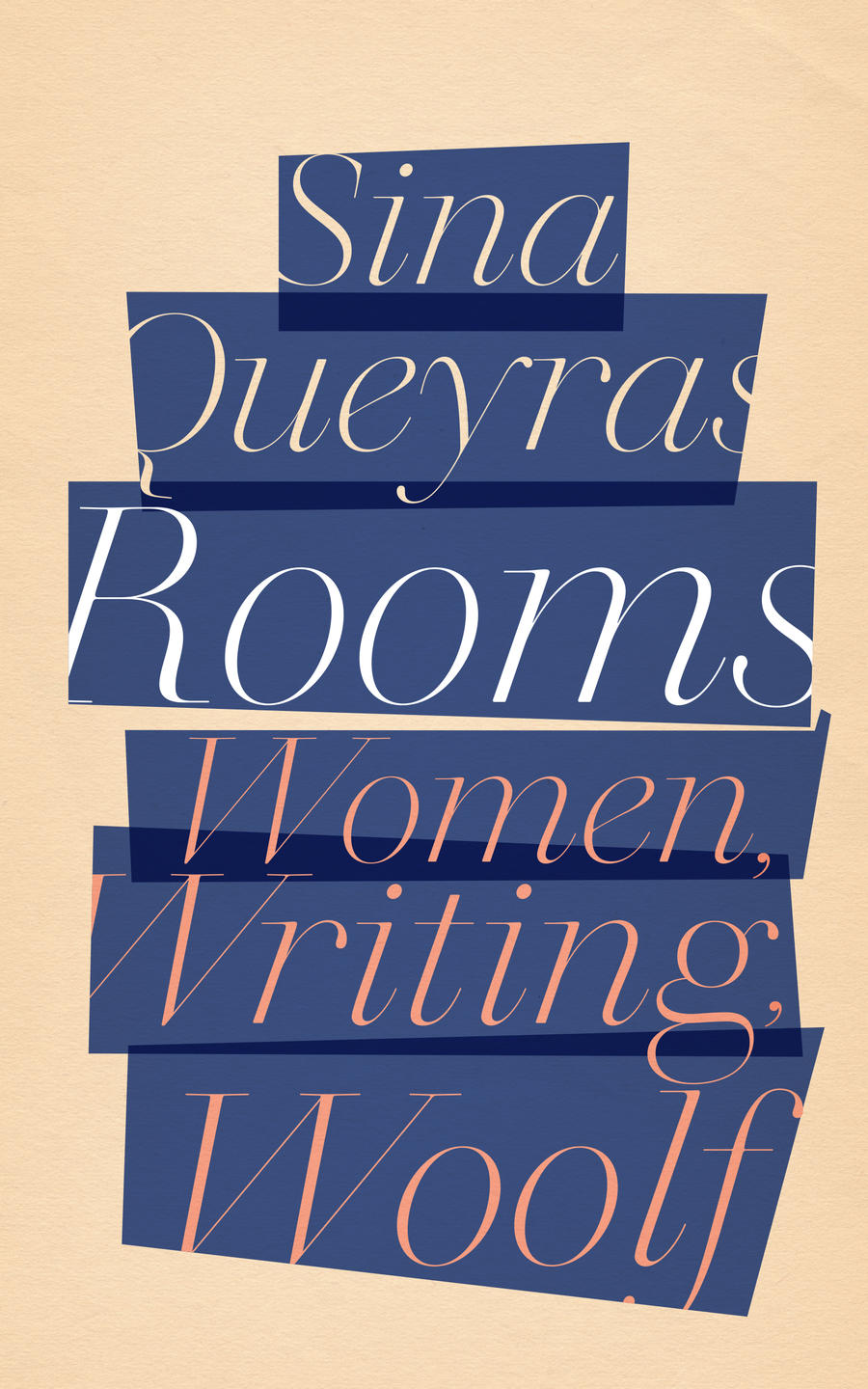
Sina Queyras, a Montreal-based Queer writer and professor, published Rooms: Women, Writing, Woolf in 2022. A genre-bending memoir using Woolf's A Room of One's Own as a touchstone for their own life. Queyras offers both an homage to and provocation of the idea of a room of one's own at the centre of a literary life. For the room is never neutral. It's shaped by who had to be displaced for you to afford it. Marked by the violence you fled to get there. Haunted by who you become when you close the door.
Queyras writes about moving from "a life of chaos to a life of the mind, and from a very private life of the mind to a public life of the page." The process of how rooms literal and figurative, complicating and deepening our understanding of what it means to create space for oneself as a writer, refusing any glib association of Woolf's famous "room" with easy freedom.
For Queyras internalized the room entirely, wriitng "the room is in me." Not a physical space you can lock, but a psychological capacity you carry. A way of being in the world. I have a right to think my own thoughts, speak my own words, claim my own space.
I think of my own experience building Write Club, through Berry House, through my writing on brennan.day. The room is never in isolation. We are looking for enough space to breathe, enough quiet to think. But also—crucially—enough porousness to let community in. The room is permeable. The room is relational. And sometimes, the room is a dance floor.
5. A Dance-Hall of One's Own: Womonspace and Queer Rooms
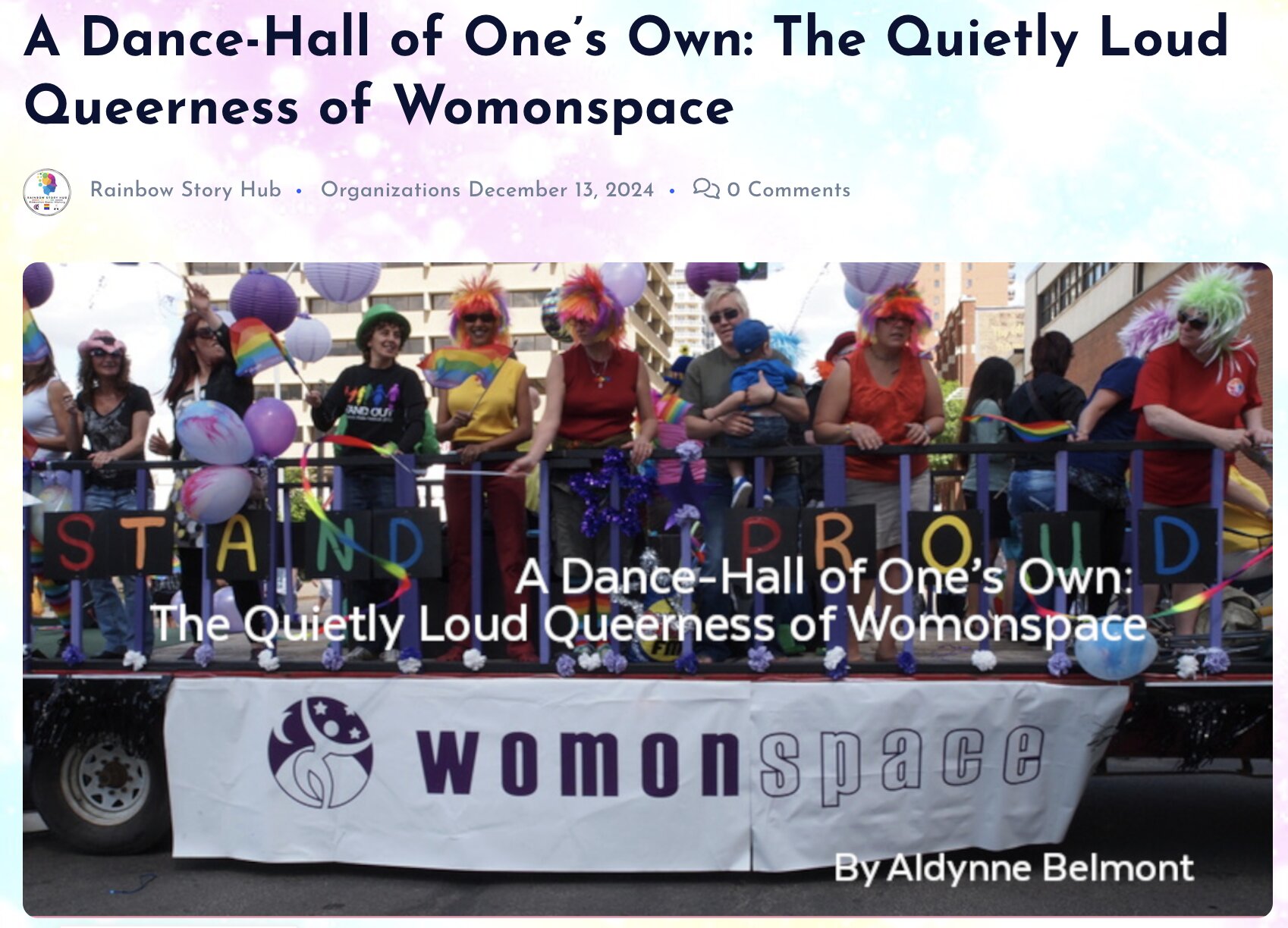
From 1981 to 2018, Womonspace was Edmonton's longest-running social, recreational, and educational society created by lesbians for lesbians. It can arguably be called one of Edmonton's most successful and impactful 2SLGBTQ+ organizations for its contribution to building Edmonton's lesbian community over its 37-year run.
The story begins with a gap, a lack, a hunger for space. Two women, Jeanne R. and Ann E., counsellors at Gay Alliance Toward Equality (GATE), were inundated with complaints about the absence of a lesbian social scene and decided to do something about it. Not with petitions or protests (those would come later), but a party. A big one. A dance at Odd Fellows Hall in September 1981. No pretense or politics. Just an opportunity for women to show up, drink something strong, and move their bodies to music.
The dance was a success, a glorious, sweaty hit. And suddenly, everyone knew Edmonton's lesbians needed a space of their own.
Over the years, Womonspace offered a wide variety of activities and a monthly newsletter called Womonspace News, providing members with a forum to learn with and from each other by sharing poetry, art, book reviews, and thoughts on lesbian spirituality.
And this matters, because lesbian bars and spaces have almost entirely disappeared. There are only 36 remaining lesbian bars in the United States with 25% located in New York, and there are virtually none left in Canada. Womonspace held its ground for 37 years.
For the room is collective and embodied. The room is claimed through movement, through music, through the simple radical act of existing together in public space.
Write Club was never really about workshops, rather, it was about making space for emerging writers and marginalized voices, and for those who'd been told their stories didn't matter. Berry House isn't really about web development, rather, it's about helping people claim their own domains, build their own spaces on the web, and escape the platform monopolies forcing us to be locked in their walled silos.
6. The Room Now?
As I sit in my Killarney home, a year out from graduation, I'm building my webdev practice and writing daily on my own domain. I understand Woolf's room as both promise and provocation.
The room is: The laptop, the domain, the Do Not Disturb notification setting, the writing group, the community centre, the childcare, the voice memo app. The room is both "a space between four solid walls" and "a free psychic and utopian space of the imagination, a virtual room." It's material. Money, time, physical space. It's immaterial. Permission, confidence, the belief that your voice deserves to be heard.
Woolf knew the room wasn't mere architecture, nor lock-and-key. The room is autonomy. Agency. The radical act of claiming that your interior life, your particular way of seeing, your words, deserve space and volume in the world.
The room is an ongoing negotiation. It's the domain I claim online, yes, but it's also the acknowledgment that I write on stolen land, that my ability to write is made possible by generations of Métis women who survived displacement and erasure, that the literary spaces I enter were built to exclude people who look like me. The room is never neutral. The room is always political.
Creative freedom requires material conditions and those conditions are distributed unequally. We have a collective responsibility to expand the room until everyone has space to breathe.
∅. Walking Home (A Year Later)
Now it's March 2026. I'm near thirty years old, no longer a student, watching winter finally break through my bedroom window. The wet concrete catches the streetlight and holds it. I sit in my room only a stone's throw away from campus, still asking the same burning questions about what exactly literature should be.
Woolf's gift was her insistence that writing emerges from the body, from the room, from the currents of consciousness that conventional forms suppress. Embrace the tension between boundless vision and necessary form. Honour the physical reality of the writing body. Understand "the room" is both material necessity and psychic freedom.
Woolf revealed literature isn't separate from life but is life itself, caught in mid-flow and held in the vessel of language.
Our struggle as writers is finding courage to access what lies beneath the surface and to bring forward what feels too fragile for daylight, and this was "Woolf's greatest asset, which was also her greatest vulnerability, was her ability to access these less conscious configural meanings".
Writing emerges from body and place, from moments of being that pierce ordinary time. My concept of bloodwriting connects to her vision, as "I call it bloodwriting because it is our DNA pressed into words." It "begins with a pulse. The thrum of your fingers against keys. Flutters in your chest when you press publish. A quiet conviction that your words—whether they take the form of a scholarly essay or a thread on Bluesky or Threads or Mastodon—deserve to exist in the world." For "when our ancestors painted on cave walls, they mixed their own blood with the ochre to make the images more powerful (Bunney)." Woolf knew this truth. Words carry more than meaning. Words carry life itself.
The snow has melted. Streets empty. I keep walking. The page waits, ready for tracks proving someone passed this way, alive and noticing everything.
Works Referenced
Brown, Brennan Kenneth. HOW THE ENGLISH DEGREE WILL SAVE THE WORLD: Queering, Decolonizing, and Democratizing Literary Studies for Generation Z. ENGL 5110, Mount Royal University, Dec. 2024.
Burtis, Martha. "Making and Breaking Domain of One's Own: Rethinking the Web in Higher Ed." Hybrid Pedagogy, August 2016.
Charles, Marilyn. "The Waves: Tensions Between Creativity and Containment in the Life and Writings of Virginia Woolf." The Psychoanalytic Review, vol. 91, no. 1, Feb. 2004, pp. 71–97.
"A Dance-Hall of One's Own: The Quietly Loud Queerness of Womonspace." Edmonton Queer History Project, July 2025.
"Domain of One's Own." University of Mary Washington Division of Teaching and Learning Technologies.
"Domain of One's Own: A Brief History, Part 2." University of Mary Washington Division of Teaching and Learning Technologies, December 2016.
Mahmoud, Ihsan Mudhar. "The Influence of Place and Ideas on the Creativity of the English Writer Virginia Woolf." Journal of Tikrit University for Humanities, vol. 30, no. 4, Apr. 2023, pp. 31–54.
Moran, Patricia. "Virginia Woolf and the Scene of Writing." MFS Modern Fiction Studies, vol. 38, no. 1, 1992, pp. 81–100.
Nünning, Vera. "'A Theory of the Art of Writing': Virginia Woolf's Aesthetics from the Point of View of Her Critical Essays." English Studies, vol. 98, no. 8, Nov. 2017, pp. 978–94.
Queyras, Sina. Rooms: Women, Writing, Woolf. Toronto: Coach House Books, 2022.
Sindral, Poppy. "A Room of One's Own in the Digital Age: Virginia Woolf's Legacy for Contemporary Writers." Medium, April 20, 2025.
"Virginia Woolf's A [Virtual] Room of One's Own." Journal of Feminist Scholarship, Vol. 3, Iss. 3, 2018.
"Womonspace." Edmonton Queer History Project.
"Women Writers Don't Let the Pandemic Stand in Their Way." Old Dominion University.
Woolf, Virginia. A Room of One's Own. 1929.
Phillis Wheatley (c. 1753–1784) was the first African-American author to publish a book of poetry, Poems on Various Subjects, Religious and Moral (1773). Kidnapped from West Africa and enslaved in Boston, she gained international fame for her elegiac verse, challenging contemporary views on the intellectual capabilities of Black people. ↩︎


Comments
To comment, please sign in with your website:
Signed in as:
No comments yet. Be the first to share your thoughts!